
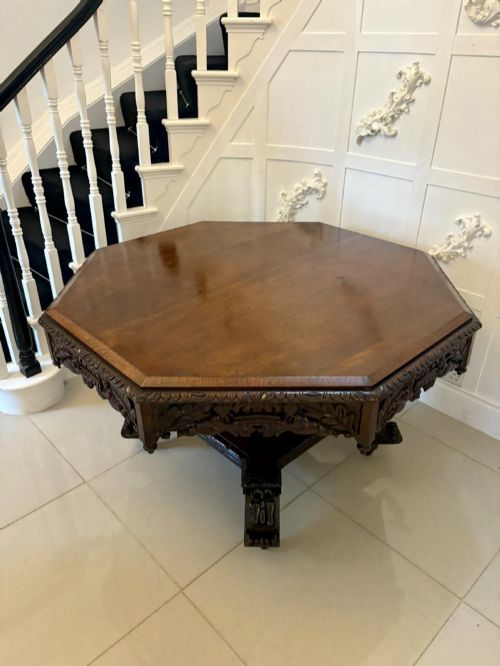
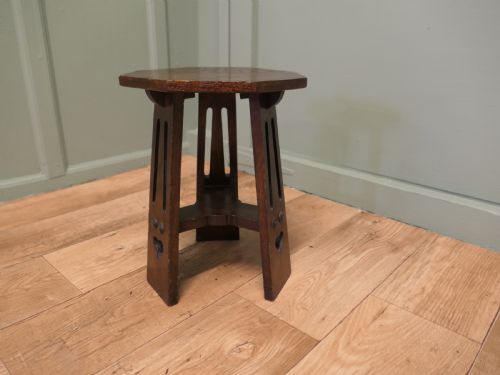
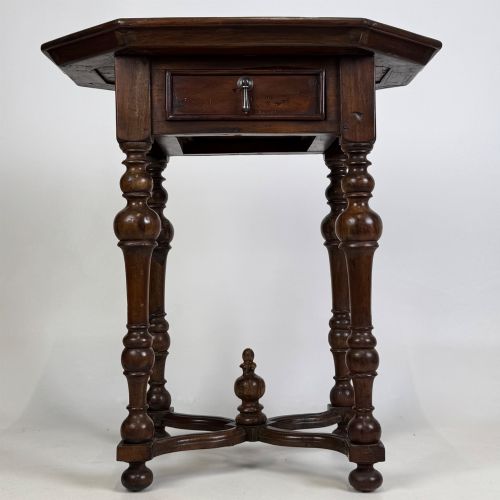
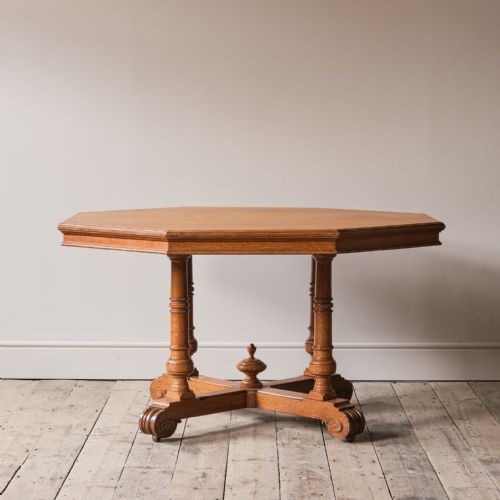
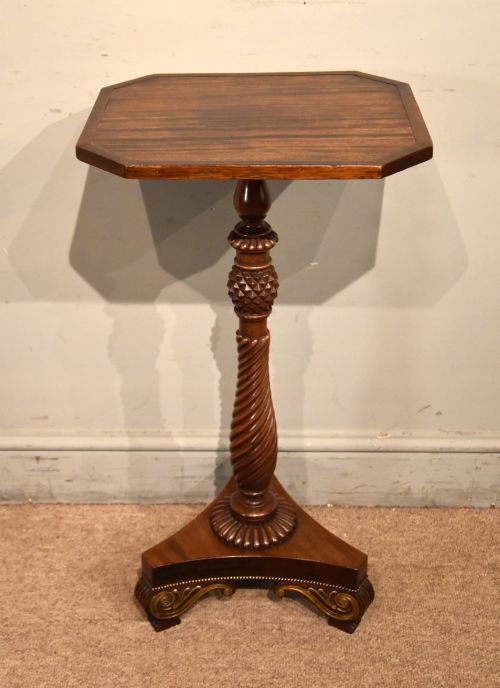
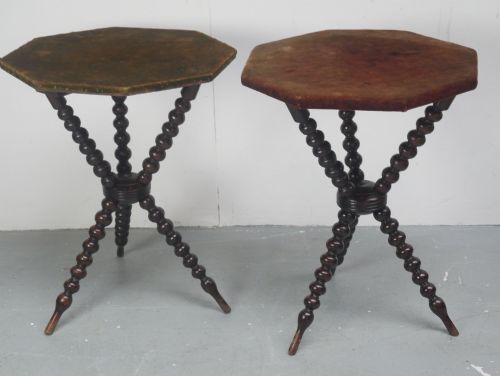
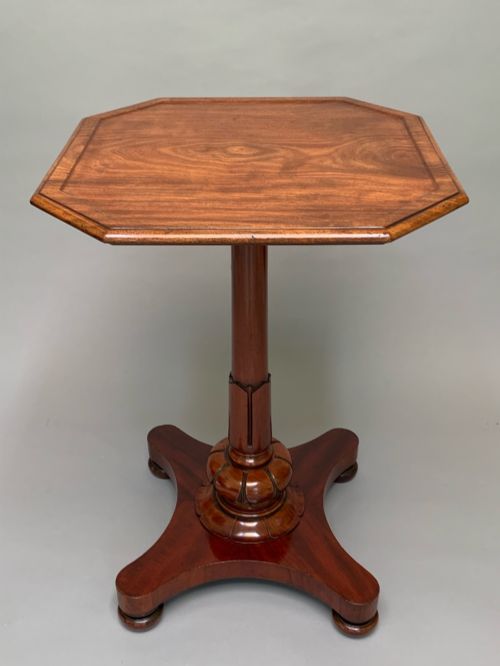
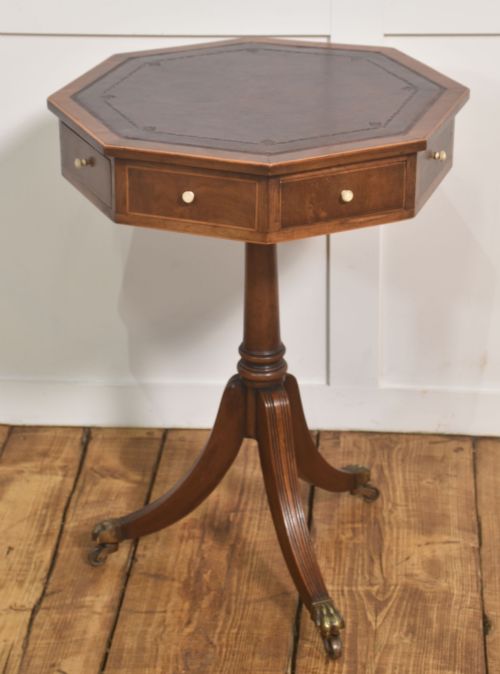
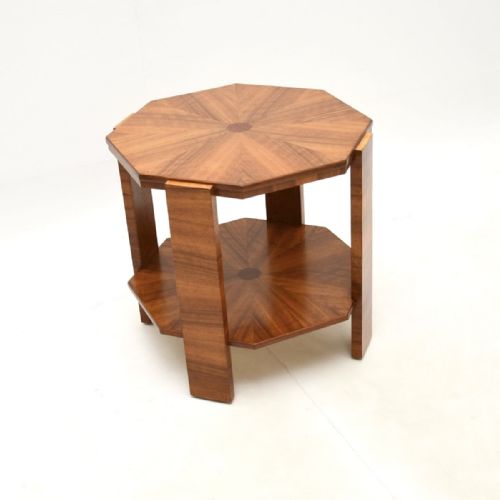
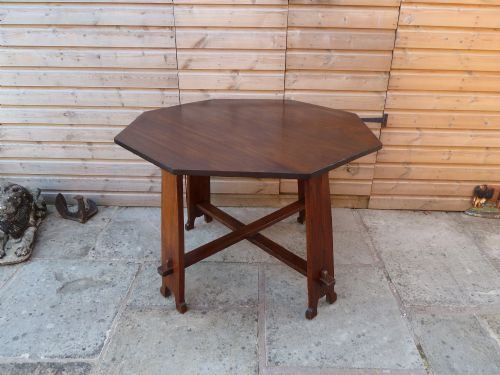
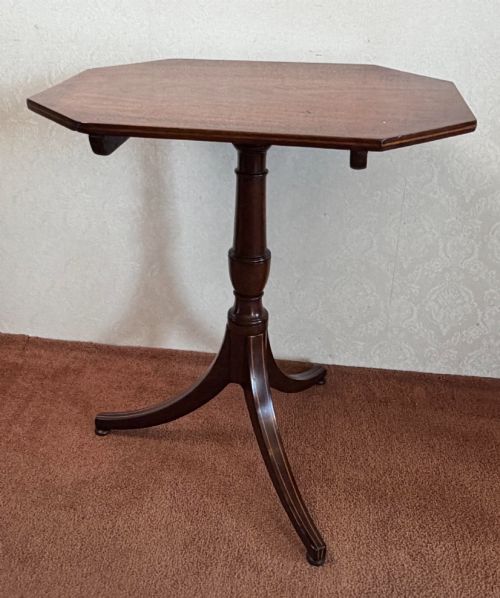

Brown Octagonal Table
A brown octagonal table brings eight-sided geometry and warm timber tones to a room, serving reliably as a lamp stand, centrepiece, or occasional surface.
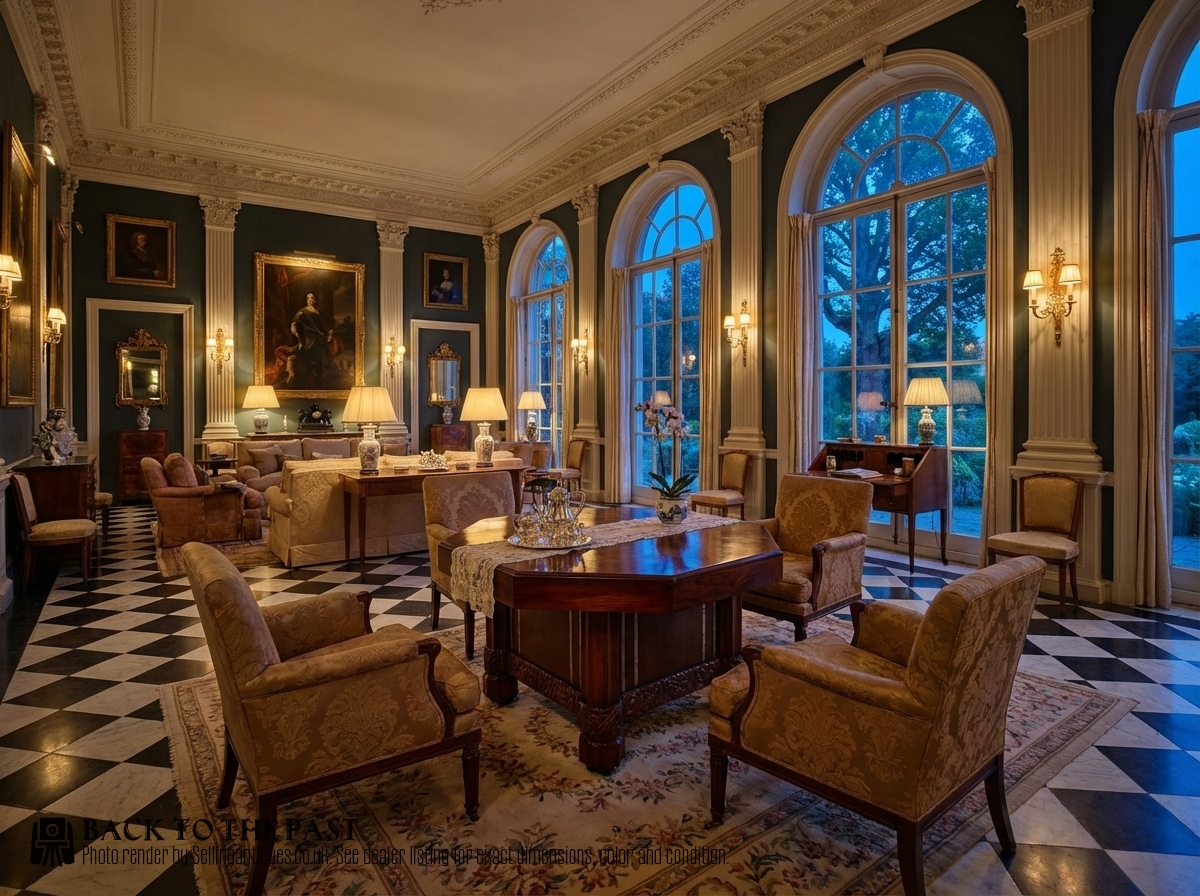
Brown Octagonal Table
A brown octagonal table appears in various guises across the nineteenth and twentieth centuries, spanning periods from the Georgian era through Victorian, Edwardian, and Art Deco times. These pieces function primarily as occasional tables, plant stands, centre tables, and coffee tables within domestic spaces.
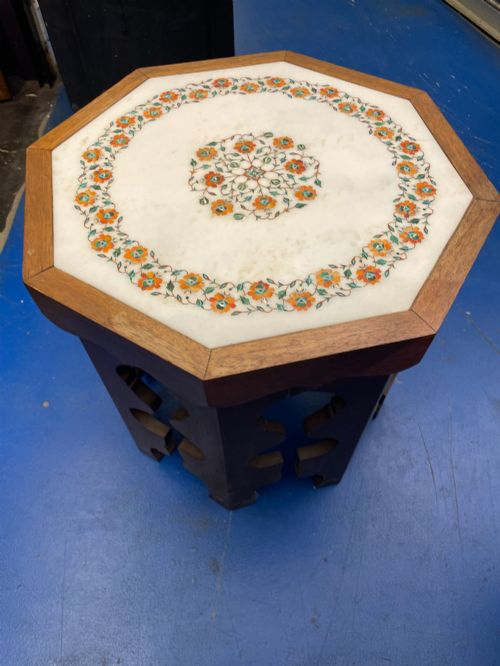
Regional and imported variations also feature prominently, including inlaid Damascus tables, Anglo-Indian items from Hoshiarpur, and sturdy Arts and Crafts oak designs. Each style brings distinct carving traditions and structural proportions to the basic octagonal footprint.
Materials and construction
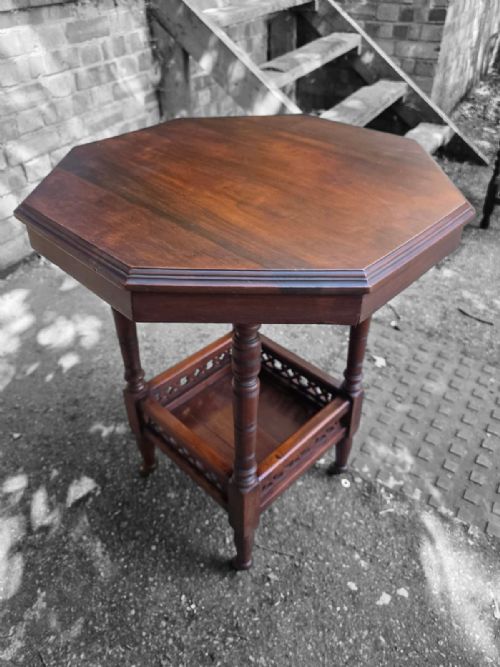
Cabinet makers relied heavily on dense timbers such as mahogany, oak, walnut, and rosewood to construct stable eight-sided frames. Grain selection mattered greatly, with burr walnut, pollard oak, and figured mahogany chosen for prominent top surfaces.
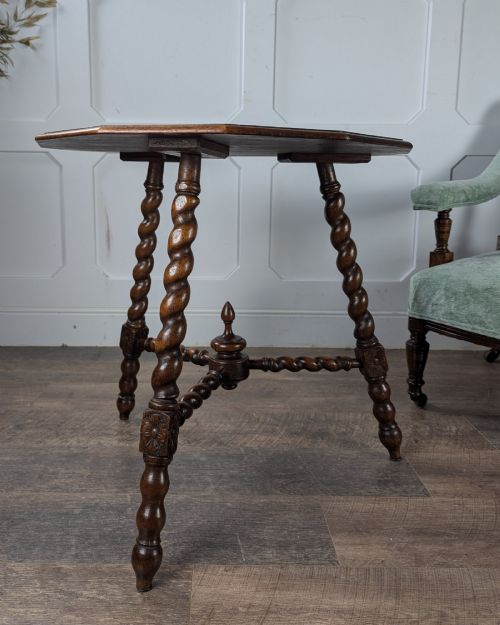
Inlay work added intricate detail to many tables, utilising boxwood, mother of pearl, brass, and contrasting exotic hardwoods. Joinery techniques included tripod supports, barley twist legs, carved pedestals, and folding Damascus mechanisms.
Some Victorian tables fold completely flat for storage, proving that clever flat-pack furniture existed long before modern warehouses.
Judging execution
Quality rests in the crispness of the timber carving, the precision of the parquetry or inlay work, and the stability of the central pedestal or leg assembly. Superior examples display seamless mitre joints on the eight-sided top and balanced proportions that prevent wobbling.
Finer pieces incorporate decorative flourishes like parcel gilt, boxwood stringing, or dense mother of pearl arrangements without sacrificing everyday utility. Lesser specimens rely on plain, unfigured secondary woods and simpler turned legs lacking individual character.
Gillows·Ralph Turnbull·Liberty and Co
The Brown Octagonal Table Glossary
- Occasional table
- A small, movable table designed for intermittent use around a sitting room or bedroom. These pieces offer convenient surfaces for books, lamps, or decorative objects.
- Centre table
- A freestanding table meant to be viewed from all sides, traditionally placed in the middle of a room rather than against a wall. They frequently feature elaborate pedestal bases and carved aprons.
- Parquetry
- Geometric mosaic woodwork arranged in repeating patterns across a tabletop. This technique employs contrasting timber species to create striking visual depth.
- Damascus table
- An intricately carved and inlaid folding table originating from the Middle East. They often feature dense mother of pearl and exotic wood inlays.
- Plant stand
- A tall, slender support designed to elevate ferns or potted plants. Their compact octagonal tops suit vertical spaces.
Brown Octagonal Table: Frequently Asked Questions
Where should I place an octagonal table?
An octagonal table fits well in the centre of a room, beside a sofa, or in an empty corner where a round table might feel too plain. Its eight-sided geometry helps soften rigid room angles and breaks up linear furniture arrangements.
The compact footprint of many examples makes them ideal as lamp stands or plant supports. They provide useful surface area without dominating the floor space.
How do I care for antique timber tables?
Keep wooden tables away from direct heat sources and strong sunlight to prevent the timber from drying out or splitting. Dust regularly with a dry cloth and apply a quality beeswax periodically to nourish the polished surface.
Avoid using modern silicone sprays or excessive water, which can damage historic French polish or lift delicate veneer work.
What is the difference between an occasional and a centre table?
Centre tables are traditionally larger, designed to stand independently in the middle of a room and feature decorative detailing on all sides. They served as focal points for displaying books or lamps in Victorian and Georgian interiors.
Occasional tables are lighter, smaller, and easier to move around as needed. They function primarily as practical auxiliary surfaces rather than grand statement pieces.
How can I tell the period of a table?
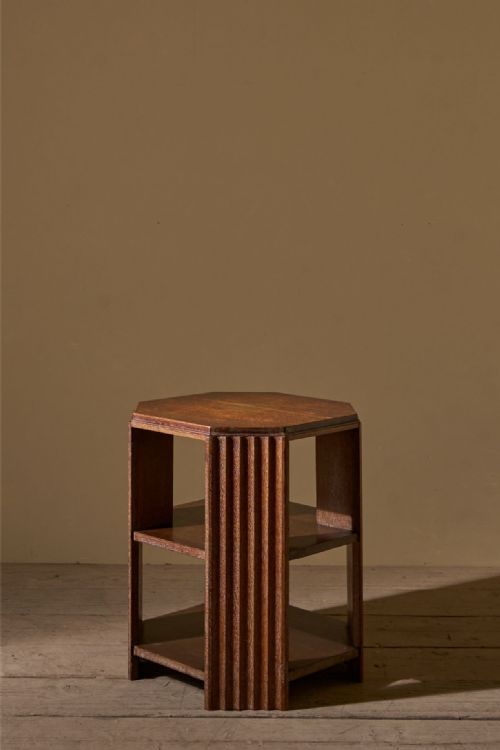
Dating relies on examining timber choices, construction methods, and stylistic cues such as carved motifs or inlay materials. Heavy oak carving and barley twist legs often point towards the Victorian era, while geometric simplicity suggests Arts and Crafts or Art Deco influence.
Inlay techniques and secondary woods inside the frame also provide clues to the era of manufacture.