
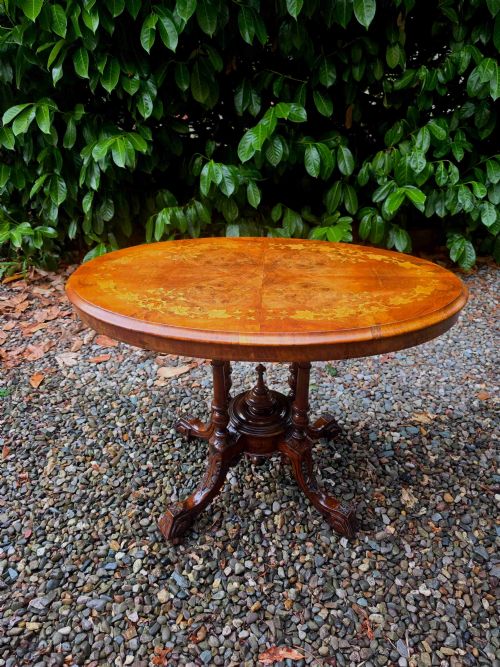
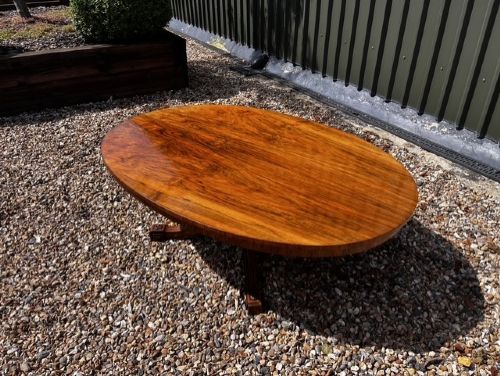
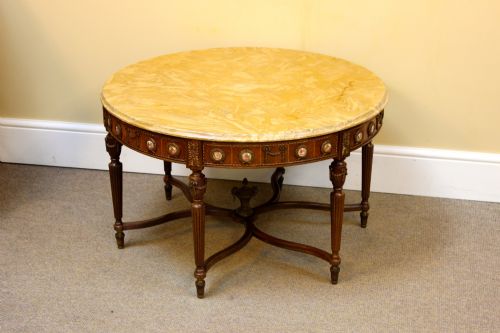
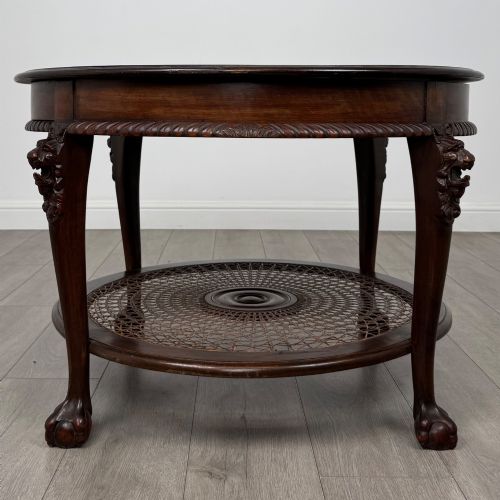



Edwardian Carved Centre Table
An Edwardian carved centre table stands ready to anchor a room, bringing period craftsmanship and freestanding elegance to your interior.
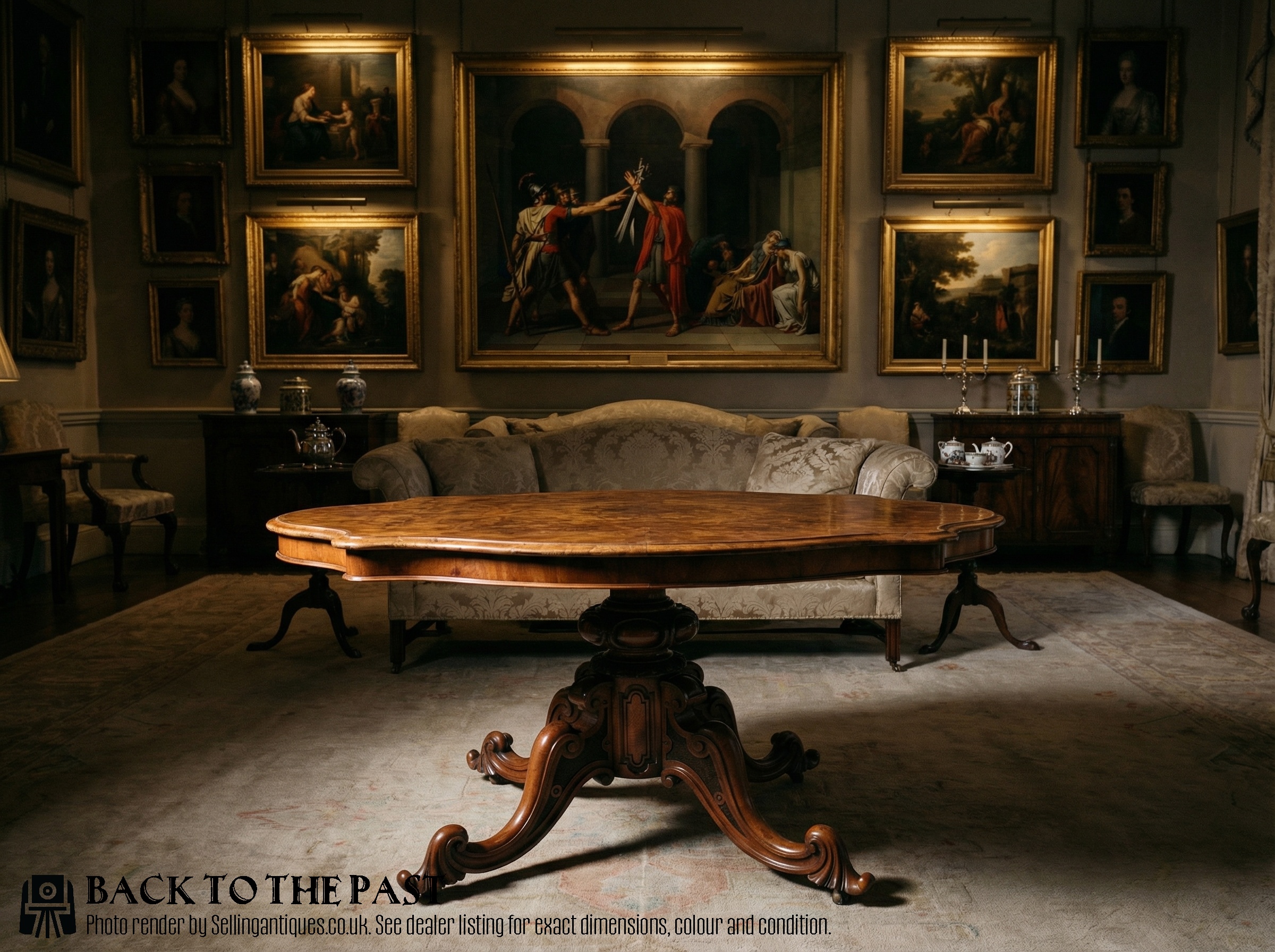
Edwardian Carved Centre Table
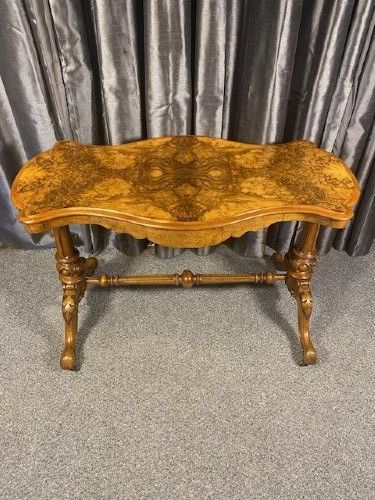
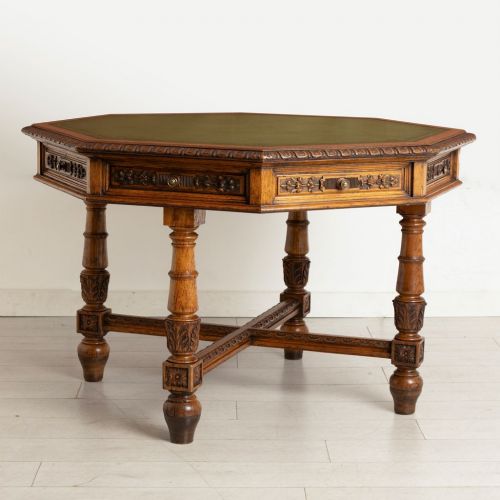
Makers and workshops of the era produced these tables in various shapes, including circular, oval, square, and octagonal tops. They function practically as display surfaces or writing spaces while serving as decorative focal points within a room.
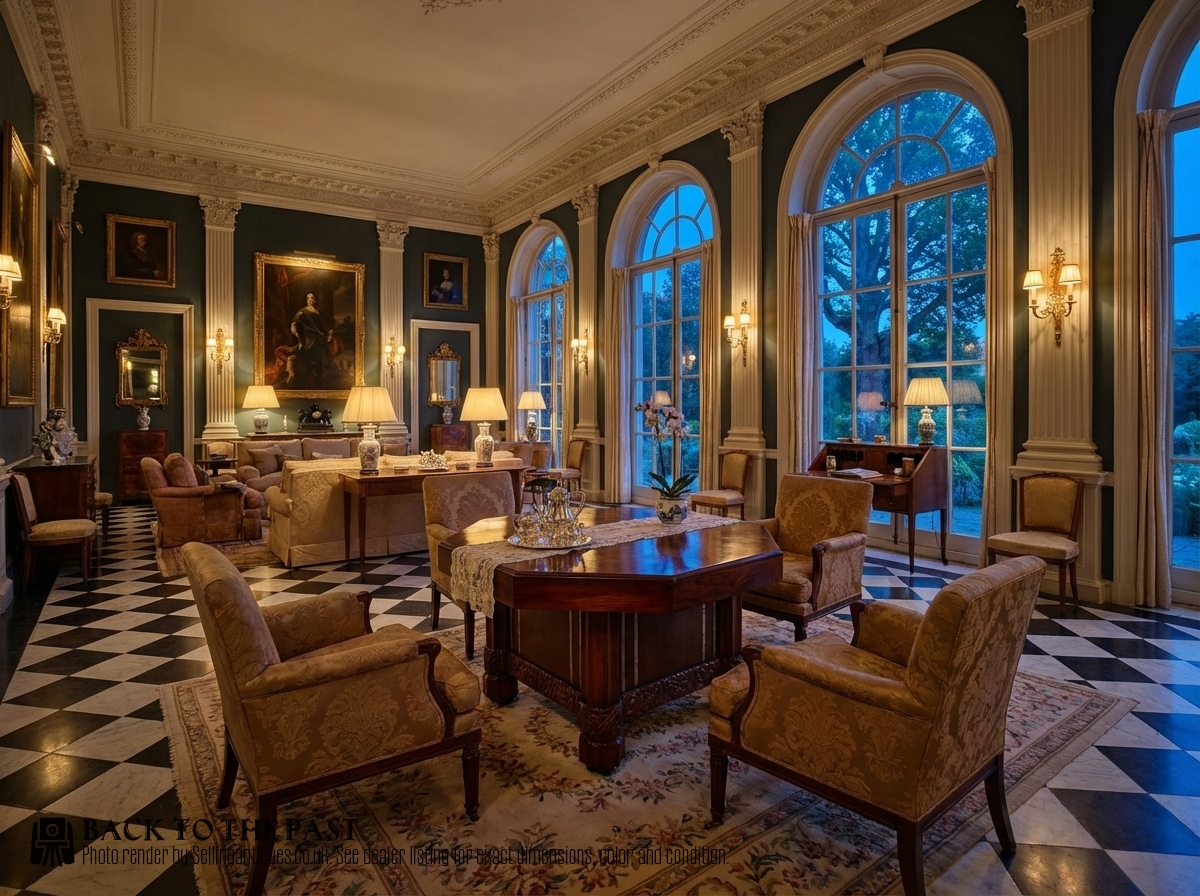
How they were made
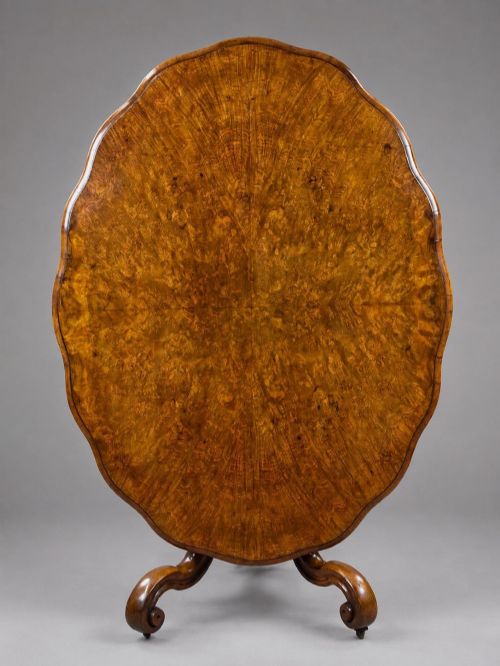
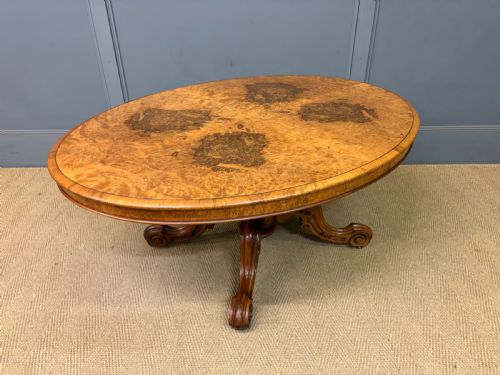
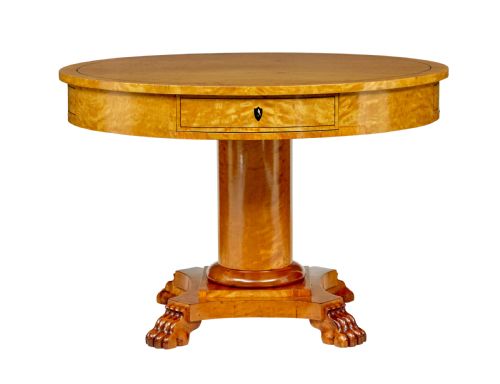
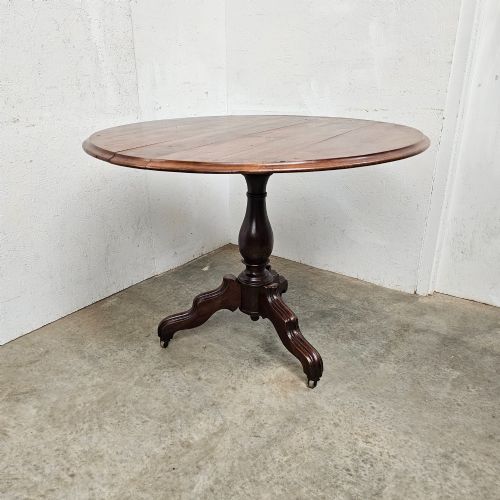
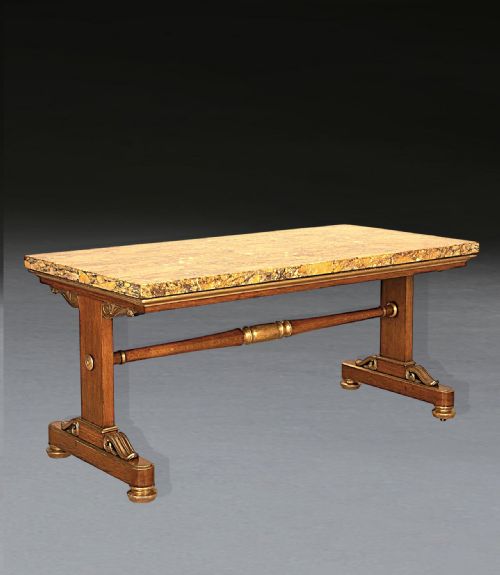
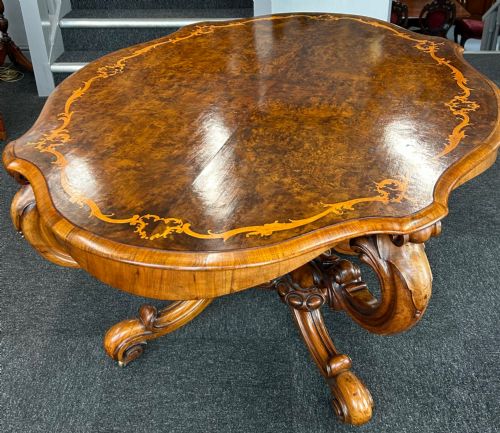
Cabinet makers utilised solid woods and decorative veneers, notably burr walnut and mahogany, combined with wood inlay, brass, and marble inserts. Tops were frequently shaped with marquetry or supported on carved pedestals and tripod legs.
Construction relied on traditional joinery methods, ensuring stability for freestanding use in the centre of a room. Carved details were executed by hand, complementing the natural figure of the timber.
Object forms span centre tables, occasional tables, coffee tables, side tables, library tables, drum tables, breakfast tables, and tripod tables.
What varies in quality
The standard of timber selection largely dictates the quality, with highly figured burr walnut and rich mahogany commanding attention. The crispness and depth of hand-carving also separate standard production pieces from high-end examples.
Attribution to known cabinet makers elevates a piece, as does the integration of specialist materials such as original marble tops or intricate marquetry inlay. Overall proportion and the retention of a desirable surface finish define the better specimens.
Holland & Sons Of London·James Shoolbred & Co. London·Edwards & Roberts
The Edwardian Carved Centre Table Glossary
- Centre table
- A freestanding table intended to be placed in the middle of a room rather than against a wall. These pieces are finished on all sides.
- Burr walnut
- A prized timber veneer obtained from the warted growths of walnut trees. It displays swirling, highly decorative grain patterns.
- Marquetry
- The art of applying decorative pieces of veneer to a structure to form intricate patterns or pictures. It was widely utilised on Edwardian and Victorian tabletops.
- Tripod table
- A small table supported by a central pillar resting on three legs. They offer versatile placement options in period interiors.
- Occasional table
- A small, light table intended for intermittent use within a principal living space. These often feature carved or inlaid tops.
Edwardian Carved Centre Table: Frequently Asked Questions
Where should a centre table be placed?
These tables are designed to stand away from walls, traditionally occupying the middle of a principal room or a spacious entrance hall. Because they are finished on all sides, they act as visual anchors in open spaces.
In modern homes, they function effectively in large living rooms or libraries where a freestanding surface is required for books, lamps, or decorative objects.
How do I distinguish Edwardian from Victorian tables?
Edwardian pieces generally exhibit lighter proportions, simpler lines, and influences from revival styles like Chippendale or Louis XVI. They often utilise marquetry inlay on walnut or mahogany.
Victorian counterparts tend to be heavier and more heavily carved, frequently employing dark mahogany, burr walnut, or ebonised finishes with elaborate revival ornamentation.
What were library tables used for?
Library tables served as sturdy, substantial work surfaces for reading, writing, and sorting documents. They typically offered generous proportions and robust timber construction.
Many examples feature octagonal or rectangular tops designed to accommodate multiple users or large volumes within a study or library setting.
Can these tables be used as coffee tables?
Many period tables of this type are adapted for modern living as coffee tables, particularly lower occasional variants and marble-topped pieces. Their dimensions often suit placement before a sofa.
When utilised this way, they introduce historic timber grain and hand-carved detail into a contemporary seating arrangement.