


Edwardian Oak Coffee Table
An edwardian oak coffee table brings honest timber and sturdy utility to a room, offering a grounded surface shaped by decades of quiet domestic use.
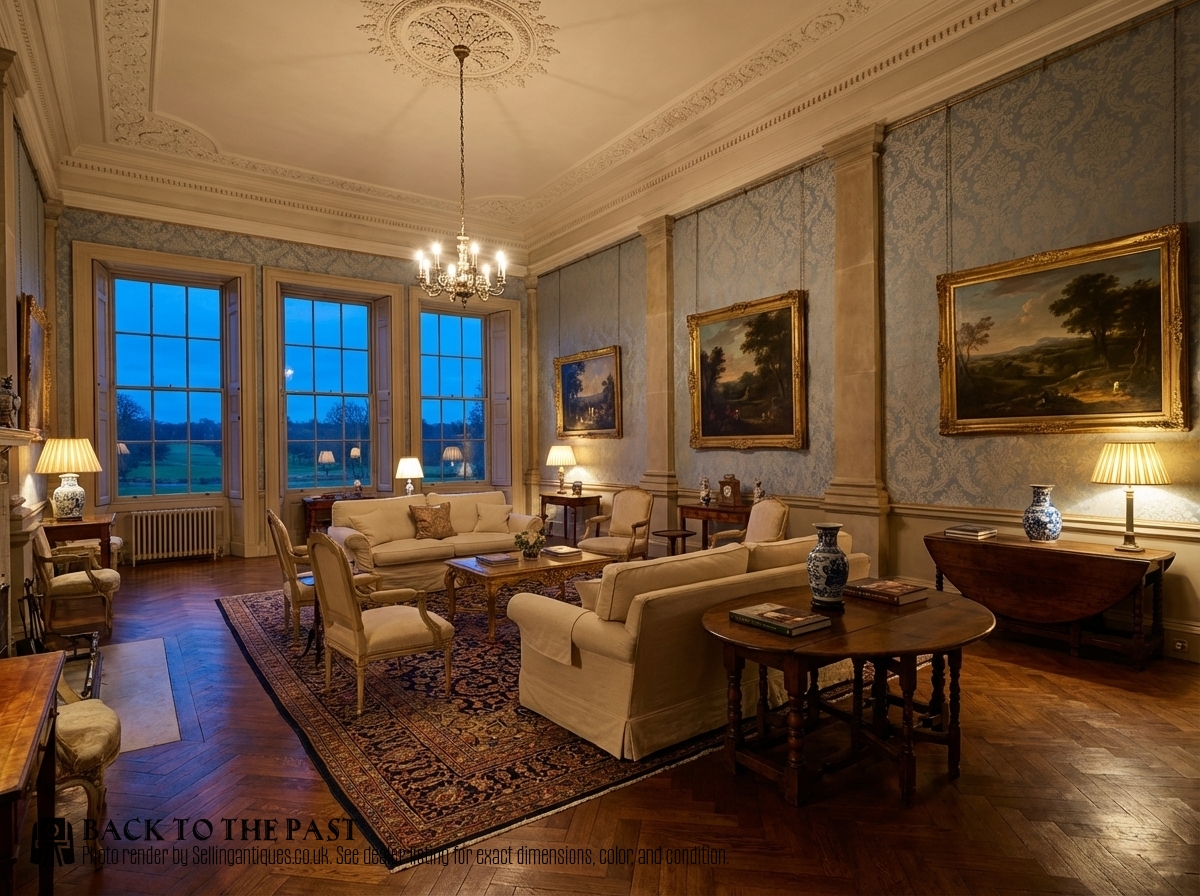
Edwardian Oak Coffee Table
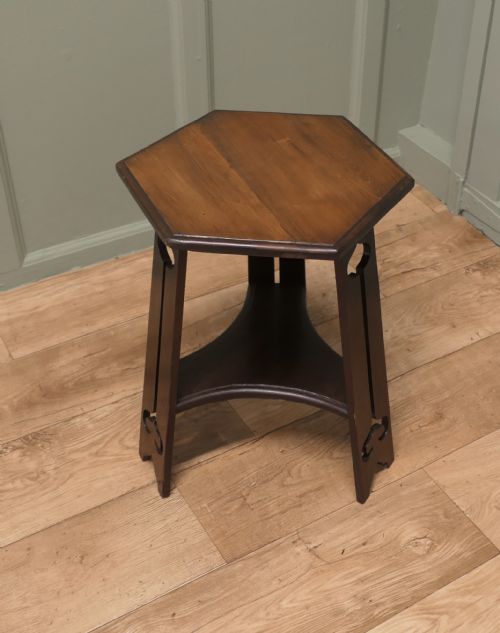
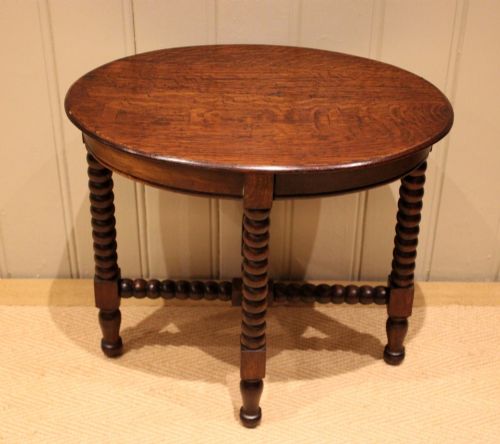
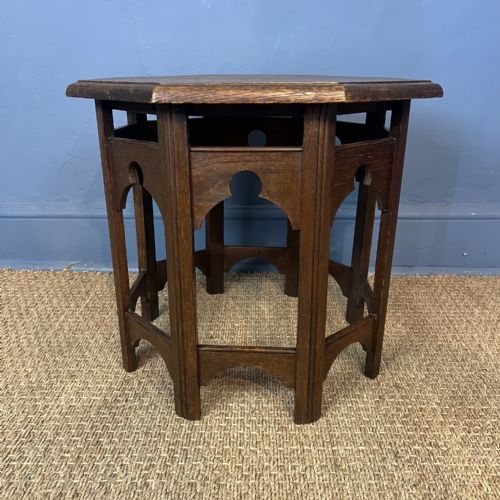
The edwardian oak coffee table category covers a broad selection of low timbers, occasional stands, and adapted trays drawn from the late nineteenth century through to the interwar decades. Buyers will encounter sturdy oval tops, nests of several pieces, folding card tables, and hexagonal Arts and Crafts forms alongside simpler utilitarian designs in solid and tiger oak.
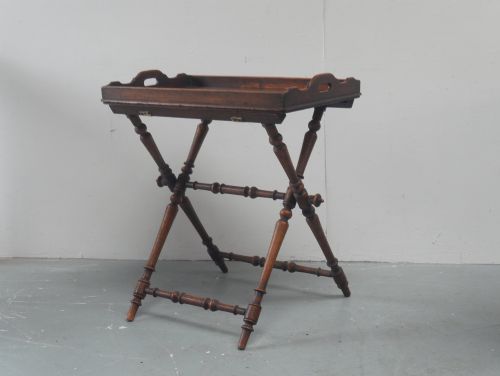
While many examples originate directly from the Edwardian period, the selection extends to Victorian precursors and later twentieth-century iterations influenced by rustic farmhouse and Jacobean revival styles. Tables often cross over with side tables, plant stands, and butler trays, reflecting a historical flexibility in how lower domestic surfaces were utilised.
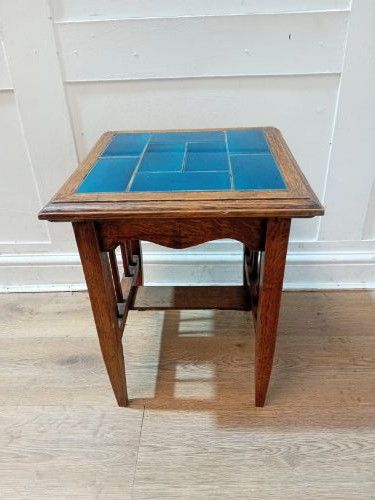
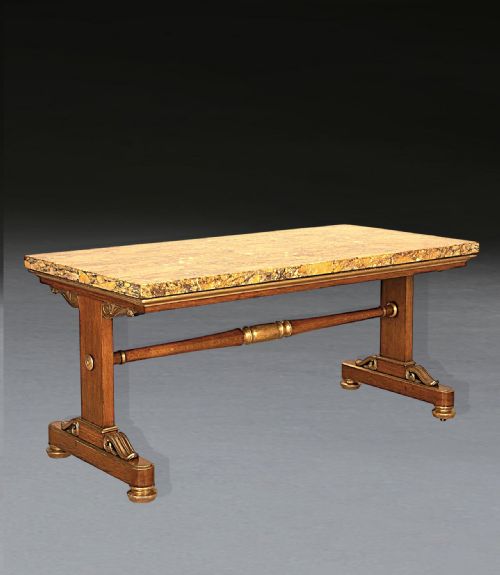
Makers and workshops of the era produced these pieces to serve practical functions in drawing rooms and parlours, meaning low formats frequently derive from shortened legs or convertible designs. The presence of ceramic tiles, marble inserts, or drop leaves adds regional and stylistic variety to the standard timber frame.
Materials and Technique
Construction relies heavily on solid oak and tiger oak, chosen for durability and distinct figuring, sometimes paired with brass hardware, painted surfaces, or giltwood detailing. Cabinetmakers utilised traditional joinery methods to assemble sturdy frames that could withstand daily service as domestic surfaces.
Surface decoration ranges from carved details and barley twist legs to inset ceramic tiles and Siena marble tops. Drop leaves, folding mechanisms, and removable butler trays demonstrate the mechanical ingenuity applied to utilitarian furniture during this period.
Edwardian Oak Coffee Table Retail Price Guide 2026
Typical asking prices for edwardian oak coffee table among the pieces listed under this phrase on Sellingantiques today, from the lower quarter to the upper quarter. They describe what is for sale here now, not the wider market.
Listings feature oak, brass, ceramic tile, Siena marble, and giltwood across styles from Arts and Crafts to rustic farmhouse.
Standards of Execution
Quality rests in the weight of the timber, the crispness of any carving, and the integrity of joints that hold lower frames steady under pressure. Superior examples show thoughtful proportion and careful selection of oak grain, particularly in tiger oak or quarter-sawn varieties.
The integration of secondary materials such as ceramic tiles, brass handles, or marble inserts distinguishes finer workshop production from standard utility items. Alterations, such as shortened legs on older side tables, shift an item's character and influence its coherence as a low surface.
Heals·Liberty of London
The Edwardian Oak Coffee Table Glossary
- Tiger oak
- Oak timber exhibiting prominent medullary rays that create a striped, mottled pattern resembling tiger stripes. This cut was favoured in Arts and Crafts and Edwardian furniture for its decorative visual depth.
- Butler tray
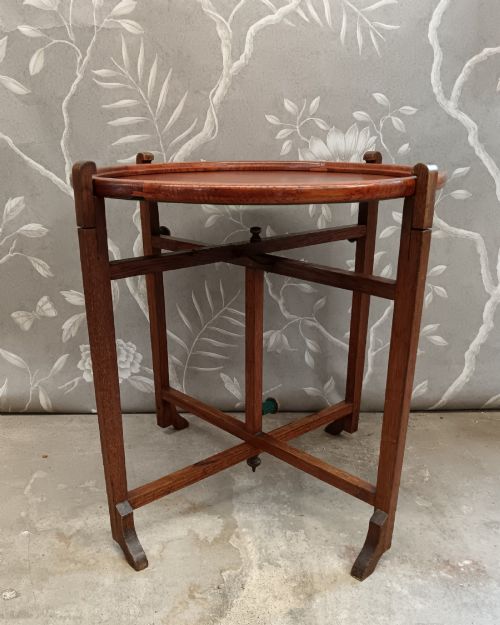
- A portable wooden tray with hinged or fixed sides, designed to sit upon a folding wooden stand. It functions as a removable surface for serving or display.
- Barley twist
- A turned wooden furniture leg resembling the spiral twist of a barley stalk. This decorative woodworking technique appears frequently on Edwardian and Jacobean revival tables.
- Nest of tables
- A set of graduated tables designed to fit neatly beneath one another when not in use. They provide flexible surface space in compact domestic settings.
Edwardian Oak Coffee Table: Frequently Asked Questions
How do I identify an Edwardian table?
Edwardian tables generally display lighter oak tones compared to heavy Victorian furniture, often incorporating simple rectilinear lines or subtle Arts and Crafts influences. Look for construction methods typical of the early twentieth century, such as machine-planed timbers combined with hand-finished joints.
Hardware and secondary materials like brass handles, ceramic tiles, or subtle carving further anchor a piece to this era. Proportions tend to be practical and domestic, designed for comfortable use in parlours and drawing rooms.
Were these always coffee tables?
Many items sold as coffee tables today began life as side tables, occasional stands, or butler trays that were subsequently lowered or repurposed. The dedicated low coffee table format became more common later in the twentieth century.
Earlier pieces often retain taller proportions or folding mechanisms intended for card games, plants, or serving tea. Examining the leg height and underframe will usually reveal whether a piece has been altered from an earlier side table.
What is tiger oak?
Tiger oak refers to quarter-sawn oak timber that displays striking, speckled medullary rays running across the grain. This cutting technique exposes the natural figure of the wood in a pattern that resembles tiger stripes.
Cabinetmakers utilised this cut to add visual texture to prominent surfaces like table tops and panels. It remains a hallmark of quality craftsmanship in Edwardian and Arts and Crafts furniture.
Can I use a nest of tables daily?
Nests of tables are built with sturdy oak frames designed to withstand regular pulling out and stacking. They offer practical surface space that adapts easily to entertaining without dominating a room.
Ensure the joints remain tight and the surfaces are protected from excess moisture to preserve the timber. Regular use helps keep the wood conditioned and highlights the natural grain.