





Serpentine Centre Table
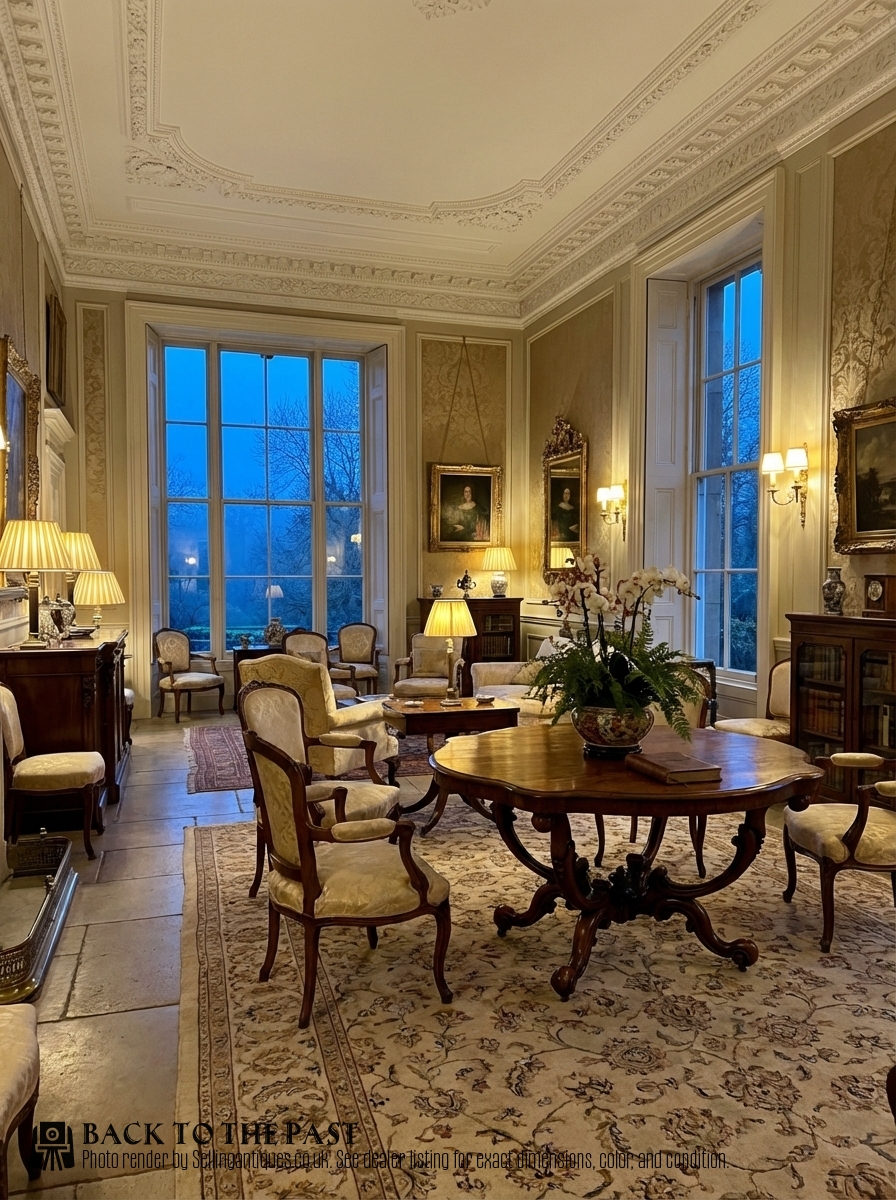
A serpentine centre table demands space to float in a room, showing off flowing curves from every angle.
Serpentine Centre Table
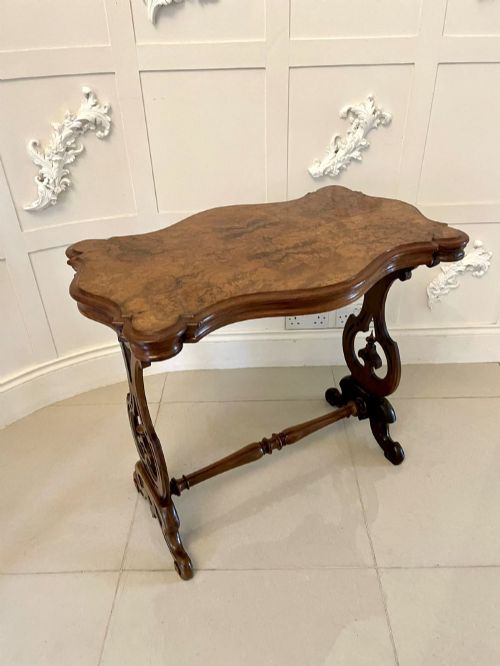
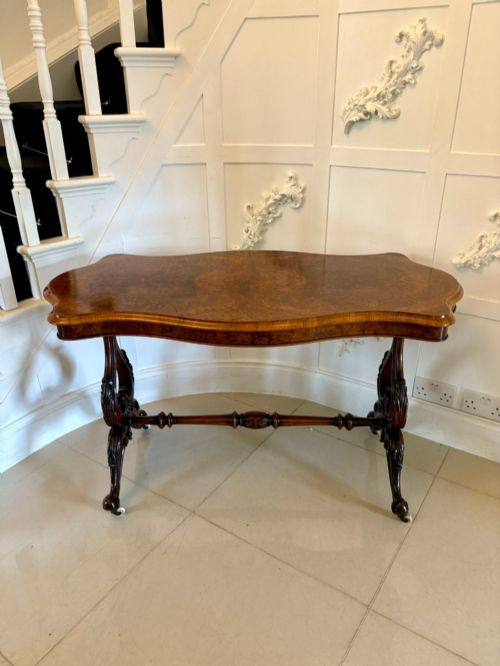
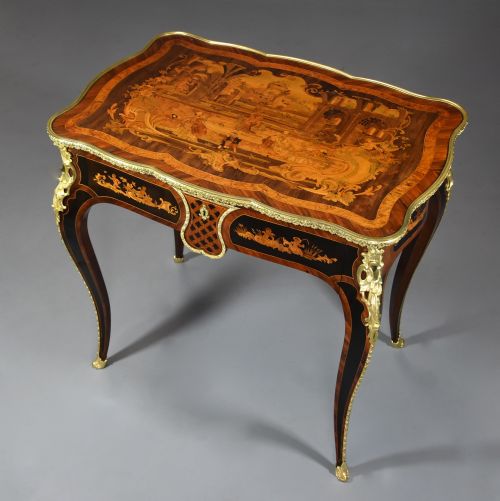
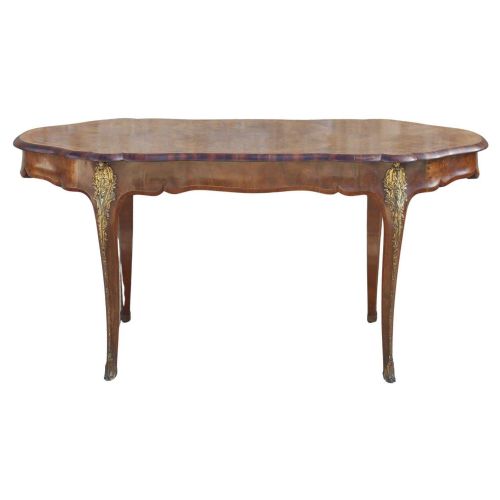
A serpentine centre table is a freestanding piece designed to sit in the middle of a room rather than against a wall. These tables feature distinctive undulating edges that curve outward and inward, creating a dynamic silhouette.
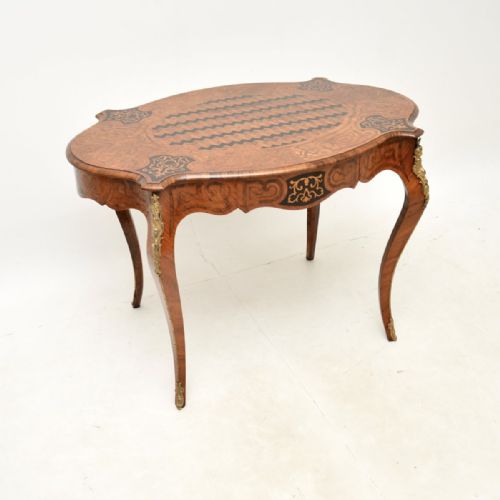
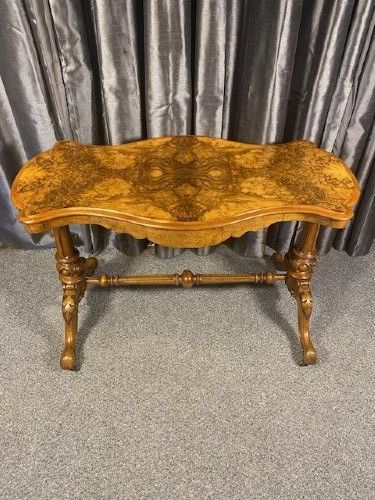
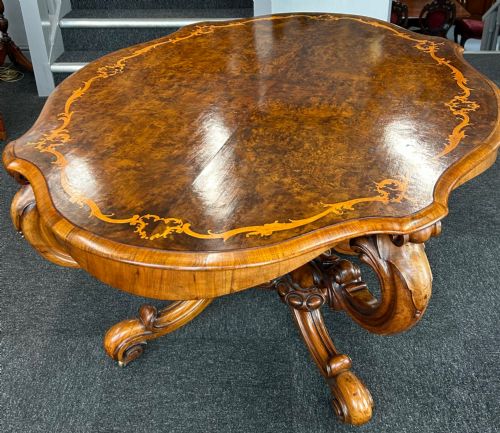
The versions most commonly met on this page date from the nineteenth century, spanning the Victorian period and various French revival styles. Makers favoured figured timbers and complex geometric or floral inlays for these prominent domestic items.
Form follows function across several variations, ranging from large dining and loo tables to smaller occasional and writing desks. Each shares the characteristic sinuous outline that defines the group.
How They Were Made
Cabinet makers constructed the curved framework using dense solid timbers such as mahogany and walnut as a stable carcass. They then applied decorative veneers like burr walnut, satinwood, and kingwood to the expansive top surfaces to display rich grain patterns.
Many examples incorporate elaborate brass or ormolu mounts, marquetry, and parquetry detail alongside hand-carved cabriole legs. These decorative elements required specialist joinery to follow the complex winding contours of the serpentine edge without distortion.
Serpentine Centre Table Retail Price Guide 2026
Typical asking prices for serpentine centre table among the pieces listed under this phrase on Sellingantiques today, from the lower quarter to the upper quarter. They describe what is for sale here now, not the wider market.
Several tilt-top tables retain their original brass catches, engineered so the heavy timber top flips smoothly vertical without trapping a careless thumb.
What Varies in Quality
Quality rests primarily in the choice of timber veneer and the precision of the underlying cabinet work. Superior pieces utilise highly figured burr walnut or meticulously cut marquetry that flows seamlessly around difficult curved corners.
The treatment of the secondary timbers and the crispness of any hand carving on the legs or stretcher base further distinguish finer examples. Heavy ormolu mounts and substantial framing indicate workshops that invested greater time in construction.
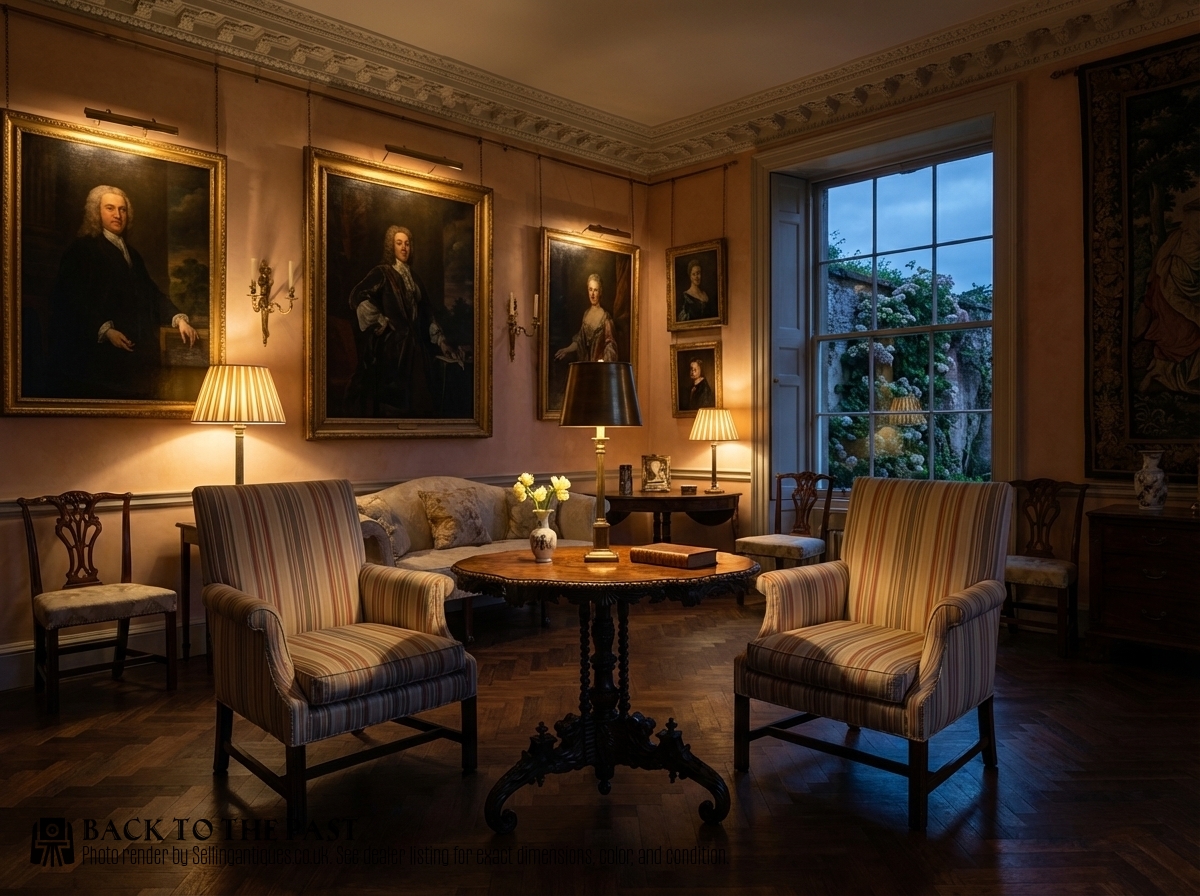
Maison Millet·Gillows·Edwards & Roberts
The Serpentine Centre Table Glossary
- Serpentine
- A curved line of furniture edge work that bends convexly in the centre and concavely at the sides. This shape creates a sense of movement across the timber top.
- Burr walnut
- A mottled timber grain obtained from walnut tree growths, prized for rich swirling patterns. Cabinet makers sliced this wood into thin veneers for decorative table tops.
- Ormolu
- Gilded bronze mounts applied to furniture for decorative contrast against dark woods. Makers cast and chased these metal ornaments by hand during the nineteenth century.
- Marquetry
- The art of forming decorative patterns using thin pieces of wood veneer applied to a base. Artisans combined different timber species to create elaborate floral or geometric scenes.
- Loo table
- A large round or serpentine tilt-top table used for nineteenth-century card games. The top swivels and folds vertically to store flat against a wall when not in use.
Serpentine Centre Table: Frequently Asked Questions
Where should I place a centre table?
These tables are made to be viewed from all sides, making them ideal for the middle of a principal reception room or a large hallway.
Ensure there is sufficient clearance to walk around the perimeter so the curved edges can be fully appreciated.
How do I care for burr walnut veneer?
Keep nineteenth-century polished surfaces away from direct sunlight and excessive heat sources to prevent the timber from drying out or fading.
Dust gently with a soft dry cloth and avoid applying modern liquid silicones or household polishes.
What is a tilt-top mechanism used for?
The hinged mechanism allows the heavy timber top to lock into a vertical position when not in use.
This practical nineteenth-century feature saved valuable floor space in grand drawing rooms.
How do I distinguish Victorian from French styles?
English Victorian examples often rely on rich figured mahogany or burr walnut with robust carved frames and stretcher bases.
French pieces from the same era frequently display more pronounced ormolu mounts, intricate marquetry, and slender cabriole legs.