
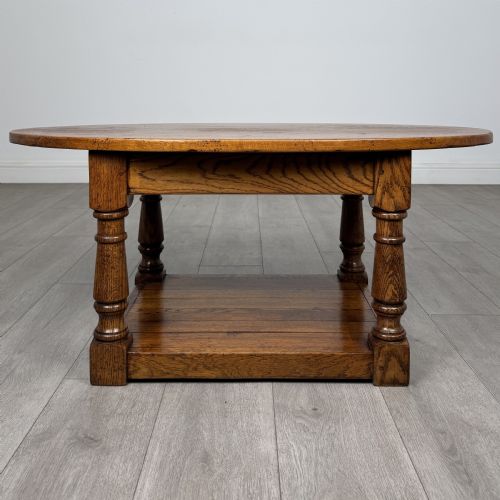
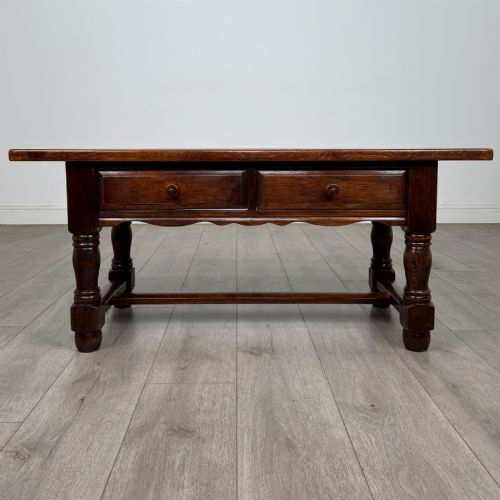
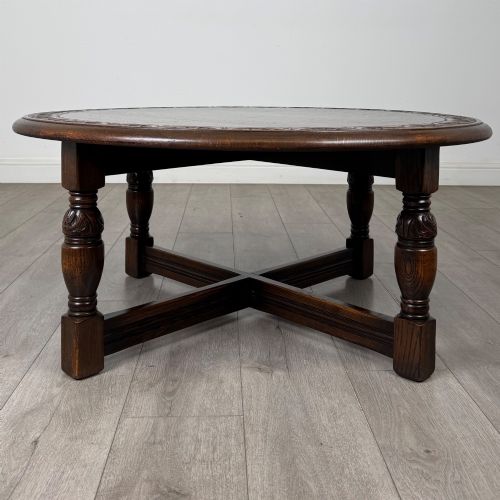
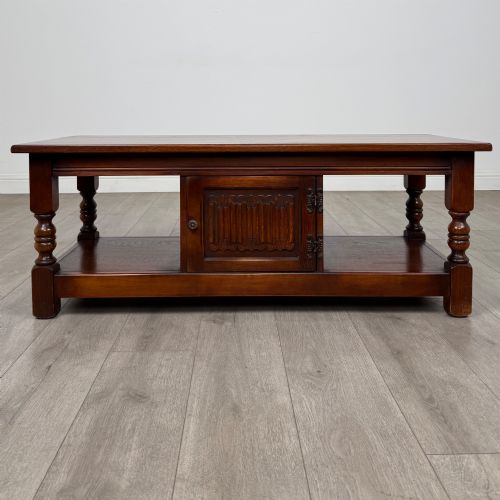


Carved Leg Oak Coffee Table
A carved leg oak coffee table brings solid timber grain and period detail straight to your living room floor.
Carved Leg Oak Coffee Table
A carved leg oak coffee table combines sturdy hardwood construction with decorative lower framing, serving as a low central surface for the home. When you search for this phrase, you find low tables adapted from earlier side tables or built specifically for domestic use.
The selections here span centuries of British and continental woodworking, reaching from eighteenth-century country pieces to Edwardian revivals. Most examples date from the nineteenth and early twentieth centuries, offering practical proportions for modern seating layouts.
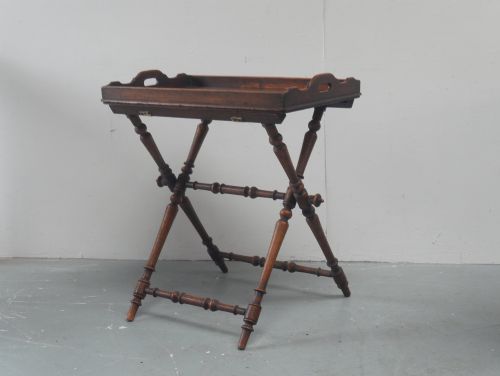
Forms vary from round occasional tops and oval gate legs to rectangular plank surfaces and hexagonal designs. They appear alongside related low forms such as butler trays, side tables, and refectory styles.
How they were made
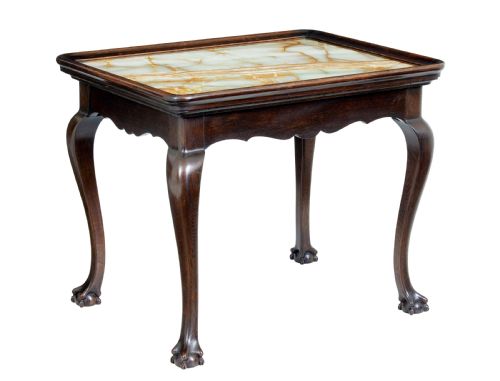
Makers relied primarily on oak timber, sometimes complemented by walnut, pine, brass, metal, or onyx inserts depending on the regional tradition. Joinery techniques utilised traditional pegs, mortise and tenon joints, and solid plank construction.
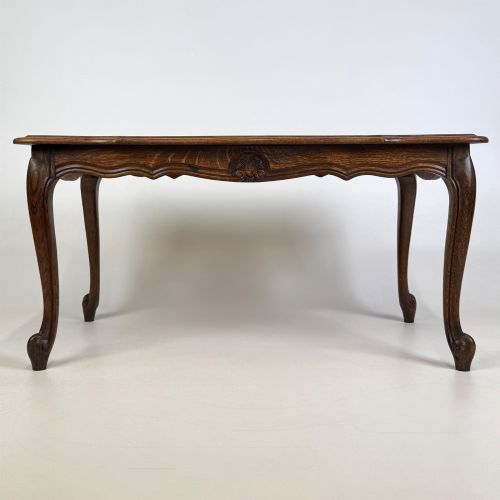
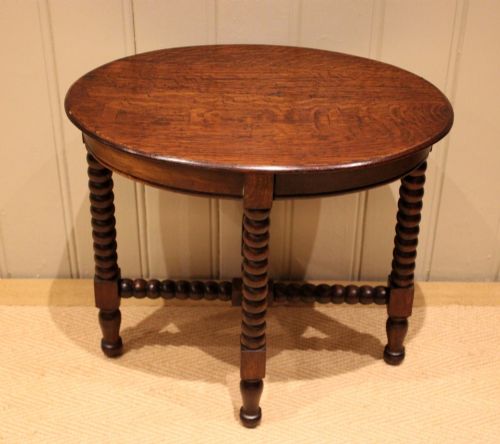
Carving on the legs and frame ranges from simple geometric chip carving to elaborate Jacobean revival motifs and barley twist turnings. Surfaces were finished by hand, developing rich patinas over generations of use.
Listings feature oak alongside alternative materials like onyx, brass, glass, and pine across multiple European traditions.
What varies in quality
The distinction between ordinary and exceptional pieces lies in the crispness of the hand-carving and the selection of figured timber grain. Superior examples retain original structural integrity without excessive timber shrinkage or later alterations.
Proportion and balance dictate the overall success of the piece, particularly when taller side tables or refectory formats have been lowered to coffee table height. Finer workshops invested greater care in joint tightness and harmonious leg turning.
Gillows
The Carved Leg Oak Coffee Table Glossary
- Barley twist
- A spiral turning carved into furniture legs and supports popular in seventeenth-century and Edwardian revival furniture. This technique creates dynamic vertical movement along the table support.
- Gate leg
- A hinged table leg that swings outward to support a drop leaf or extended top surface. It allows the table frame to fold or expand as needed.
- Refectory table
- A long, narrow dining table originally used in monastic dining halls, occasionally adapted to lower coffee table heights. These pieces feature sturdy stretcher rails between the legs.
- Occasional table
- A small, movable table designed for light domestic use in various rooms rather than a fixed dining function. They often feature inventive top shapes like hexagons or octagons.
- Patina
- The surface sheen and colour developed by aged wood through years of handling, polishing, and exposure to light. It serves as a visual indicator of genuine age.
Carved Leg Oak Coffee Table: Frequently Asked Questions
Are these original coffee tables?
Many items sold as coffee tables today began life as taller side tables, occasional tables, or refectory tables during the nineteenth or eighteenth centuries. Cabinetmakers or later restorers lowered them to suit modern domestic seating heights.
This adaptation is a standard part of their history rather than a modern alteration, allowing older craftsmanship to find a functional place in contemporary rooms.
How do I care for an oak surface?
Solid oak requires minimal maintenance beyond dusting with a dry or slightly damp cloth. Avoid placing timber tables near direct heat sources or strong sunlight to prevent warping and drying of the grain.
Applying a traditional beeswax occasionally helps nourish the historic finish and protects the wood from accidental spills.
How do I spot a Jacobean revival piece?
Jacobean revival furniture typically displays heavy geometric mouldings, strapwork carving, and turned supports inspired by seventeenth-century English design. These pieces were particularly fashionable during the Edwardian period and the late nineteenth century.
Examining the underside and joint construction helps distinguish these later revivals from authentic seventeenth-century originals.
Will an oak table fit a modern room?
Low oak tables provide neutral tones and robust textures that anchor various interior styles, from rustic farmhouse settings to contemporary minimalist spaces. Their compact proportions make them versatile additions in front of sofas or sectionals.
Consider the clearance around the carved legs and the height of your seating when selecting the ideal table shape.