

Antique Walnut Tilt Top
An antique walnut tilt top brings ingenious Victorian and Georgian engineering together with rich timber grain.
Antique Walnut Tilt Top
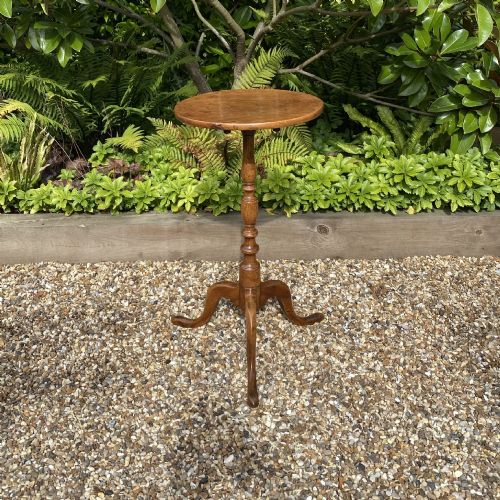
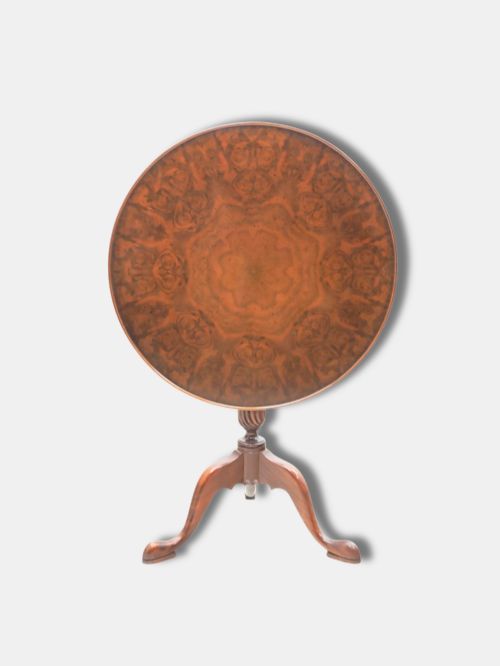
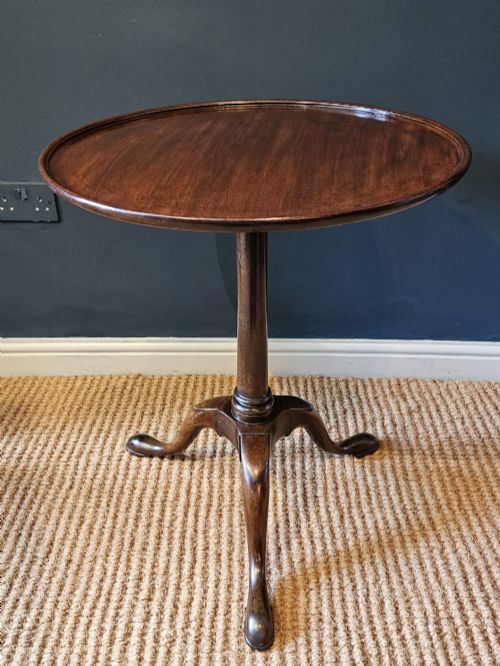
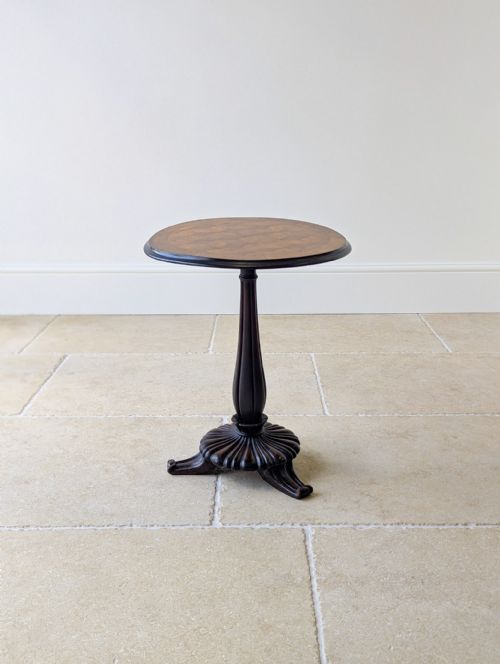
An antique walnut tilt top functions as a versatile piece of furniture designed to pivot its surface vertically when not in use. These tables take various forms, from small wine tables and tripod occasional tables to large oval breakfast and loo tables. Pieces date from the 18th century through the Victorian era, reflecting shifting domestic needs over generations.
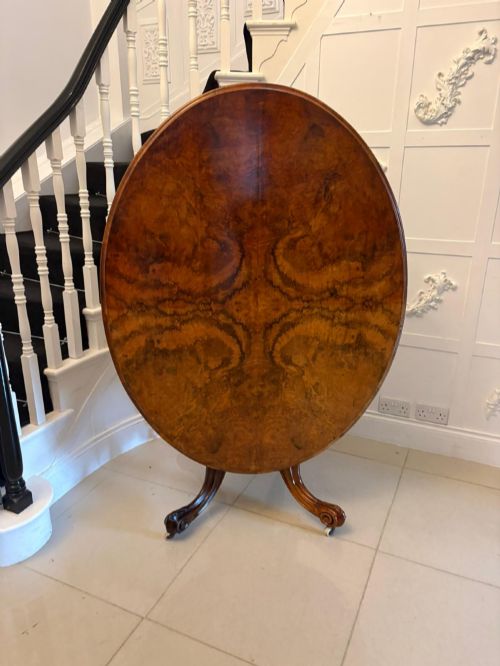
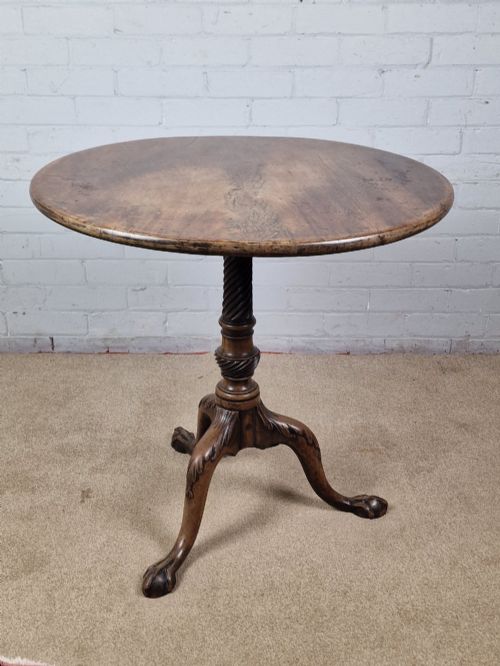
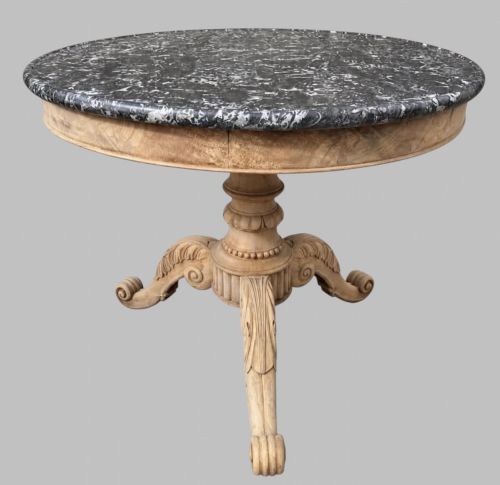
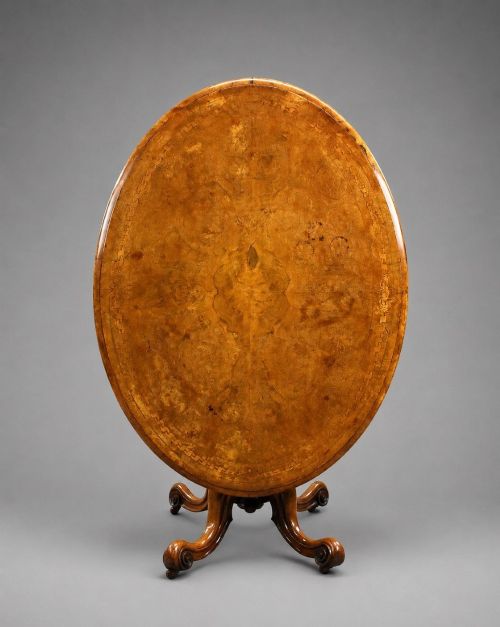
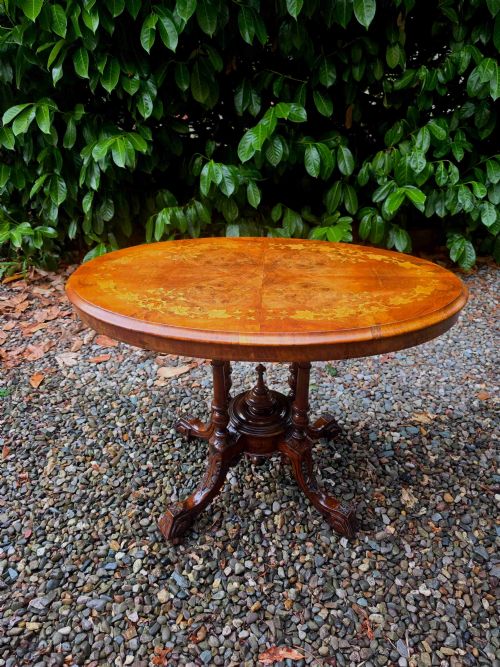
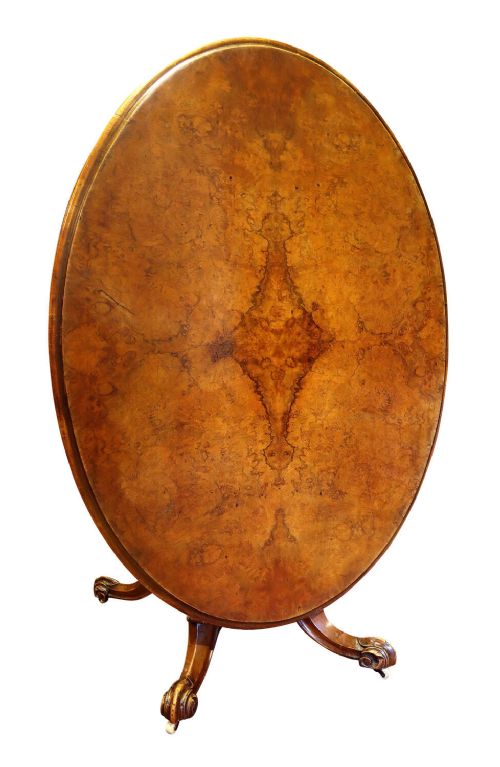
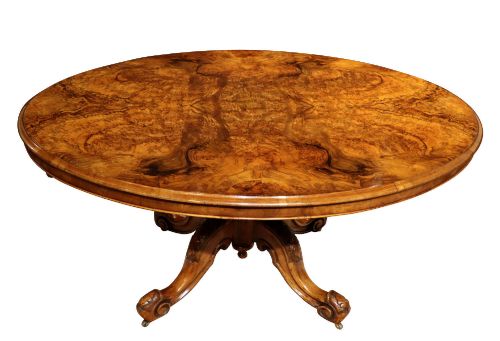
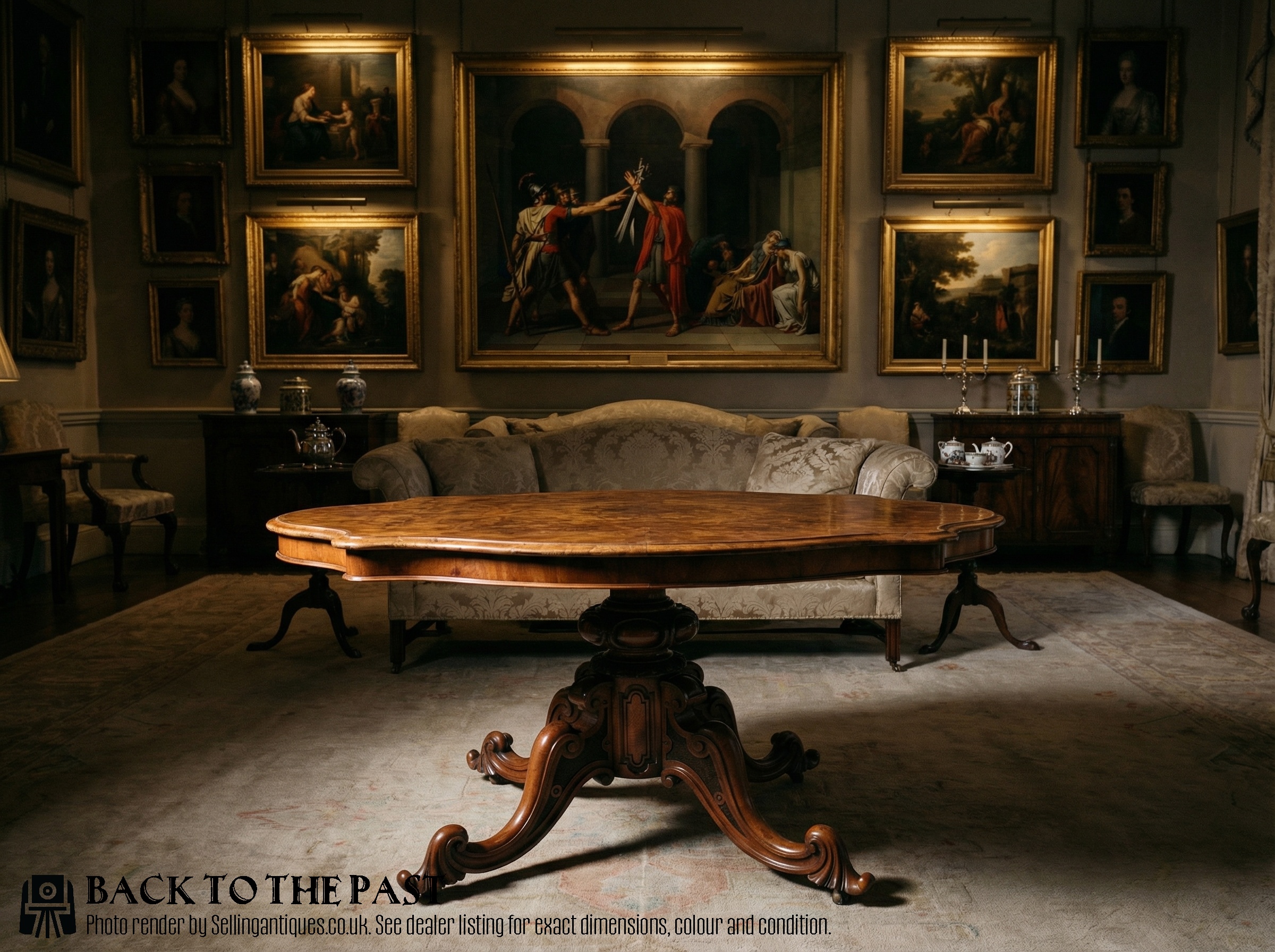
Victorian examples in burr walnut dominate the selection, often taking an oval shape supported by a carved central pedestal or quadrapod base. Buyers also encounter earlier George II red walnut designs alongside French and Italian interpretations. The mechanism allows the tabletop to save floor space by standing flat against a wall.
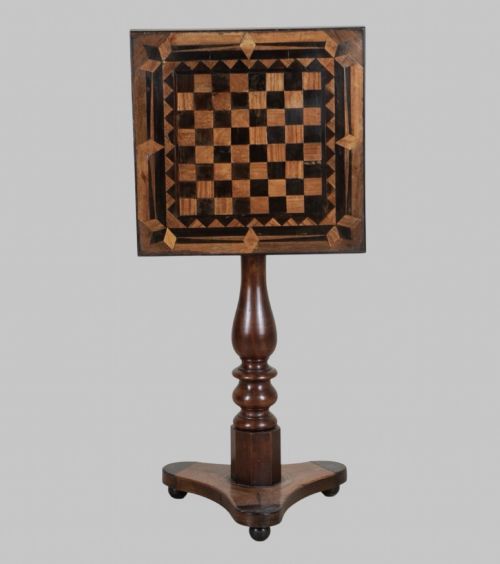
Makers utilised timber qualities to maximum effect, pairing solid walnut structures with figured veneers. Whether configured as a lamp table, a games table, or a dining surface, the tilt top remains a staple of period interior arrangement.
How They Were Made
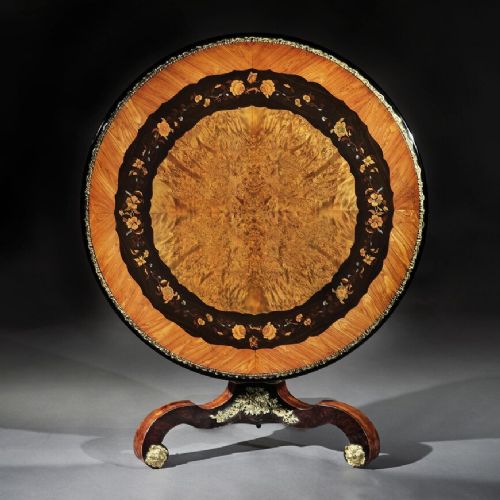
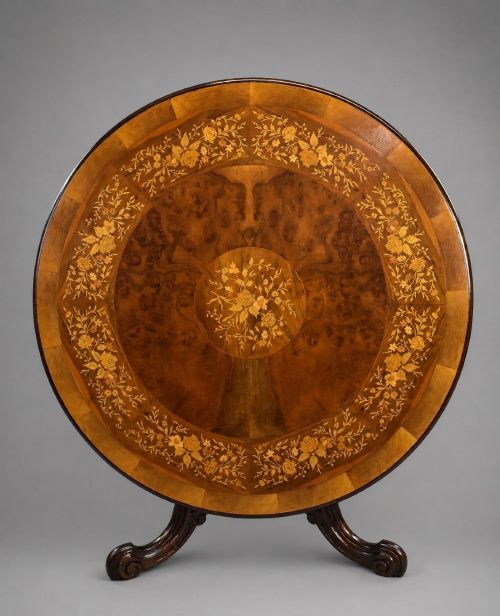
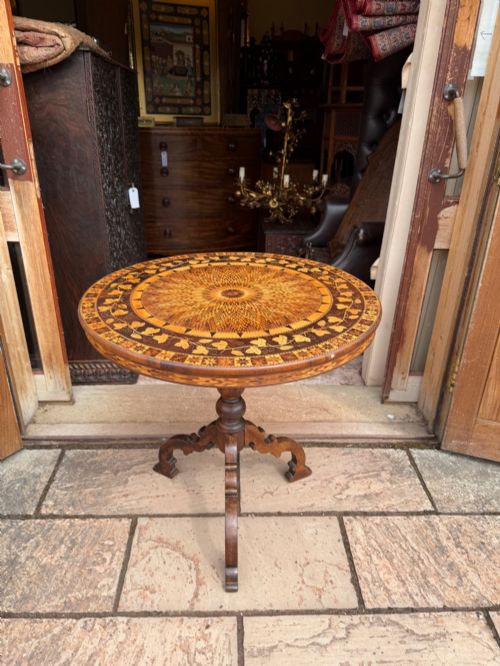
Cabinet makers constructed these tables using solid walnut frameworks overlaid with burr walnut veneer to create highly figured surfaces. The distinctive grain patterns emerge from tree growths, sliced and laid down with precision. Marquetry inlay utilising boxwood, brass, and assorted woods often decorates the borders and centres of Victorian and Georgian panels.
The pivoting mechanism relies on a clever catch and block arrangement beneath the top, allowing the surface to release and lock securely. Pedestals branch into tripod or quadrapod legs, frequently carved with scrolls or foliage. Secondary timbers such as mahogany sometimes appear in internal framing or lesser components.
Victorian hosts relied on these tilting tables to clear the room for dancing after the cards were put away.
What Varies in Quality
Quality rests significantly on the choice of burr walnut veneer and the symmetry of its grain pattern across the tabletop. Superior examples display dense, unblemished swirling figures that match seamlessly across the joint lines. Inferior pieces may show clumsy patching, lifting veneer, or plain timber lacking visual depth.
The execution of the tilt mechanism and the stability of the central column dictate functional excellence. Finer tables maintain a rigid stance when lowered, with no wobble in the catch, and feature crisply carved tripod bases rather than soft, indistinct mouldings.
Edward Holmes Baldock·James Shoolbred
The Antique Walnut Tilt Top Glossary
- Burr Walnut
- A timber derived from the irregular growth knots of the walnut tree, prized for its swirling, highly decorative grain patterns. Cabinet makers sliced this wood into thin veneers for statement furniture surfaces.
- Tilt Top
- A pivoting mechanism fitted beneath a tabletop that allows the surface to rotate vertically for storage. This clever engineering saved valuable floor space in period drawing rooms.
- Loo Table
- A large Victorian round or oval table designed for evening card games such as loo. These pieces almost universally incorporated a tilt top mechanism.
- Marquetry
- The art of applying pieces of veneer to a structure to form decorative patterns or pictures. Craftsmen frequently used boxwood and fruitwoods for floral motifs.
- Snap Top
- An alternative term for a tilt top table, referencing the audible snap of the catch locking the surface into its horizontal position. This ensured the table remained stable during use.
Antique Walnut Tilt Top: Frequently Asked Questions
What is a loo table?
A loo table is a large Victorian centre table designed specifically for playing the popular card game of that name during evening gatherings.
These tables feature large oval or circular tops fitted with tilt mechanisms so they could be stored against the wall when the card games concluded.
How do you operate the tilt mechanism?
The mechanism relies on a brass or wooden catch beneath the surface that releases the tabletop from its horizontal lock. Once disengaged, the surface pivots on its central axis to stand vertically.
To lower it back down, simply guide the top until the catch snaps securely into place against the block.
Where were these tables used?
Period homes utilised these tables primarily in drawing rooms, parlours, and libraries as flexible furniture pieces. Smaller wine and lamp tables sat beside seating areas, while larger breakfast tables occupied the centre of the room.
Their ability to tilt allowed households to clear floor space quickly for dancing or other activities.
How do you distinguish Georgian from Victorian examples?
Georgian tables tend to use simpler, rich red walnut timbers with plain or subtle cockbeaded edges, often taking the form of tripod wine tables. They emphasise clean structural lines and restrained proportions.
Victorian versions frequently showcase heavily figured burr walnut veneers, elaborate marquetry inlay, and robust carved pedestals designed to impress visitors.