

Georgian Style Tilt Top
Georgian style tilt top tables bring ingenious pivoting mechanism and compact tripod design together for flexible living.
Georgian Style Tilt Top
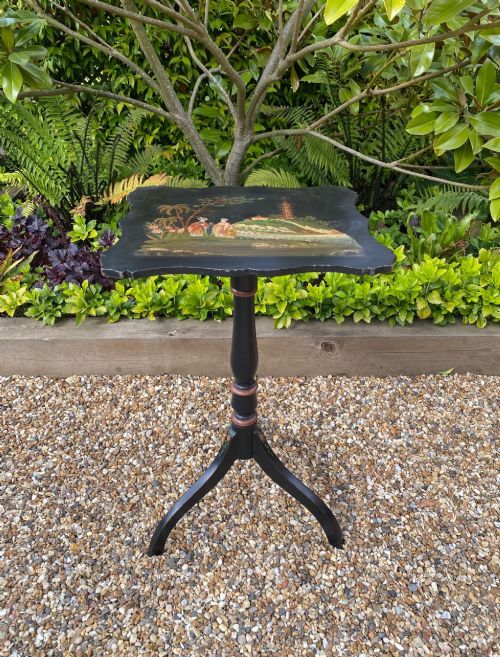
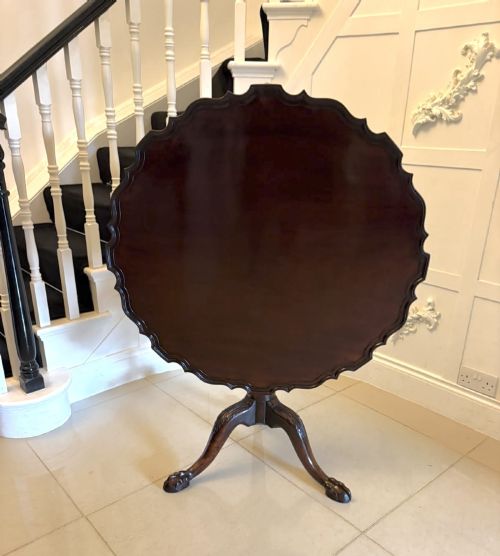
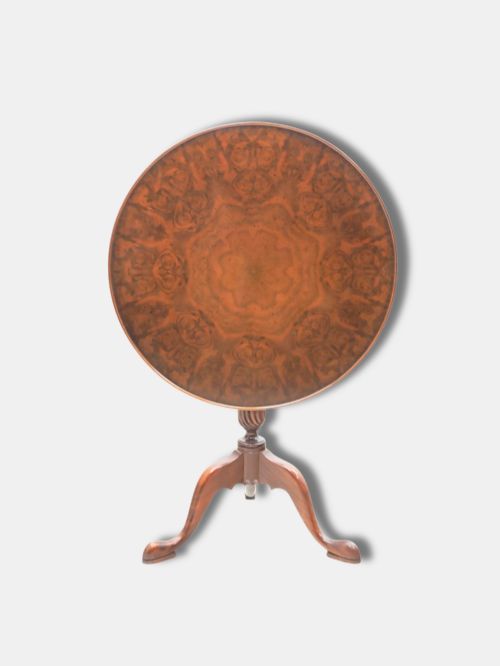
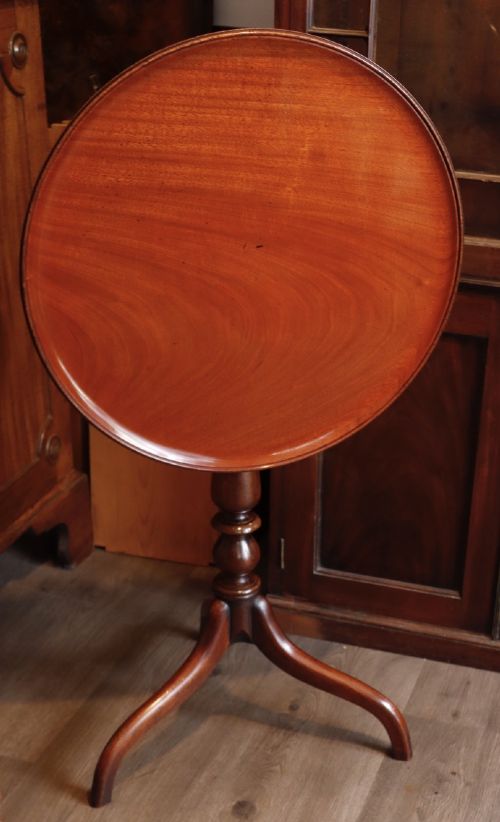
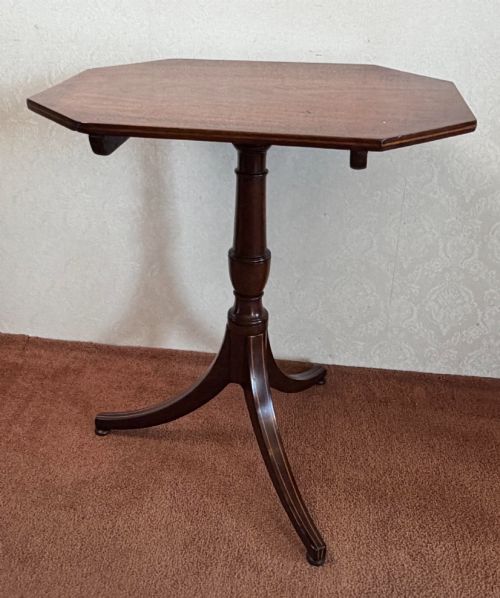
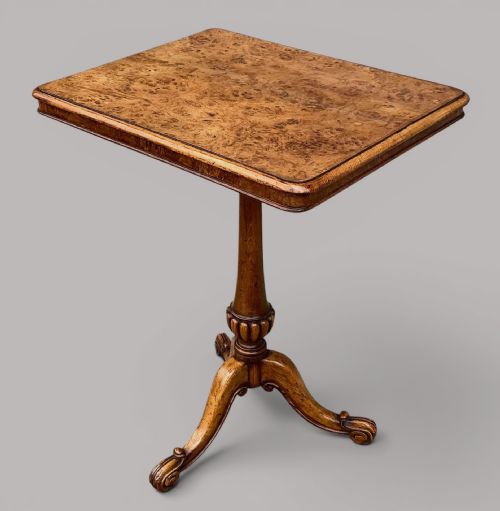
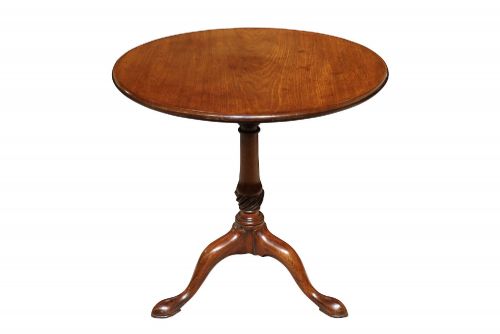
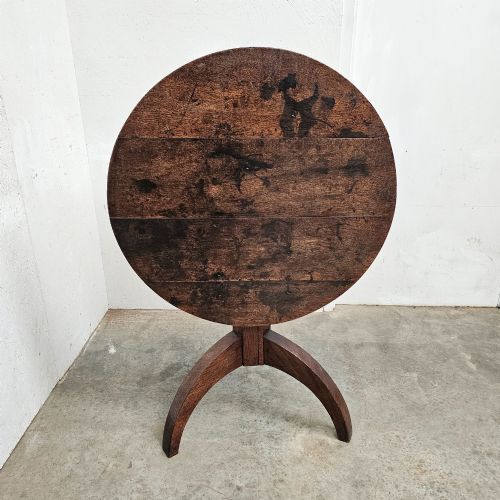
When you search for georgian style tilt top pieces, you encounter circular tables designed to tip upright against a wall when not in use. The evidence shows these versatile items appearing as wine tables, supper tables, and occasional tables supported by tripod legs.
Most examples you meet span from the eighteenth century through to later revivals in the nineteenth and twentieth centuries. They function equally well beside a chair as lamp tables or centred in a room for display.
Materials and construction
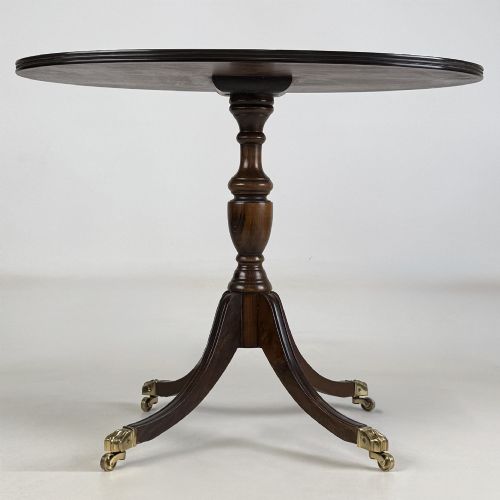
Cabinet makers relied heavily on timber such as mahogany, oak, walnut, and yew, often selecting figured veneers like burr yew and burr oak for the circular tops. Brass components frequently feature in the mechanical joints and castors of larger examples.
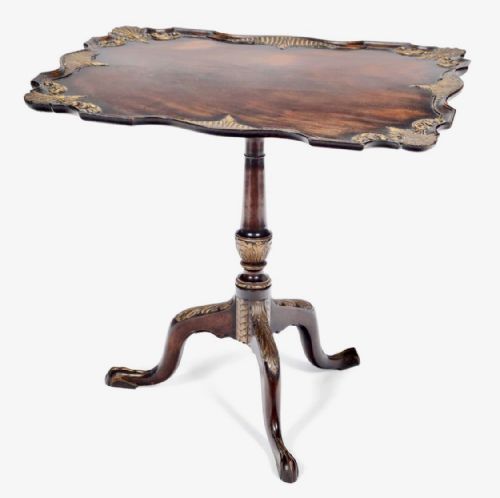
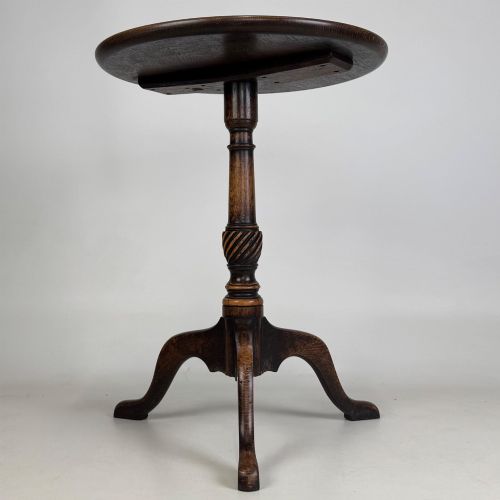
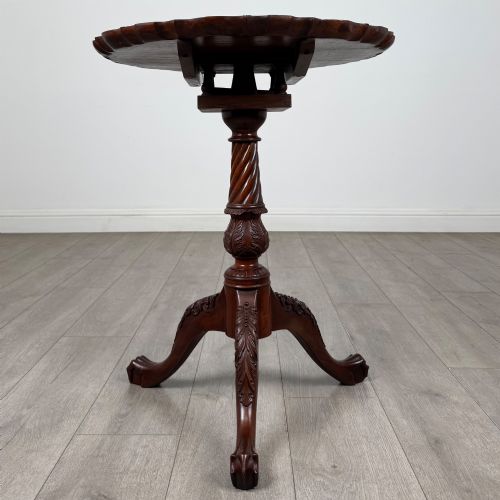
Sophisticated internal engineering such as the birdcage mechanism allows the top to both rotate and tilt. Carved tripod bases terminate in pad feet, claw and ball feet, or splayed legs.
The listings demonstrate a material palette dominated by mahogany, oak, and walnut, alongside decorative accents of boxwood inlay and parcel gilding.
Judging the execution
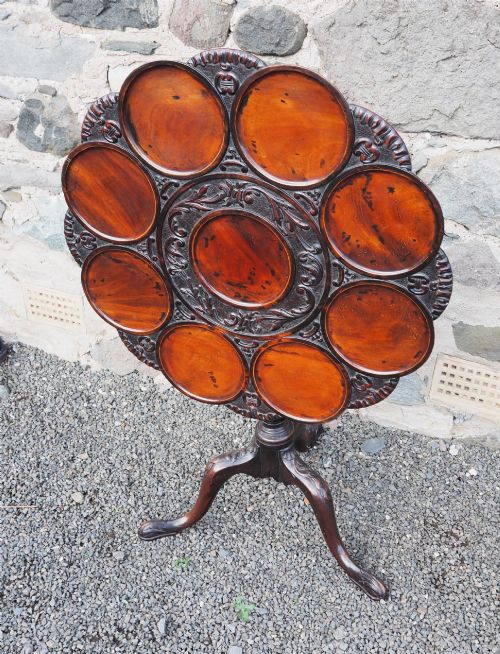
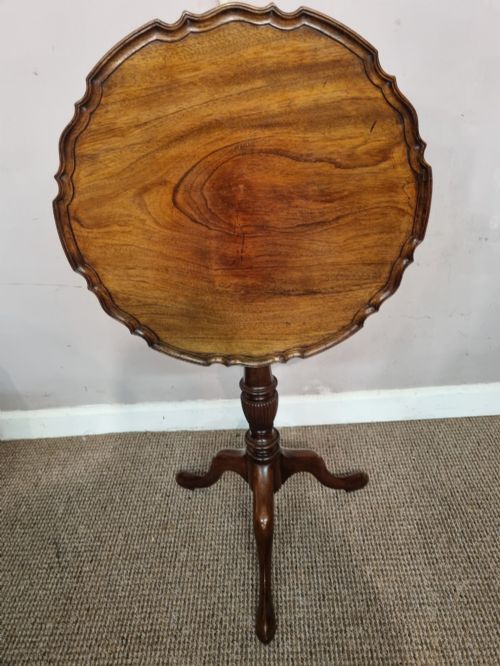
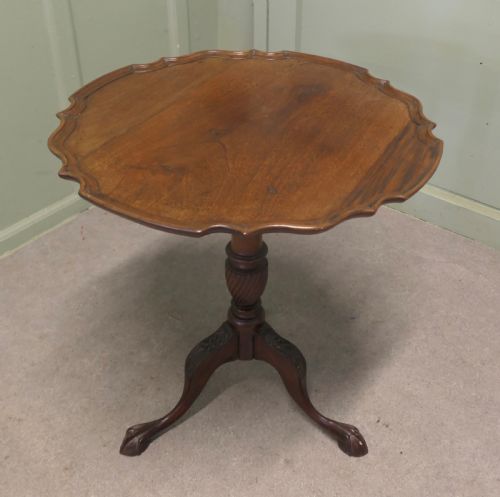
Quality rests in the crispness of the carving on the pillar and legs, particularly where piecrust edges are shaped from solid timber rather than applied. The stability of the central pivot mechanism determines how securely the top locks into the horizontal position.
The choice of timber grain on the surface dictates visual success, with matched veneers and subtle boxwood inlay demonstrating superior workshop standards compared to plain secondary woods.
Gillows
The Georgian Style Tilt Top Glossary
- Tilt top
- A table top hinged to the central pillar so it can pivot vertically to save space. This clever design allows the furniture to stand flat against a wall when idle.
- Tripod table
- A small freestanding table supported by a single central pillar resting on three spreading legs. This configuration prevents wobbling on uneven floors.
- Birdcage
- A revolving wooden framework beneath the table top that permits both rotation and tilting actions. It sits atop the central column for smooth movement.
- Piecrust edge
- A raised, scalloped border carved along the circumference of a circular table top. The decorative profile mimics pastry work popular on Georgian dining furniture.
- Tripod
- The three-legged base structure typical of small occasional and wine tables. It provides balanced support beneath the central pedestal.
Georgian Style Tilt Top: Frequently Asked Questions
What is a tilt top table used for?
These tables served historically for tea, wine, or supper in domestic parlours. Their pivoting action allowed servants to clear them quickly and store them flat against the wall.
Today, they function well as lamp tables, bedside stands, or accent pieces in living spaces where surface area is needed temporarily.
How do you operate a birdcage mechanism?
The birdcage consists of two parallel wooden discs connected by small spindles, allowing the table top to rotate independently of the central column. A wooden catch or peg typically secures the platform when lowered.
Lifting this catch permits the whole top to pivot upright, engaging the hinge for compact storage against a vertical surface.
Are these tables strictly from the Georgian period?
The evidence shows examples originating across multiple eras, including the eighteenth century alongside nineteenth-century pieces and twentieth-century Georgian revival items. Makers continued reproducing these classic silhouettes long after the original reigns.
Design details, timber patination, and construction methods help distinguish authentic eighteenth-century pieces from later revival work.
Do tilt top tables wobble easily?
A well-constructed tripod base distributes weight evenly across three feet, ensuring stability on solid floors. The central pillar and leg joints must remain tight to prevent lateral movement.
Tables featuring the birdcage mechanism may exhibit slight play at the pivot point, which is normal for moving wooden components of this age.