
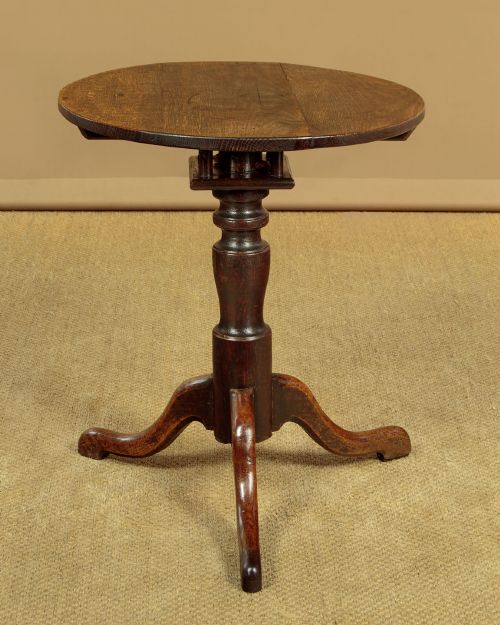


Rustic Tilt Top Table
These rustic tilt top table pieces offer practical surfaces with tilting mechanisms, bringing historical charm and folding convenience into modern interiors.
Rustic Tilt Top Table
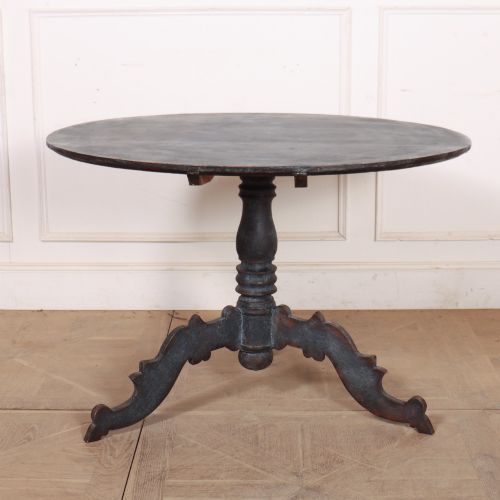
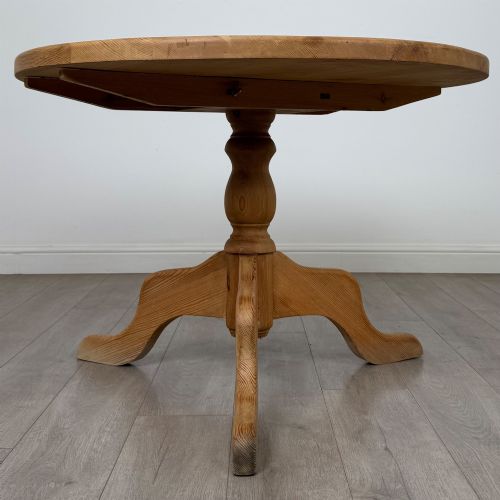
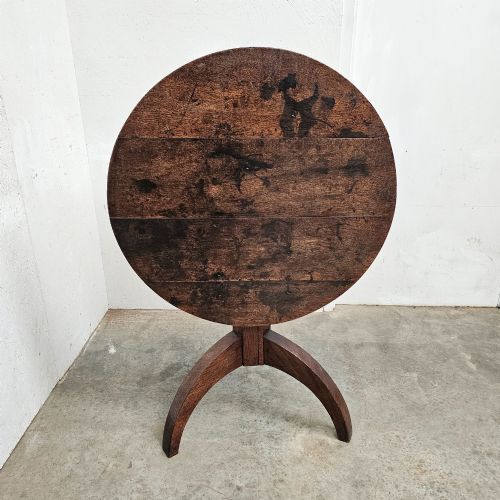
A rustic tilt top table combines a functional tilting surface with sturdy timber construction, designed to save space when not in use. Buyers searching for a rustic tilt top table encounter diverse regional forms spanning the eighteenth and nineteenth centuries.
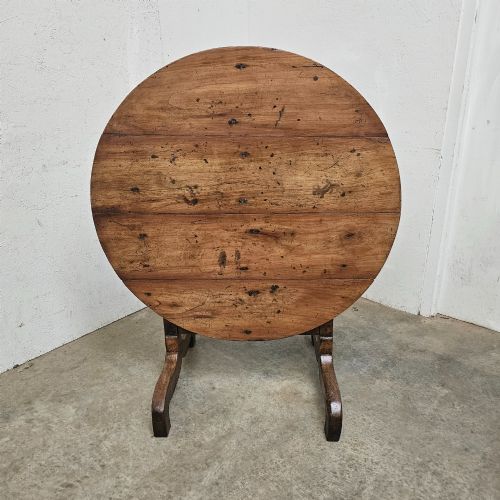
The selection here includes examples from English vernacular traditions, French provincial workshops, and Scandinavian country makers. Common forms encompass tripod occasional tables, large wine tasting vendange tables, and folding vineyard tables.
Most pieces date from the nineteenth century alongside earlier eighteenth century Georgian examples. Materials range from native oak and pine to cherry, fruitwood, sycamore, and ash.
How they were made
Carpenters constructed these tables using solid regional timbers such as oak, pine, cherry, and fruitwood, often pairing woods like oak tops with cherry frames. Turning lathes shaped the central pedestals and tripod legs, while traditional joinery secured the tilting mechanisms.
Specialised regional forms, particularly French vendange and vigneron tables, utilised hinged folding underframes alongside tilting tops for efficient storage during grape harvests. Surface finishes relied on natural waxing or historic painted treatments rather than modern synthetics.
Listings feature items from the 18th and 19th centuries, including the year 1880, constructed from oak, pine, cherry, fruitwood, yew, sycamore, ash, and linden wood.
What varies in quality
The integrity of the tilting mechanism and the stability of the tripod base determine the structural standard of each piece. Superior examples retain original timber patination and tight joinery without excessive replacement parts.
Carved detail differentiates standard utilitarian furniture from finer work, as seen in specialised pieces featuring naturalistic linden wood carving. The choice of timber also influences character, with dense fruitwoods and figured yew wood commanding particular attention.
The Rustic Tilt Top Table Glossary
- Tilt top table
- A table featuring a hinged mechanism that allows the surface to pivot vertically into a space saving position when stored against a wall.
- Tripod table
- A freestanding small table supported by a central pillar resting on three spreading feet for stability on uneven floors.
- Vendange table
- A French wine harvest table typically equipped with a folding frame and a tilting circular top for easy transport and storage.
- Vernacular furniture
- Practical domestic items made by local craftspeople using regional materials, prioritizing function and availability over metropolitan academic styles.
- Parnassian
- An alternative descriptive term sometimes associated with nineteenth century regional European wine tables.
Rustic Tilt Top Table: Frequently Asked Questions
How do I use a tilt top table?
These tables function as standard occasional or dining surfaces when the top is locked flat. Release the catch underneath to pivot the surface vertically against a wall when floor space is needed.
Their historical design makes them practical for smaller rooms or hallways where a permanent table would obstruct movement.
What is a vendange table?
A vendange table is a French harvest table historically used during wine production. They typically feature round tops that tilt and folding wooden bases.
These characteristics allowed workers to clear and store multiple tables quickly in barns or vineyards after the grape harvest concluded.
How do I date an 18th century tripod table?
Eighteenth century examples often display Georgian vernacular characteristics, including pegged tenon joints and hand turned columnar pedestals. The choice of timbers, such as dense native oak and yew wood, also points to earlier manufacturing periods.
Examination of the underside reveals tool marks and construction methods distinct from later nineteenth century production.
Are pine tilt top tables durable?
Pine tables offer robust utility provided the timber remains dry and well maintained. While softer than oak or fruitwood, pine was widely used for nineteenth century utility tables due to its local availability.
Normal daily use and careful handling of the tilt mechanism ensure these tables remain stable and functional.