




Antique Tip Top Table
An antique tip top table offers a clever folding mechanism that lets the surface tilt upright when not in active use.
Antique Tip Top Table
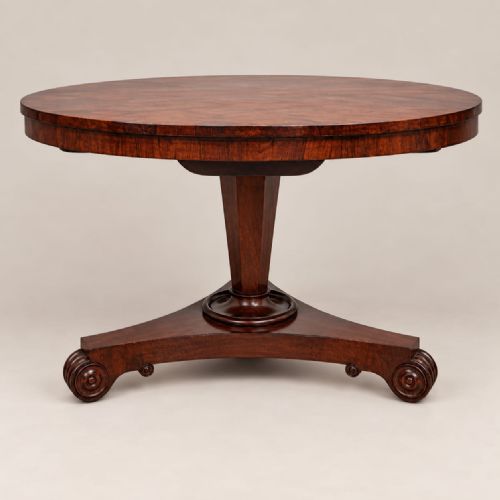
An antique tip top table is a versatile piece of furniture designed with a hinged top that rotates and tips into a vertical position for compact storage against a wall. The examples on this page span several centuries and styles, including Georgian, Regency, William IV, and Victorian periods.
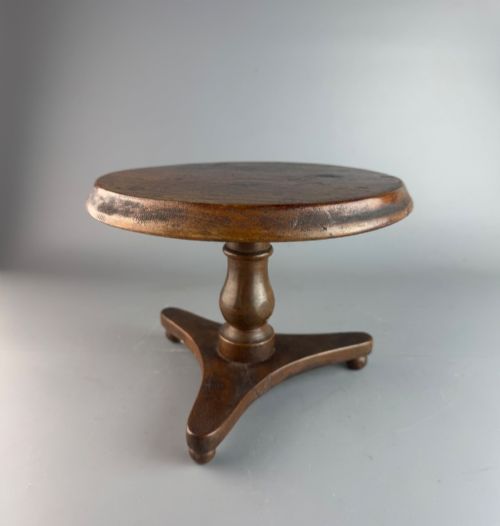
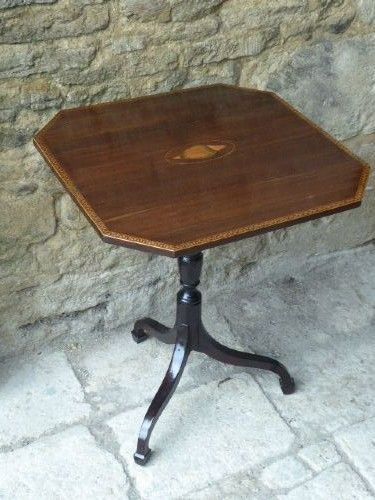
Buyers encounter various forms ranging from small treen candlestands and wine tables to large circular dining and breakfast tables. Materials vary across the selection, featuring mahogany, rosewood, walnut, pine, teak, and hardwood, often accompanied by brass fittings or wood inlay.
Stylistic influences stretch from 18th century country and Georgian Revival to Louis XVI and Anglo-Burmese designs. These tables function as occasional tables, side tables, or dining tables depending on their overall scale and the height of the pedestal base.
How they were made
Cabinet makers utilised dense timbers such as mahogany, rosewood, and walnut for the circular tops and sturdy pedestal bases, occasionally employing pine for country pieces. Timber selection dictated the weight and balance required for the tipping mechanism to function smoothly.
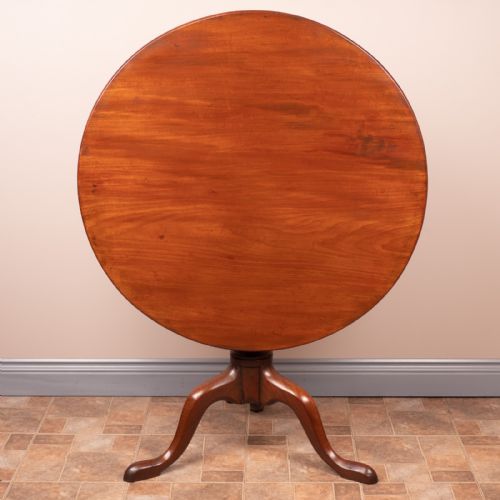
The characteristic tilt action relies on specialised framing, including birdcage mechanisms that allow the table top to both rotate and tilt on a central column. Tripod legs or pedestal supports provide stability, frequently terminating in brass castors or shaped feet.
Listings feature mahogany, pine, rosewood, walnut, teak, and brass alongside leather and wood inlay.
What varies in quality
Quality separates simple utilitarian pieces from sophisticated drawing room furniture through the choice of timber and the precision of the turning on the central pillar. Figured mahogany or rich rosewood veneers indicate a higher grade of manufacture intended for formal reception rooms.
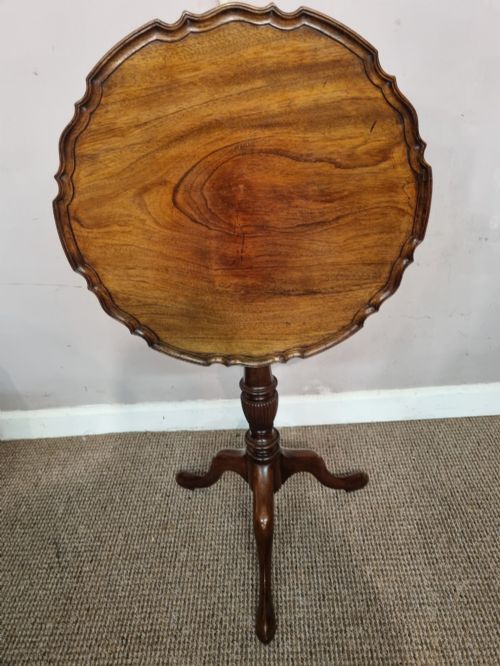
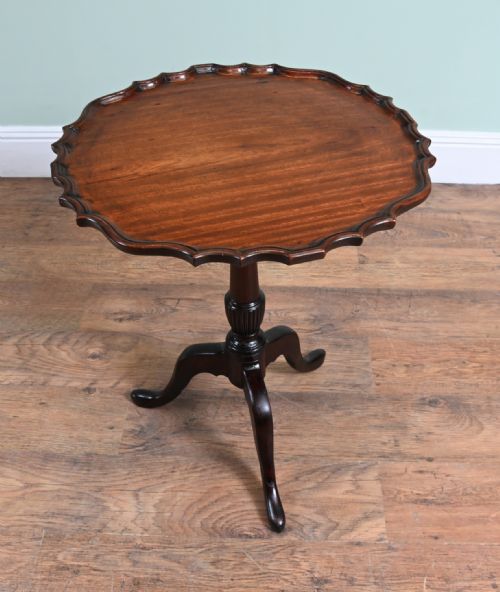
The sophistication of the tipping mechanism also marks the division in quality, particularly the presence of a well-fitted birdcage assembly that reduces wobble when the surface is locked horizontal. Finer examples display carved tripod legs, pie crust edges, or subtle wood inlay rather than plain turned pine or basic bracket joints.
The Antique Tip Top Table Glossary
- Tip-top table
- A table with a hinged top that tilts into a vertical position for storage. This clever design saves space in smaller rooms.
- Birdcage
- A wooden framework beneath the table top that allows the surface to rotate and tilt. It sits between the top and the central pedestal column.
- Pie crust edge
- A raised, decorative carved rim shaped like pastry crust around the edge of a round table top. It prevents items from sliding off.
- Tripod base
- A pedestal support featuring three legs spreading from a central column. This configuration ensures the table remains stable on uneven floors.
Antique Tip Top Table: Frequently Asked Questions
Why did they make tip top tables?
These tables were designed to save valuable floor space in domestic interiors. When the meal or task finished, the top tilted upright so the piece could stand flat against a wall.
This clever economy of space made them practical for multi-use rooms in both grand houses and smaller country dwellings.
How do you use a tilt top table today?
A tilt top table works well as an occasional side table or a lamp table in a living room. Keeping the top lowered provides a convenient surface for books and drinks.
When extra floor space is needed for gatherings, the mechanism allows the top to tilt back upright against the wall.
What is a birdcage mechanism?
The birdcage is a small wooden assembly fitted underneath the circular table top. It connects the surface to the central pillar using a series of small spindles.
This construction allows the table top to rotate smoothly in a full circle as well as tilt upward.
How do I identify a Georgian tip top table?
Georgian examples often feature solid mahogany construction with a central turned pillar resting on tripod legs. Details like birdcage supports and carved pie crust edges frequently appear on pieces from this era.
Proportions tend to be elegant and balanced, reflecting the cabinet making standards of the eighteenth century.