
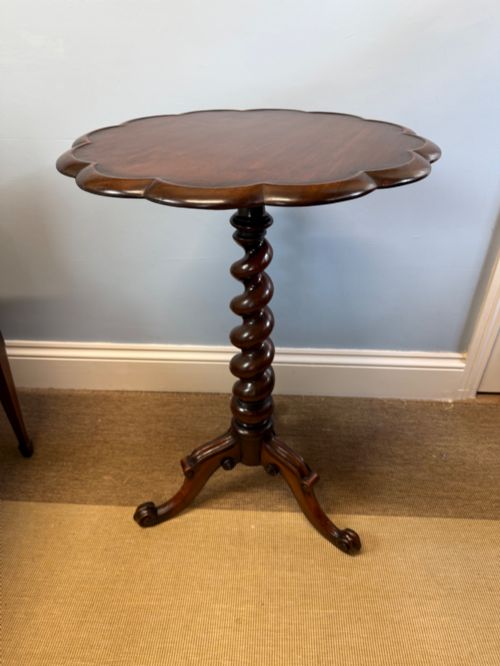
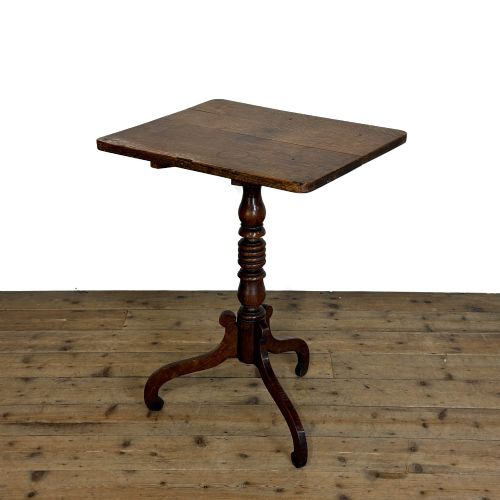
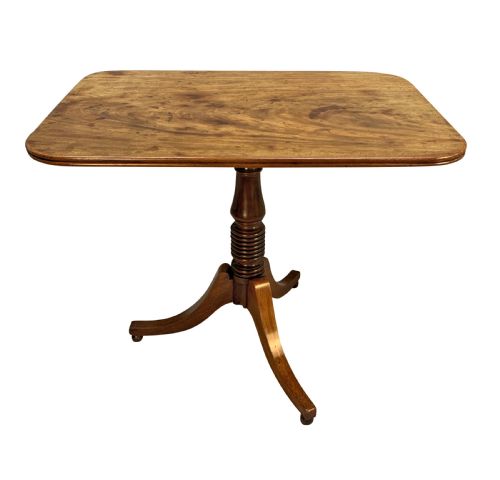
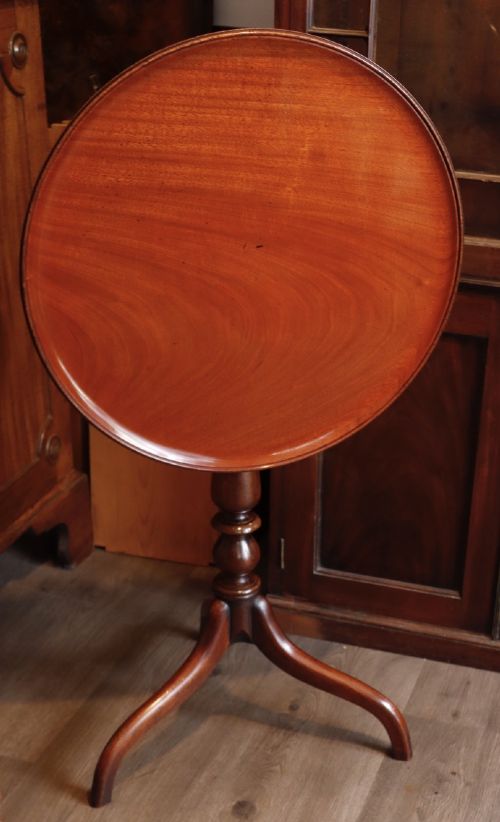

Wooden Tripod Tea Table
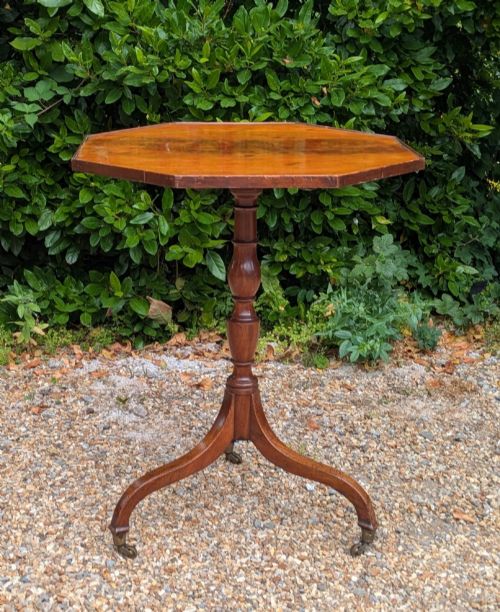
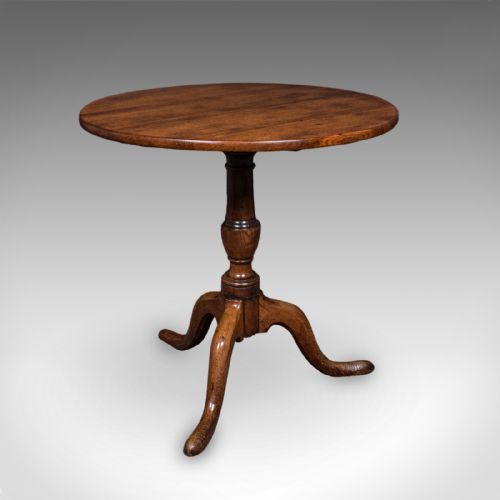
A wooden tripod tea table brings centuries of British and colonial craftsmanship into a room, offering a sturdy central column and three supportive legs.
Wooden Tripod Tea Table
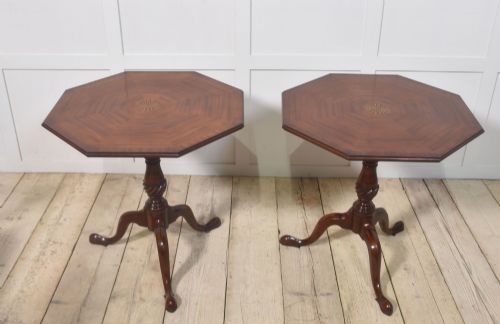
A wooden tripod tea table is an occasional piece designed with a central pedestal supported by three legs, commonly found in Georgian, Victorian, and Edwardian periods.
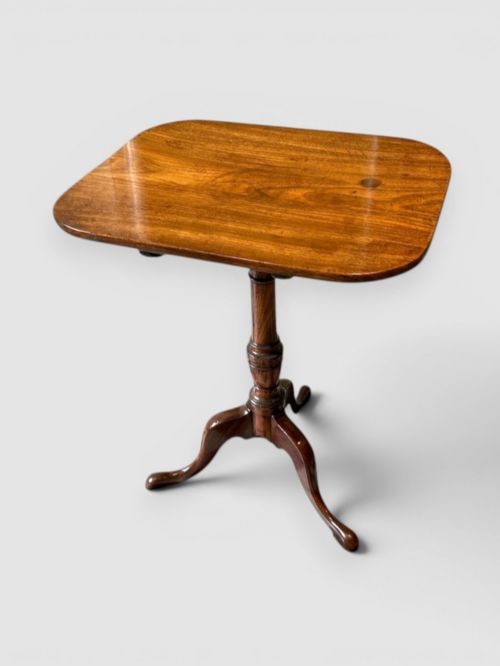
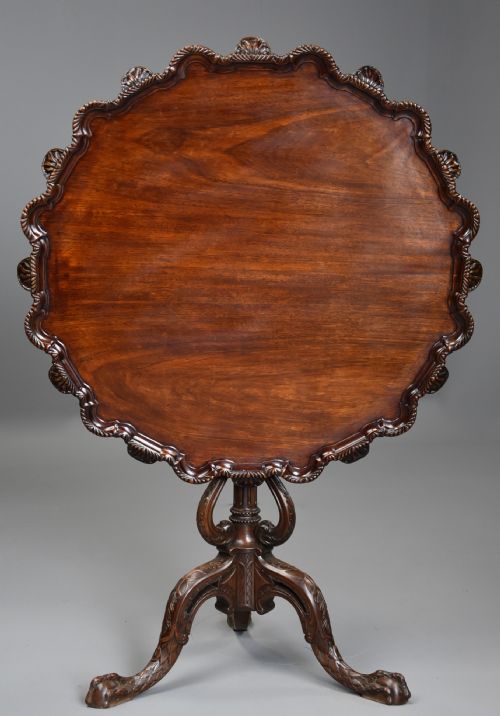
Buyers seeking this phrase encounter circular or rectangular surfaces, frequently featuring tilting mechanisms or birdcage actions that allow the top to fold away when not in use.
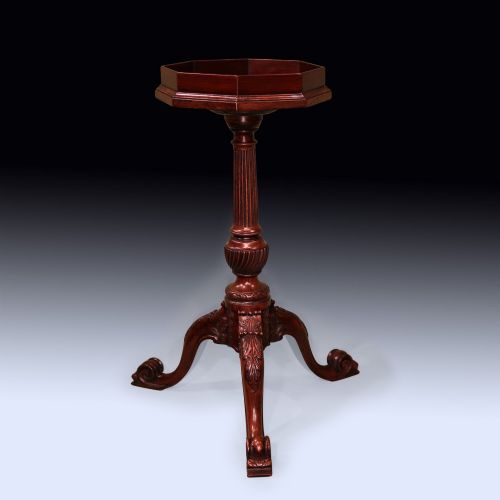
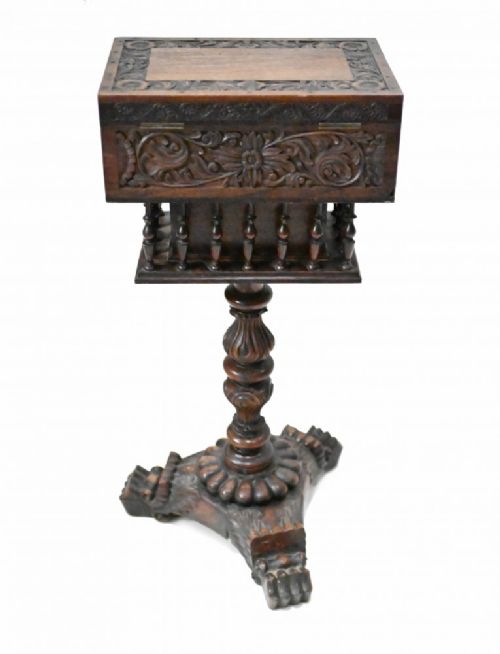
The selection includes forms described as wine tables, kettle stands, and teapoys, spanning domestic British workshops as well as Anglo-Indian and Burmese colonial production.
How they were made
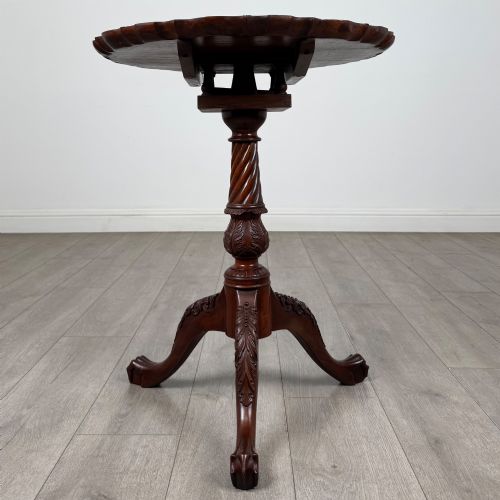
Cabinetmakers utilised dense timbers such as mahogany, oak, walnut, and padouk, often turning the central column on a lathe and shaping the three legs to curve outward gracefully.
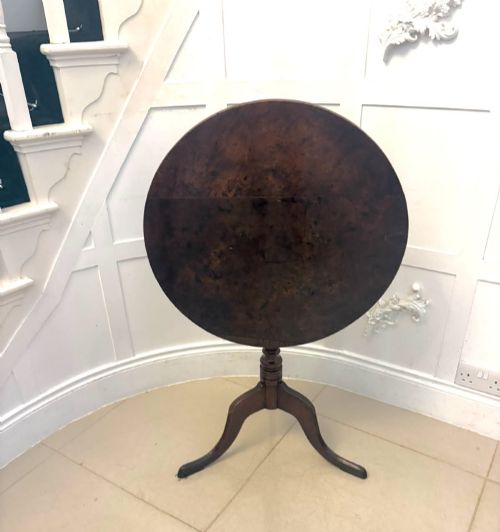
Many examples incorporate specialised mechanics like the birdcage mechanism or a tilting hinge, allowing the timber top to pivot securely onto the pedestal shaft.
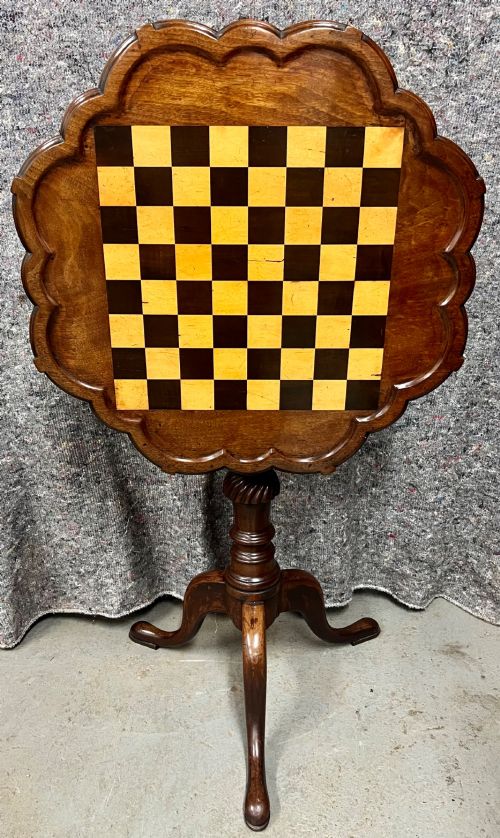
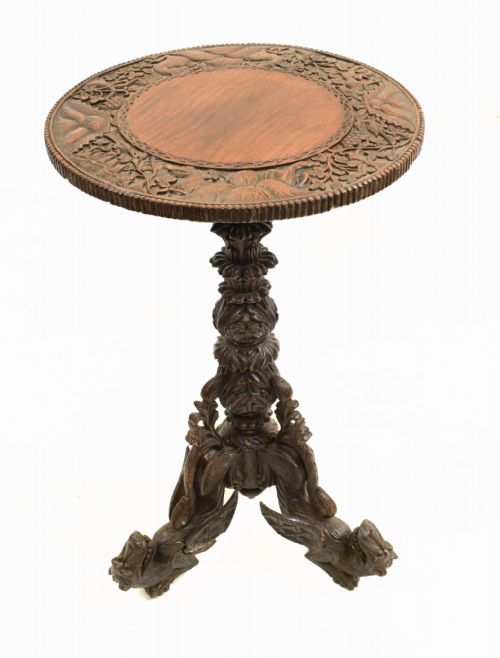
Surface decoration ranges from plain polished wood to intricate carving, inlaid chess boards, and satinwood details applied by period artisans.
Elephant heads occasionally stare out from the carved hardwood legs of nineteenth-century Anglo-Indian colonial tables.
What varies in quality
The choice of timber dictates the upper tier of the range, with figured plum pudding mahogany or burr oak distinguishing finer pieces from standard utilitarian items.
Construction details such as the seamless operation of a birdcage mechanism and the precise hand-carving on tripod legs or columns separate master workshops from provincial work.
The integrity of the central pivot and the stability of the three-legged base determine how well the table survives centuries of daily use.
The Wooden Tripod Tea Table Glossary
- Tilt top
- A table design where the wooden surface hinges vertically, allowing the piece to sit flat against a wall when not in use. This mechanism saved valuable floor space in period drawing rooms.
- Birdcage
- A timber framework beneath the table top that permits the surface both to tilt and to rotate 360 degrees. It represents a more complex and desirable engineering method.
- Tripod base
- A support structure comprising three legs radiating from a central turned column. This configuration ensures stability on uneven historical floorboards.
- Teapoy
- A small pedestal table or box originally used for holding tea caddies and serving tea. Later examples evolved into general occasional tables.
- Padouk
- A heavy, durable tropical hardwood utilised in Anglo-Indian and colonial furniture. It accepts deep hand-carving exceptionally well.
Wooden Tripod Tea Table: Frequently Asked Questions
What is a wooden tripod tea table?
A wooden tripod tea table is a small pedestal table supported by three legs, historically used for serving tea or holding decorative items.
These pieces date from the Georgian era through to the early twentieth century and often feature circular tops.
How do tilt top mechanisms work?
The wooden top connects to a pivot block or birdcage frame that allows the surface to swivel upright.
This clever design enabled owners to store the tables against drawing room walls to free up floor space.
How do I style a tripod table?
These compact tables function well beside armchairs as lamp stands or occasional surfaces for books and ceramics.
Their narrow footprints make them adaptable additions to both traditional and modern interiors.