
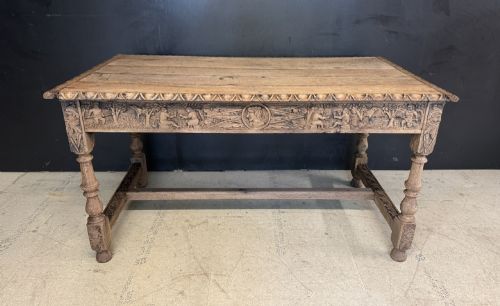
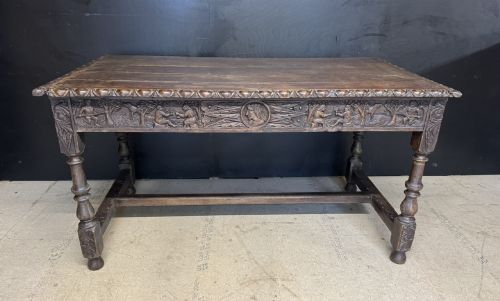
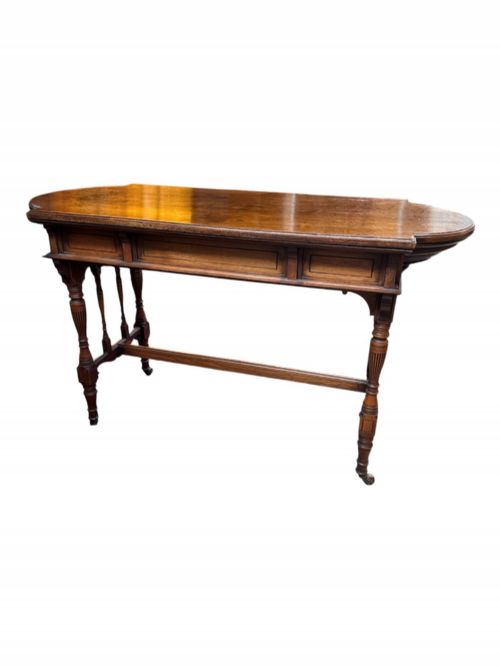
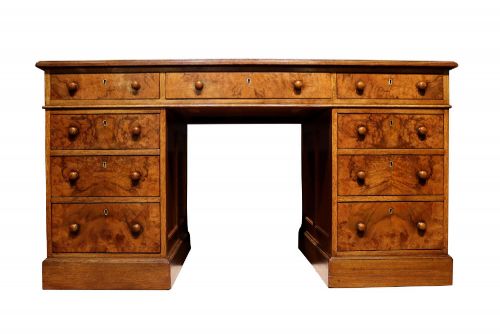
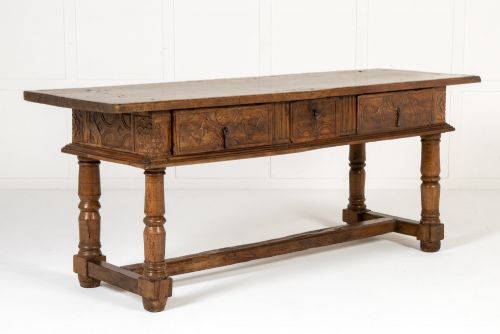


Carved Wooden Library Table
A carved wooden library table is a substantial study piece built to anchor a room, bringing rich timber and deep carved detail to your working space.
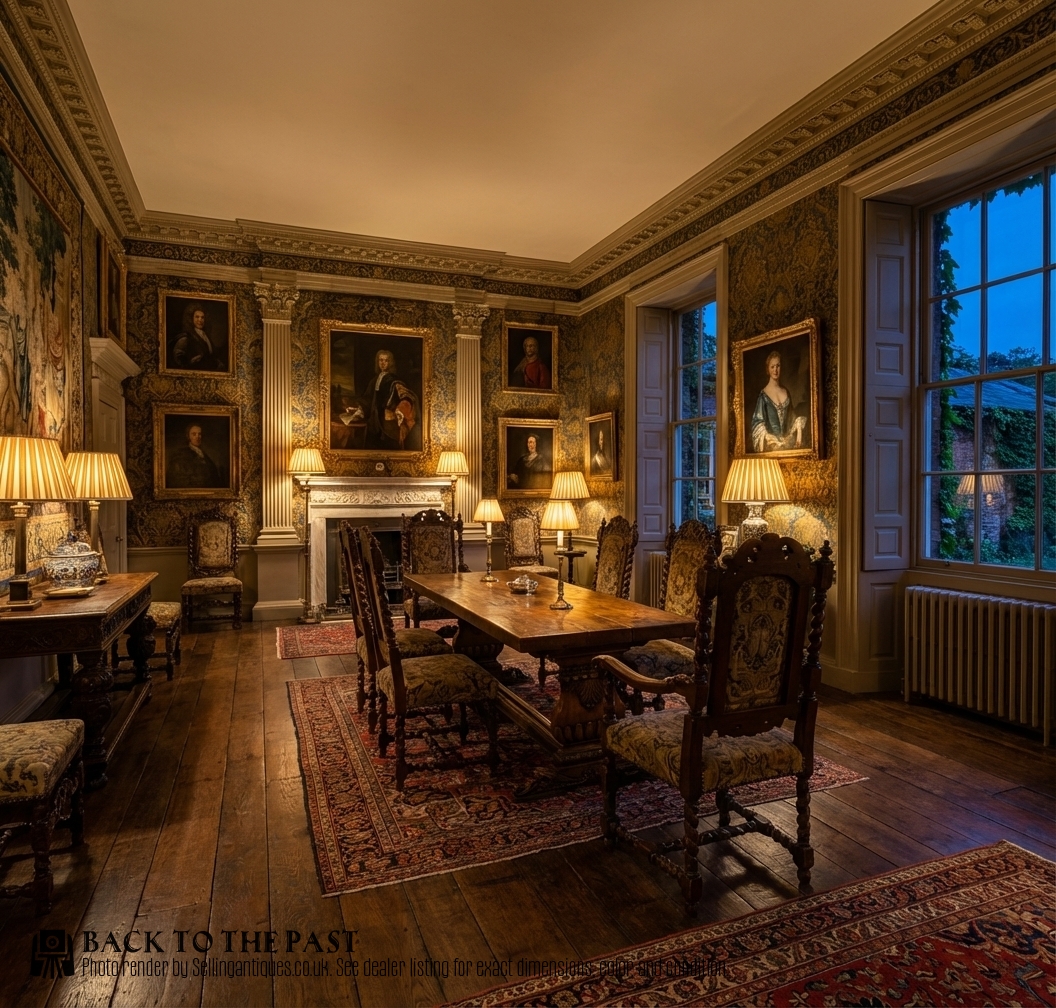
Carved Wooden Library Table
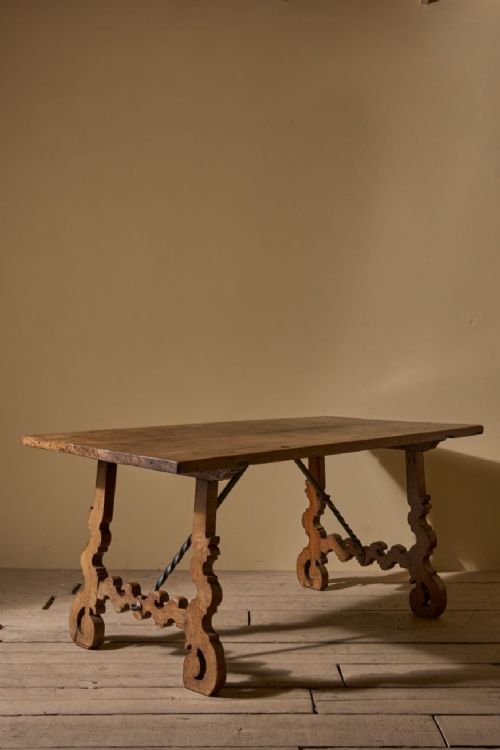
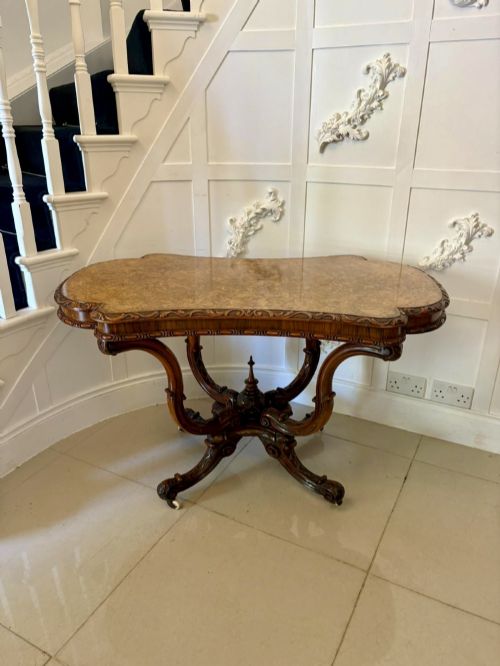
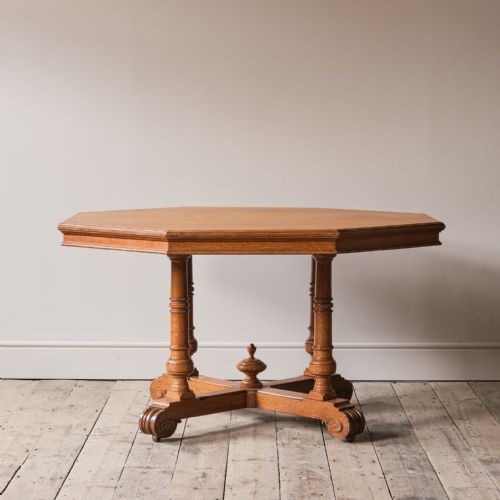
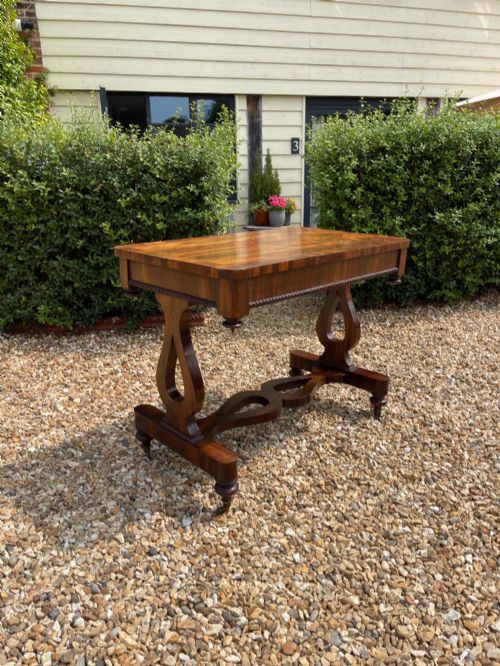
A carved wooden library table serves as a substantial focal point for a study or principal room, designed for both writing and display. The pieces on this page span the eighteenth and nineteenth centuries, taking forms such as centre tables, writing desks, and partners desks.
You will frequently encounter nineteenth-century Victorian examples alongside earlier eighteenth-century Spanish and Italian walnut pieces. Makers and workshops across Britain and Europe utilised dense hardwoods to construct these heavy, functional tables.
Regional variations appear in the heavy Spanish Baroque and Italian walnut forms compared to the lighter English Regency and Chippendale revival styles. Many incorporate drawers or leather inserts suited to daily work.
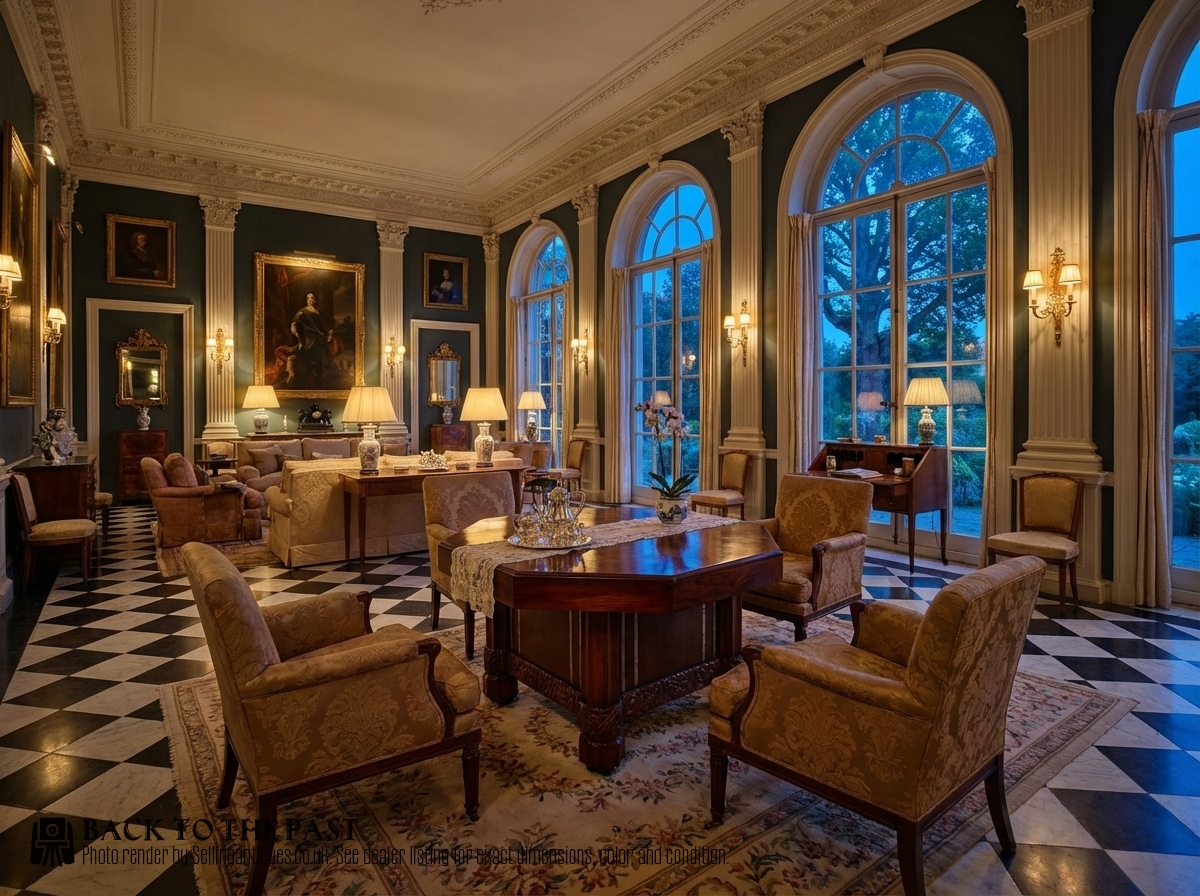
Construction and Materials
Cabinetmakers built these tables from dense timbers such as mahogany, walnut, oak, and rosewood, often selecting burr walnut or satinwood veneers for decorative surfaces. These woods provided the structural strength required for large tabletops and heavy pedestals.
Carving was executed by hand directly into the solid timber or applied mouldings, displaying styles from Gothic Revival to Renaissance and Spanish Baroque. Brass hardware, leather writing surfaces, and occasional marble tops completed the construction.
Listings feature woods including mahogany, walnut, burr walnut, oak, rosewood, and satinwood alongside marble and leather.
Markers of Quality
Quality rests in the depth and crispness of the hand carving, the selection of figured timber veneers, and the integrity of the original joints and patination. Superior examples display thoughtful proportions and substantial timber thickness throughout the frame and drawers.
Exhibition quality pieces demonstrate finer detailing on secondary woods and superior brass mounts or fitted desk interiors. Tables bearing maker stamps or attributed to notable cabinetmakers carry distinct craftsmanship that elevates them above standard production.
Whytock and Reid·John Gregory·Druce and Co·Daniel Cottier
The Carved Wooden Library Table Glossary
- Partners desk
- A large double-sided desk designed for two people to work opposite one another, featuring drawers and cupboards on both faces.
- Centre table
- A freestanding table finished on all sides so it can sit in the middle of a room rather than against a wall.
- Patina
- The surface sheen and softening of colour developed on wood through age, handling, and beeswax over many decades.
- Satinwood
- A durable tropical hardwood with a lustrous golden yellow appearance, frequently used for veneers and inlay in fine furniture.
- Fusee
- A conical pulley mechanism used in clocks and mechanical pieces to ensure even power delivery as the mainspring winds down.
Carved Wooden Library Table: Frequently Asked Questions
What is a library table used for?
These large tables were traditionally placed in libraries or studies to provide a stable, spacious surface for reading large volumes, writing letters, and sorting papers.
Today, they function effectively as large executive desks, centre tables in reception rooms, or substantial dining surfaces in smaller spaces.
How do I date a wooden table?
Dating relies on examining the timber species, construction methods, tool marks inside drawers, and stylistic details such as carved motifs or leg profiles.
Comparing the piece to documented examples from periods like the Regency or Victorian eras helps narrow down the decade of manufacture.
Are leather top tables original?
Many nineteenth-century desks and library tables were fitted with tooled leather writing surfaces to provide a smooth, glare-free plane for writing.
While some surfaces have been replaced during restoration, period examples often retain original leather showing appropriate wear and patination.
How do I care for antique wood?
Protect antique timber by keeping it away from direct heat sources and strong sunlight, which can dry out the wood and fade polished surfaces.
Apply a light coat of quality beeswax periodically and buff gently with a soft cloth to maintain the natural moisture and shine.