

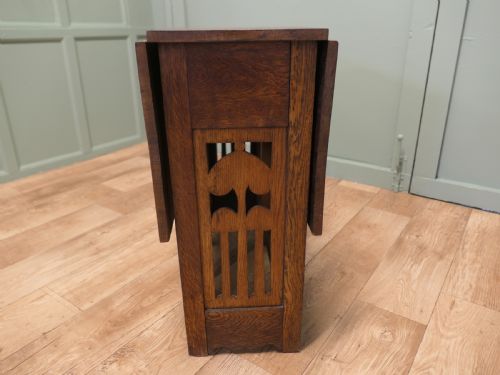
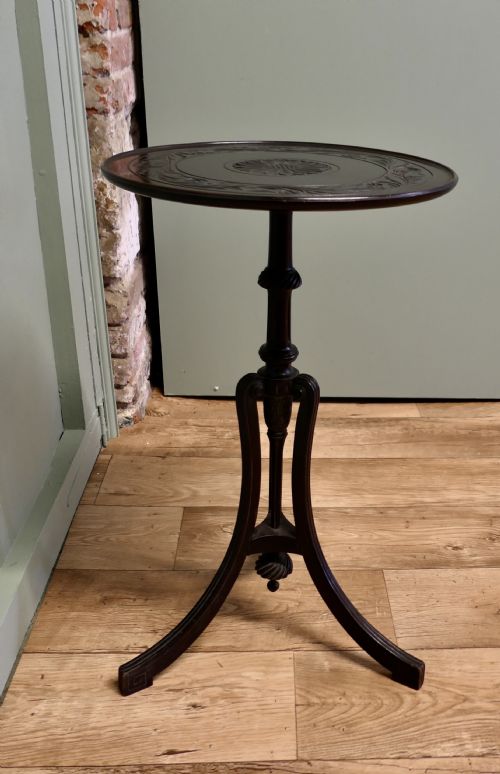
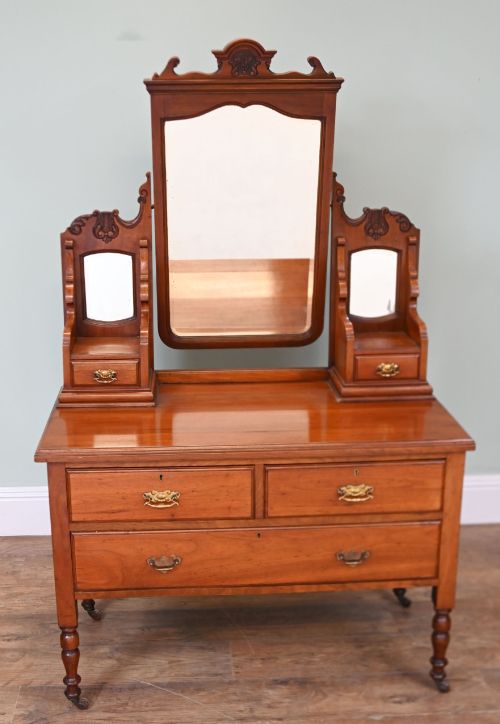
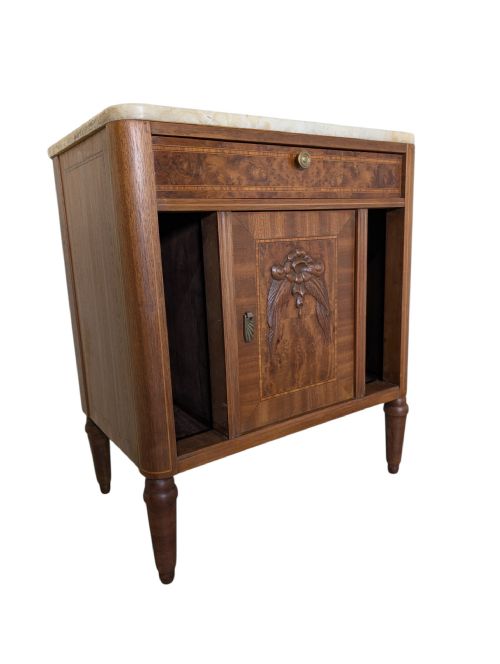


Carved Art Nouveau Table
A carved art nouveau table brings fluid botanical lines and organic movement into a room, serving as a striking focal point for display or daily use.
Carved Art Nouveau Table
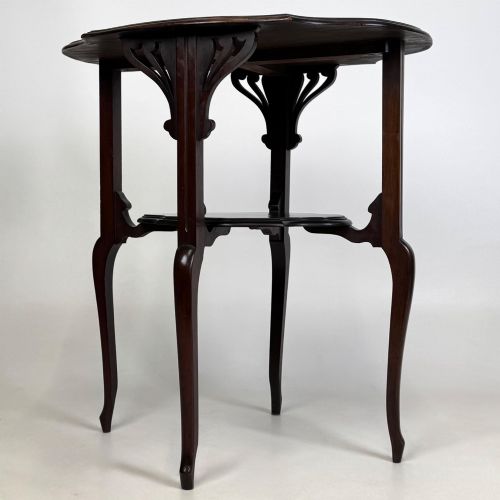
A carved art nouveau table encompasses occasional pieces, side tables, plant stands and centre tables produced primarily around the turn of the twentieth century. These domestic items display the characteristic whiplash curves, stylised floral motifs and asymmetrical plant forms associated with the movement.
The pieces appearing on this page span the late nineteenth century through the Edwardian period and into the nineteen-twenties, incorporating related vernaculars like Arts and Crafts and the Amsterdam School. Forms range from compact wine tables and two-tier plant stands to substantial mahogany and oak centre tables.
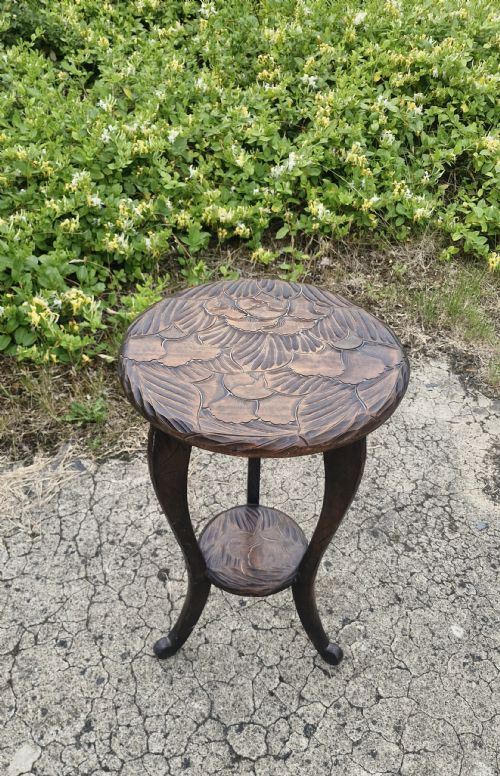
Buyers seeking a carved art nouveau table will most frequently encounter occasional and side tables in oak and mahogany, often featuring pierced bracket supports, sculpted legs and organic surface carvings that reflect the natural world.
Materials and construction methods
Makers utilised native and imported hardwoods, predominantly oak and mahogany alongside rich walnut, chosen for their grain and structural stability. These timbers were shaped using traditional joinery combined with deep relief carving and pierced fretwork to achieve the characteristic undulating contours.
Surface ornamentation relied on manual chiselling for botanical motifs, complemented by occasional parquetry inlays, brass mounts and subtle polishing to highlight the natural figures of the wood. The integration of structural support with flowing sculptural ornament required advanced carpentry skills.
Carved Art Nouveau Table Retail Price Guide 2026
Typical asking prices for carved art nouveau table among the pieces listed under this phrase on Sellingantiques today, from the lower quarter to the upper quarter. They describe what is for sale here now, not the wider market.
Listings demonstrate that oak and mahogany are the predominant timbers utilised for these tables, spanning the late Victorian period to the nineteen-thirties.
Assessing quality and execution
Quality in these pieces rests upon the depth, sharpness and confidence of the hand-carving, where crisp execution of organic lines distinguishes superior examples from mechanical or heavy-handed reproductions. The integration of the carved ornament into the overall architectural frame dictates the success of the design.
Material selection and timber seasoning heavily influence the longevity and stability of the piece, with well-chosen quarter-sawn oak or figured mahogany retaining tighter joints and smoother surfaces over decades of use.
Liberty and Co·Bulstrode Cambridge·Fischel·Orivit·Carlo Bugatti
The Carved Art Nouveau Table Glossary
- Art Nouveau
- A design movement flourishing between eighteen-ninety and nineteen-ten characterised by asymmetrical organic forms, whiplash lines and botanical motifs. It rejected historic revivalism in favour of modern nature-inspired ornamentation.
- Occasional Table
- A small, movable table designed for a specific, transient function such as holding a lamp, book or decorative object. These pieces form a large proportion of domestic seating area furnishings.
- Jardiniere Stand
- A tall, slender pedestal or stand specifically constructed to elevate a plant pot or floral display. They often feature carved stems and tiered platforms to showcase foliage.
- Parquetry
- A geometric mosaic of wood pieces used for decorative surfacing on tabletops. This technique creates patterned designs utilising contrasting timber colours and grains.
- Fretwork
- Ornamental perforated woodwork created by cutting patterns through thin boards. This technique produces lightweight decorative panels and brackets on tables and stands.
Carved Art Nouveau Table: Frequently Asked Questions
What is a carved art nouveau table used for?
These tables served primarily as occasional surfaces in nineteenth and early twentieth-century parlours and drawing rooms, holding lamps, calling card trays or decorative items. Plant stands and jardiniere tables specifically elevated indoor greenery to catch the light.
Today, they function well as bedside tables, accent pieces in hallways, or compact display surfaces for ceramics and lamps in contemporary living spaces.
How do I date a carved art nouveau table?
Dating relies on examining the timber species, construction joints, hardware and stylistic purity. Pieces from the eighteen-nineties often combine Victorian carcass construction with emerging organic motifs, while nineteen-hundred examples show fully integrated whiplash carving.
Later Edwardian and nineteen-twenties iterations often display lighter proportions and simplified geometric influences alongside traditional floral carving.
Are these tables sturdy for everyday use?
Many occasional tables and plant stands were built with slender, organic legs designed for decorative display rather than heavy weight-bearing duties. Solid hardwood construction provides natural resilience, but joints can loosen over decades.
Placing them away from direct heat sources and excessive moisture protects the timber and keeps the original frame stable for daily placement of lightweight items.
How do I care for antique wood furniture?
Maintenance requires keeping timber away from direct sunlight and radiators to prevent the wood from drying, warping or splitting. Regular dusting with a dry, soft cloth maintains the finish without stripping historical patina.
Applying a quality natural wax occasionally nourishes hardwood surfaces and protects the hand-carved details from accumulation of dirt and grease.