

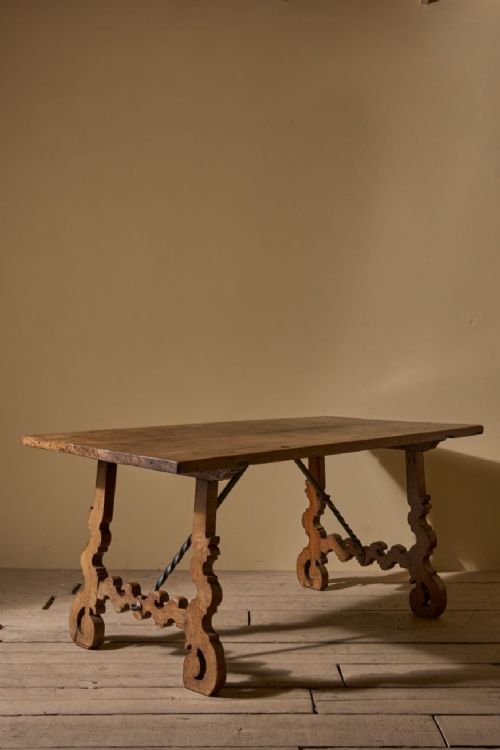
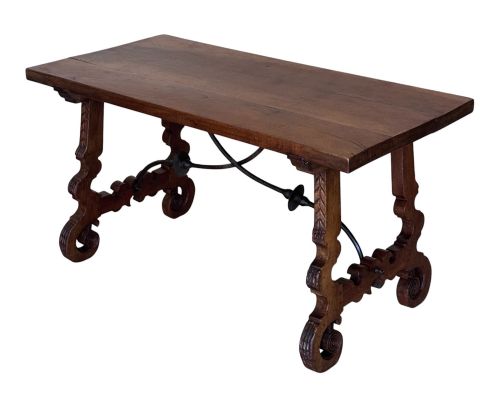
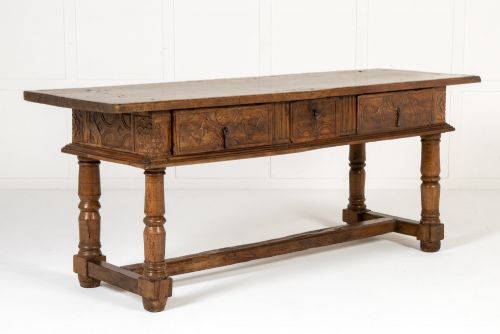


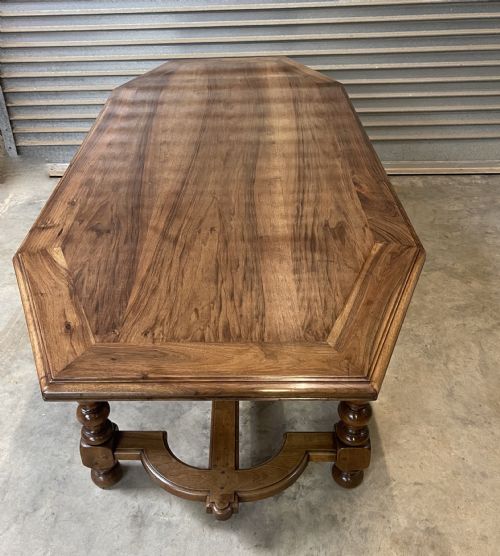

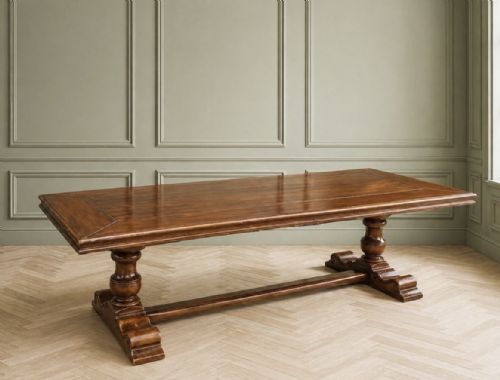
Carved Walnut Refectory Table
A carved walnut refectory table brings historic architectural presence to a dining room through rich timber and robust framing.
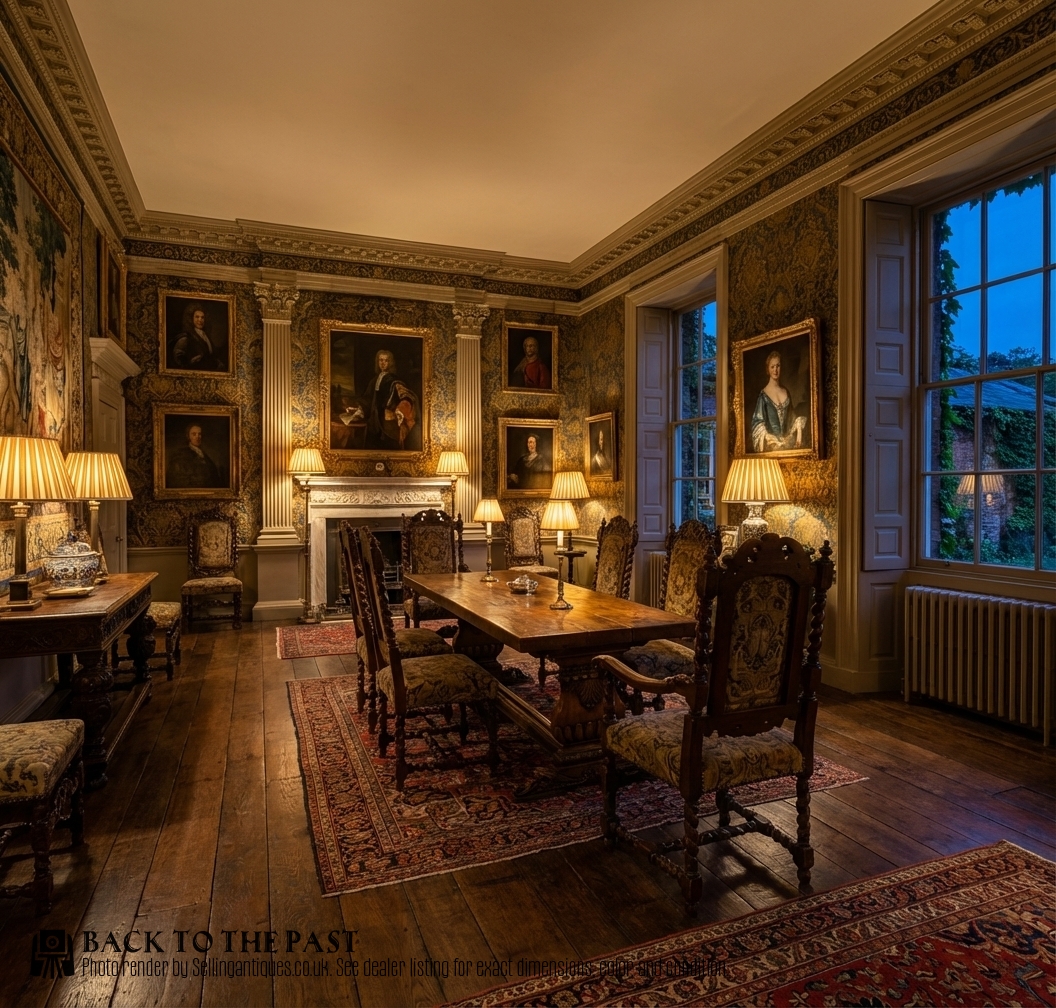
Carved Walnut Refectory Table
A carved walnut refectory table is a long, substantial dining piece historically designed for communal dining in monastic or baronial halls. When you search for this phrase, you find examples originating from major European furniture traditions, notably Spanish, Italian, and French workshops.
The pieces on this page span several centuries, reaching from the seventeenth century through the nineteenth century and into early twentieth-century revivals. You are most likely to encounter nineteenth-century interpretations alongside earlier period survivors and robust farmhouse or rustic iterations.
Forms include classic trestle bases, tables with carved bulbous legs, and extending variants suited to modern gatherings. Walnut predominates as the primary timber, occasionally complemented by oak or iron elements.
How they were made
Construction relies on solid timber boards joined to sturdy framing, frequently utilising walnut for its deep grain and durability. Wrought iron or iron stretchers occasionally provide structural support beneath the main surface.
Carving is applied directly to the timber elements, including bases, frames, and legs, reflecting Renaissance, Baroque, or Gothic design influences. Joinery techniques prioritize stability to support the considerable weight of the thick wooden tops.
Carved Walnut Refectory Table Retail Price Guide 2026
Typical asking prices for carved walnut refectory table among the pieces listed under this phrase on Sellingantiques today, from the lower quarter to the upper quarter. They describe what is for sale here now, not the wider market.
The listings span the seventeenth, eighteenth, and nineteenth centuries alongside early twentieth-century revivals, utilising walnut, oak, and iron.
What varies in quality
Quality rests in the depth of the timber's natural patina and the crispness of the hand-carving on the base and legs. Early period originals display surface marks and wear that reflect centuries of daily use, separating them from later revivals.
The integrity of the construction, from the thickness of the top boards to the solidity of the trestle or leg joints, determines the structural distinction across the range.
The Carved Walnut Refectory Table Glossary
- Refectory table
- A long dining table traditionally used in monasteries and large houses for communal meals. These forms generally feature long planks supported by trestles, legs, or central stretchers.
- Patina
- The surface sheen and colour developed by timber over long periods through handling, polishing, and ageing. A good patina adds visual depth to walnut grain.
- Trestle table
- A table consisting of two or more support frames connected by a longitudinal beam or stretcher beneath the top. This construction method allows maximum legroom along the length.
- Bulbous leg
- A heavily turned, swelling leg shape popular in seventeenth-century and revival furniture styles. Carved ornamentation often decorates the widest section of the bulb.
- Spanish Baroque
- An ornate artistic style spanning the seventeenth and eighteenth centuries, characterised by dramatic detail and bold carving. Pieces in this manner show strong architectural influences.
Carved Walnut Refectory Table: Frequently Asked Questions
How do I care for a walnut table surface?
Maintain walnut surfaces by dusting regularly with a soft cloth and applying appropriate wax feeds periodically to preserve the timber's natural moisture.
Avoid placing hot items directly on the wood and protect the top from excessive moisture to prevent marking the historic finish.
Can I use a refectory table for daily dining?
These robust tables were originally built for heavy daily use, making them durable centerpieces for modern dining rooms and kitchens.
Ensure chairs fit comfortably beneath the aprons or stretchers by checking the height clearance of the specific base design.
How do I distinguish an earlier period table from a revival?
Examine the construction methods, tool marks, and timber shrinkage patterns across the underside and joints of the table frame.
Earlier seventeenth and eighteenth-century examples exhibit hand-cut joinery and authentic wear consistent with age, whereas revivals from the nineteenth and twentieth centuries show uniform machine assistance.
What rooms suit a large refectory table?
A substantial refectory table commands space in large dining rooms, open-plan kitchens, or spacious entrance halls with high ceilings.
Allow sufficient clearance around all sides of the table for seating and movement to let the carved base remain fully visible.