



Victorian Carved Refectory Table
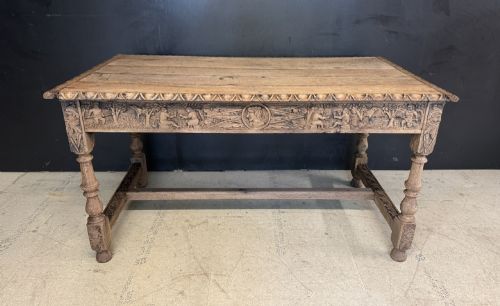
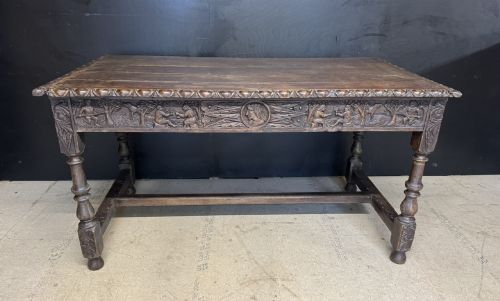
A victorian carved refectory table anchors a room with deep timber and solid presence, built for long gatherings and daily family life.
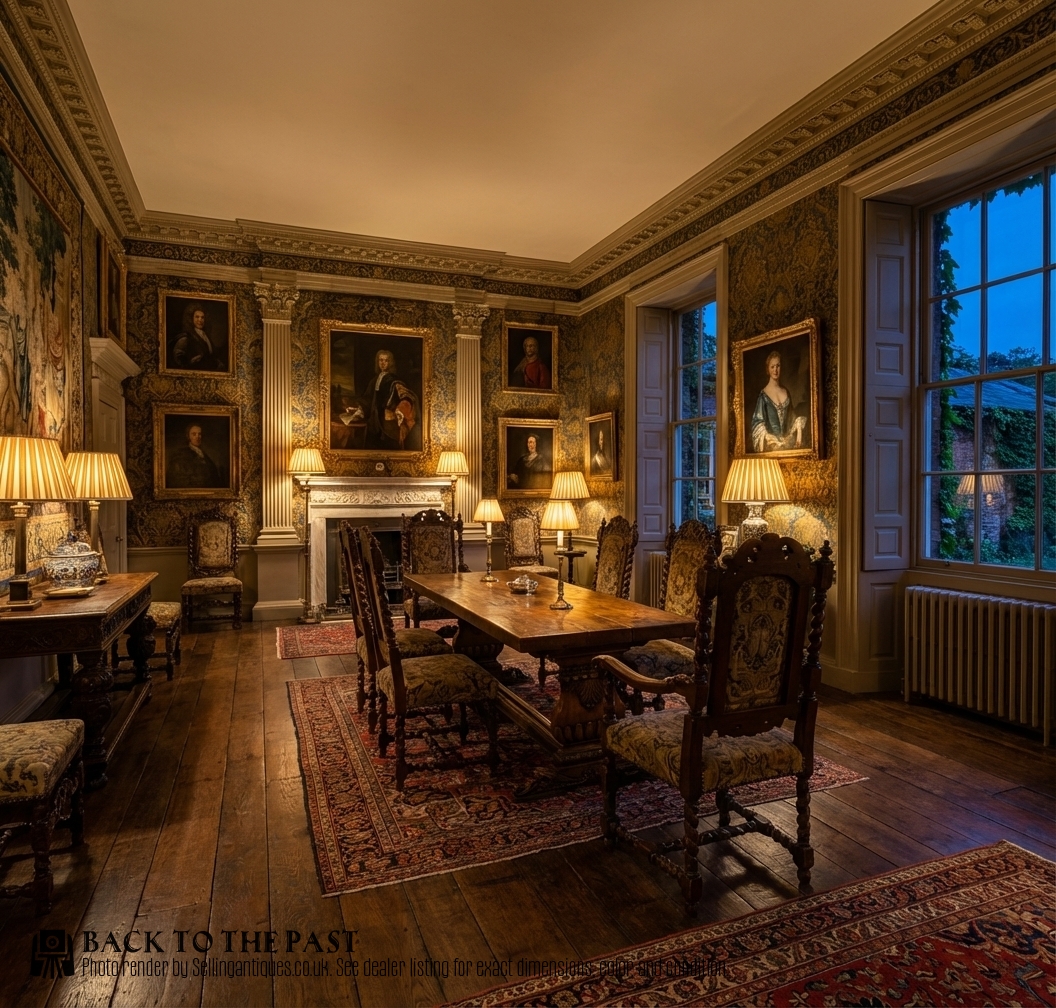
Victorian Carved Refectory Table
A victorian carved refectory table brings together long horizontal boards and substantial timber supports, originating from monastic and baronial dining halls. These pieces often measure several feet in length, designed to seat large households or guests comfortably.
Most examples found in this selection date from the nineteenth century, drawing heavily on earlier design vocabularies. Buyers will frequently encounter oak construction embellished with revival details such as Gothic tracery, Renaissance motifs, or Elizabethan strapwork.
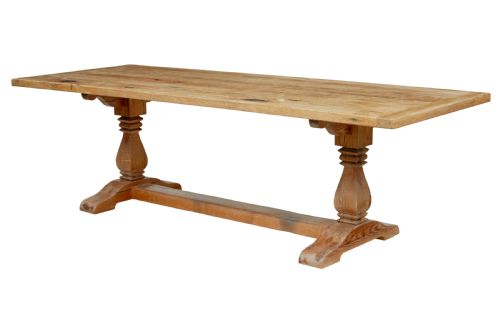
The category spans simple country kitchen boards alongside heavily sculpted architectural dining tables. Alongside standard dining tables, related forms include trestle tables, side tables, and occasional dining sets paired with matching benches or chairs.
Materials and Construction
Oak forms the primary material for the vast majority of these tables, supplemented by walnut, pollard oak, pine, and occasional brass hardware. Craftsmen selected dense, quarter-sawn boards to handle the substantial weight and length required for large dining surfaces.
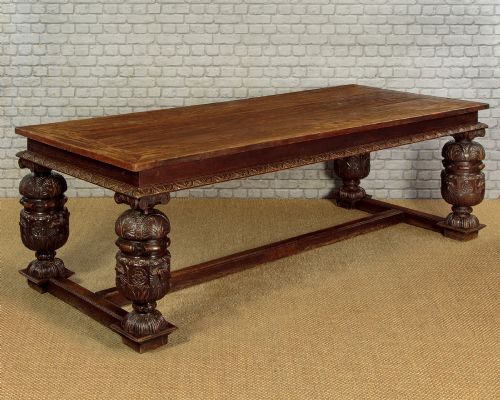
Joinery relied on traditional pegged mortise and tenon frames, supporting thick plank tops that could span up to eighteen feet. Carvers applied deep relief work by hand to friezes, legs, and trestle bases, incorporating Green Man masks, foliage, and geometric panels.
Victorian Carved Refectory Table Retail Price Guide 2026
Typical asking prices for victorian carved refectory table among the pieces listed under this phrase on Sellingantiques today, from the lower quarter to the upper quarter. They describe what is for sale here now, not the wider market.
Several dining tables hide built-in drawers beneath their massive oak boards, ready to catch rogue cutlery and stray dinner napkins.
Assessing Quality
Quality rests upon the integrity of the timber and the depth of the hand-carved detail. Superior examples display dense grain patterns in the primary boards and crisp, unsoftened relief work on the bases and friezes.
The balance between top planks and underframe support distinguishes finer workshops from utilitarian output. Tables retaining matching benches, original extension mechanisms, or integrated drawers command greater attention from collectors.
The Victorian Carved Refectory Table Glossary
- Refectory table
- A long, narrow dining table originally used in monastic dining halls. These pieces typically feature heavy legs joined by stretchers near the floor.
- Plank top
- A table surface constructed from long parallel boards of timber rather than a single sheet. Two-plank configurations are common in substantial nineteenth-century dining tables.
- Gothic Revival
- An architectural and decorative style popular in the nineteenth century that mimics medieval forms. Characteristic details include pointed arches, trefoils, and heavy tracery.
- Frieze
- The horizontal band running beneath the top edge of a table. Carved tables often place Green Man masks or scrolling foliage within this space.
- Trestle table
- A table design where the top is supported by two or more upright frames connected by a horizontal beam. This configuration allows for unobstructed legroom along the length of the board.
- Pollard oak
- Timber taken from trees that have been pruned close to the trunk to produce dense, highly figured grain. This decorative wood appears on select revival dining tables.
Victorian Carved Refectory Table: Frequently Asked Questions
How do I clean a carved oak table?
Dust the surface regularly with a soft, dry cloth to prevent dirt settling into the carved recesses. Avoid modern silicone sprays and harsh chemical cleaners which can damage the aged patina of the timber.
Feed the wood periodically with traditional beeswax to maintain moisture and protect the finish. Apply the wax sparingly and buff gently with a clean cloth to preserve the crispness of the carved details.
Will an eighteen-foot table fit my dining room?
Measure your floor space carefully, allowing at least four to five feet of clearance around all sides of the table for chairs and movement. Consider access routes through doorways, hallways, and stairwells before bringing a massive nineteenth-century piece inside.
Very large refectory tables often dismantle into separate top planks and heavy base assemblies for transport. Confirm the construction details with the seller to understand how the components fit together.
What is a Green Man carving?
A Green Man is a sculptural motif depicting a human face surrounded by or sprouting from foliage, vines, or leaves. This ancient symbol represents rebirth and the spirit of vegetation.
Victorian craftsmen frequently incorporated Green Man masks into the friezes of heavy oak dining tables as part of the Gothic and Renaissance revival movements. These expressive faces add distinct character to the woodwork.
How can I tell a Victorian revival table from a seventeenth-century original?
Examine the underside and hidden construction areas for tool marks, screw types, and timber seasoning. Nineteenth-century revival pieces often utilise mechanical sawmill marks and standardised fixings that differ from seventeenth-century hand-hewn joinery.
Assess the overall proportion and consistency of the carving style across the piece. Victorian makers frequently blended Elizabethan, Jacobean, and Gothic motifs into a single grand design distinct from authentic early periods.