
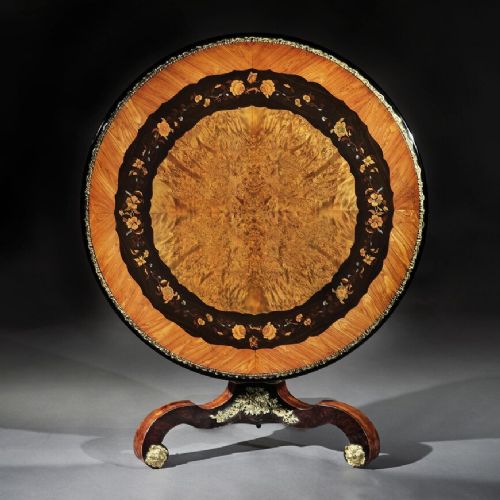
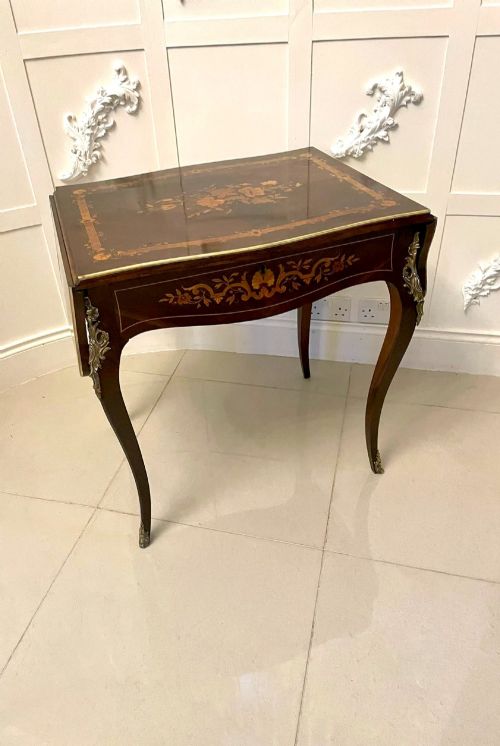

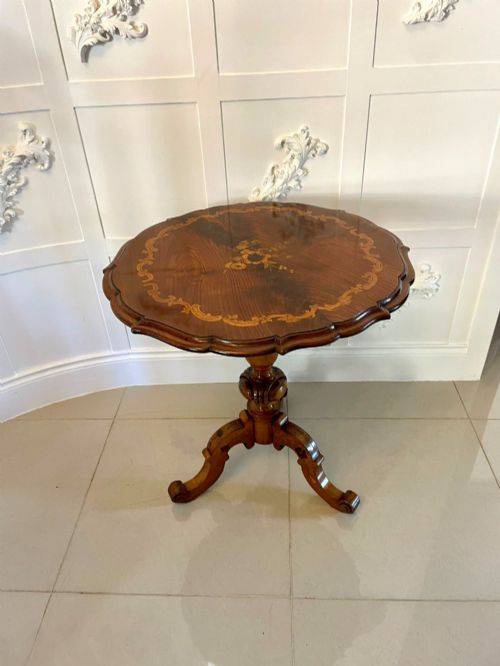
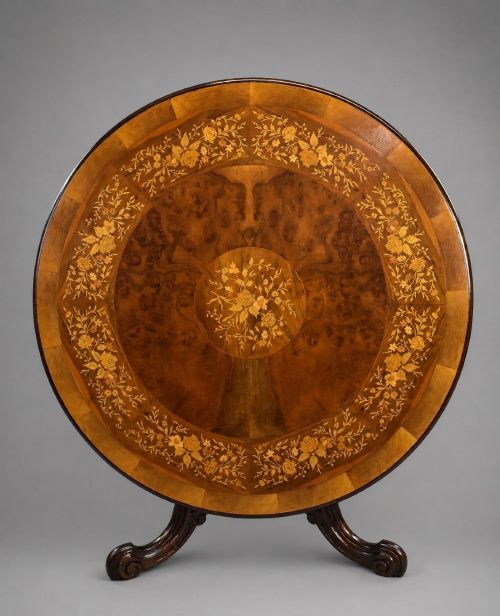
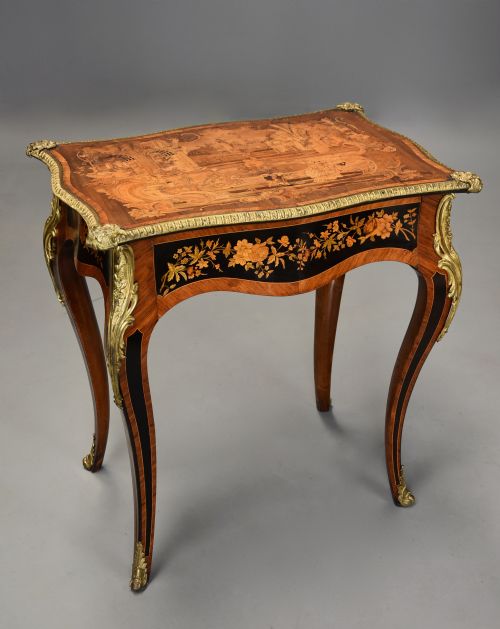

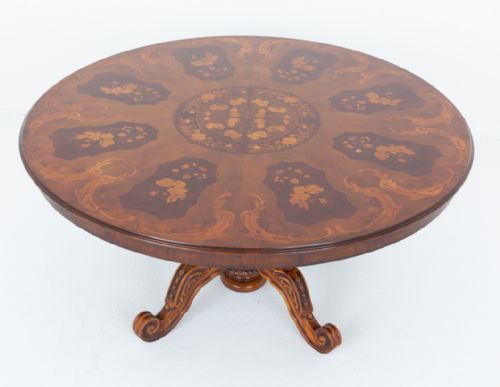


Floral Inlaid Centre Table
A floral inlaid centre table brings pattern and presence to a room, offering a freestanding surface worked in timber and marquetry.
Floral Inlaid Centre Table
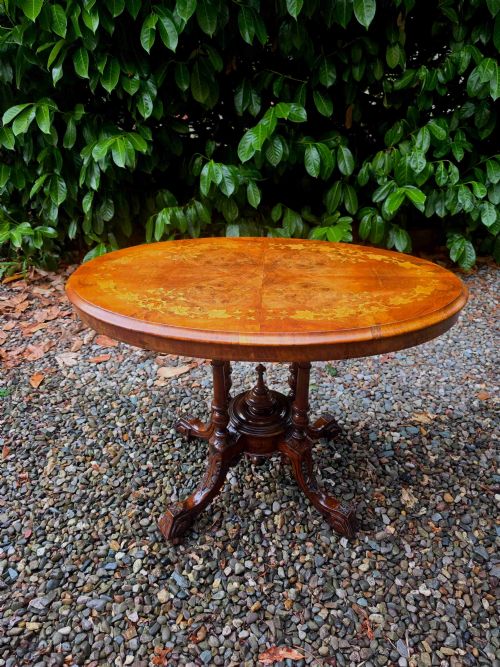
A floral inlaid centre table is a freestanding piece designed to be viewed from all sides, placing decorative timberwork directly in the middle of a room. These tables appear most frequently from the nineteenth century and the Victorian period, though examples stretch back to the eighteenth century.
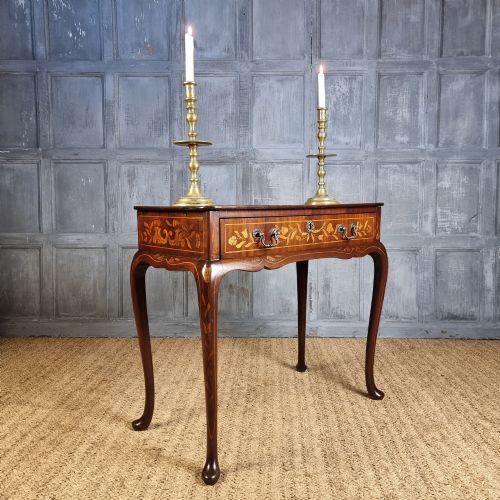
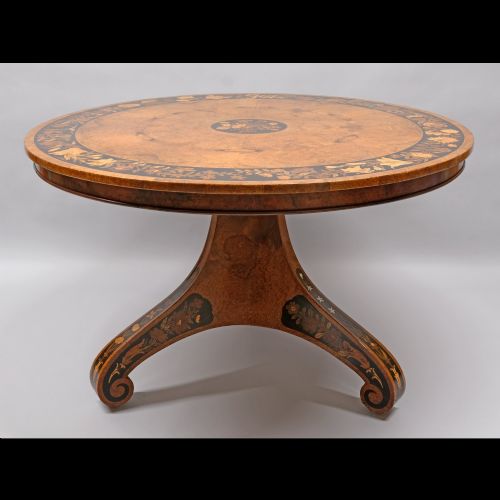
The form encompasses various shapes, from round breakfast tables and octagonal surfaces to oval designs and large dining formats. Makers worked within styles such as Louis XV and Louis XVI revivals, Dutch Baroque, and French designs, applying elaborate decoration to the top surface.
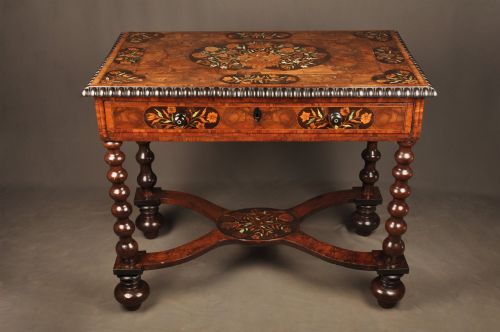
Buyers seeking a floral inlaid centre table will find pieces constructed primarily in walnut, burr walnut, rosewood, and kingwood. The central focus remains the marquetry inlay depicting floral motifs across the timber ground.
Materials and Construction
Construction relies on a solid timber carcase faced with veneers of walnut, burr walnut, rosewood, satinwood, or kingwood. Artisans then executed marquetry inlay using contrasting fruitwoods and specialised timbers to form detailed floral patterns.
Many examples incorporate ormolu mounts, brass details, and occasional bone inlay to accent the timber framework. Pedestal bases, carved walnut supports, and multi-legged frames provide the structural foundation for these heavy decorative tops.
Listings feature pieces spanning the eighteenth, nineteenth, and early twentieth centuries, incorporating walnut, rosewood, and satinwood.
Evaluating Quality and Execution
The distinction between standard examples and exhibition quality pieces lies in the precision of the marquetry and the choice of veneer. Burr walnut and finely figured rosewood provide richer surface texture than plain timbers.
Execution of the floral motifs demonstrates the maker's hand, where subtle shading in the inlaid woods creates depth and naturalism. The inclusion of cast ormolu mounts and substantial carved structural elements further separates finer iterations.
Edward Holmes Baldock·Jackson and Graham
The Floral Inlaid Centre Table Glossary
- Marquetry Inlay
- The art of applying decorative veneer pieces to a structure to form intricate pictorial designs, typically depicting flowers and foliage. This technique defines the primary surface ornamentation of the pieces.
- Burr Walnut
- A specialised wood grain harvested from walnut tree growths, prized for its swirling, highly figured pattern. It forms a decorative background for floral marquetry.
- Ormolu
- Gilded bronze mounts applied to furniture edges and legs, common in French revival pieces. This material adds metallic contrast to the timber surface.
- Bureau Plat
- A freestanding writing table fitted with drawers, often featuring elaborate marquetry and mounts. These serve a dual purpose as both desk and centre table.
- Pietra Dura
- An inlay technique using cut and fitted polished coloured stones rather than wood. Examples employ this method to create permanent floral arrangements on the tabletop.
Floral Inlaid Centre Table: Frequently Asked Questions
Where should I place a centre table?
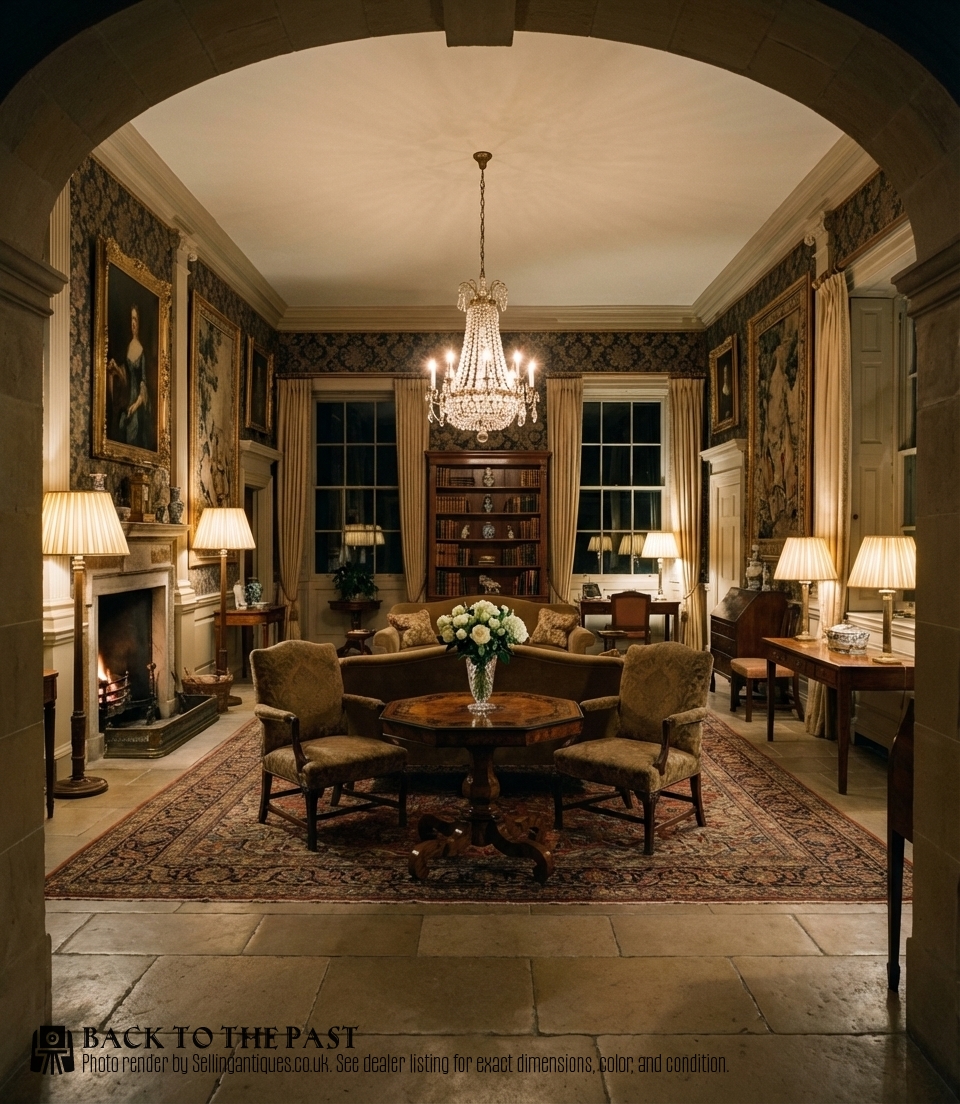
A centre table requires open floor space where it can stand independently away from walls. Because the marquetry and finish extend to all sides, positioning it in the middle of a room allows the piece to function properly as a focal point.
Ensure there is sufficient clearance around the table for movement. These pieces suit entrance halls, drawing rooms, and libraries where they can be viewed and utilised from every angle.
How do I care for polished wood furniture?
Protect the polished timber and marquetry surfaces by avoiding direct sunlight and excessive heat sources. Consistent room humidity prevents the veneers from lifting or cracking over time.
Dust the surface regularly with a soft, dry cloth. Avoid commercial silicone sprays and harsh chemical cleaners that can damage antique French polish and delicate wood inlay.
What is the difference between a centre table and a dining table?
Centre tables are designed primarily for display and occasional use, often featuring elaborate pedestal bases or delicate legs that restrict knee room. Dining tables prioritize seating capacity and structural stability for daily meals.
While some larger examples function for dining, most centre tables serve as occasional surfaces, lamp tables, or writing desks within a principal room.
How do I identify the period of a floral inlaid table?
Dating relies on the combination of timber selection, structural joinery, and stylistic revival influences. Nineteenth century Victorian pieces frequently utilise burr walnut and rich marquetry, referencing earlier French designs.
Earlier eighteenth century examples display different construction methods and timber ageing characteristics. Reviewing the secondary woods beneath the top provides further clues to the manufacturing date.