

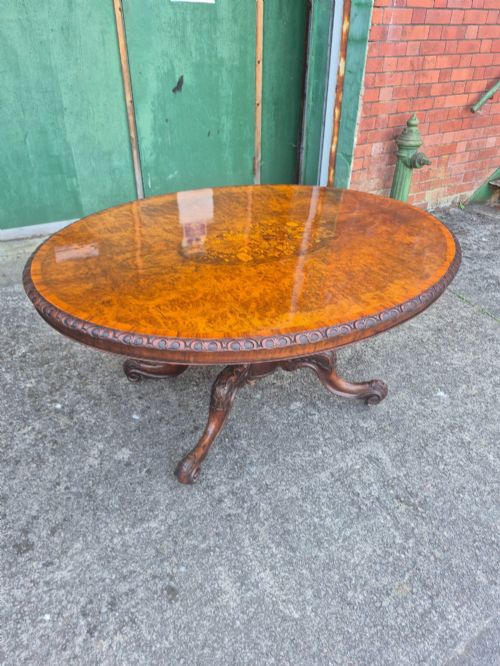
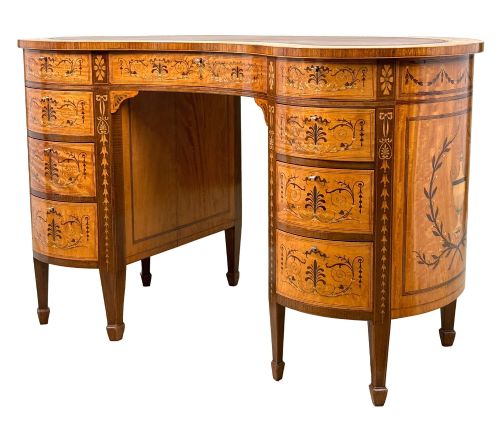

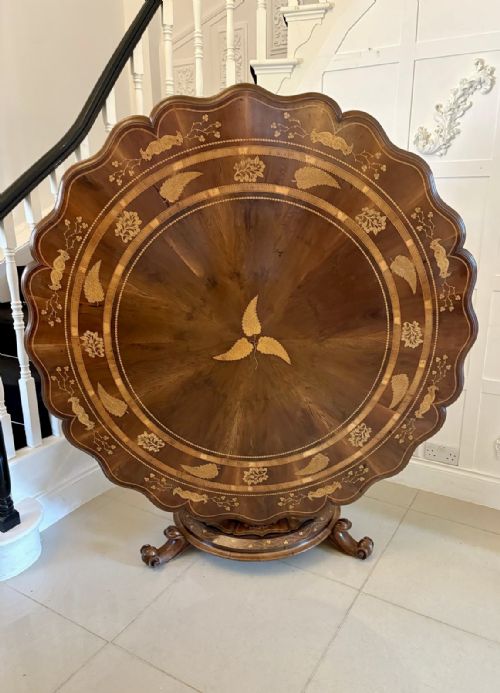
Victorian Marquetry Pedestal Table
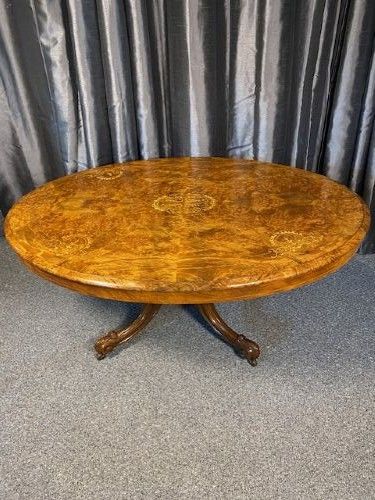
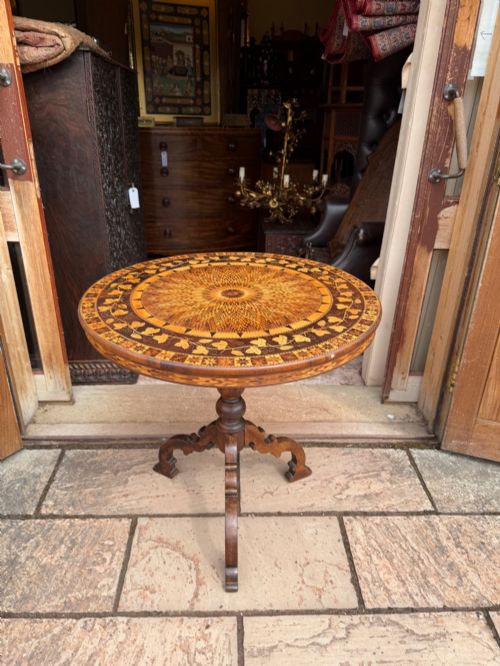
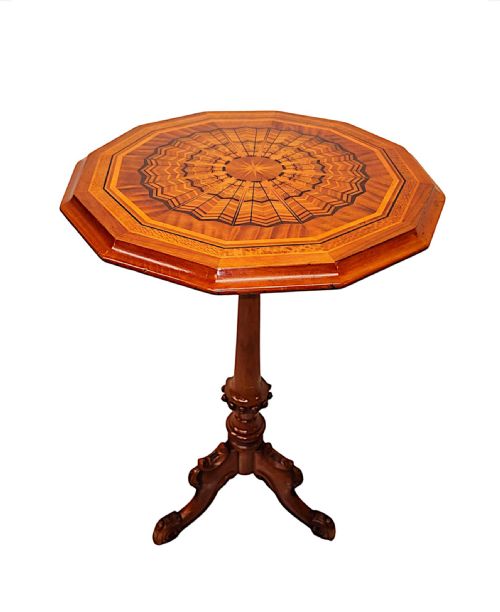
A victorian marquetry pedestal table brings together elaborate wood inlay and sturdy central support, offering a striking focal point for a traditional room.
Victorian Marquetry Pedestal Table
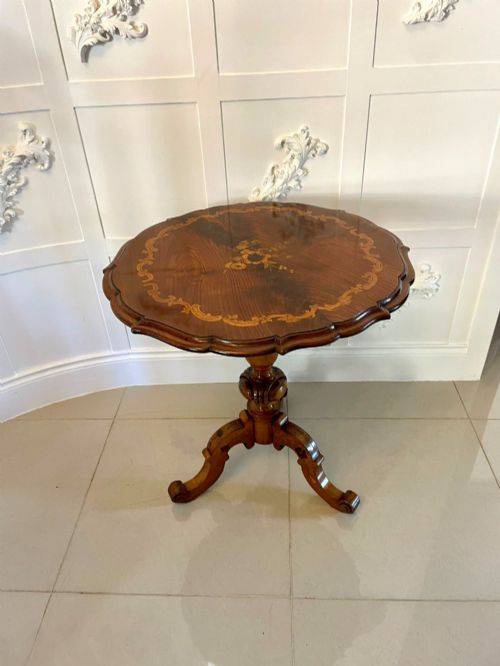
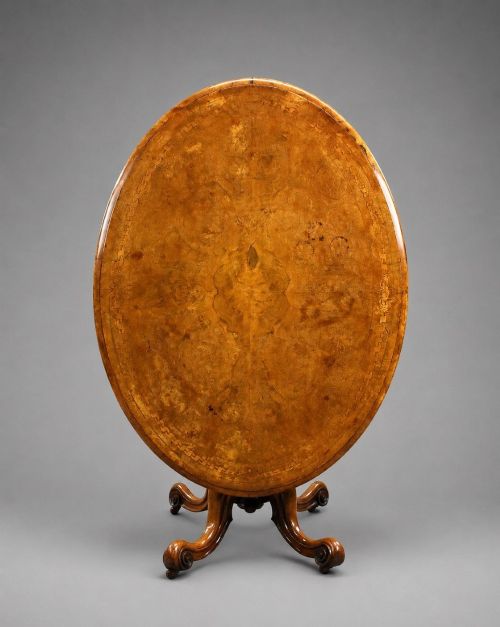
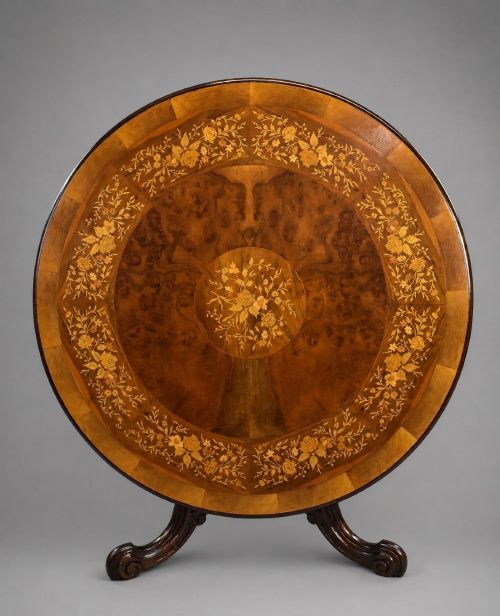
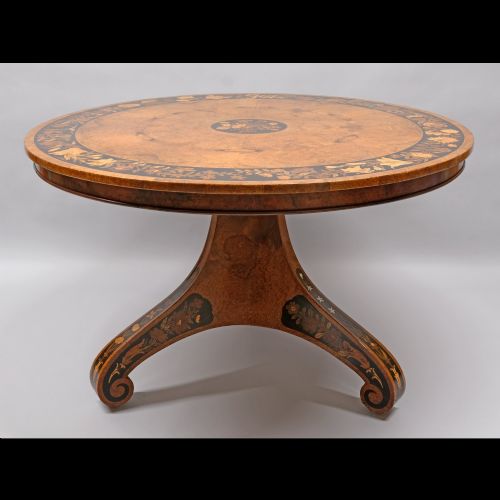
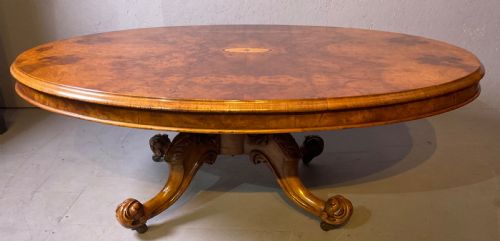
A victorian marquetry pedestal table sits on a single central column or tripod base, featuring detailed wood inlays across the top surface. These tables emerge from various nineteenth century periods, utilising rich timbers to create lasting visual interest in a room.
Buyers searching for this phrase encounter numerous centre tables, breakfast tables and occasional tables built with elaborate ornamentation. Burr walnut and mahogany provide the primary foundation for these pieces, often enhanced by contrasting boxwood and satinwood details.
Many examples date from the mid to late nineteenth century, spanning distinct regional variations including Italian Sorrento work and Irish Killarney production. The circular or oval tops rest securely on carved pedestals, combining decorative surface artistry with practical utility.
Materials and Technique
Cabinet makers constructed these tables using solid timber frames faced with carefully selected veneers of burr walnut, rosewood or satinwood. The distinct grain patterns of burr timber provided a rich background for the intricate decorative elements.
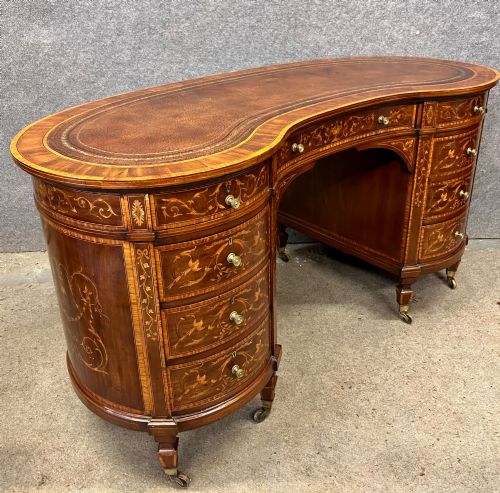
Marquetry decoration involved fitting contrasting pieces of boxwood, bone and various coloured woods into recessed channels to form floral, geometric or figurative motifs. Craftsmen secured these veneers with animal glues, smoothing the finished top to an even surface.
The listings show walnut as the dominant primary timber, paired frequently with satinwood and boxwood for marquetry inlay.
Judging Quality
The sophistication of the marquetry design and the precision of the veneer work largely determine the standing of an individual table. Skilled makers achieved seamless junctions between contrasting timbers, whereas lesser examples show wider gaps or simpler geometric repeats.
The choice of primary timber also sets pieces apart, with highly figured burr walnut and dense rosewood commanding greater regard than standard mahogany. Furthermore, the carving on the pedestal column and the stability of the base reveal the original standard of workshop production.
Gillows·Edwards and Roberts·Holmes Baldock·Egan Workshop
The Victorian Marquetry Pedestal Table Glossary
- Marquetry
- The art of applying decorative pieces of wood veneer to a structure to form pictorial patterns. Artisans cut various tinted timbers to create complex floral or architectural scenes across the tabletop.
- Burr Walnut
- Timber taken from the abnormal growth of a walnut tree, yielding highly twisted and knotted grain patterns. This material was heavily favoured by nineteenth century cabinet makers for luxurious surface veneers.
- Pedestal Table
- A table supported by a single central pillar rising from a base or feet. This configuration allows for unobstructed seating around the perimeter.
- Satinwood
- A durable, yellowish timber native to India and Sri Lanka, possessing a lustrous natural sheen. It served as a bright contrasting veneer in detailed marquetry panels.
- Tripod Table
- A small table standing on three legs connected to a central column. This form became widely popular for occasional and loo tables during the Victorian era.
Victorian Marquetry Pedestal Table: Frequently Asked Questions
What is a Victorian marquetry pedestal table used for?
These tables functioned primarily as centre pieces in entrance halls or as occasional tables for displaying ornaments in a Victorian parlour.
Their sturdy central pedestals allowed people to gather closely around the top without obstruction from corner legs.
How do I care for a burr walnut tabletop?
Keep the wood away from direct sunlight and strong heat sources to prevent the delicate veneers from drying out and lifting.
Apply a quality beeswax polish occasionally and buff gently with a soft cloth to maintain the natural lustre of the timber.
How can I tell Italian Sorrento work apart?
Italian Sorrento pieces typically feature distinctive pictorial marquetry depicting architectural ruins, musicians or local landscapes executed in pale woods.
Makers in that region developed specific shading techniques by scorching veneer edges in hot sand before insertion.