





Inlaid Walnut Tilt Table
An inlaid walnut tilt table balances ingenious domestic mechanics with intricate timber marquetry, offering a versatile surface that pivots upright when not in daily use.
Inlaid Walnut Tilt Table
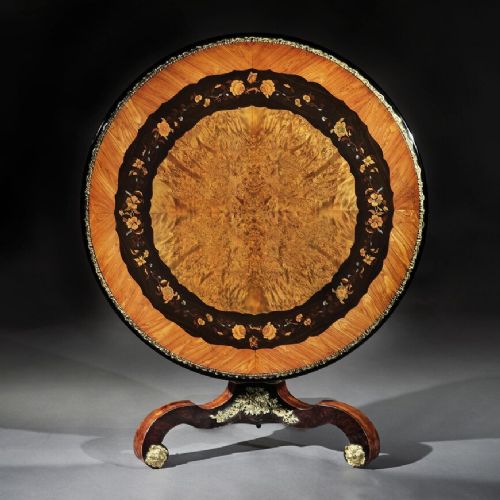
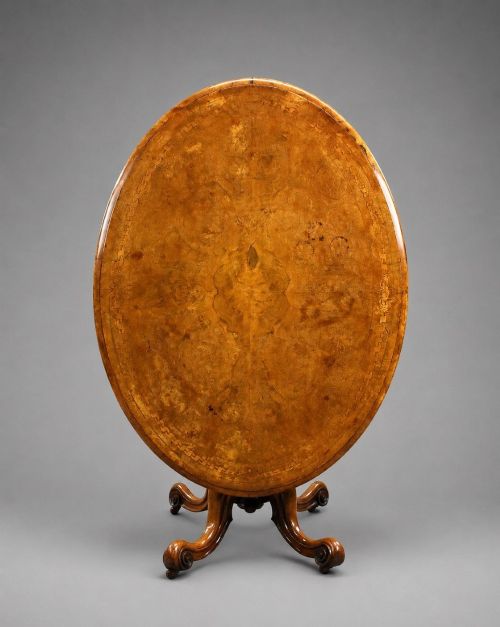
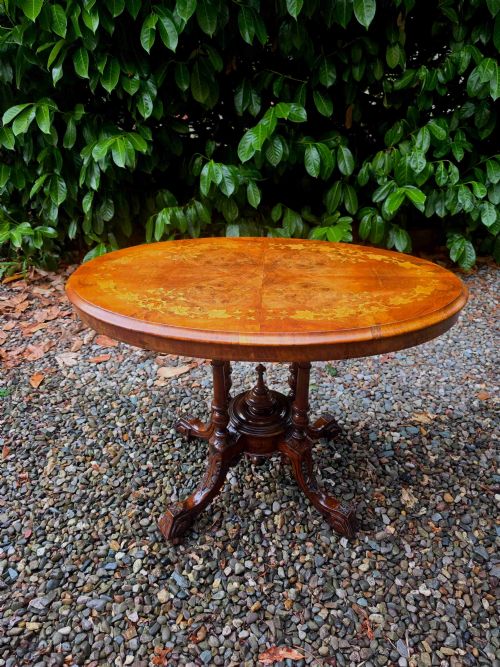
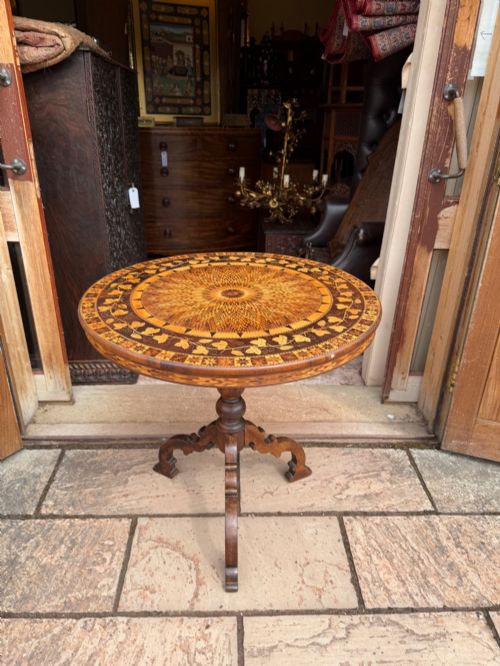
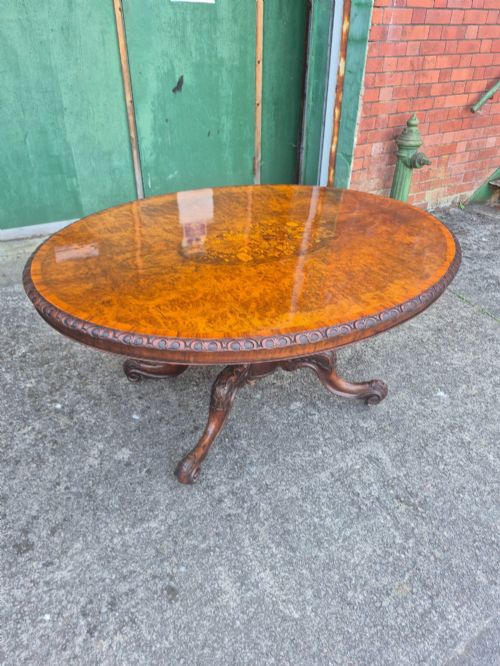
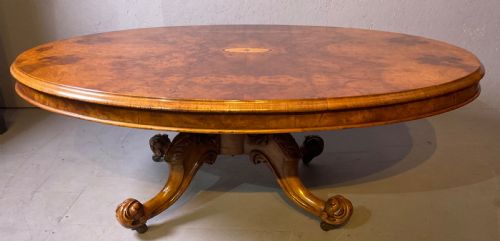
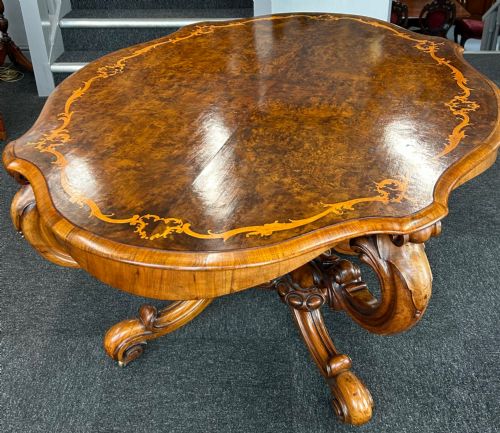
An inlaid walnut tilt table represents a convergence of fine cabinet making and domestic utility, designed to stand proudly in a parlour or drawing room. You will most frequently encounter Victorian examples featuring oval burr walnut tops decorated with marquetry inlay and supported by a central pedestal and tripod base.
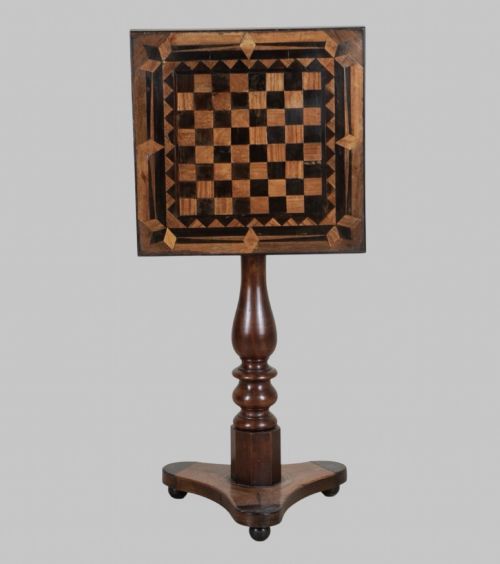
The primary function of these pieces centres on the pivoting mechanism, which allows the surface to tilt vertically for compact storage against a wall. Surviving pieces span the Georgian, Victorian, and later nineteenth-century periods, taking various forms including breakfast tables, loo tables, and occasional lamp tables.
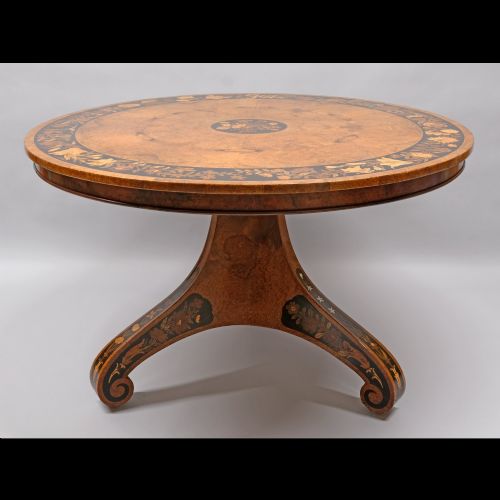
Makers utilised rich timber grains and contrasting decorative banding to catch the eye, ensuring the table remained an ornamental focal point even when tilted. The integration of fruitwood, boxwood, and brass details further enhances the visual depth of the walnut ground.
How they were made
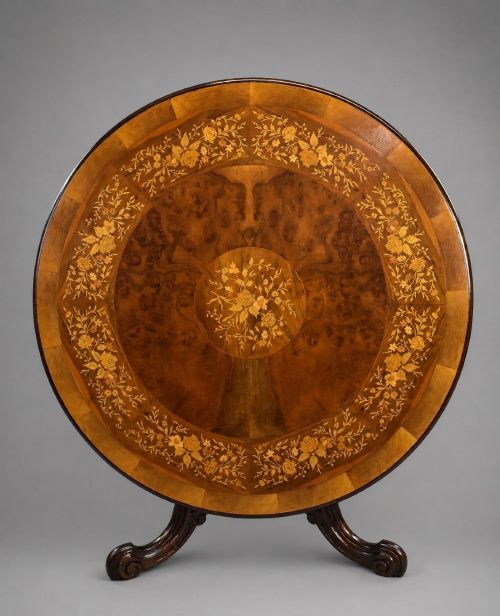
Cabinet makers built the tops using figured burr walnut veneers laid over stable secondary timber substrates, often incorporating elaborate marquetry inlay of boxwood and fruitwood. The tilt mechanism relied on a robust wooden or metal catch block fitted beneath the surface to lock the top securely in either a horizontal or vertical position.
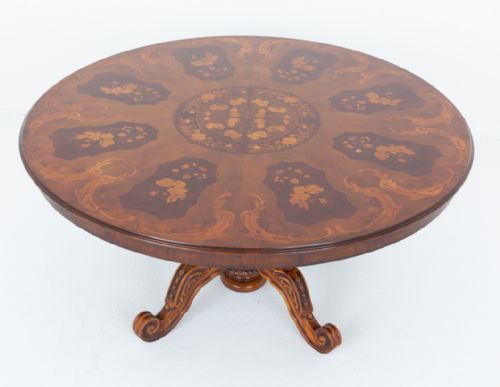
Pedestals typically turned from solid walnut branches or carved components branch out into three or four scrolled legs, sometimes accented with brass castors. Marquetry panels were painstakingly hand-cut and pieced together before being embedded into the surface veneer and polished to a deep gloss.
Some nineteenth-century tables arrive with secret locking catches that require a gentle touch of diplomacy to persuade them back down to horizontal.
What varies in quality
The distinction between ordinary production and superior craftsmanship lies in the selection of the burr walnut veneer and the precision of the marquetry inlay. Tables featuring crisp, highly detailed floral or geometric marquetry combined with substantial, finely carved pedestals represent the upper echelon of the craft.
Structural integrity of the tilt mechanism and the flatness of the large walnut top dictate the long-term success of the piece. Subtle details such as crossbanding in complementary woods and well-executed secondary framing elevate an everyday table into a notable example.
Edward Holmes Baldock·Gillows
The Inlaid Walnut Tilt Table Glossary
- Burr walnut
- A prized timber veneer harvested from the wart-like growths on walnut trees, yielding complex swirling grain patterns. It forms the primary decorative surface on many nineteenth-century tables.
- Marquetry
- The art of creating decorative pictorial patterns using thin pieces of varied coloured wood veneers fitted into a ground. Craftsmen used boxwood and fruitwood to achieve sharp contrast.
- Tilt top
- A mechanical arrangement featuring a hinged block allowing the table surface to rotate vertically. This clever design saved valuable floor space in period domestic interiors.
- Loo table
- A large round or oval parlour table designed for card games like loo, frequently adapted with a tilting top. They date predominantly from the Victorian era.
- Crossbanding
- A decorative border technique where veneer strips are applied around the edge of a table top so the grain runs perpendicular to the main field. It frames the central marquetry design.
- Sorrento ware
- Woodwork decorated with micro-mosaic marquetry originating from the Italian town of Sorrento. Pieces bearing this influence often display intricate architectural or floral motifs.
Inlaid Walnut Tilt Table: Frequently Asked Questions
Why did they make tilt top tables?
The tilting mechanism allowed households to clear floor space quickly when the furniture was not actively in use for dining or parlour games.
By pivoting the top upright against a wall, rooms retained an open feel during the day while keeping the decorative marquetry visible.
How do I date a walnut table?
Dating relies on observing the combination of timber selection, base construction, and prevailing decorative styles across the Georgian and Victorian periods.
Earlier examples often feature simpler architectural pedestals, while mid-nineteenth-century pieces lean towards heavily figured burr walnut and elaborate tripod bases with castors.
Are these tables suitable for daily use?
These pieces function well as lamp tables, occasional surfaces, or small dining tables provided they receive sensible care and protection from excessive moisture.
The original tilt mechanisms remain surprisingly sturdy, though daily handling should be approached with an appreciation for their age.
What is the difference between a loo table and a breakfast table?
While both share a similar scale and round or oval format, loo tables earned their name from the Victorian card game played upon them.
Breakfast tables served a broader domestic purpose for morning meals, though builders frequently employed identical tilting pedestals and marquetry tops for both functions.