

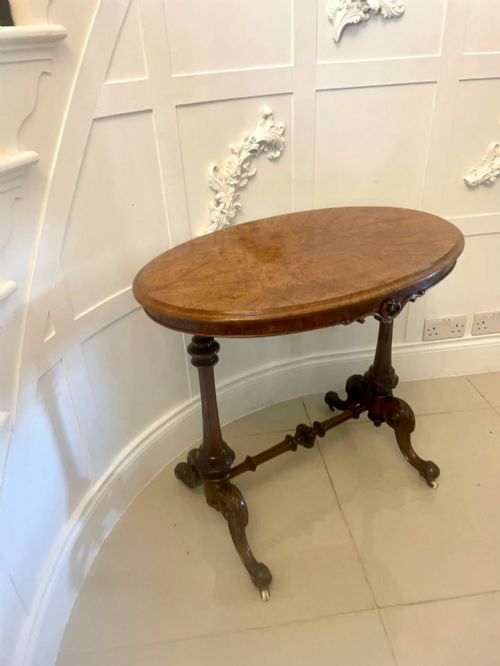
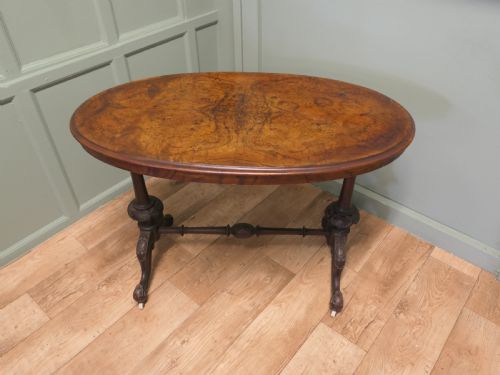
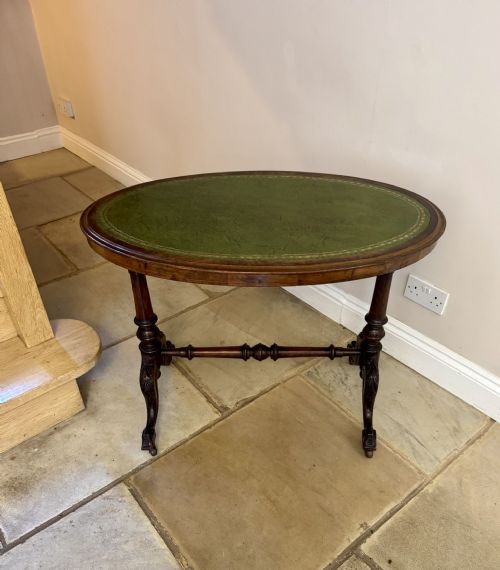


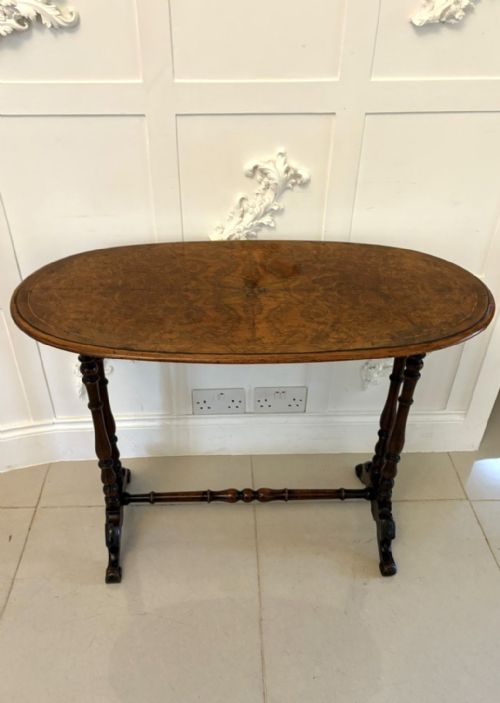
Antique Oval Sofa Table
An antique oval sofa table brings practical surface area and warm timber tones to a sitting room, offering a distinct profile shaped by nineteenth-century workshops.
Antique Oval Sofa Table
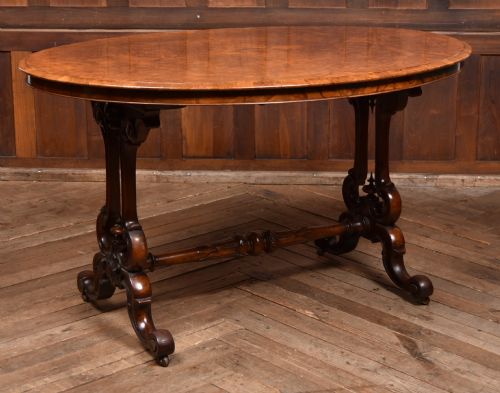
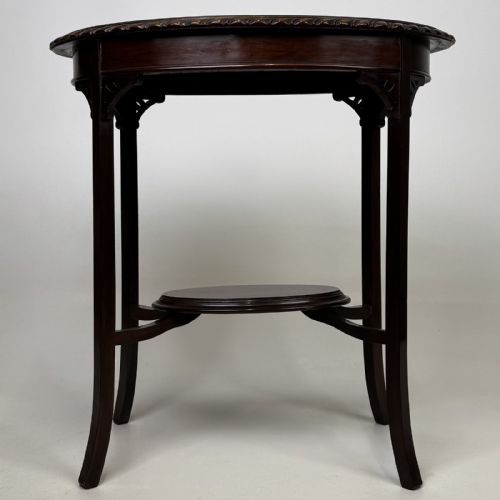
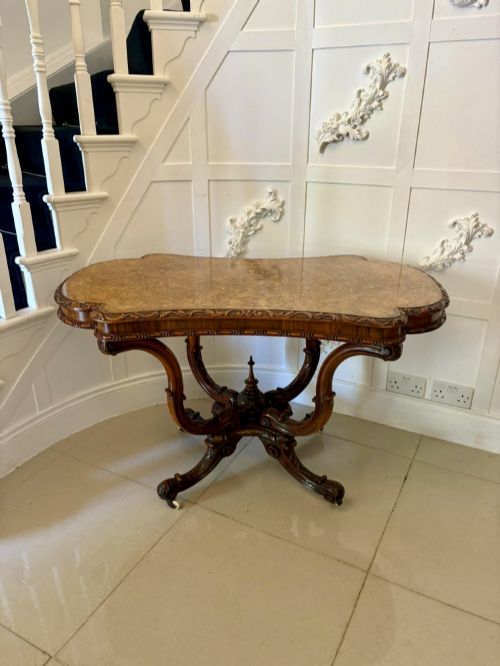
The antique oval sofa table category spans several distinct nineteenth-century forms, including drop-leaf designs, pembroke tables, and freestanding centre tables designed to sit before seating or in the middle of a room. Most examples encountered here originate from the Victorian era, alongside Georgian and Edwardian interpretations.
Makers utilised these versatile pieces as writing tables, lamp tables, and occasional tables, adapting the oval format for smaller rooms and drawing rooms. Walnut and burr walnut dominate the selection, complemented by mahogany, rosewood, and satinwood.
Drop-leaf mechanisms and Pembroke configurations allow the footprint to change depending on the space available, while stretcher bases and basket supports provide structural stability beneath the curved top.
Materials and construction
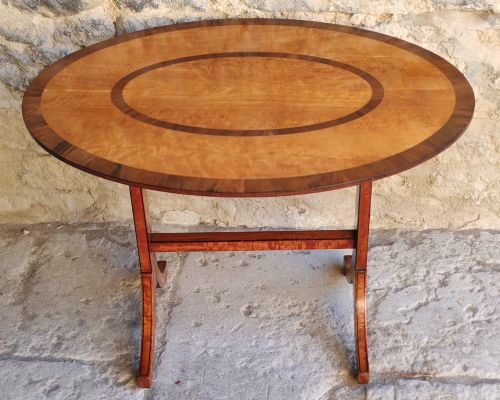
Cabinetmakers selected figured timbers such as burr walnut, mahogany, and rosewood for the primary surfaces, often applying marquetry or boxwood inlay to accentuate the oval top. Inlays of satinwood, kingswood, and brass provide contrasting geometric or floral detailing.
Solid timber frames support veneered tops, whilst turned columns, carved pedestals, and tripod bases distribute weight evenly across the floor. Drop-leaf actions rely on hinged flaps supported by pivoting wooden brackets or swing legs.
Antique Oval Sofa Table Retail Price Guide 2026
Typical asking prices for oval sofa table among the pieces listed under this phrase on Sellingantiques today, from the lower quarter to the upper quarter. They describe what is for sale here now, not the wider market.
Recorded forms range from compact drop-leaf coffee tables and Pembroke tables to large freestanding centre tables featuring chess boards and leather writing surfaces.
Assessing quality and execution
Superior examples distinguish themselves through the choice of timber figure, particularly richly patterned burr walnut or finely grained mahogany, matched symmetrically across the oval top. The crispness of hand-carving on pedestals and the precision of boxwood or marquetry inlay further separate standard production from finer cabinetmaking.
Structural integrity depends on the tightness of joinery in the pedestal or stretcher base, smooth operation of drop-leaf mechanisms, and the condition of the original polished surface finish. Tables retaining genuine brass fittings and stable, warp-free tops represent the upper tier of surviving pieces.
The Antique Oval Sofa Table Glossary
- Pembroke table
- A small occasional table featuring two hinged drop leaves on opposite sides. They often include a single drawer and slender legs.
- Marquetry
- Decorative veneer work forming pictures or patterns by using different coloured woods, ivory, or shell. Craftsmen applied this technique extensively to table tops.
- Drop leaf
- A hinged flap on a table that folds down to reduce the overall surface area. These leaves lift and lock into place with wooden brackets when extra space is required.
- Stretcher base
- A system of horizontal wooden bars connecting the legs of a table for added rigidity. Victorian makers utilised these for both structural support and decorative effect.
Antique Oval Sofa Table: Frequently Asked Questions
Where should I place an oval table?
These pieces suit placement in front of a sofa, beside an armchair, or as a freestanding centrepiece in a hallway or drawing room. The curved ends soften the geometry of a room while providing a functional surface for lamps and books.
Drop-leaf versions offer flexibility for smaller spaces, allowing you to lower the flaps when floor area is limited.
How do I care for walnut veneer?
Dust surfaces regularly with a soft, dry cloth and avoid placing wooden furniture in direct sunlight or near heat sources. Excessive dryness can cause old veneers to lift.
Apply a traditional beeswax polish sparingly to nourish the timber and maintain a soft, protective sheen over the grain.
How can I tell a Victorian table from a Georgian one?
Georgian pieces, dating around eighteen hundred, frequently utilise mahogany or satinwood with restrained inlay and straight lines. Victorian examples from the mid to late nineteenth century often showcase heavily figured burr walnut, carved pedestal bases, and more ornate marquetry.
Construction methods and timber choices provide the clearest indicators of the period of manufacture.