
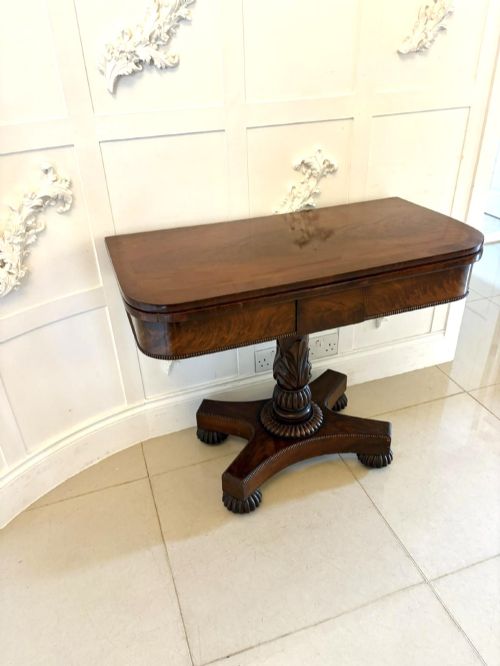
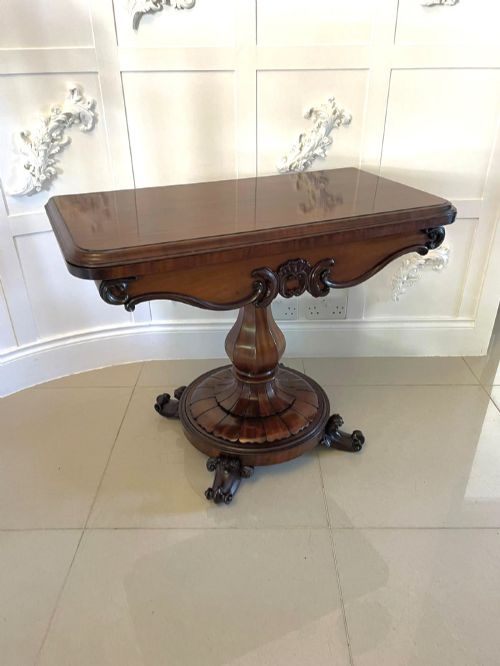
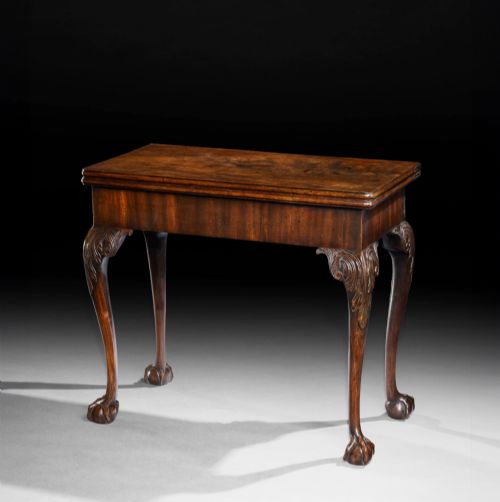
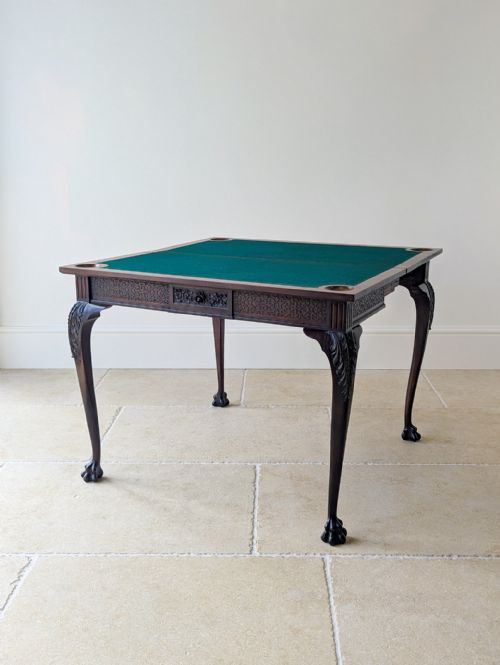
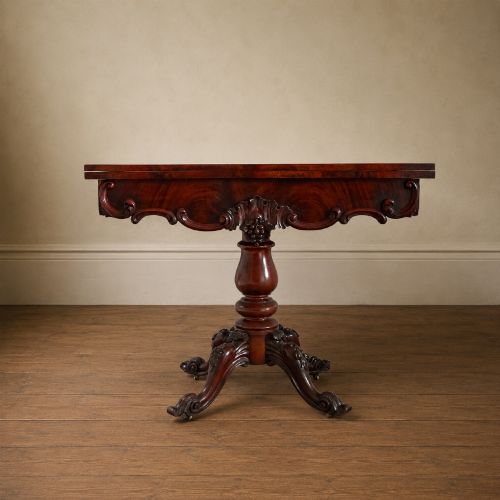
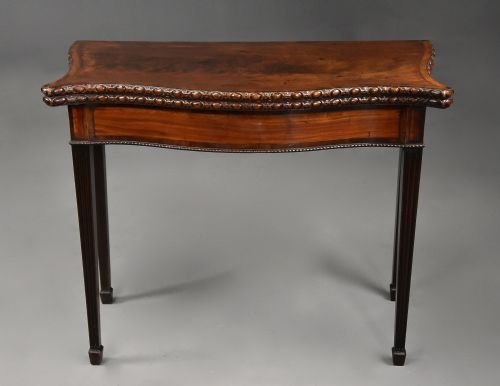
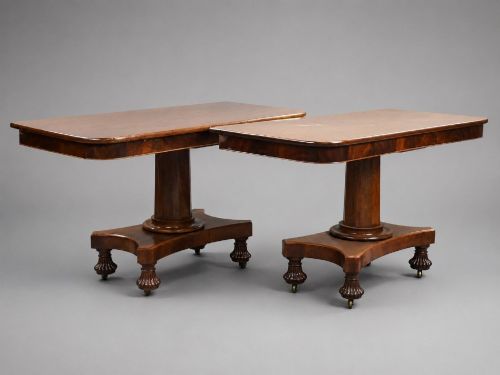
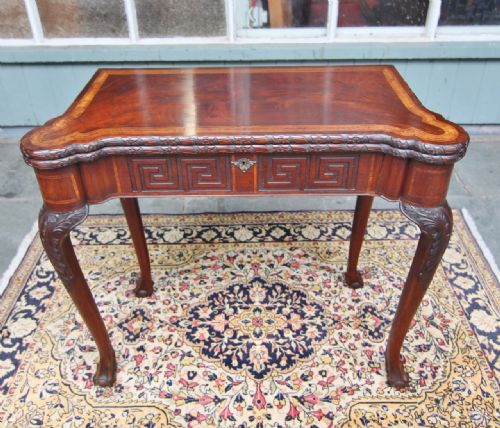
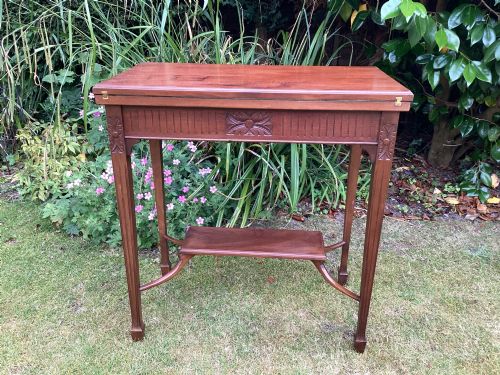
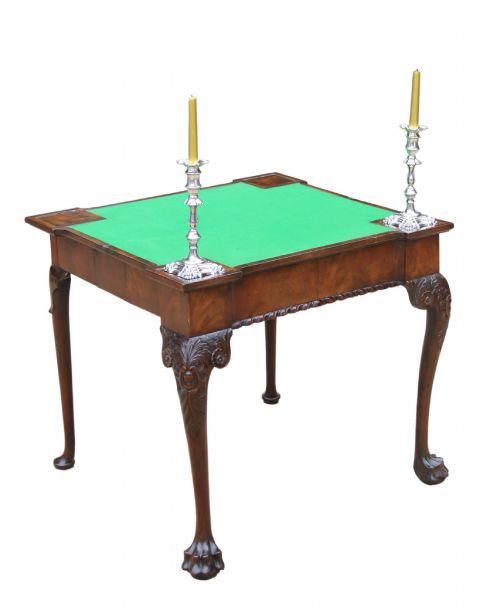
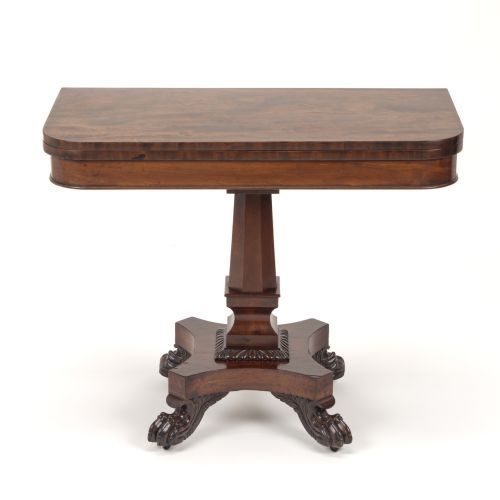
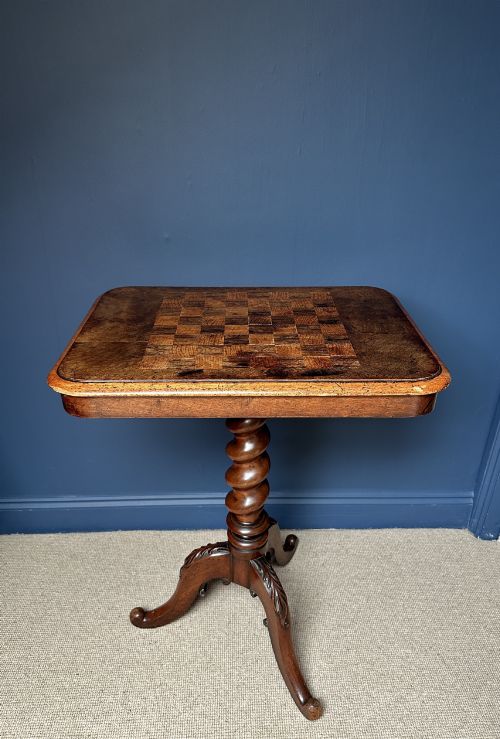
Carved Mahogany Card Table
A carved mahogany card table brings the rich grain and formal crispness of centuries past directly into a modern reception room.
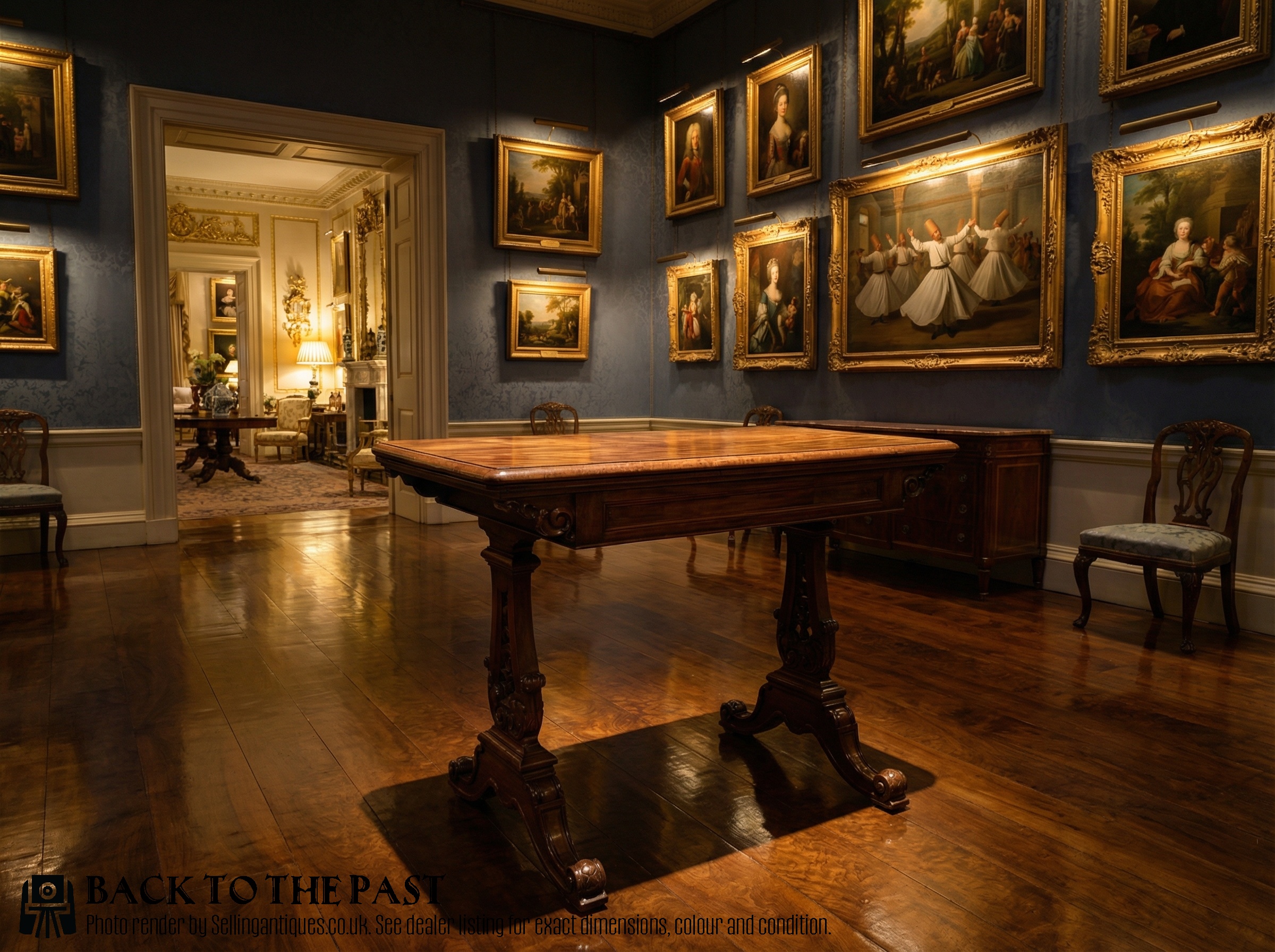
Carved Mahogany Card Table
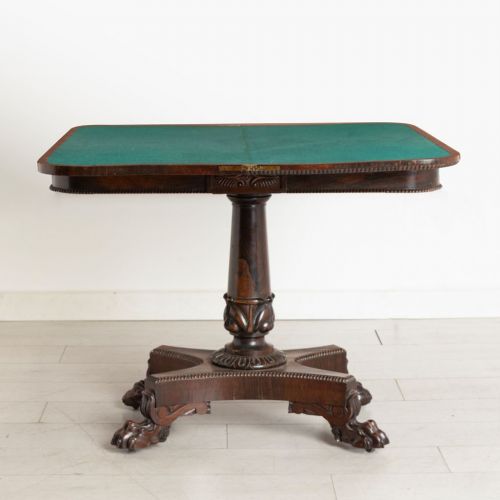
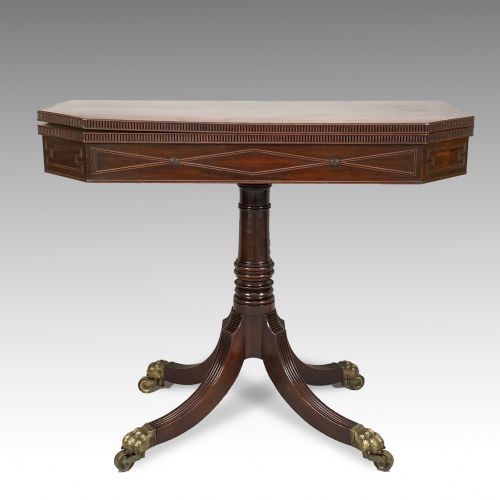
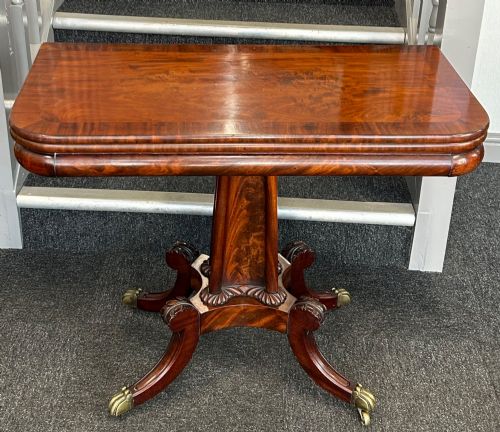
A carved mahogany card table is a folding or turnover surface designed for evening games, tea, and social assembly. They appear across the 18th century, Regency, William IV, Victorian, and Edwardian periods.
The form frequently uses a fold-over or concertina action to reveal a lined playing surface once opened against a wall or pulled to the centre of a room. Surviving examples range from plain geometric forms to elaborate Chippendale and Hepplewhite styles.
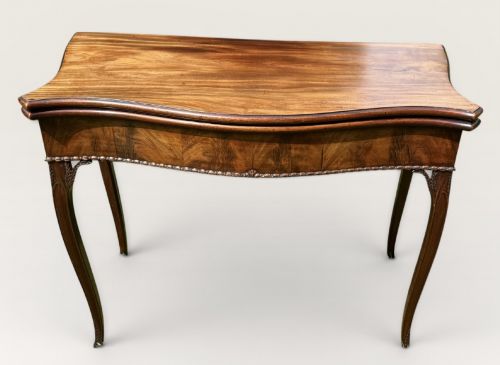
Buyers often meet George II, George III, and Victorian iterations featuring D-shaped, serpentine, or demi-lune tops. Many double as side tables or console tables when closed.
How they were made
Cabinetmakers utilised dense solid mahogany alongside figured veneers supported by secondary timbers like oak and pine. Surfaces frequently incorporate baize linings and subtle satinwood inlay or brass fittings.
Carved details such as paw feet, foliage, and blind fretwork required patient hand chiselling by skilled artisans. The folding leaves relied on clever concertina frames or pivoting wooden legs to support the weight of the open top.
Carved Mahogany Card Table Retail Price Guide 2026
Typical asking prices for carved mahogany card table among the pieces listed under this phrase on Sellingantiques today, from the lower quarter to the upper quarter. They describe what is for sale here now, not the wider market.
Listings feature mahogany, satinwood inlay, and wool baize across Georgian, Regency, Victorian, and Edwardian eras.
What varies in quality
The depth and crispness of the hand carving separate standard production pieces from master workshop outputs. Timber selection also dictates grade, with highly figured grain patterns and rich original patination commanding greater respect.
Structural integrity of the hinge mechanism and the tightness of the joints when closed reveal the original maker's joinery standards. Subtle proportion changes and refined edge moulding distinguish superior examples.
Giles Grendey·James Shoolbred & Co.
The Carved Mahogany Card Table Glossary
- Concertina action
- An expanding frame mechanism that allows all four legs to move outward when the top unfolds, evenly distributing weight.
- Baize
- A coarse woollen fabric traditionally used to line the playing surface of gaming furniture.
- Turnover top
- A hinged table top that folds flat against the base when closed and swings open to double the surface area.
- Blind fretwork
- Low-relief carved ornamentation applied to flat surfaces without piercing right through the timber.
- Demi-lune
- A half-moon shape characteristic of side and card tables designed to sit flush against a wall.
Carved Mahogany Card Table: Frequently Asked Questions
How do you open a concertina card table?
The rear legs and frame pull outwards together on concealed wooden hinges to create a square, supported perimeter.
This clever mechanism keeps the table balanced without relying on a single swinging fly-leg.
What were carved mahogany card tables used for?
They served polite society for card games, chess, and social conversation during evening assemblies.
Between gatherings, the closed tops held decorative items or sat neatly against a parlour wall as side furniture.
How do I date a Georgian card table?
Cabinetmaking style offers the clearest clues, with early pieces showing bold cabriole legs and later examples favouring tapered supports.
Turnover edges, hinge types, and timber choice also help narrow the decade of construction.
Can I use an antique card table everyday?
These tables adapt well to daily use as hallway consoles or living room side tables when kept closed.
Opening them requires gentle handling to protect historical hinges and delicate wool baize linings.