


Inlaid Mahogany Games Table
An inlaid mahogany games table combines ingenious folding engineering with cabinet-maker art, serving as a social centrepiece for card play.

What an inlaid mahogany games table is
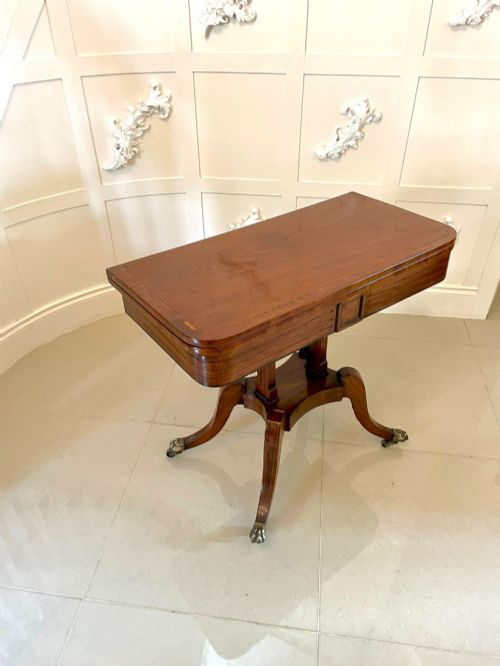
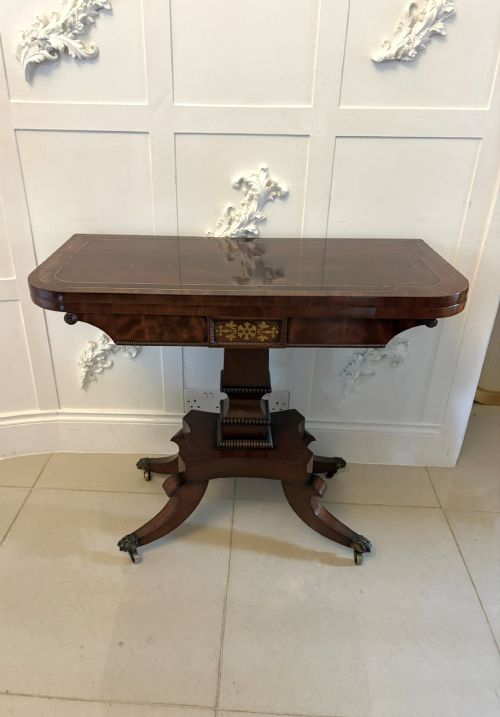
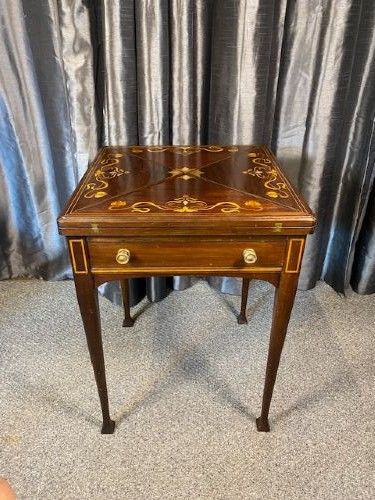
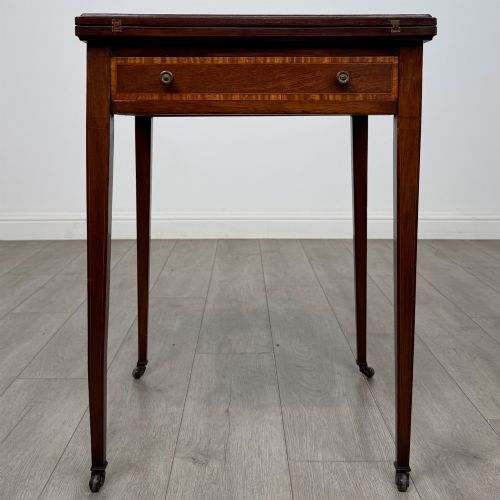
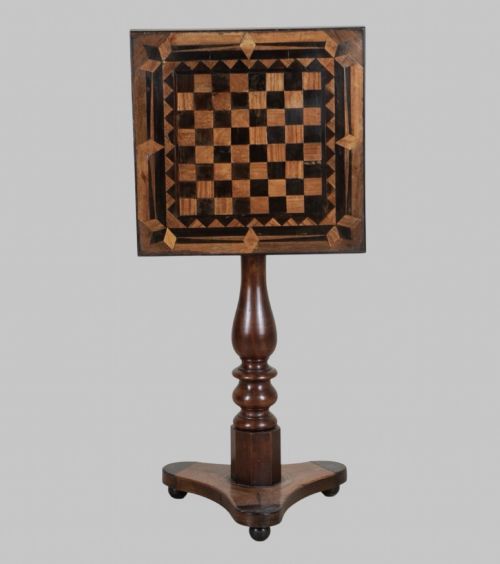
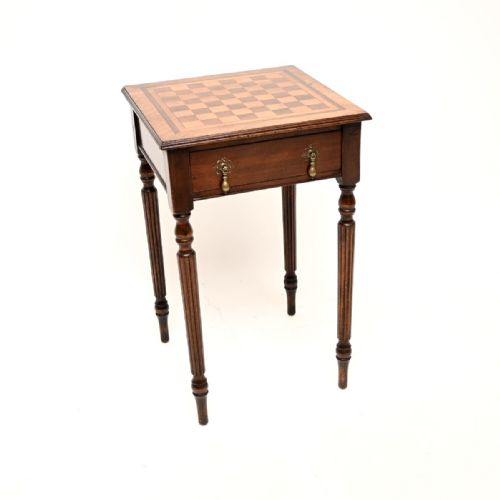
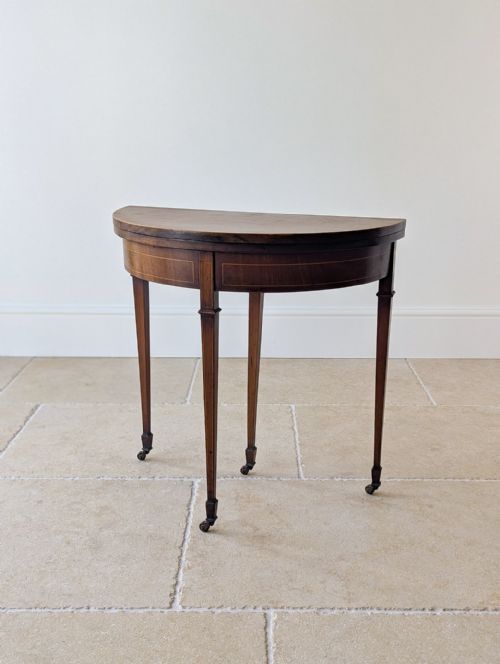
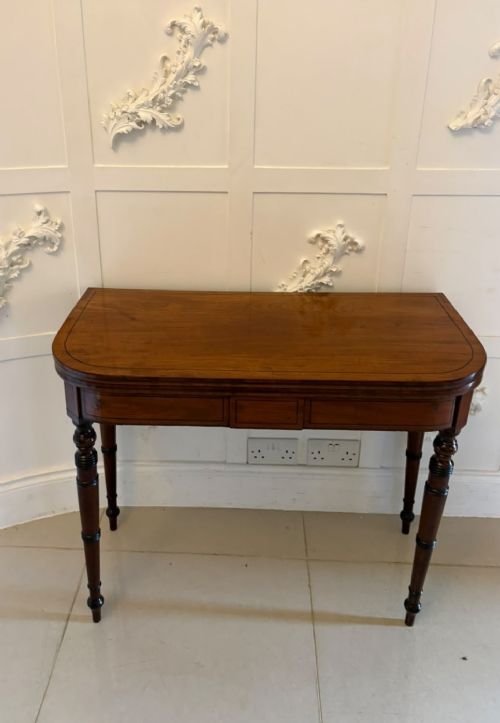
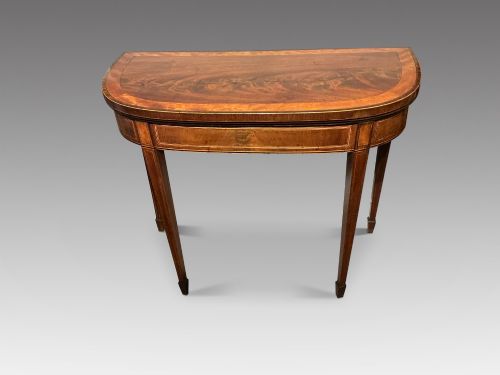
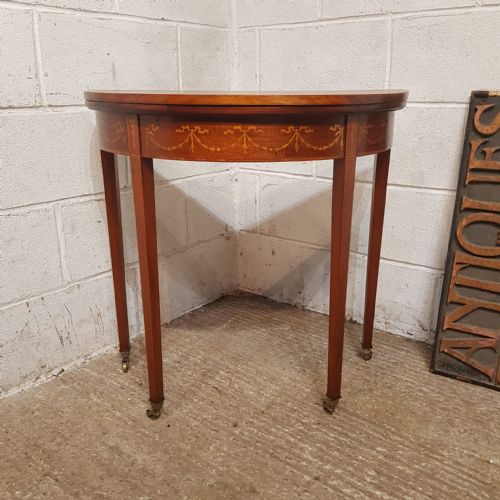
An inlaid mahogany games table is a multifunctional piece of furniture designed for card playing, chess, or social gaming, which doubles as a console or side table when closed. The most common forms found here include Edwardian envelope tables with folding triangular flaps, George III and Regency demi-lune or console card tables, and Victorian swivel-top designs.
These pieces bridge the gap between rigorous utility and elegant drawing room decor. They appear in periods ranging from the eighteenth century through the Victorian and Edwardian eras, reflecting changing domestic entertainments and tastes in timberwork.
How they were made
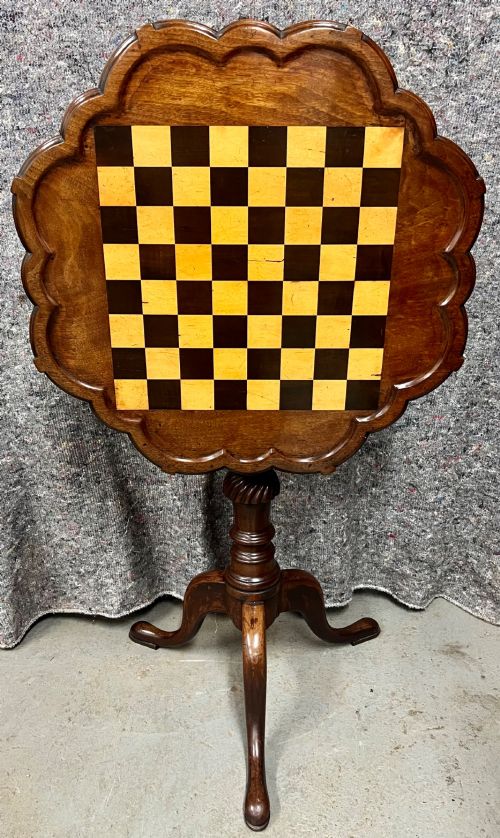
Makers constructed these tables using solid and veneered mahogany, often embellished with contrasting stringing and banding in satinwood, boxwood, and ebony. Craftspeople inlaid these lighter woods into the dark mahogany grain to create geometric borders, floral motifs, or dedicated gaming boards for chess and patience.
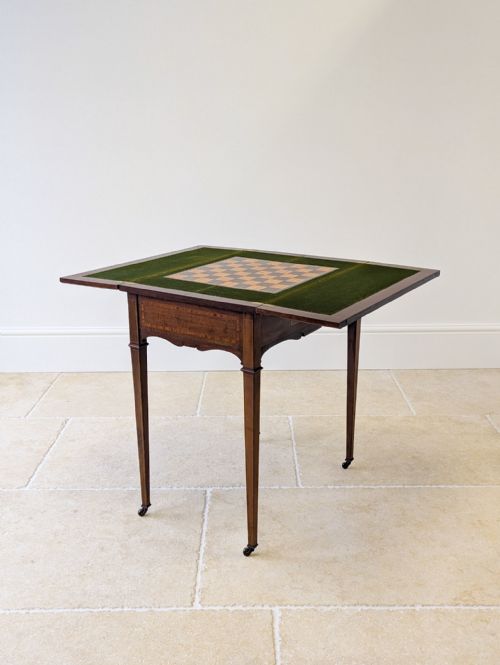
Internal engineering relied on pivoting tops, folding leaves, and rotating swivel mechanisms supported by tapering legs, pedestal bases, or frieze drawers. Interiors frequently lined surfaces with baize or incorporated specialised compartments for counters and cards.
Retail Price Guide 2026
Typical UK retail prices for inlaid mahogany games table, calculated from the Sellingantiques database of over a million retail prices indexed since 2003. This retail price guide relies exclusively on Sellingantiques data; no external sources or auction records are used, so the figures do not describe the wider market.
Some Edwardian tables feature hidden pull-out drink coasters tucked discreetly beneath the corners, keeping tumbler rings well away from the baize.
What varies in quality
Quality rests upon the precision of the timber selection and the crispness of the inlay work. Finer examples feature highly figured mahogany, intricate multi-wood Tunbridge-style or marquetry panels, and well-matched grain patterns across the fold-over leaves.
Structural integrity and the smoothness of the mechanical hinges, swivel tops, and drawer actions distinguish superior workshop output from simpler production. The integration of auxiliary pull-out surfaces, brass castors, and original hardware further elevates the standing of an individual piece.
Bruce & Burns of Edinburgh·Edwards & Roberts·Maple & Co
The Inlaid Mahogany Games Table Glossary
- Demi-lune
- A half-moon shape popular for console and card tables designed to sit flat against a wall. When opened, the hinged top reveals a full circular or semicircular playing surface.
- Baize
- A coarse woolen fabric, traditionally green, used to line the playing surfaces of card tables. It provides a soft, non-slip mat for dealing cards and placing counters.
- Stringing
- Thin lines of contrasting timber inlaid into channels cut into the main wood surface. This technique creates delicate geometric borders around table edges and legs.
- Envelope table
- A square card table with four triangular flaps that fold diagonally inward to cover the top. Opening one flap causes the others to pivot open simultaneously.
- Marquetry
- The art of forming decorative patterns using fitted veneers of various woods and other materials. It creates pictorial or ornamental designs across table tops.
Frequently Asked Questions
How do you open an envelope games table?
The top utilises a clever pivoting mechanism where lifting one triangular flap causes the remaining three sections to unfold simultaneously in sequence.
Once fully open, the flaps lock flat to reveal the baize-lined interior surface used for card games or bridge.
What games were played on these tables?
These tables accommodated a variety of domestic pastimes including whist, bridge, chess, draughts, and patience. Specialised models featured reversible tops or dedicated inlaid boards.
Interior wells and frieze drawers provided storage for playing cards, bone counters, and gaming pieces between sessions.
How do I date a mahogany games table?
Dating relies on combining the overarching furniture style, leg configuration, and specific inlay materials with cabinet-making construction techniques. Georgian and Regency pieces show different proportions and carving styles compared to later Victorian and Edwardian examples.
Examining secondary timbers underneath and the style of hinges offers further clues to the period of manufacture.
Are the playing surfaces always baize?
While green baize is the most common lining for card play, interiors vary according to the intended use of the table. Some feature polished wood surfaces or inlaid marquetry chess and backgammon boards.
Tables designed primarily for general card games almost universally utilise woolen cloth to deaden the sound of play and prevent cards from sliding.