
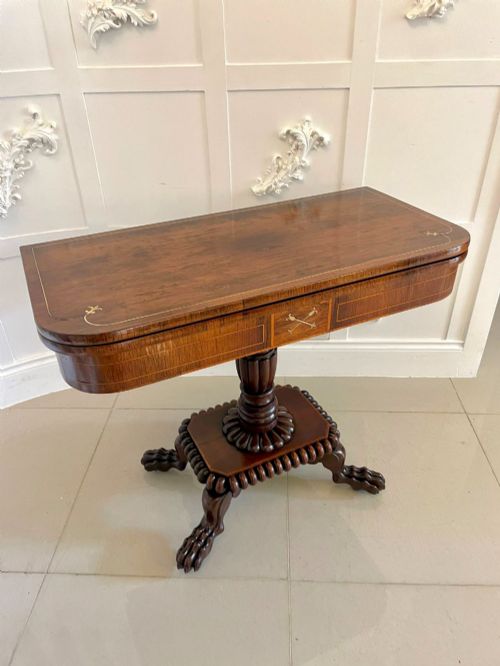
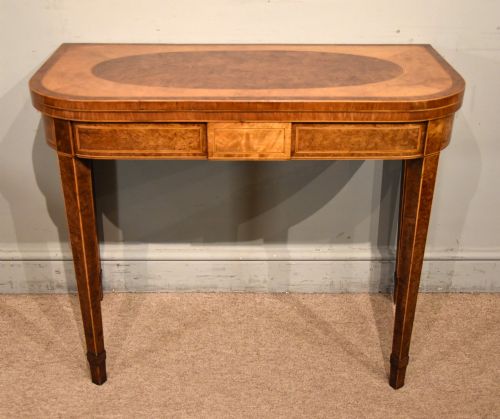
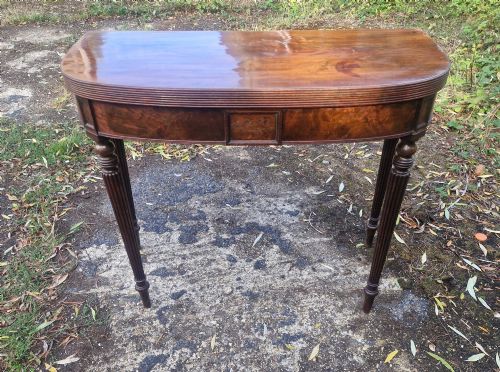
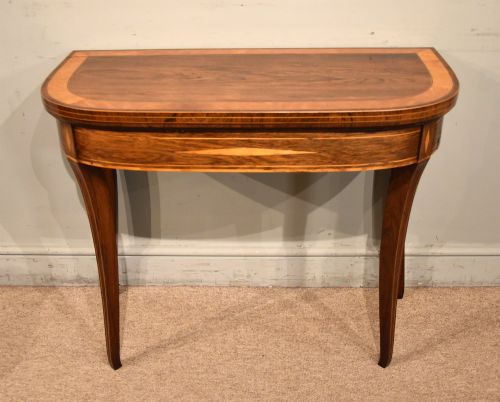

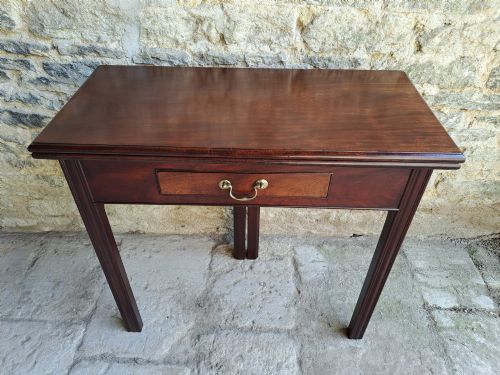
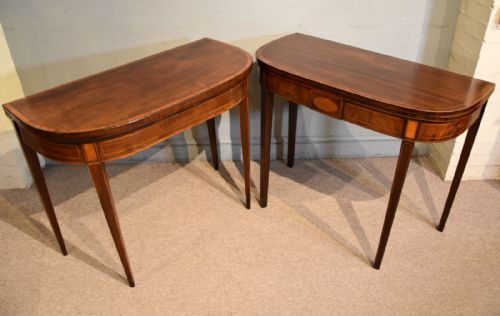

Georgian Foldover Card Table
A georgian foldover card table provides a clever surface for play and display, opening up when the evening calls for cards.

Georgian Foldover Card Table
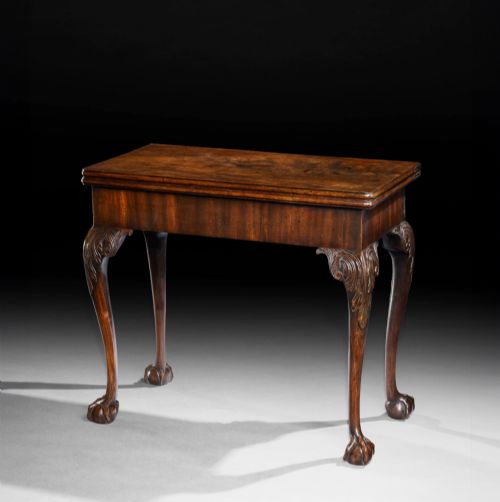
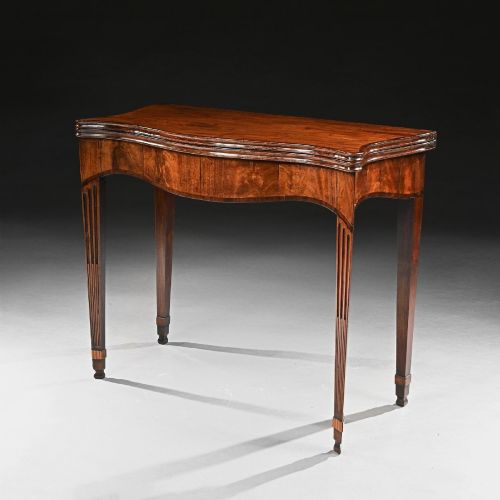
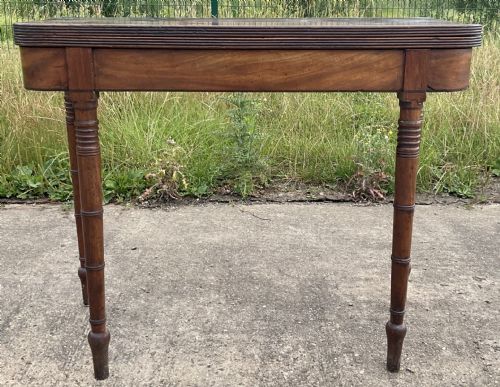
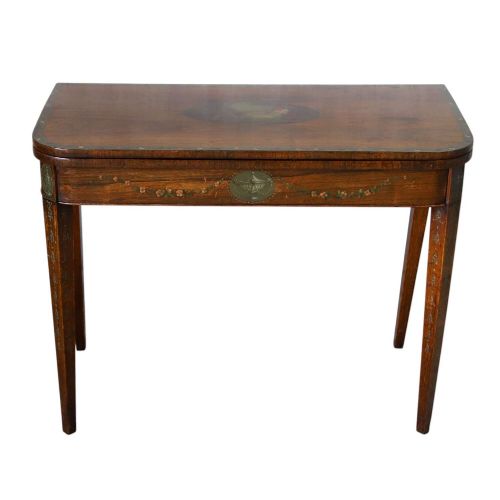
A georgian foldover card table is a domestic piece designed to sit against a wall when closed and pivot or unfold into a larger playing surface. These tables appear frequently from the eighteenth century into the regency period, spanning reigns from George II through George IV.
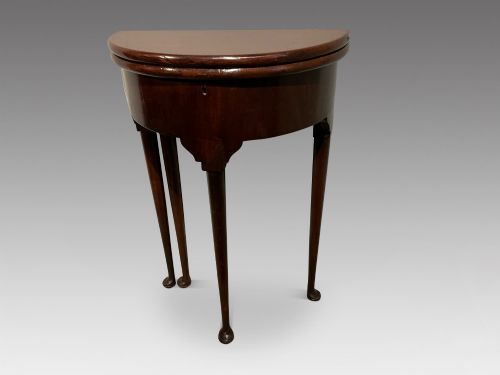
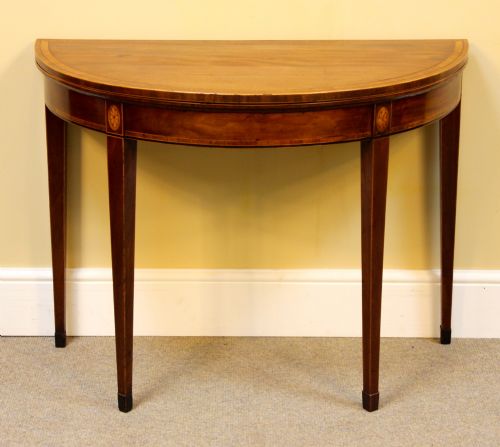
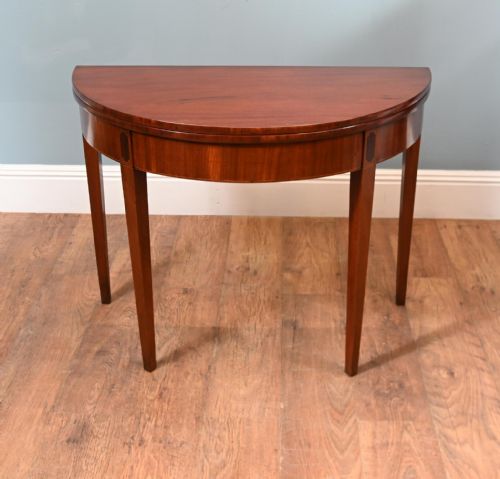
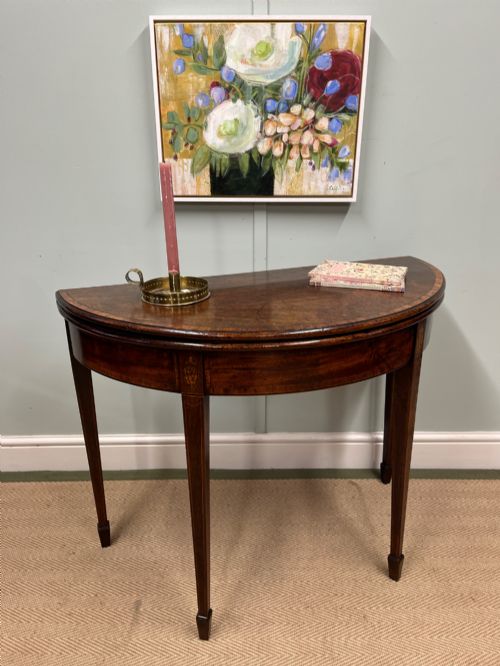
The forms vary from rectangular and serpentine shapes to demilune and D-shaped profiles that fit neatly into period interiors. Many function equally well as tea tables or general console tables when the hinged top remains closed.
Makers produced these games tables with concertina actions, gateleg supports, or pivoting leaves to bear the weight of the open top. Buyers encounter diverse proportions, from small half-moon tables to larger mahogany surfaces.

How They Were Made
Cabinet makers relied heavily on mahogany, often specifically Cuban mahogany, alongside rosewood and satinwood for the primary structures and show surfaces. Artisans applied fine wood veneer and intricate wood inlay, incorporating boxwood and satinwood stringing to define the edges and borders.
Workshops integrated brass inlay and brass mounts on regency examples, adding metallic contrast to dark timbers. Surfaces frequently received decorative treatments such as painted decoration or meticulous polish to highlight the natural grain and patination of the wood.
Georgian Foldover Card Table Retail Price Guide 2026
Typical asking prices for georgian foldover card table among the pieces listed under this phrase on Sellingantiques today, from the lower quarter to the upper quarter. They describe what is for sale here now, not the wider market.
Listings feature mahogany, rosewood, satinwood, and boxwood, spanning the eighteenth and nineteenth centuries with frequent examples from the regency period.
What Varies in Quality
The division between standard and superior pieces rests on the choice of timber and the precision of the cabinet work. Tables utilising highly figured burr yew, dense cuban mahogany, or detailed marquetry inlay sit firmly at the higher end of the scale.
Mechanical execution also dictates worth, particularly the smoothness of concertina actions and the stability of folding leaves. Refined carving on the legs, such as Chippendale style details or Gillows style shaping, separates workshop masterpieces from simpler provincial designs.
Gillows·Giles Grendey
The Georgian Foldover Card Table Glossary
- Concertina action
- An expanding frame mechanism that pulls out to support all four corners of a foldover top when opened. This sophisticated engineering allows the rear legs to move outwards in symmetry.
- Demilune
- A half-moon or semicircular shape popular for tables designed to stand flat against a wall. These forms often double as tea tables.
- Patination
- The surface sheen and deep colour acquired by aged wood through decades of handling, light, and polishing. Good examples display a warm, unblemished depth.
- Marquetry
- Decorative patterns formed by fitting contrasting veneers into a prepared background. Artisans use this technique to create elaborate floral or geometric motifs on table tops.
- Serpentine
- A gently undulating curved outline that bends outward in the centre and inward at the sides. This contour requires skilled carpentry to shape accurately.
Georgian Foldover Card Table: Frequently Asked Questions
How do you open the table?
Most tables use a hinged top that swings open on pivots, requiring a support leg to pull out or a concertina frame to expand and hold the weight.
Once the leaf lies flat, it creates a stable surface traditionally lined with baize or leather for playing cards.
Were they only used for cards?
Although designed primarily for games like whist, many doubled as tea tables during daytime hours.
Owners placed them against drawing room walls when closed, treating them as decorative console tables until evening.
How do I spot a georgian piece?
Look for construction traits typical of the eighteenth century, such as hand-cut dovetails, dense mahogany timbers, and period specific leg styles like those associated with Chippendale.
Secondary woods like oak or pine often appear inside the frame where makers did not use polished show surfaces.
Can I use it as a desk?
The height and surface area of many card tables suit occasional writing or laptop use when opened.
However, users should check the stability of the folding leaf and any interior wells before placing heavy items on top.