

Folded Card Table
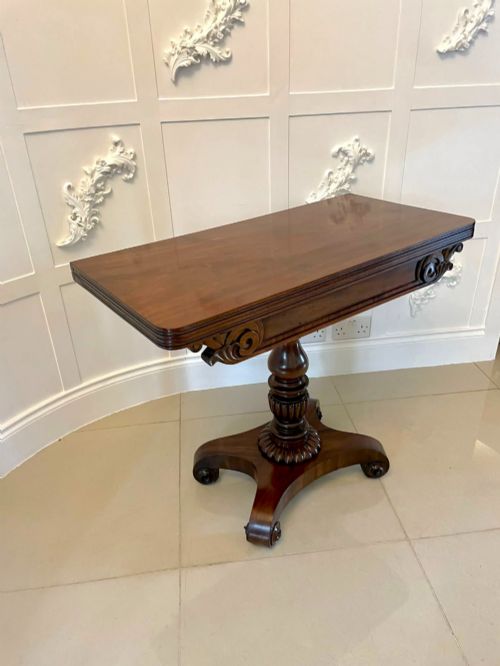
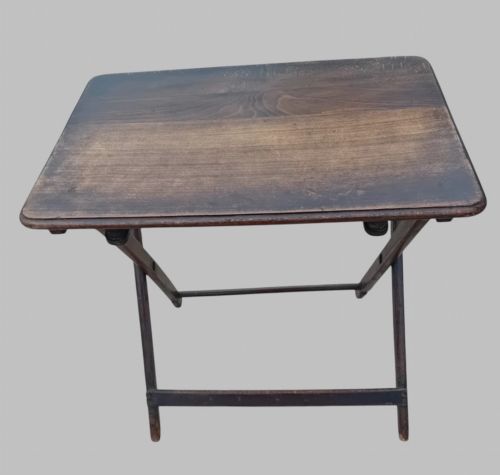
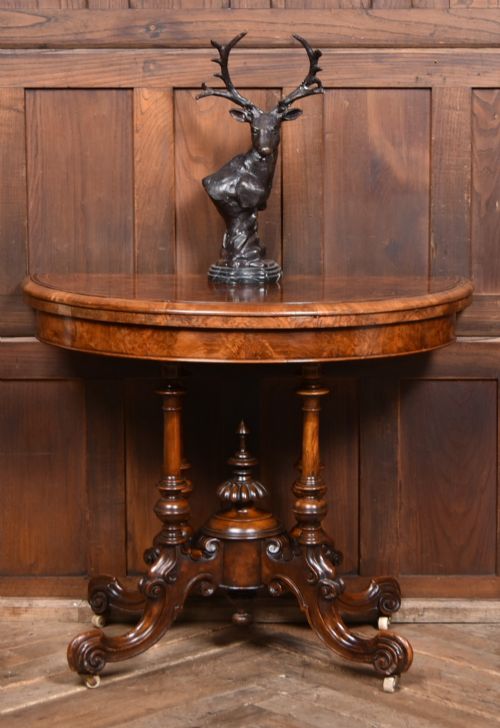
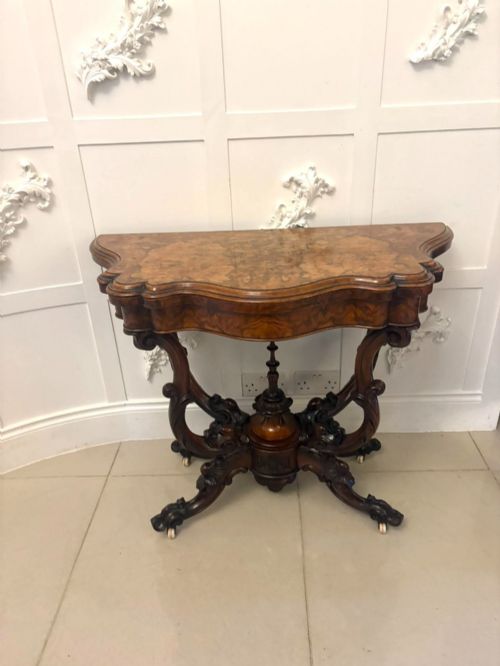
A folded card table is a clever piece of furniture designed for gaming and social evenings that unfolds to reveal a baize-lined surface.

Folded Card Table
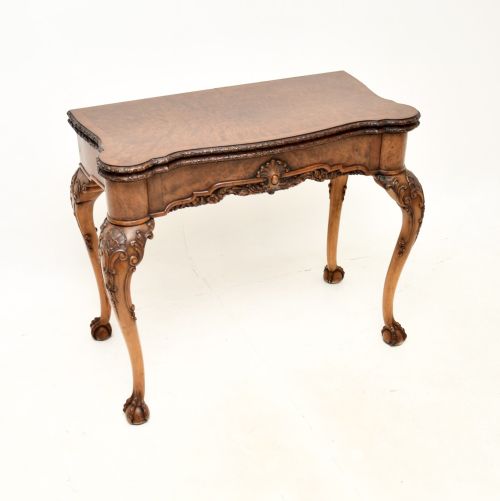
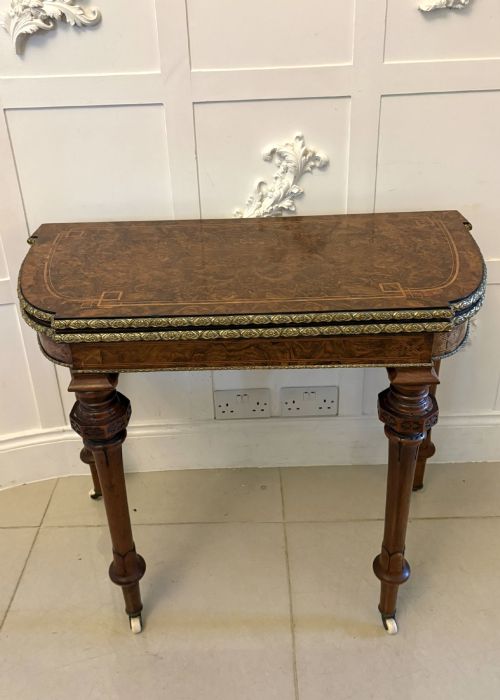
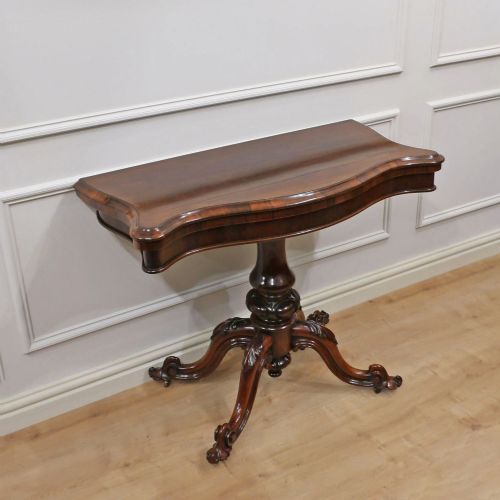
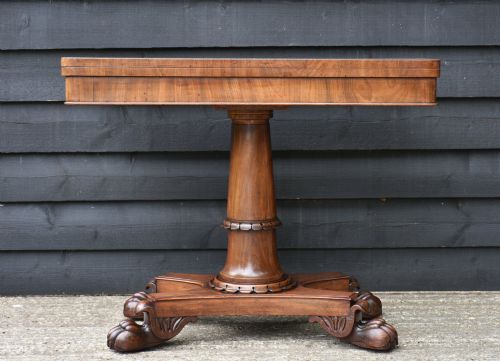
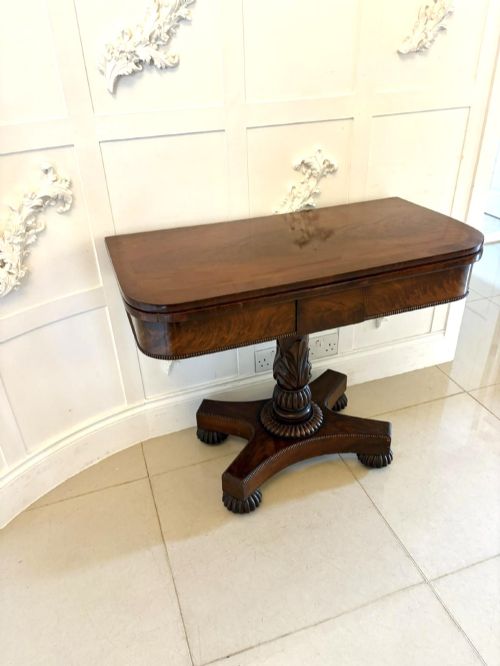
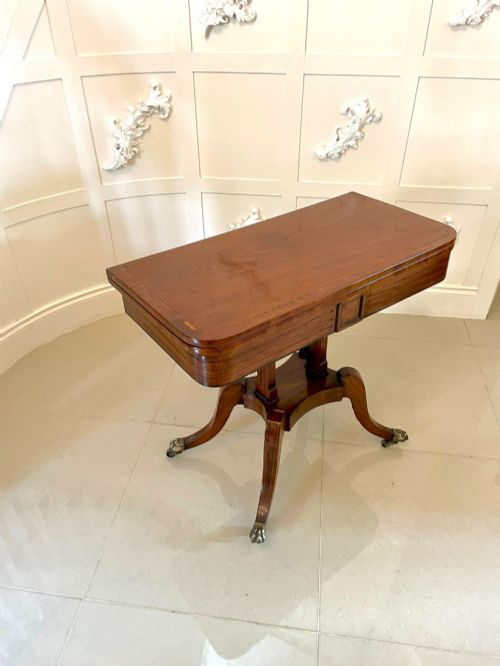
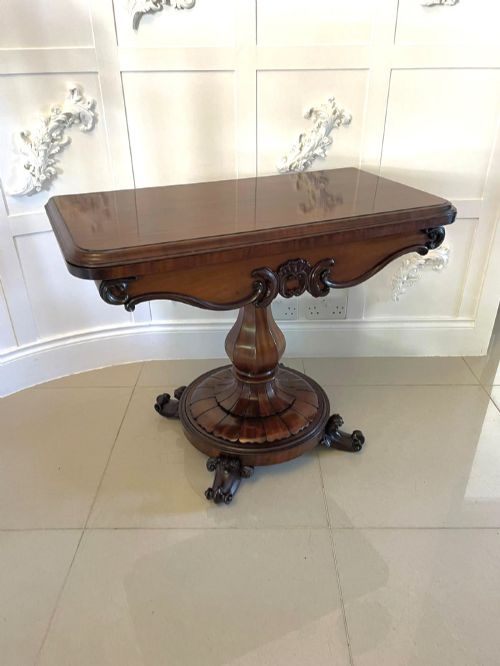
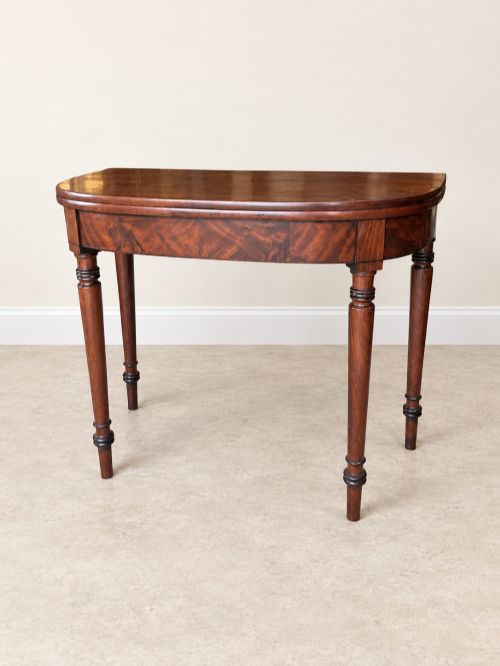
A folded card table provides a dual-purpose surface that sits discreetly against a wall as a console or side table before opening out for card games and social gatherings. These pieces span several key periods, with examples appearing from the 18th century, the Georgian and Regency eras, the Victorian epoch, and into the Edwardian period.
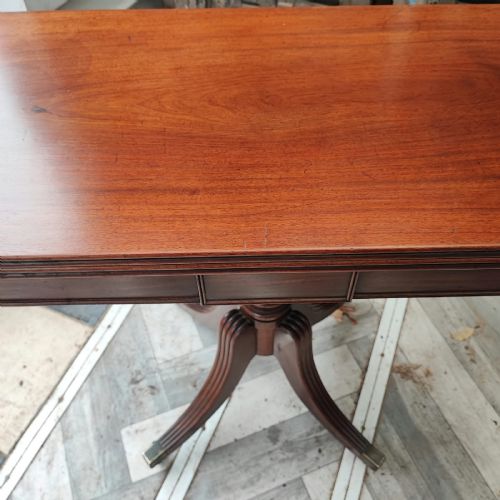
The most common formats you will meet on this page are mahogany, rosewood, and burr walnut tables featuring fold-over tops, swivel mechanisms, or clever envelope designs. Alongside standard card tables, the listings include games tables, tea tables, and console tables that share the same folding or pivoting construction.
How they were made
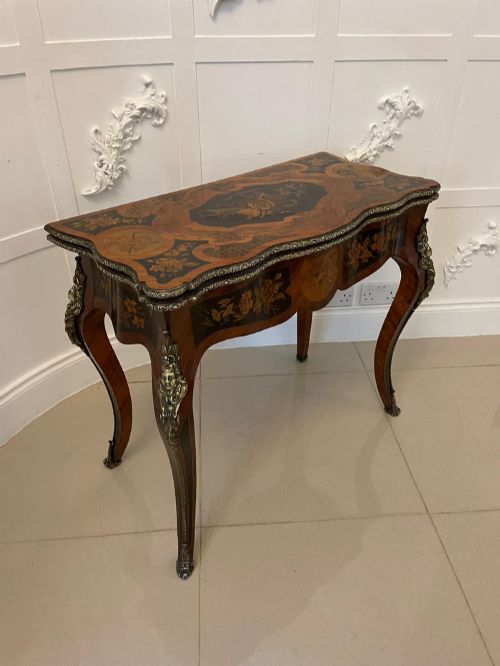
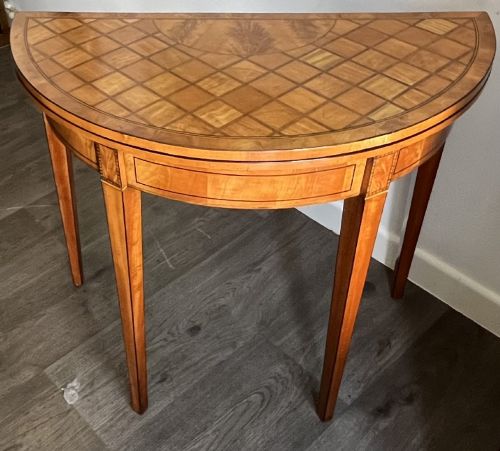
Cabinetmakers constructed these tables using solid timbers like mahogany, beech, and walnut for the structural frames, often applying fine veneers such as satinwood, kingwood, burr yew, and rosewood to the visible surfaces. Crossbanding and stringing in contrasting woods framed the tops, while brass inlay, marquetry, and carved wooden bases added decorative detail to the better examples.
The mechanics relied on clever joinery, including concertina actions, swivel tops, and folding envelope leaves that pivoted smoothly on wooden or brass hinges to support the extended leaf without sagging.
The selection spans the 18th century through the Georgian, Regency, Victorian, and Edwardian periods.
What varies in quality
The distinction between ordinary and exceptional pieces lies in the choice of timber and the precision of the cabinetwork. Tables veneered in highly figured burr walnut, flame mahogany, or elaborately marquetry-inlaid kingwood and satinwood demand superior skill from the maker.
Construction details also separate the tiers of quality, seen in whether a table utilises a complex concertina frame that expands symmetrically or a simpler pivoting leg, alongside the crispness of hand-carved details and ormolu mounts.
George Bullock·Gillows
The Folded Card Table Glossary
- Fold-over
- A table top hinged in the middle that opens out to double its surface area, resting on a pivoting leg or swinging frame.
- Concertina action
- An expanding frame that pulls out like a bellows to support all four corners of a opened table evenly.
- Crossbanding
- A strip of veneer applied to the border of a table top with the grain running perpendicular to the main centre panel.
- Demi-lune
- A half-moon shape characteristic of many 18th-century and Regency tables designed to stand flat against a wall.
- Baize
- The traditional woven woolen fabric used to line the playing surface of card and games tables.
Folded Card Table: Frequently Asked Questions
What were card tables used for?
In past centuries, card tables served as essential social furniture for hosting evening parlour games such as whist, quadrille, and piquet. When not in use for gaming, the folded top allowed the piece to function as a side table, tea table, or console against a drawing room wall.
This versatility made them immensely popular in prosperous homes where rooms served multiple functions throughout the day.
How do I tell a Georgian card table from a Victorian one?
Georgian card tables, particularly those from the George III period, often showcase crisp mahogany, satinwood veneers, and straight or slender cabriole legs. They tend to feature understated elegance and fine stringing.
Victorian examples frequently employ darker woods like rosewood and burr walnut, often displaying heavier proportions, elaborate carved basket bases, or French revival influences like ormolu mounts and marquetry.
Can I use an antique card table every day?
Antique folded card tables are sturdy enough for everyday use as display surfaces or occasional writing desks, provided you treat the polished wood with care. Placing hot cups or damp glasses directly on the delicate veneer should be avoided.
If you plan to use the table for card games, ensure the hinges and supporting legs are stable before opening the leaf fully to protect the vintage mechanism.