




Neoclassical Fold Top Table
These neoclassical fold top table examples bring refined proportions and ingenious folding mechanics straight from the late eighteenth century into modern rooms.

Neoclassical Fold Top Table
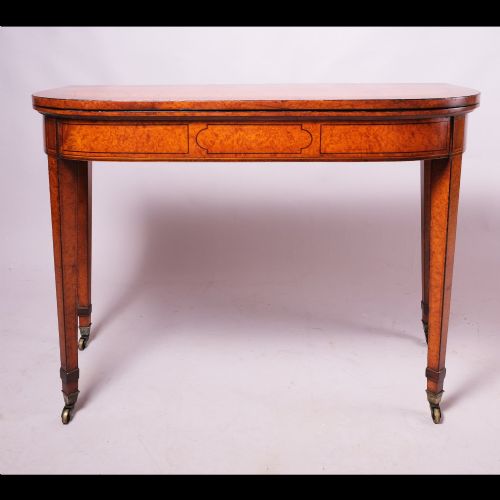
A neoclassical fold top table combines symmetrical geometry with surfaces designed to expand for dining, tea, or card games. These pieces span the eighteenth century, the nineteenth century, and the Edwardian era, showing forms such as card tables, tea tables, and console tables.
The versions most commonly met on this page include demi-lune card tables and D-shaped tea tables. Makers constructed these versatile items in mahogany, satinwood, amboyna, and oak, applying precise inlays and painted decoration.
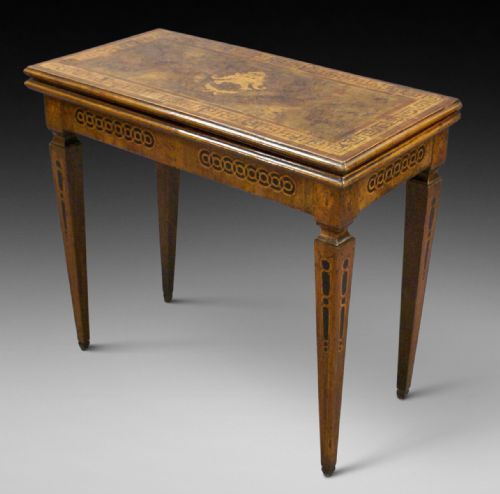
Geographical origins range from British workshops working in the Sheraton and George III styles to Italian makers producing inlaid games tables. The folding mechanism transforms a compact pier or console piece into a fully functional surface.
Materials and construction methods
Cabinet makers utilised dense hardwoods like mahogany and walnut for structural stability, pairing them with decorative timbers such as satinwood and amboyna for visible surfaces. Cross-banding and boxwood stringing added crisp linear borders to the tabletops.
Marquetry inlay introduced contrasting botanical and geometric motifs into the timber veneer, while hand-painted details embellished satinwood panels. Brass fittings often secured the clever hinges and swing legs required for the folding tops.
Neoclassical Fold Top Table Retail Price Guide 2026
Typical asking prices for neoclassical fold top table among the pieces listed under this phrase on Sellingantiques today, from the lower quarter to the upper quarter. They describe what is for sale here now, not the wider market.
Some tables hide secret compartments beneath the folding top, once reserved for secret love letters or winning card stakes.
Assessing craftsmanship and finish
The division between standard output and superior work rests on the precision of the timber matching and the subtlety of the marquetry. Finer examples display continuous grain across the fold and immaculate mitres on cross-banded borders.
Structural integrity in the pivoting leg mechanisms separates accomplished cabinet work from simpler builds. Original painted surfaces and patinated veneers retain greater visual depth than later restorations.
The Neoclassical Fold Top Table Glossary
- Demi-lune
- Half-moon shape. This semicircular form sits flat against a wall when closed and opens to a full circle for use.
- Marquetry
- Veneer pattern. Artisans cut thin slices of different coloured woods to form pictorial or geometric designs.
- Cross-banding
- Border veneer. A strip of wood veneer applied perpendicularly to the grain of the main surface.
- Stringing
- Inlay line. Narrow strips of contrasting timber set into channels to outline panels and edges.
Neoclassical Fold Top Table: Frequently Asked Questions
How were these tables used originally?
These tables served primarily as versatile furniture for entertaining guests in formal drawing rooms. Owners deployed the folding tops to create a stable surface for evening card games or afternoon tea.
When not in use, the folded pieces stood neatly against a wall as console or pier tables. This dual purpose made them essential items in Georgian and neoclassical interiors.
How do I distinguish George III pieces?
George III pieces typically exhibit disciplined classical proportions combined with high-grade mahogany or satinwood veneers. Look for restrained carved details, boxwood stringing, and tapered legs that reflect the prevailing architectural tastes of the late eighteenth century.
Maker influence from this period often shows in the meticulous execution of cross-banding and precise joinery. Dating relies on these structural characteristics and timber selections rather than stamped signatures.
Where should I place a fold top table?
These tables fit well in hallways, living rooms, and dining spaces where floor space fluctuates. Placing one against a wall in its closed position provides a surface for lamps or decorative objects.
Opening the top reveals a generous table surface suitable for occasional dining or card playing. The balanced proportions allow them to anchor both traditional and contemporary interiors.