
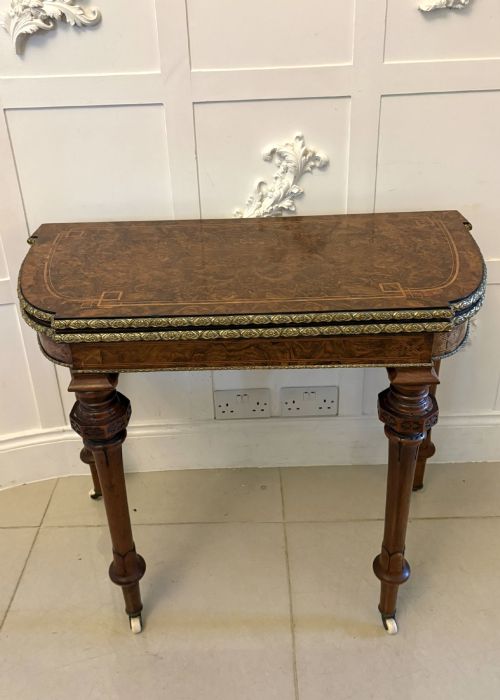
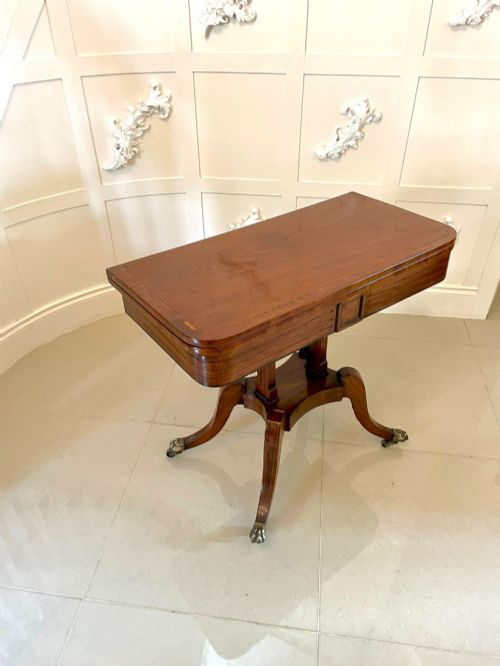
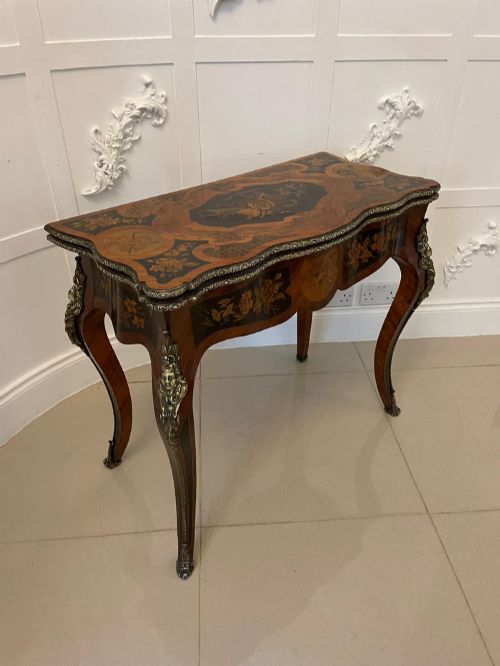


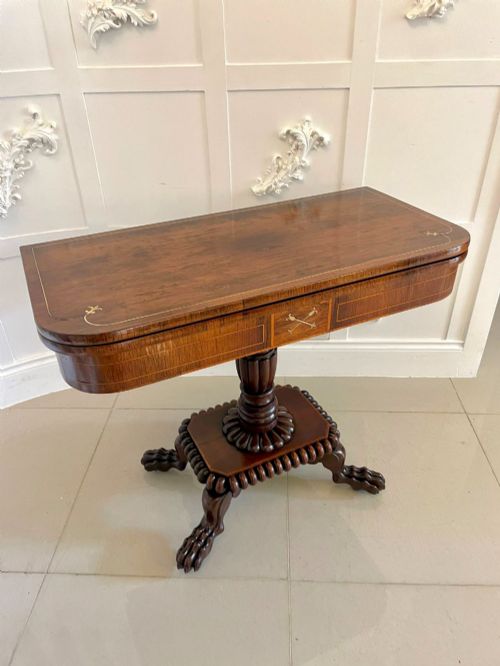
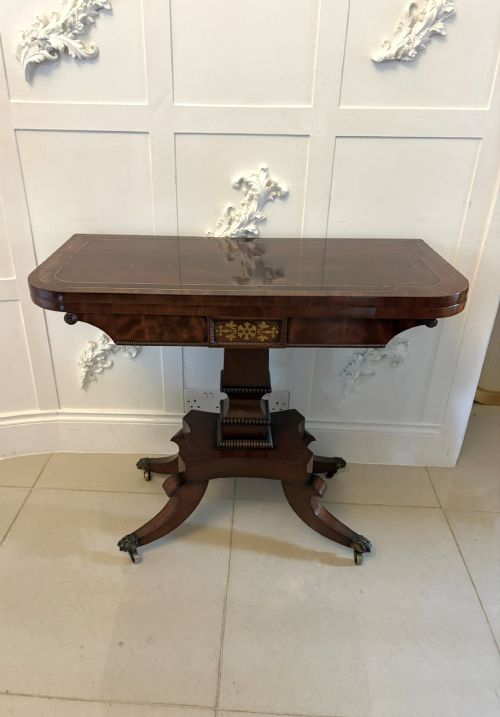
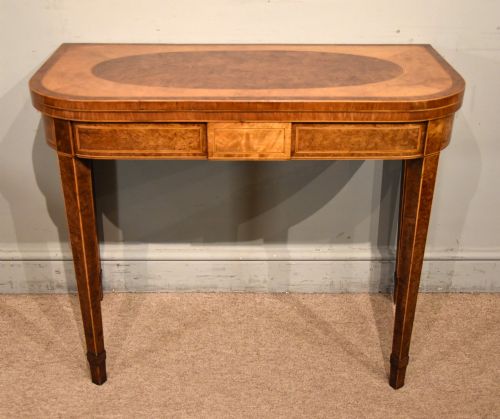
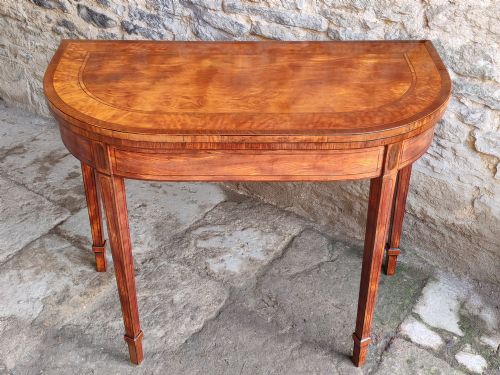
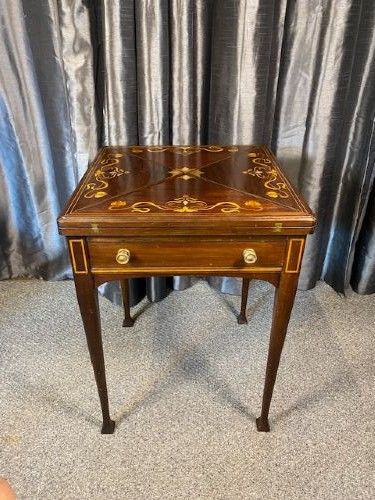
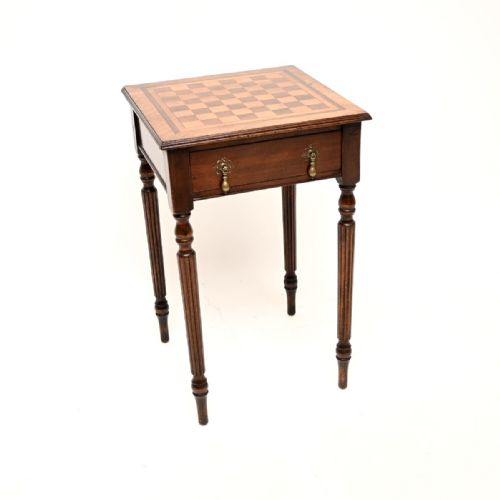
Inlaid Gaming Table
An inlaid gaming table brings centuries of social evening pastimes into a modern room with timber surfaces and contrasting veneers.

Inlaid Gaming Table
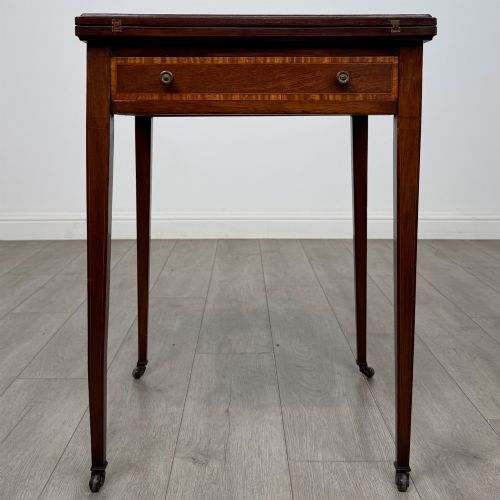
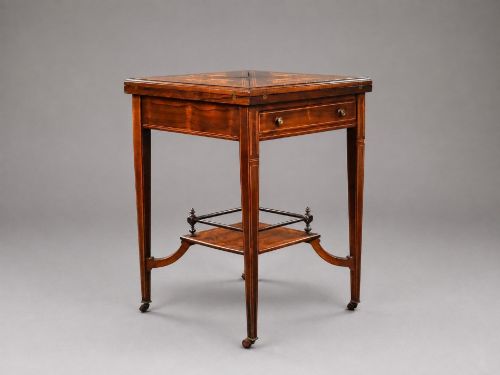
An inlaid gaming table is a multi-functional piece designed for cards, chess, and board entertainment, appearing in forms such as fold-over console tables, swivel-top designs, and envelope tops. Buyers encounter examples spanning the eighteenth century through the Edwardian period, with Georgian, Regency, and Victorian styles dominating the selection.
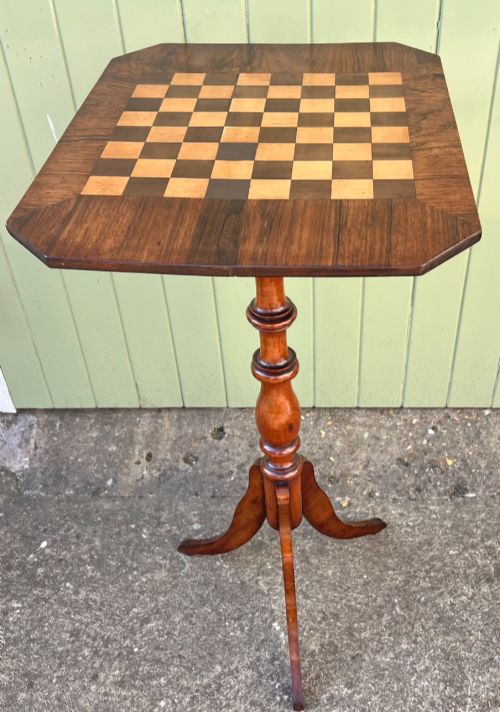
The most common formats on this page are mahogany and rosewood card tables featuring inlaid borders or dedicated chess boards. Makers adapted these tables for domestic rooms, allowing them to function as side or tea tables when closed and open up for play when required.
Materials and Technique
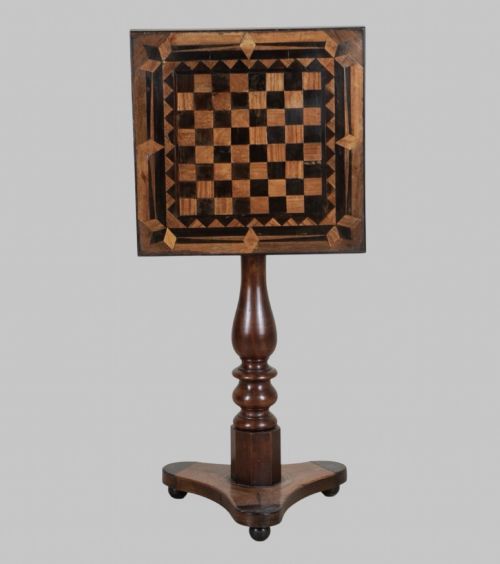
Cabinet makers utilised primary timbers such as mahogany, rosewood, burr walnut, and satinwood, applying veneers over solid carcases to create figured surfaces. Boxwood, brass, and exotic woods were then inlaid into the timber to form geometric stringing, foliage, or dedicated chess and backgammon boards.
Structural joints relied on traditional cabinet-making methods, while swivel mechanisms, folding leaves, and pivoting underframes allowed the tops to transition between closed console tables and stable playing surfaces.
Inlaid Gaming Table Retail Price Guide 2026
Typical asking prices for inlaid gaming table among the pieces listed under this phrase on Sellingantiques today, from the lower quarter to the upper quarter. They describe what is for sale here now, not the wider market.
The listings on this page span the 18th, 19th, and 20th centuries, featuring mahogany, rosewood, satinwood, and walnut with inlaid chess and card surfaces.
The Spectrum of Make
Quality rests in the precision of the timber selection and the sharpness of the inlay work. Higher-grade pieces utilise densely figured veneers like burr walnut or amboyna, paired with crisp, clean boxwood and brass stringing that remains flush with the surrounding wood.
Lower-grade examples show simpler mahogany surfaces with plain borders and heavier, less refined hinge mechanisms. The sophistication of the internal pivoting mechanism and the harmony of the contrasting woods separate standard production items from workshop pieces signed by named cabinet makers.
George Bullock·Bruce & Burns of Edinburgh
The Inlaid Gaming Table Glossary
- Envelope table
- A square card table with four triangular flaps that swivel and fold open together to reveal a baize-lined playing surface. This design became popular during the Edwardian period.
- Demilune
- Half-moon shaped, describing tables with a curved front and a straight back edge designed to stand flat against a wall.
- Marquetry
- The art of forming decorative patterns using thin veneers of different coloured woods, fitted together into a single panel.
- Ormolu
- Gilt-bronze mounts applied to furniture for decorative effect, frequently seen on Victorian revival pieces.
- Stringing
- A narrow strip of contrasting wood or light-coloured inlay set into the surface of a table to define borders and panels.
Inlaid Gaming Table: Frequently Asked Questions
How do I know what games a table was made for?
Examine the inlaid surface on the top or beneath the folding leaf. Tables with checkered squares indicate chess or draughts, while plain veneered surfaces often reveal baize or leather playing areas once opened.
Multi-game tables feature reversible or sliding tops that conceal backgammon layouts and storage wells for counters beneath the playing surface.
Can I use an antique gaming table daily?
These pieces were built for regular domestic use and function well as side or hall tables when closed. Opening and closing the top requires care to protect the original hinges and pivoting wooden supports.
Avoid placing hot cups or liquids directly on the polished timber veneer to protect the historical finish and inlay work from moisture damage.
How do I distinguish Georgian from Victorian tables?
Georgian and Regency examples tend to feature straight-grained mahogany or rosewood with restrained brass stringing and classical proportions. They often utilise fold-over swivel tops supported by a single pivoting rear leg.
Victorian tables frequently display burr walnut veneers, heavier carved columns, elaborate serpentine edges, and French or Louis XV revival styling with ormolu mounts.