




Antique Square Card Table
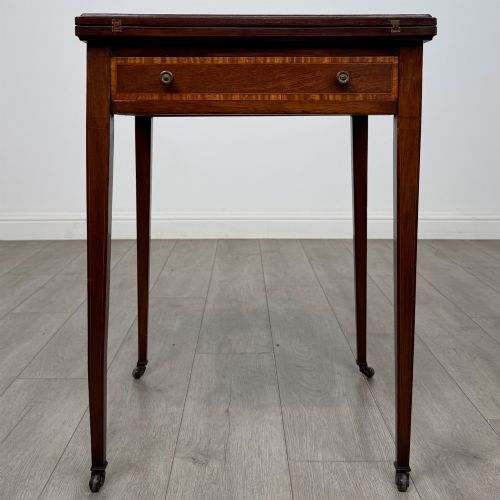
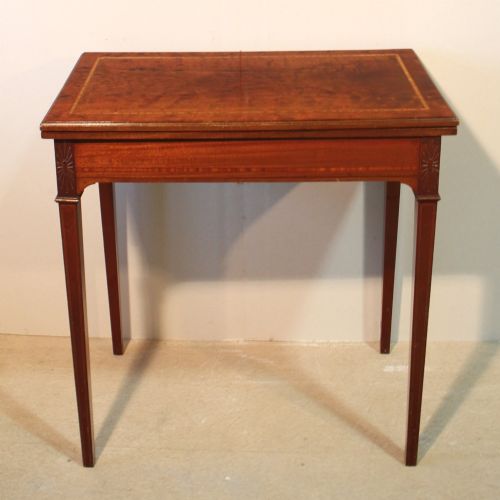
An antique square card table is a clever piece of domestic furniture built for evening entertainment, offering a fold-over top that transforms from a compact side table into a baize-lined surface for play.
Antique Square Card Table
An antique square card table serves a distinct purpose in period interiors, designed specifically for card games and social gatherings before the dominance of modern entertainment. When searching for an antique square card table, buyers encounter a variety of forms ranging from Georgian fold-over designs to Edwardian envelope tables.
The selection on this page spans several centuries, including 18th century, 19th century, and Edwardian periods. Examples frequently appear in mahogany and satinwood, often featuring stylistic revivals such as Hepplewhite and Sheraton influence alongside Georgian and Chippendale aesthetics.
Beyond standard card tables, the records show related forms including games tables, tea tables, and occasional tables with similar folding mechanisms. These pieces function equally well as side tables or lamp tables when closed, making them adaptable for modern rooms.
Materials and construction
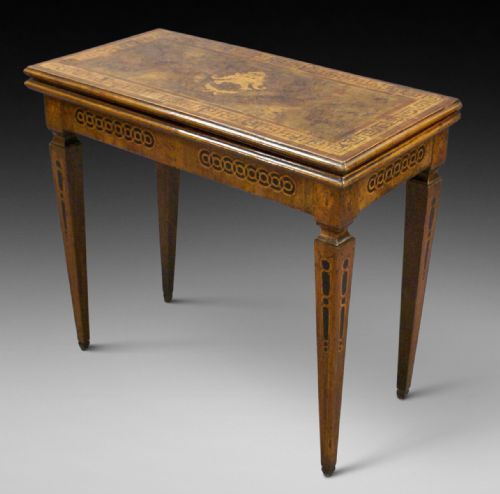
Makers relied heavily on timber selection, utilising mahogany as a primary structural wood alongside satinwood, oak, and walnut for contrasting surfaces. Wood veneer and marquetry inlay provide decorative enrichment across many surviving examples.
Construction techniques focus on mobility and transformation, employing concertina actions, flip tops, and rotating envelope leaves to support the extended playing surface. Boxwood stringing and brass fittings frequently accent the woodwork.
The inventory spans the Georgian and Edwardian periods, including specific revivals of Hepplewhite and Chippendale styles.
Judging quality and craftsmanship
Quality rests upon the precision of the folding mechanism and the stability of the legs when extended to hold weight. A superior table maintains tight joints and smooth operation without wobble in the hinges or frame.
The crispness of the marquetry inlay and the figuring of the mahogany veneer distinguish finer workshops from standard production. Surface finish and timber selection dictate the overall visual presence of the piece.
The Antique Square Card Table Glossary
- Concertina action
- An expanding frame mechanism that opens on all four sides to support a fold-over top evenly. This construction is typical of high-quality 18th century examples.
- Envelope table
- A square table with four triangular flaps that pivot open to reveal the interior surface. This form gained popularity during the Edwardian period.
- Marquetry inlay
- Decorative patterns formed by fitting contrasting pieces of wood veneer into a primary surface. It appears frequently on satinwood and mahogany pieces.
- Foldover top
- A hinged wooden surface that doubles the size of the table when opened for play or dining. The interior often retains its original baize or leather lining.
- Boxwood stringing
- Thin inlay lines of pale wood used to outline drawers, edges, and panels. This technique adds subtle linear contrast to darker timbers.
Antique Square Card Table: Frequently Asked Questions
How do concertina action tables work?
A concertina action utilises an expanding wooden frame that pulls outward from all four corners when the top unfolds. This design provides extra leg support beneath the extended leaves.
It is an indicator of cabinet-making skill typically found on 18th century and Georgian pieces.
Can these tables be used daily?
These tables function well as side tables, lamp tables, or occasional tables when the top remains closed against the wall. Opening the mechanism requires care to protect the antique hinges and veneered surfaces.
Placing them out of direct sunlight preserves the polish and any interior baize lining.
How do I identify a Georgian card table?
Georgian card tables generally display solid timber construction in mahogany, often featuring carved details like ball-and-claw feet or straight legs with subtle chamfers. Their folding tops rely on simple pivot or concertina mechanisms rather than rotating leaves.
Proportions tend to be heavier and more robust than later Edwardian iterations.