


Georgian Gaming Table Brass
A Georgian gaming table brass brings refined card-playing heritage home through gleaming metal inlay and rich timber.
Georgian Gaming Table Brass
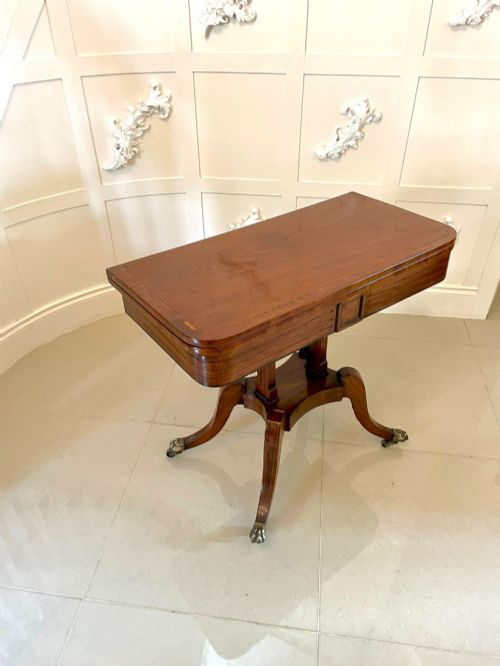
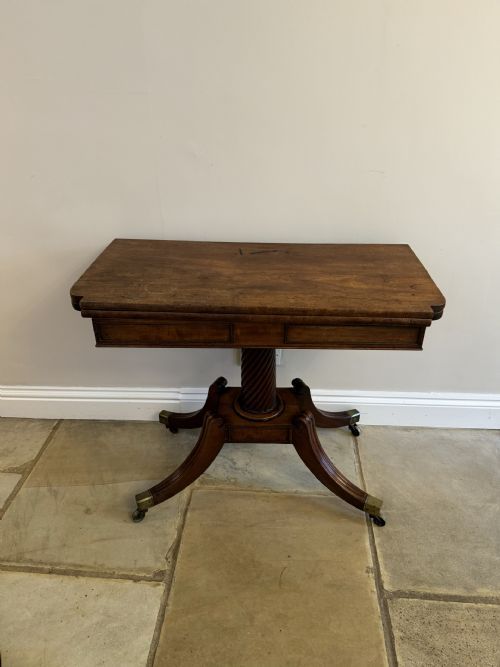
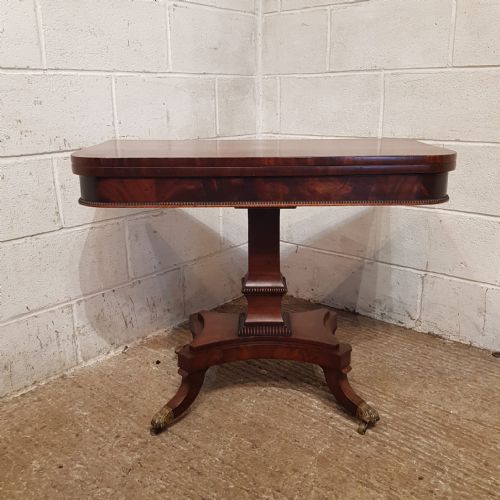
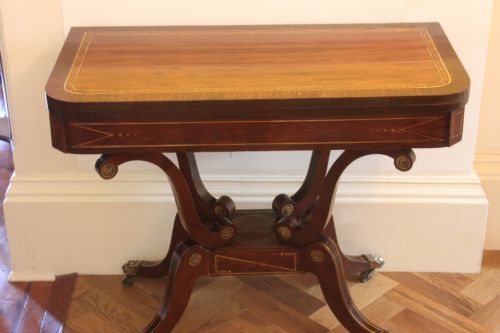
A georgian gaming table brass represents the sophisticated social pastimes of the eighteenth and nineteenth centuries, designed specifically for card games and domestic gatherings. These pieces function as versatile furniture, often featuring fold-over tops that transform a side table into a dedicated surface for play.
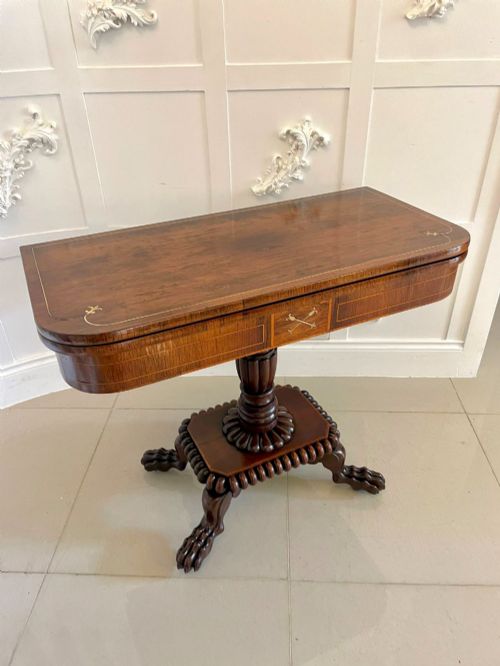
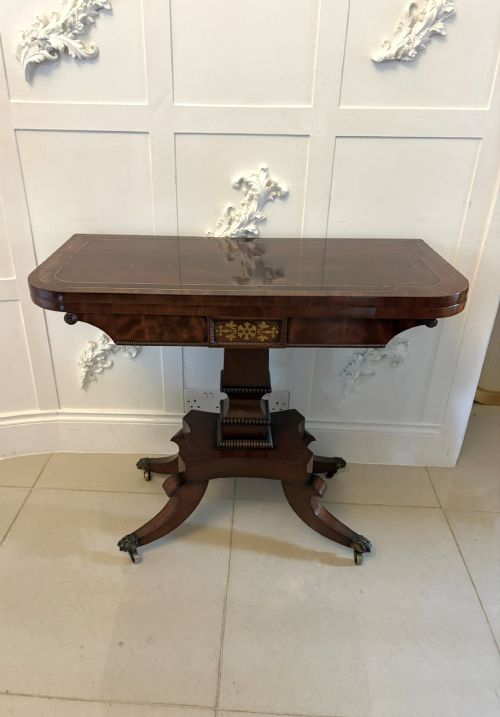
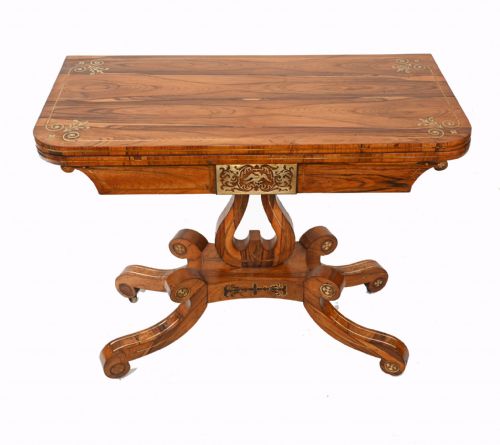
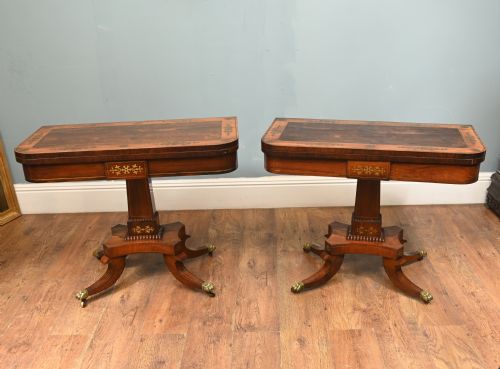
Most examples encountered here date from the Regency and late Georgian periods, spanning mahogany and rosewood constructions. The inclusion of brass inlay and mounts defines this particular group, adding crisp geometric lines or classical motifs to dark timbers.
Materials and Technique
Cabinetmakers utilised dense timbers such as mahogany, rosewood, and satinwood, frequently applying crossbanding and contrasting stringing in ebony and boxwood. These tropical and native hardwoods provided stable surfaces capable of supporting intricate joinery and folding mechanisms.
Brass formed an essential decorative element, embedded directly into the timber as precise stringing or cast into gilded mounts and mounts. Craftsmen combined these metal details with wool baize surfaces inside the folding leaves to create a durable, muted playing field.
Some tables hide secret compartments beneath the folding top, ready to swallow stray sixpences after a late night at cards.
Judging Quality and Execution
The distinction between standard domestic pieces and top-tier examples lies in the precision of the brass inlay and the selection of figured timber veneers. Superior pieces display seamless integration of metal into wood without gaps, alongside richly grained rosewood or flame mahogany.
Structural integrity of the fold-over mechanism and the refinement of the pedestal or leg supports also dictate worth. Tables with well-balanced proportions and crisp carving reflect superior workshop standards.
William Trotter of Edinburgh
The Georgian Gaming Table Brass Glossary
- Fold-over top
- A hinged table top that opens to double the surface area for gaming or dining. This mechanism is central to card and tea tables from the period.
- Brass inlay
- Thin strips or cut-out patterns of brass set flush into the wooden surface of the furniture. It creates sharp contrast against dark timbers like mahogany and rosewood.
- Crossbanding
- A strip of veneer applied to the border of a table top with the grain running perpendicular to the centre. This technique frames the primary timber.
- Wool baize
- A coarse woollen fabric used to line the interior playing surface of games tables. It provides a soft, quiet mat for cards during play.
- Gilded metal
- Metal treated with a gold-coloured finish or leaf to simulate solid gold mounts. It accents the corners and legs of formal Regency pieces.
Georgian Gaming Table Brass: Frequently Asked Questions
What is a georgian gaming table brass used for?
These tables served as dual-purpose furniture for the home, functioning as console or side tables when closed. When unfolded, the lined surface provided a dedicated space for card games and social betting.
They allowed polite society to host evening entertainment cleanly and efficiently, folding away neatly against the wall afterward.
How do I identify a Regency period table?
Regency tables typically display classical influences, bold rosewood or mahogany grains, and characteristic brass stringing or gilded mounts. Look for heavier pillar supports and platform bases rather than slender eighteenth-century legs.
Construction details such as mahogany secondary woods and traditional hand-cut joints also point to the early nineteenth century.
Are these tables suitable for everyday use?
Many examples remain sturdy enough for daily placement in a hallway or drawing room as side or console tables. The folding top should be operated with care to protect the antique hinges and internal wooden pivots.
Placing them away from direct sunlight preserves the rich colour of the rosewood and mahogany veneers.
What woods were commonly used?
Mahogany and rosewood dominate this group of tables, providing a dark, heavy foundation for brass decoration. Satinwood and ebony frequently appear as contrasting veneers and stringing.
Secondary timbers like pine or oak are typically found inside the framing and internal compartments.