
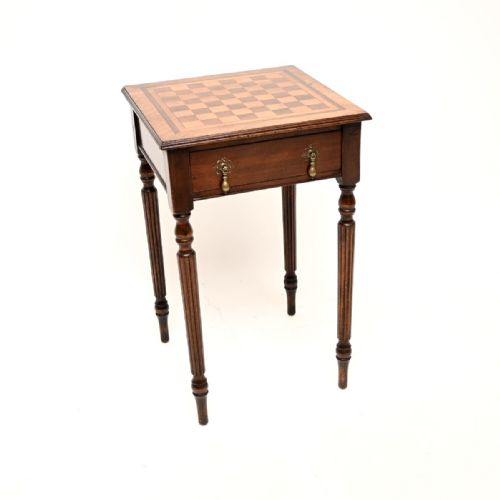
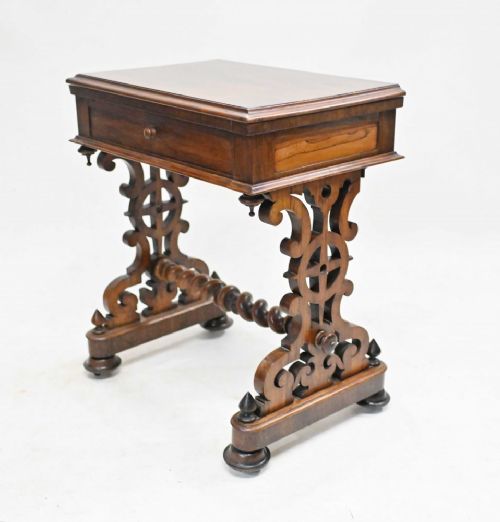
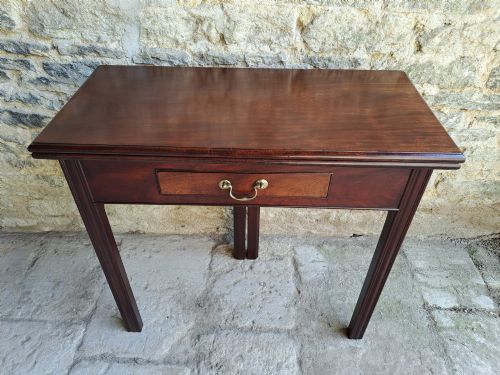


Antique Games Table Drawer
An antique games table drawer provides the concealed storage that every serious card player or chess enthusiast required.
Antique Games Table Drawer
An antique games table drawer belongs to furnishings created for domestic pastimes during the Georgian, Victorian, and Edwardian eras. These surfaces often double as tea tables, sofa tables, or occasional tables, adapting to the needs of a parlour.
The version most commonly met on this page is the Georgian or Victorian mahogany card table, frequently featuring a flip top, concertina action, or swivel mechanism alongside a concealed drawer for counters and dice.
Pieces span from mid-eighteenth-century George II examples up to early twentieth-century reproductions and compendiums, showing how social habits surrounding chess, backgammon, and card games evolved across generations.
How they were made
Joiners and cabinet makers relied heavily on timber selection, utilising solid mahogany, Cuban mahogany, walnut, and satinwood to construct the main bodies and folding leaves. Finer surfaces frequently incorporate wood inlay, marquetry, and kingwood borders.
Internal mechanics involve sophisticated carpentry, such as concertina action frames and folding mechanisms that support heavy tops when extended. Brass hinges, handles, and castors are integrated to manage movement and daily wear.
Cabinet makers occasionally miscalculated the drawer depth, forcing owners to store their ivory counters at an angle.
What varies in quality
The caliber of an antique games table drawer rests upon the depth of the cabinet maker's joinery and the integrity of the timber used. Dense Cuban mahogany and crisp, hand-cut marquetry or wood inlay distinguish ambitious commissions from standard commercial output.
Mechanisms dictate value as much as timber, with complex concertina actions and smoothly operating drawers reflecting superior workshop standards compared to basic pivot hinges and poorly fitted compartments.
The Antique Games Table Drawer Glossary
- Concertina action
- An expanding frame mechanism that extends to support a folding table top. This engineering allows the table to double its surface area while maintaining stability.
- Flip top
- A hinged table top that folds over or rotates to reveal a hidden compartment or a baize-lined playing surface. It allows a console or side table to transform instantly for play.
- Marquetry
- Decorative patterns formed by fitting together thin veneers of various coloured woods. It creates elaborate pictorial or geometric designs across the table top.
- Satinwood
- A durable, yellowish timber prized for its smooth grain and lustrous finish. Cabinet makers used it extensively for contrasting stringing and detailed inlay work.
- Games compendium
- A portable box or multi-functional table containing equipment for several different pastimes. These sets typically include boards, pieces, and counters for chess, backgammon, and cards.
Antique Games Table Drawer: Frequently Asked Questions
What is a concertina action table?
A concertina action table uses an expanding wooden frame that pulls outward as the top unfolds. This design provides four structurally sound legs beneath the extended corners during card games.
Such engineering is typically found on mid-eighteenth-century George II and Georgian pieces, distinguishing them from simpler swivel-top tables.
How were games table drawers used?
The drawers stored playing cards, bone or mother-of-pearl counters, dice, and small chess pieces when the table was not in use. They kept parlour accessories organised and close to hand.
Because the tables served multiple domestic purposes, the drawer also held correspondence or sewing items in daily living spaces.
How do I identify a Georgian card table?
Georgian card tables generally feature solid mahogany construction, precise hand-cut joints, and restrained carving such as plain or pierced friezes. Their drawers show hand-cut dovetails and side-hung runners.
Later Victorian versions often incorporate heavier mouldings, walnut veneers, marquetry, and more elaborate mechanical folding tops.