



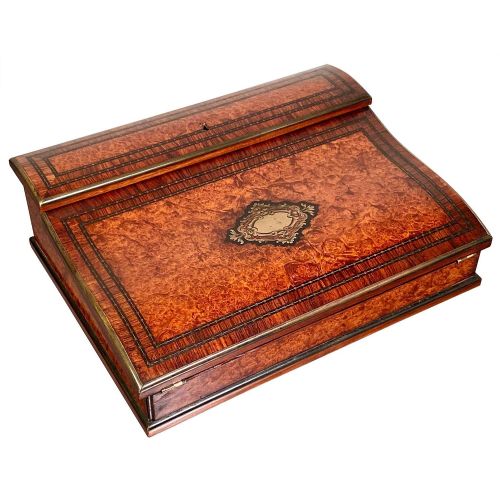
Inlaid Burr Walnut Desk
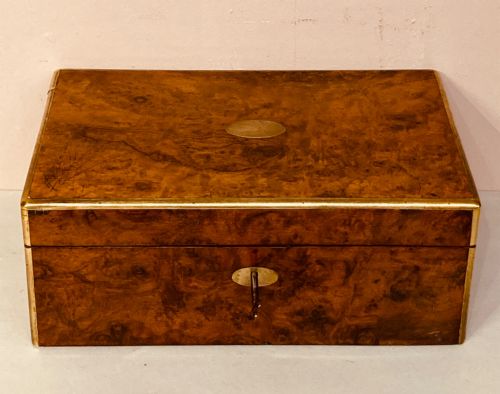
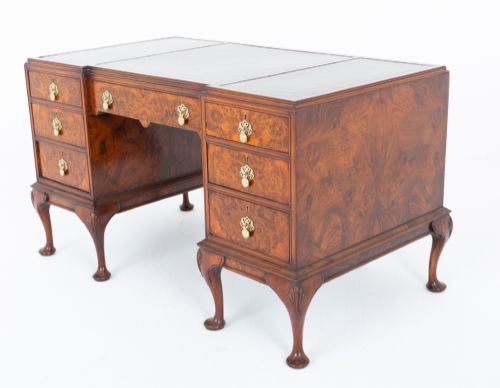
When choosing an inlaid burr walnut desk, you are selecting a piece defined by swirling wood grain and precise contrasting detail.
Inlaid Burr Walnut Desk
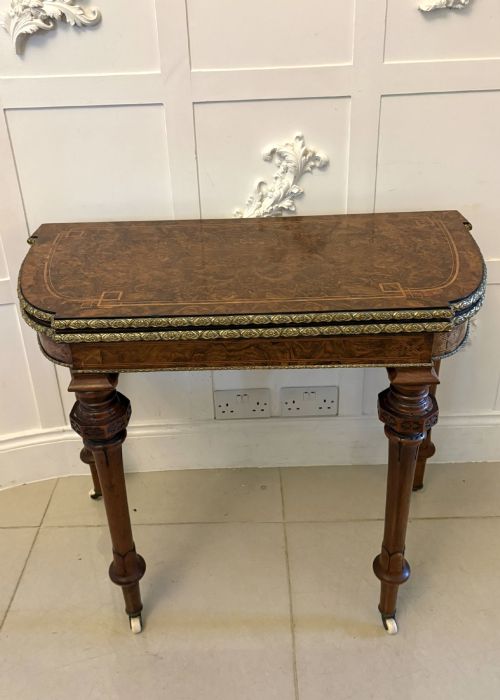
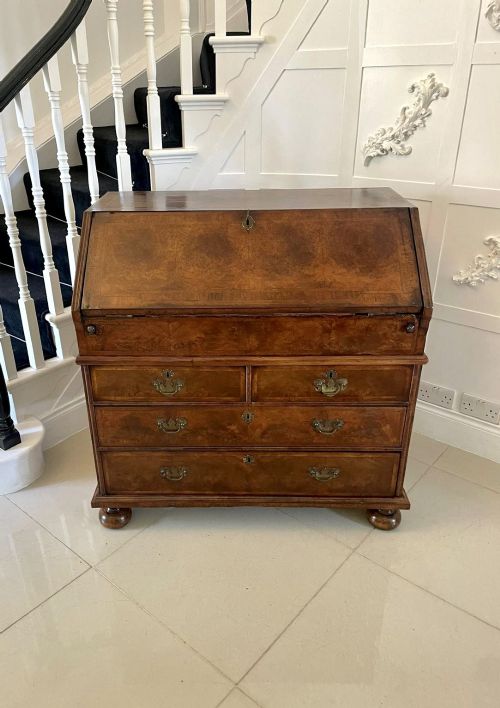
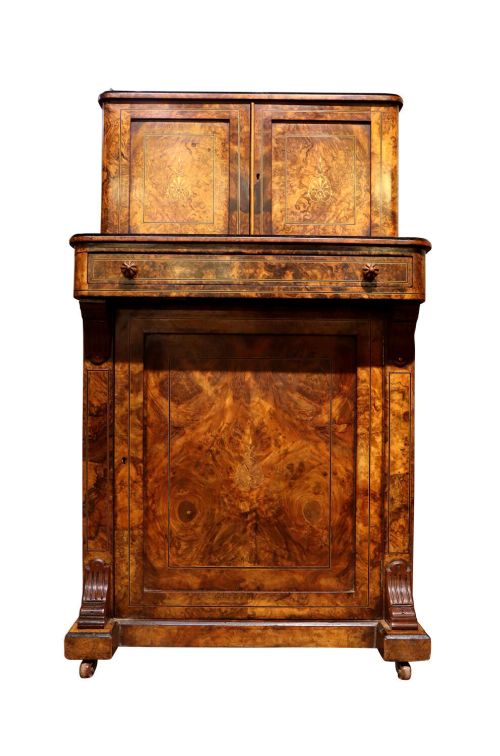
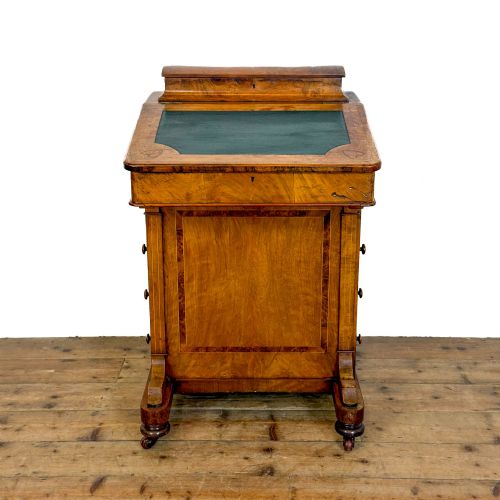
An inlaid burr walnut desk encompasses a range of writing furniture, from compact Davenport desks and slope-front bureaux to large freestanding library tables and refined bonheur du jour cabinets.
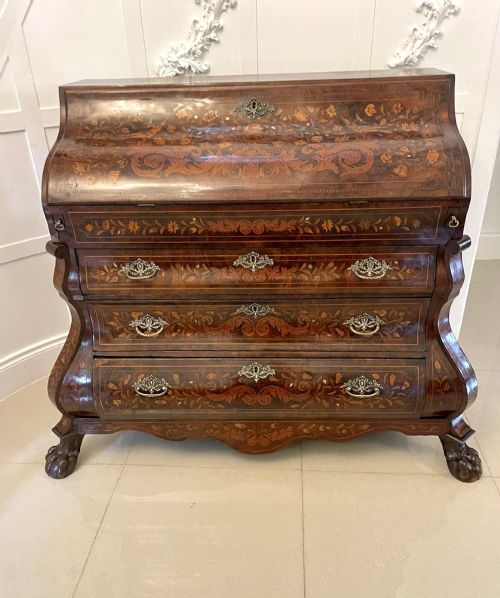
The Victorian era supplies the highest volume of pieces on this page, particularly mid-century examples featuring elaborate marquetry and brass mounts, alongside earlier 18th century Dutch and William and Mary burr walnut pieces.
Materials and construction
Cabinet makers sliced highly figured burr walnut timber into thin veneers, laying them over solid secondary woods to create swirling, symmetrical patterns across the writing surface and drawers.
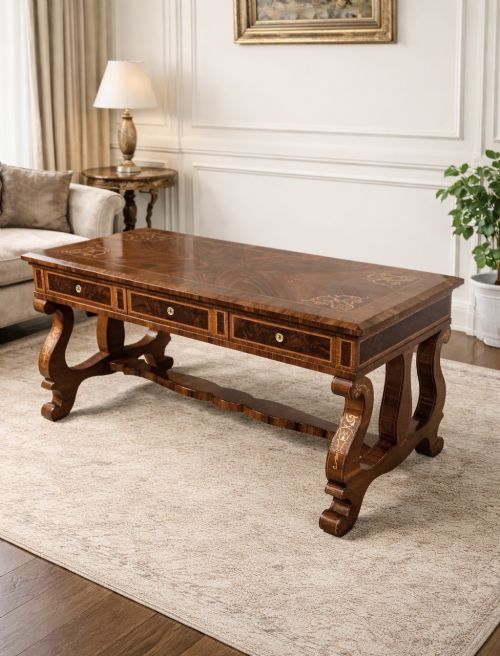
Craftsmen enriched these surfaces using boxwood and brass inlay, alongside floral marquetry and floral parquetry, sometimes combining the burr walnut with ebonised wood or ormolu mounts.
Listings feature burr walnut desks spanning the seventeenth century to the twentieth century, utilising brass, boxwood, and leather.
Judging the work
Superior examples display continuous, matching grain patterns across drawer fronts and top panels, demonstrating careful selection by the cabinet maker rather than patched veneer sections.
The crispness of the boxwood inlay and the depth of the floral marquetry separate standard production pieces from exceptional ones, where every inlaid stem and leaf remains flush with the surrounding walnut.
The Inlaid Burr Walnut Desk Glossary
- Burr walnut
- A wood harvested from the wart-like growths on walnut trees, yielding highly ornamental, swirling grain patterns prized by furniture makers.
- Marquetry
- A decorative technique arranging pieces of contrasting veneer into pictorial or floral designs across the surface of a desk.
- Davenport
- A compact writing desk featuring a sloping top above a pedestal of drawers, originating in the Regency period and remaining popular through the Victorian era.
- Bonheur du jour
- A light lady's writing desk featuring a small cabinet or set of pigeonholes fitted to the top surface.
- Escritoire
- A tall writing cabinet featuring a fall-front panel that drops down to reveal a fitted interior of small drawers and compartments.
Inlaid Burr Walnut Desk: Frequently Asked Questions
What is a Davenport desk?
A Davenport is a small, upright writing desk with a sloped leather-lined writing surface that often lifts to reveal storage. The side typically contains a bank of functional drawers.
First appearing around the turn of the nineteenth century, these compact pieces became widespread during the Victorian period, frequently constructed from burr walnut with marquetry inlay.
How do I care for burr walnut?
Burr walnut veneer requires stable indoor humidity and protection from direct sunlight to prevent the timber from drying out or warping. Regular dusting with a soft, dry cloth preserves the polished finish.
Avoid placing these desks near direct heat sources or damp areas, as extreme environmental changes risk lifting the delicate veneer and boxwood inlay.
How do I tell an 18th-century bureau from a Victorian one?
Eighteenth-century bureaux, including Dutch and William and Mary examples, often display bolder proportions, distinct cabinet construction methods, and deep floral marquetry. The walnut timber on older pieces tends to show a softer, darker patination developed over centuries.
Victorian interpretations from the mid-nineteenth century frequently incorporate machine-sawn veneers, ebonised accents, and standardised hardware alongside more complex pop-up mechanisms.