





Freestanding Walnut Table
A freestanding walnut table gives a room a finished centrepiece that looks correct from every angle.
Freestanding Walnut Table
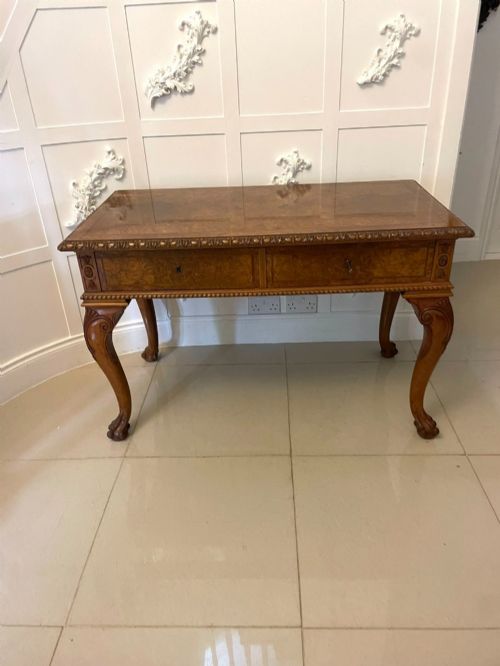
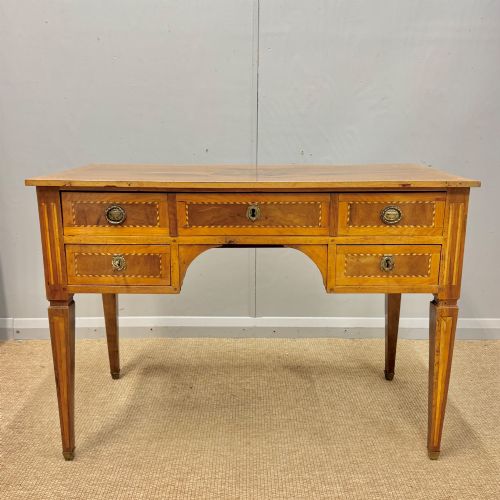
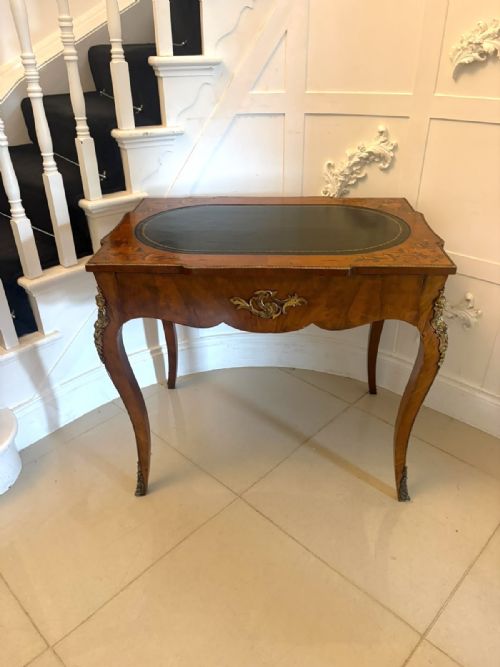
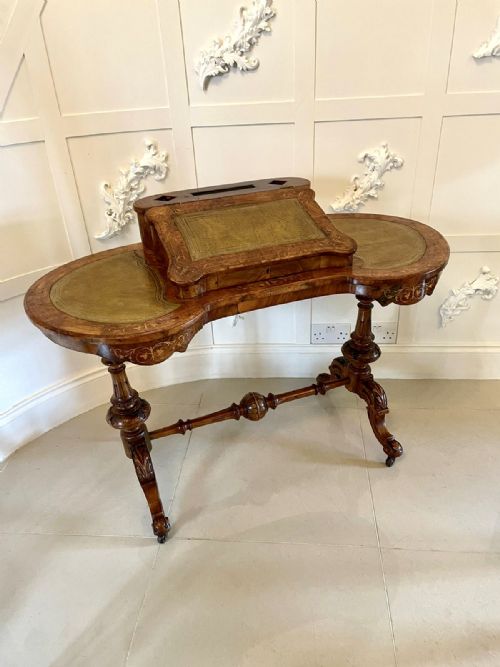
A freestanding walnut table is designed to sit in the middle of a room rather than against a wall, meaning every side receives careful finishing. When you search for a freestanding walnut table, you meet diverse forms ranging from centre tables and writing desks to console tables and sewing stands.
Victorian examples dominate the selection, heavily utilising burr walnut veneers with marquetry and parquetry details. Pieces also appear from the Edwardian period, the eighteenth century, and the early nineteenth century alongside revival styles.
The common thread across these objects is plain timber or figured grain treated to stand apart in an open space, unattached to panelling or plaster.
Materials and Construction
Cabinet makers selected solid walnut and burr walnut veneer for its rich colour and distinctive figured grain patterns. These wooden elements paired frequently with brass mounts, leather writing surfaces, and marble tops.
Marquetry and parquetry inlay work decorated the surfaces of desks and centre tables, while ormolu and glass additions enhanced specific Victorian and continental forms.
Several tables include clever compartments designed specifically for sewing gear, shaving mirrors, or hidden stationery drawers.
Judging Quality and Execution
Quality rests upon the selection of the burr walnut veneer and the precision of the underlying cabinet work. Superior examples display balanced grain patterns across every exposed side, including the reverse.
The intricacy of inlaid marquetry and the retention of original brass hardware or leather inserts distinguish higher tiers of production from standard commercial output.
Whytock & Reid·Howard & Sons
The Freestanding Walnut Table Glossary
- Burr Walnut
- Timber taken from the wart or growth on a walnut tree, yielding a swirling and highly decorative grain pattern. Cabinet makers applied thin slices of this wood as veneer to tabletops and cabinet fronts.
- Centre Table
- A table finished on all four sides to stand independently in the middle of a room. These pieces served decorative and functional purposes in Victorian drawing rooms.
- Marquetry
- The art of applying pieces of veneer to a structure to form decorative patterns and pictures. Makers utilised various tinted woods to achieve pictorial designs on desk lids and tabletops.
- Ormolu
- Gilded bronze mounting applied as a decorative trim to furniture. French-influenced pieces frequently incorporated these metallic accents.
Freestanding Walnut Table: Frequently Asked Questions
Where should I place a freestanding walnut table?
These tables belong in open spaces where their finished backs and sides remain visible. A centre table works well in the middle of a drawing room or entrance hall.
Writing desks and library tables operate effectively positioned away from walls to utilise the surrounding floor space.
How do I identify a Victorian walnut table?
Victorian examples often feature rich burr walnut veneers combined with walnut framing, turned pedestals, or carved cabriole legs. Many incorporate inset leather writing surfaces or elaborate marquetry.
They frequently date from the mid-to-late nineteenth century and show specific revival influences such as Louis XV or Rococo styles.
What is the difference between a console table and a centre table?
A centre table stands entirely on its own with finished detailing on all four elevations for central room placement. Console tables historically hugged walls, though specific freestanding variants received all-round finishing.
Centre tables prioritise balance from every angle, while console tables often emphasise a specific frontal presentation.
How do I care for walnut veneer surfaces?
Walnut benefits from minimal moisture and protection from direct sunlight to prevent the timber and veneer from fading. Regular dusting with a soft, dry cloth preserves the polished finish.
Avoid placing hot or damp items directly onto the wood to protect the historical polish and underlying veneer.