




Brown Walnut Library Table
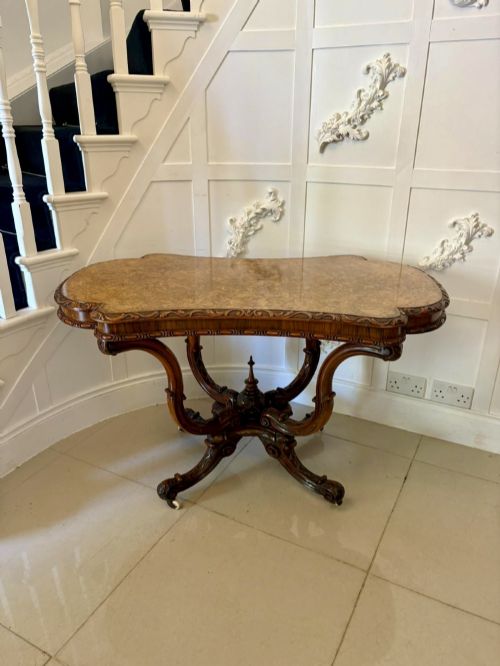
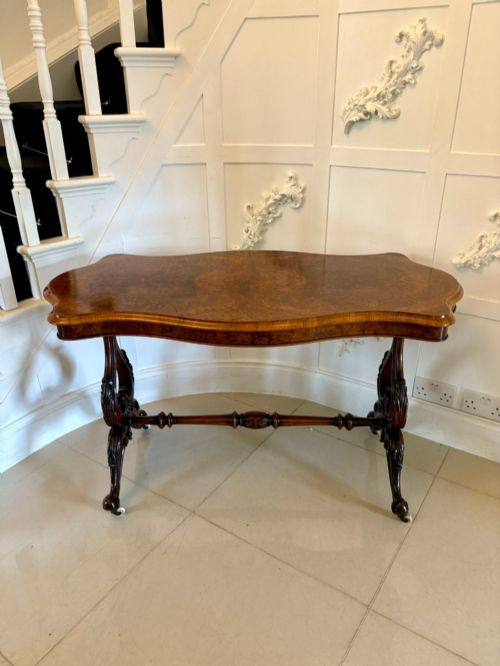
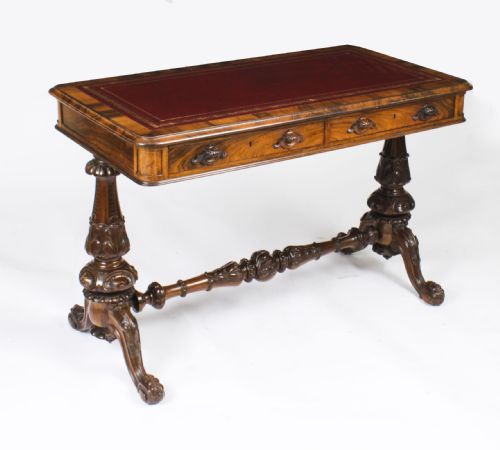
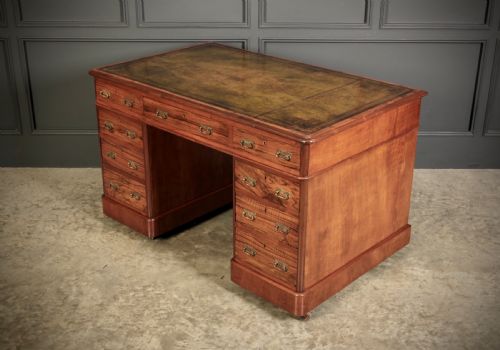
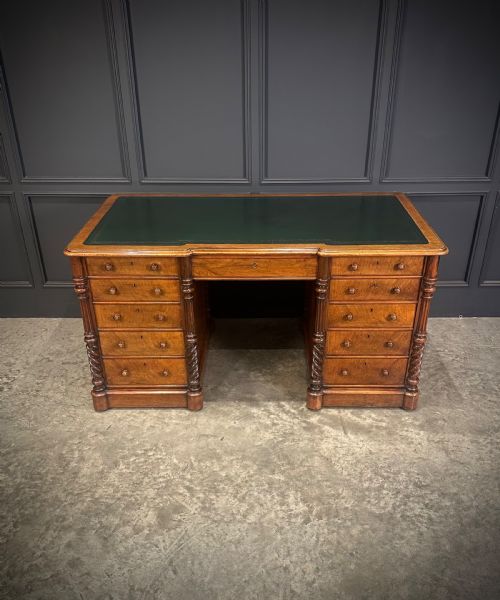
A brown walnut library table is a substantial piece of antique furniture built for reading and writing, most frequently encountered here in Victorian burr walnut.
Brown Walnut Library Table
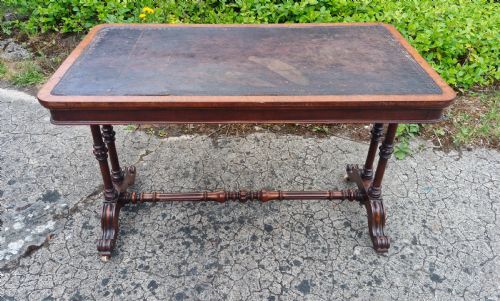
When you search for a brown walnut library table, you are looking at substantial freestanding timber furniture designed for working with books and papers. These pieces often feature inset leather tops and drawers for storage, serving as the central workspace in a period room.
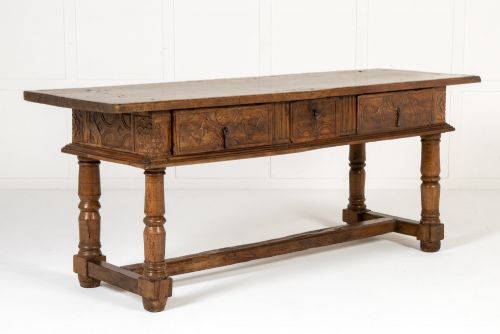
The versions you are most likely to meet on this page date predominantly from the nineteenth century and the Victorian era, though earlier seventeenth and eighteenth-century continental examples and later twentieth-century interpretations also appear.
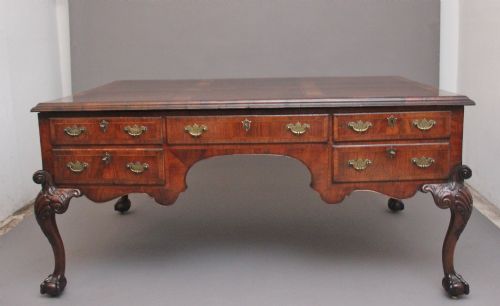
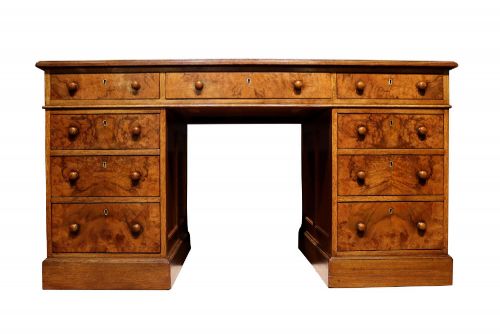
Makers and workshops across Britain and Europe constructed these tables in various forms, ranging from twin-pedestal partners desks to freestanding centre tables and writing desks finished on all sides.
How they were made
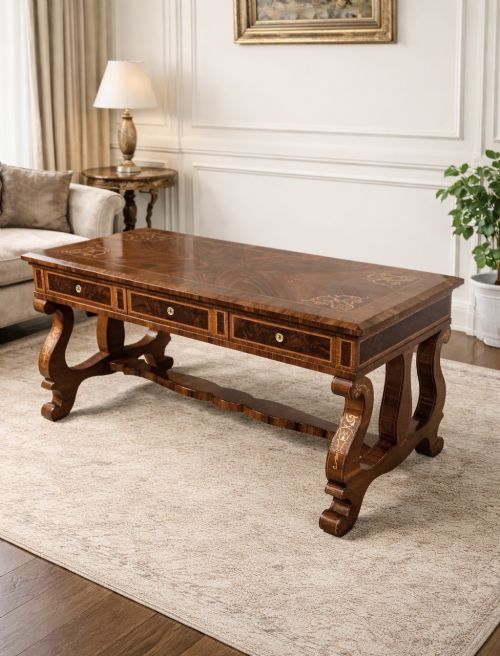
Cabinetmakers utilised solid walnut and decorative veneers like burr walnut and figured walnut applied to secondary timbers, creating rich grain patterns across large flat surfaces. Leather inserts, often tooled with gold, were traditionally fixed to the writing surfaces.
Metal components such as brass castors, handles, and ormolu mounts were incorporated to aid movement and ornamentation on finer pieces, while intricate marquetry and inlay work added detailed geometric or floral decoration to the top and frieze.
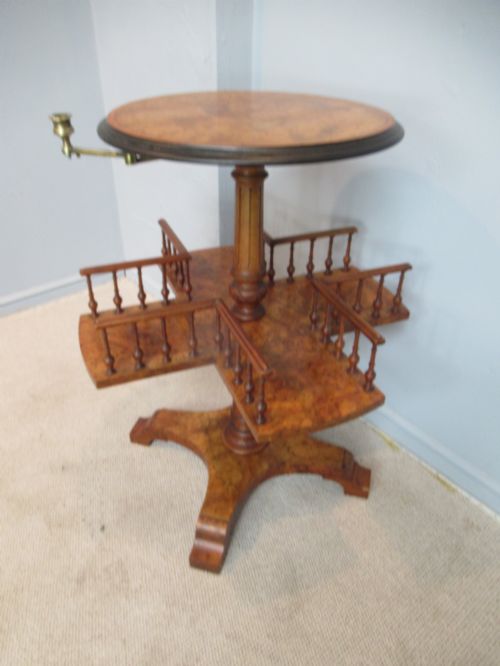
One revolving bookstand makes an appearance, proving that nineteenth-century scholars appreciated quick access to their volumes just as much as modern readers.
What varies in quality
The selection of the veneer fundamentally separates standard production from exceptional examples, with densely figured burr walnut commanding greater craftsmanship and visual depth. The treatment of the secondary timbers and the precision of the dovetailing inside the drawers indicate the standard of workshop execution.
Hardware integrity and the retention of original fittings, such as locks, keys, and tooled leather inserts, distinguish pieces that have survived with their character intact from those altered or heavily restored over time.
Edwards & Roberts·Gill & Reigate·W J Mansell·Whytock & Reid·Druce & Co
The Brown Walnut Library Table Glossary
- Burr walnut
- A prized timber harvested from the irregular growths on walnut trees, yielding complex swirling grain patterns. It was frequently sliced into thin veneers for table tops.
- Partners desk
- A large double-sided desk designed for two people to work opposite one another, featuring drawers and cupboards on both faces.
- Ormolu
- Gilded bronze ornamentation applied to furniture, popular in continental and revival styles to accent corners and mounts.
- Frieze
- The horizontal band or rail beneath the table top, often housing one or more drawers.
- Pedestal desk
- A form comprising two banks of drawers supporting a single large top, sometimes referred to as a kneehole desk.
Brown Walnut Library Table: Frequently Asked Questions
What is a brown walnut library table used for?
These tables were built primarily for reading, writing, and storing manuscripts in large libraries or studies. Their generous proportions allowed books and papers to be spread out comfortably.
Today, they function well as large executive desks or freestanding writing tables in domestic and commercial interiors.
How do I identify a Victorian library table?
Victorian examples often display rich burr walnut veneers, turned or carved legs, and sometimes inset leather tops. They date from the mid to late nineteenth century.
Look for construction details like hand-cut dovetails in the drawers and the presence of original brass castors beneath the legs.
How do I care for a walnut table top?
Keep wooden surfaces away from direct sunlight and heat sources to prevent the walnut veneer from drying out or cracking. Regular dusting with a soft, dry cloth maintains the finish.
If the top has a leather insert, clean it gently with specialised leather balms rather than harsh household solvents.