
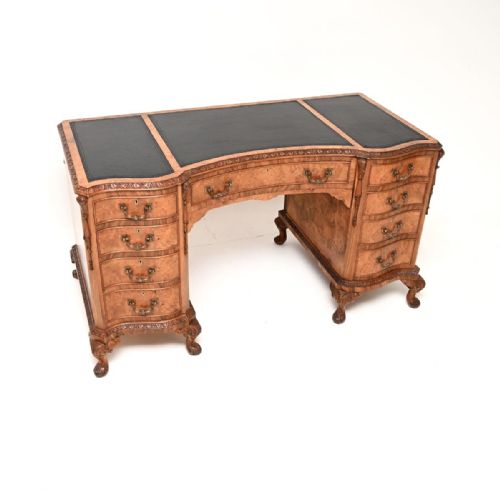
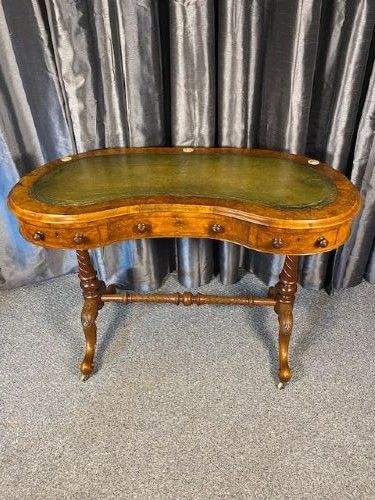
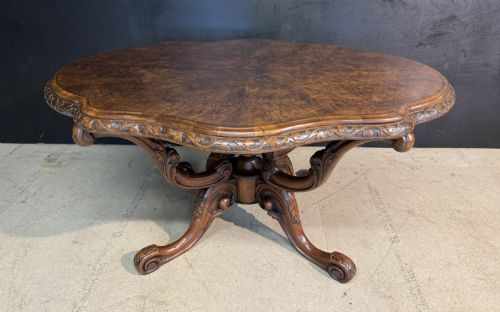
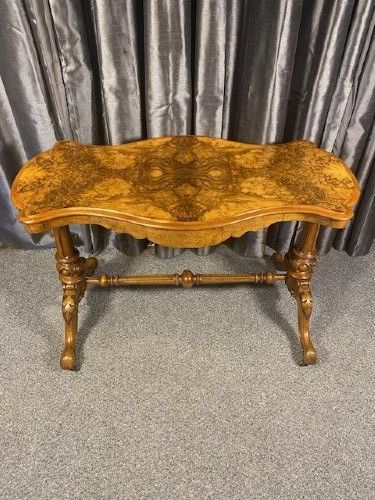
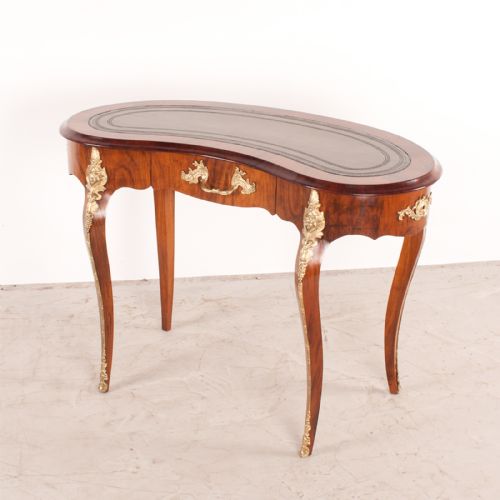
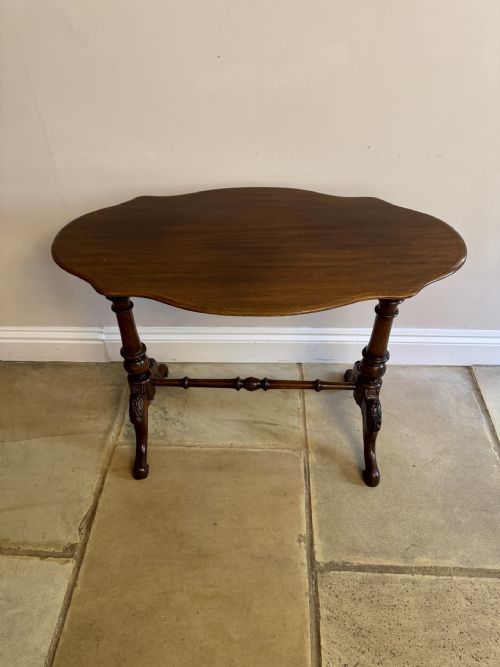
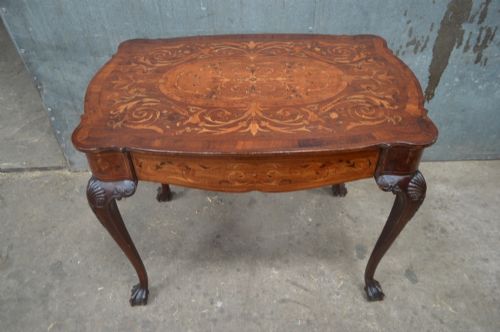
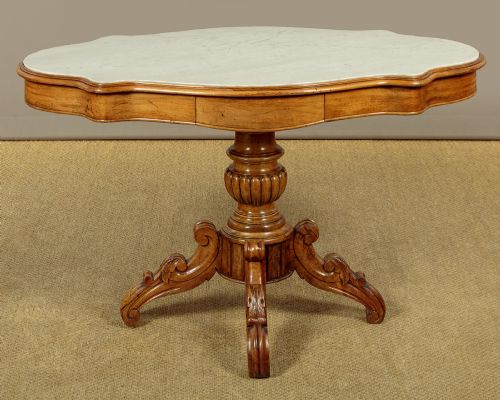


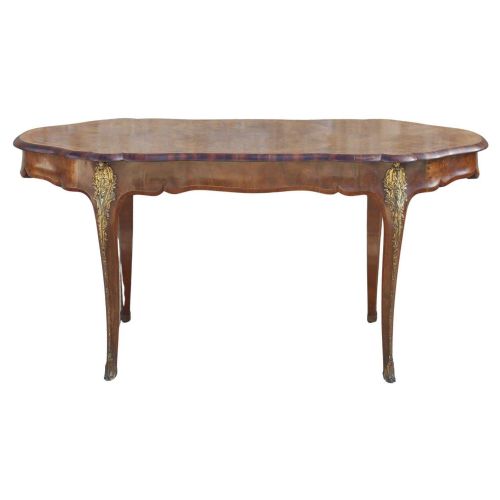
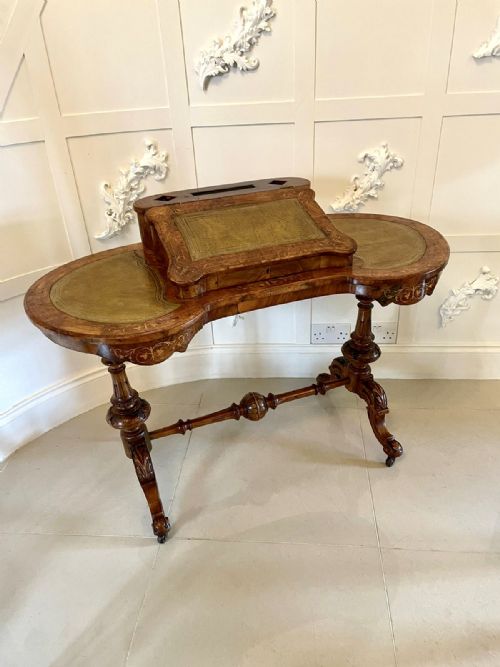


Shaped Top Walnut Table
A shaped top walnut table offers figured timber and distinct outlines, bringing warmth and character to a room.
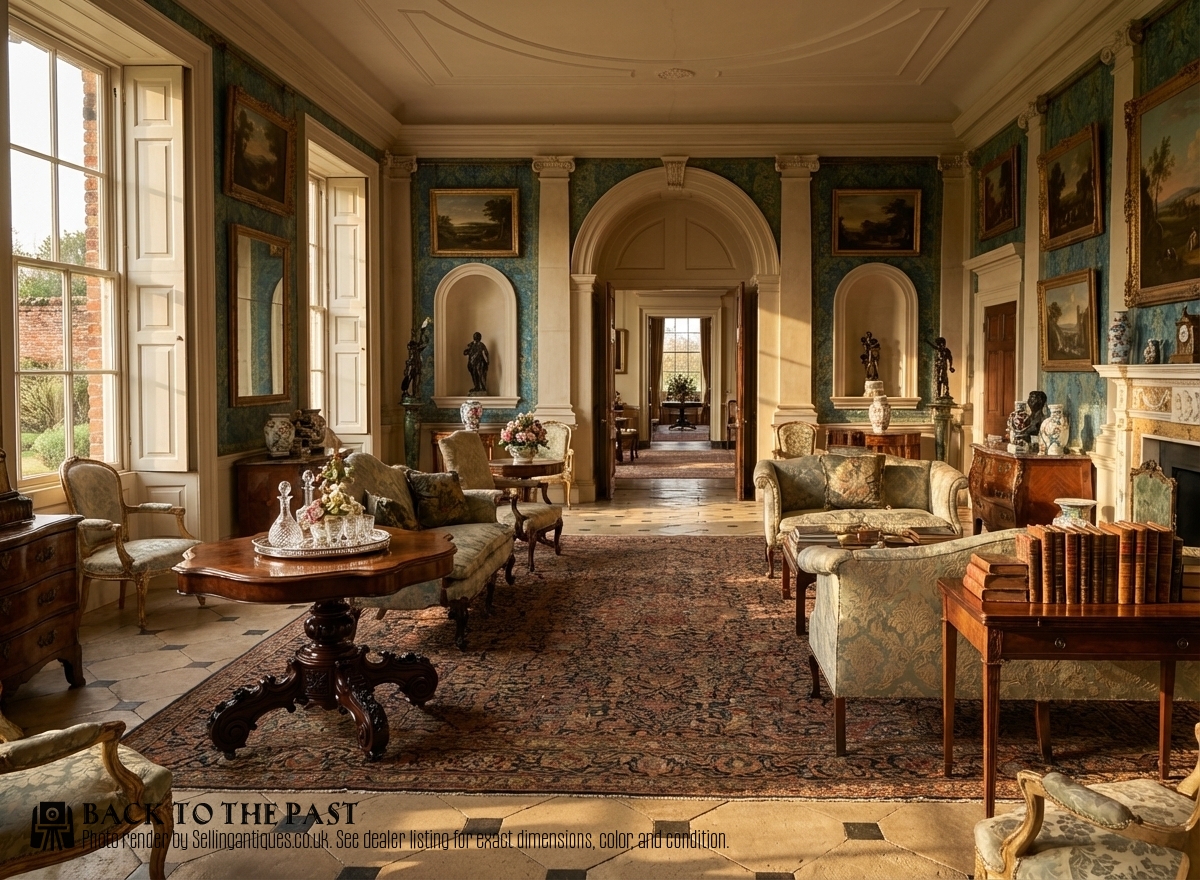
Understanding the shaped top walnut table
A shaped top walnut table is a surface featuring curved or serpentine outlines executed in timber, most frequently appearing from the Victorian era around eighteen sixty. These pieces span forms such as centre tables, occasional tables, dining tables, lamp tables, wine tables, library tables, coffee tables, breakfast tables, window tables, nest of tables, tilt-top tables, bijouterie display tables, chess top tables, and games top worktables.
The version a buyer is most likely to encounter on this page is a Victorian piece fashioned from burr walnut or figured walnut. Such examples frequently incorporate decorative inlay, boxwood details, and occasionally marquetry on the timber surfaces.
Originating predominantly in the nineteenth century, these tables serve functional roles while displaying the rich grain patterns characteristic of walnut. Pieces range from freestanding centre tables to smaller occasional and chess top formats.
Materials and construction
Construction relies upon wood, specifically walnut, burr walnut, figured walnut, and supporting secondary timbers such as oak. Craftsmen applied wood veneer over solid cores to create the patterned surfaces visible on the tops.
Decorative elements involve boxwood inlay and wood marquetry set into the walnut body. Metal components such as brass appear in structural fittings or hardware where appropriate.
Retail Price Guide 2026
Typical UK retail prices for shaped top walnut table, calculated from the Sellingantiques database of over a million retail prices indexed since 2003. This retail price guide relies exclusively on Sellingantiques data; no external sources or auction records are used, so the figures do not describe the wider market.
Some Victorian tables incorporate chess boards and trumpet-shaped compartments, proving ancestors enjoyed a game and hidden storage just as much.
Assessing quality
Quality separates ordinary production from superior examples through the selection of the burr or figured walnut veneer on the top. Rich, highly figured grain patterns and precise wood marquetry or boxwood inlay indicate finer craftsmanship.
The integrity of the shaped outline and the stability of the wood veneer across complex curves determine the overall execution of the piece. Superior examples maintain crisp lines and harmonious proportions between the top and the base structure.
The Shaped Top Walnut Table Glossary
- Burr walnut
- A veneer taken from the warted growths of walnut trees. It yields complex, swirling grain patterns highly prized for tabletops.
- Marquetry
- The art of applying pieces of veneer to a structure to form decorative patterns. Craftsmen use varied woods to create pictorial designs on the surface.
- Boxwood
- A dense, pale yellow wood utilised for delicate stringing and inlay. It provides sharp contrast against dark walnut surfaces.
- Tilt-top table
- A table with a mechanism allowing the surface to pivot vertically when not in use. This design saved space in nineteenth-century interiors.
- Centre table
- A freestanding piece finished on all sides intended to stand away from walls. These tables allow view from any angle in a room.
Frequently Asked Questions
What is a shaped top walnut table?
A shaped top walnut table is a nineteenth-century furniture piece featuring curved wooden surfaces. These tables utilise burr walnut and figured walnut veneers.
Such tables serve as centre pieces, occasional surfaces, or games tables within Victorian interiors.
How do I date these walnut tables?
Dating relies on stylistic markers and materials associated with the Victorian era and the year eighteen sixty. The presence of burr walnut and boxwood inlay points to this nineteenth-century period.
Construction methods and timber preparation further confirm the age of the piece.
Where were these tables placed?
Freestanding centre tables stood in the middle of principal rooms to display their figured walnut surfaces. Smaller occasional and lamp tables occupied corners or beside seating.
Chess top and worktable variants functioned as specialised furniture for leisure activities.
How do I care for walnut veneer?
Maintenance involves protecting the wood veneer from direct sunlight and excessive moisture. Gentle dusting preserves the polished finish of the burr walnut.
Avoiding extreme temperature fluctuations prevents movement in the underlying timber structure.