




Brass Castor Card Table
A brass castor card table is a folding piece of formal furniture designed for play and display, driven by Regency elegance.
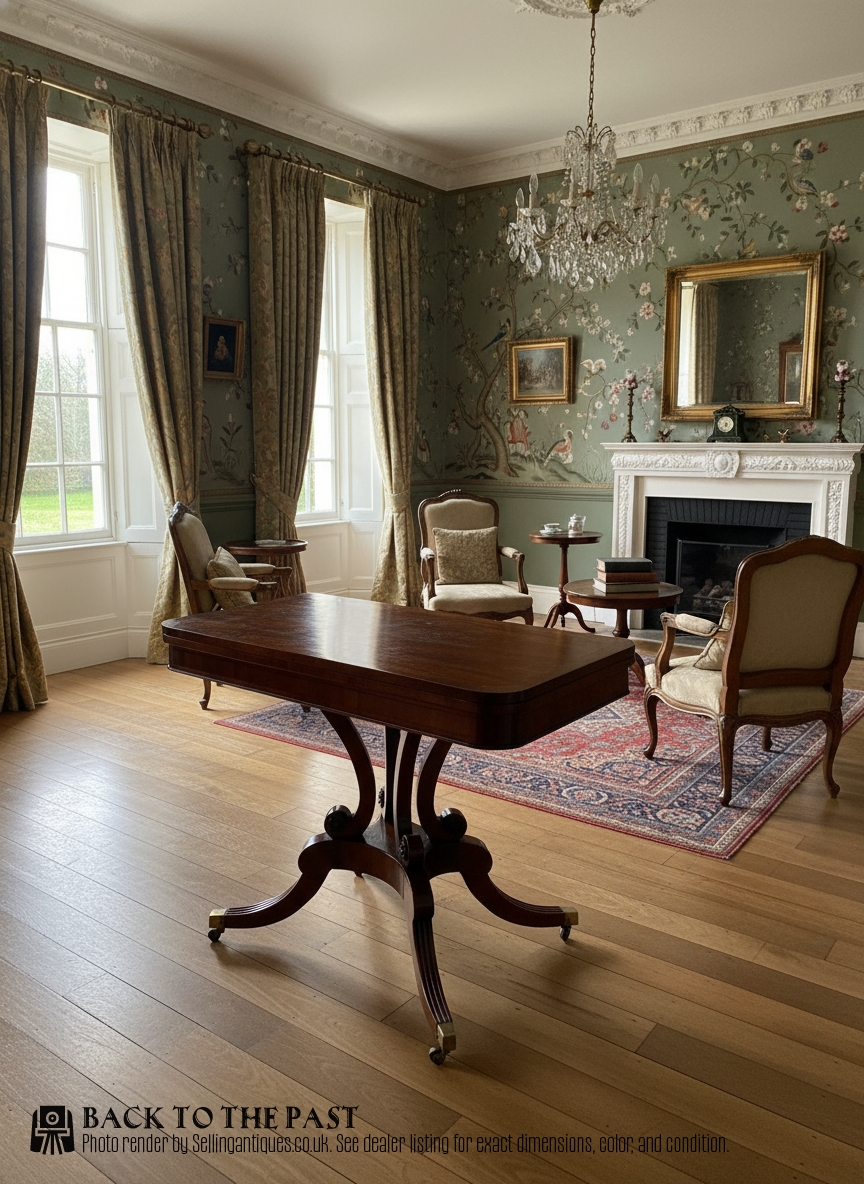
Brass Castor Card Table
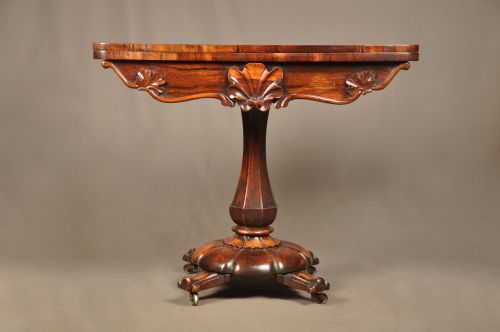
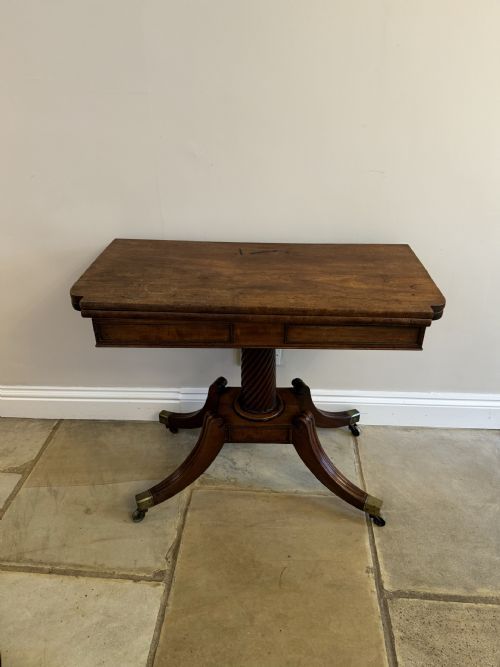
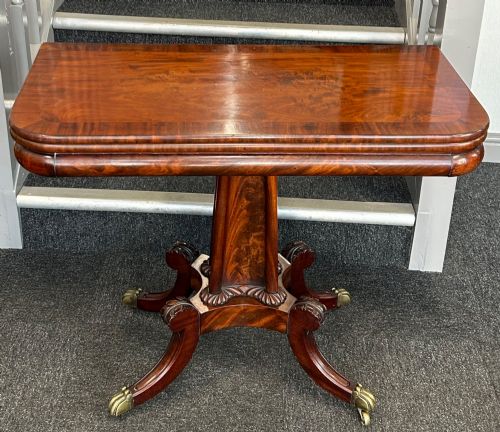
When you search for a brass castor card table, you are looking at dual-purpose furniture created for card playing, tea drinking, and general parlor use during the Georgian, Regency, and William IV periods. These tables typically feature a fold-over top that rotates or opens to reveal a playing surface lined with wool baize, supported on a central pedestal or pillar base fitted with small metal wheels.
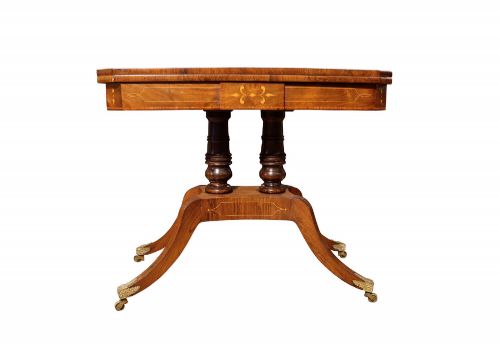
The versions you are most likely to meet on this page hail from the Regency era, constructed in rich timbers like mahogany or rosewood, often accented with satinwood or brass inlay. Alongside dedicated card tables, the listings include tea tables, games tables, and occasional side tables sharing the same foundational mechanics and mobility.
Many of these tables present clever folding mechanisms designed to maximise space in the historic drawing room before evening entertainments began. The inclusion of brass castors ensured these heavy timber items could be repositioned easily near the hearth or window without marking the floorboards.
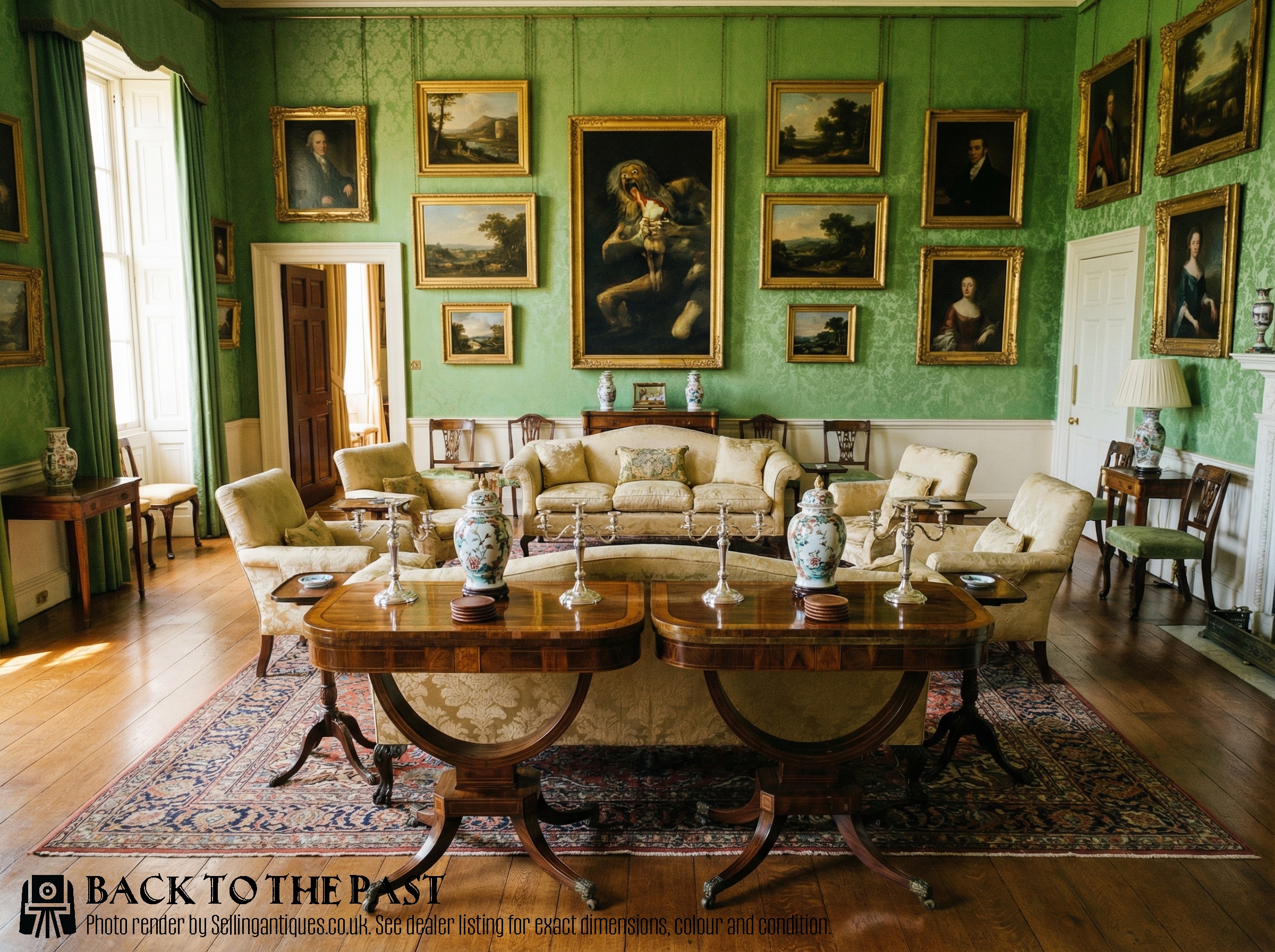
How they were made
Cabinet makers constructed these tables using dense hardwoods such as mahogany and rosewood, frequently applying decorative veneers over sturdy underlying carcases. Finer examples integrate contrasting timbers like satinwood, ebony, and boxwood for geometric stringing or intricate foliate brass inlay.
The working parts rely on traditional joinery to support the folding leaf, paired with pivot hinges and rotating top mechanisms. Brass castors are secured to the base supports, whether on quadruped legs, platforms, or pillar pedestals, providing both structural stability and rolling function.
Brass Castor Card Table Retail Price Guide 2026
Typical asking prices for brass castor card table among the pieces listed under this phrase on Sellingantiques today, from the lower quarter to the upper quarter. They describe what is for sale here now, not the wider market.
Listings feature mahogany and rosewood timber surfaces alongside wool baize and brass inlay across Regency and Georgian periods.
What varies in quality
The standard of timber selection and veneer matching defines the visual appeal at the upper end of the scale, where highly figured grains create striking surface patterns. Inferior examples rely on plain, unfigured wood with simpler construction and heavier proportions.
The precision of the brass inlay and the finesse of the brass sabots and castors separate workshop masterworks from standard production pieces. Finer tables maintain tight joinery in the folding mechanisms and crisply carved pedestal bases over centuries of use.
Gillows·William Trotter of Edinburgh
The Brass Castor Card Table Glossary
- Brass castor
- A small swivelling wheel made of brass attached to the feet of furniture to allow easy movement. They protect floor coverings and enable heavy timber tables to be repositioned around the room.
- Wool baize
- A woven woollen fabric traditionally used to line the playing surfaces of card and games tables. It provides a soft, non-slip texture for dealing cards and placing counters.
- Fold-over top
- A hinged tabletop design that doubles the surface area when opened out. It conceals a hidden well or compartment underneath when closed.
- Sabot
- A decorative or protective brass sleeve fitted to the foot of a table leg. They often incorporate castors at the base for combined style and mobility.
- Stringing
- Thin lines of contrasting wood inlay used to outline panels and borders on tabletops. This technique highlights the geometric contours of Regency and Georgian furniture.
Brass Castor Card Table: Frequently Asked Questions
What is a brass castor card table?
A brass castor card table is a multi-functional piece of nineteenth-century furniture with a hinged top that opens for card games. They feature small metal wheels on the feet to allow effortless movement across the room.
These tables combine practical engineering with elegant cabinet making, serving as display surfaces when closed and gaming tables when open.
How do you use a fold-over table?
To use the table, you lift and rotate the hinged upper leaf so it rests flat on the expanded wooden frame or swinging support gate. This reveals a lined playing surface, often covered in green wool baize.
When entertainment ends, you fold the top back over and push the table against the wall or into the centre of the parlour as a side table.
What woods are these tables made from?
The primary woods found in these listings are dark mahogany and rich rosewood, chosen for their strength and deep grain patterns. Cabinet makers also incorporated lighter exotic timbers like satinwood, ebony, and boxwood for contrast.
These materials reflect the shifting aesthetic tastes of the Georgian and Regency periods, moving from solid native timbers to dramatic imported veneers.
How do I tell Regency from Georgian?
Georgian tables often display restrained classical proportions, rectilinear forms, and straightforward mahogany construction. Regency pieces, dating from the early nineteenth century, lean towards bolder architectural motifs, brass inlay, and elaborate pedestal bases.
Regency design frequently draws inspiration from classical antiquity, resulting in heavier pillar supports and more striking contrast between dark rosewood and bright brass accents.