
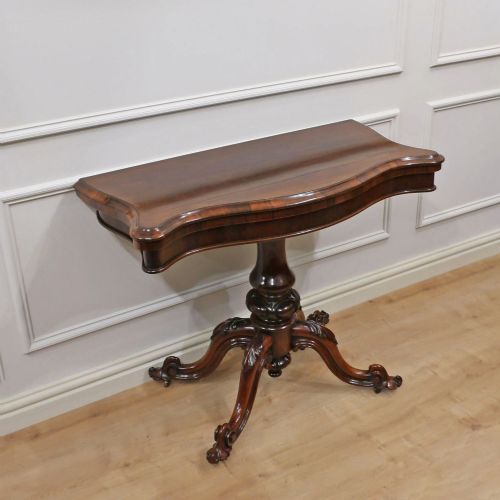

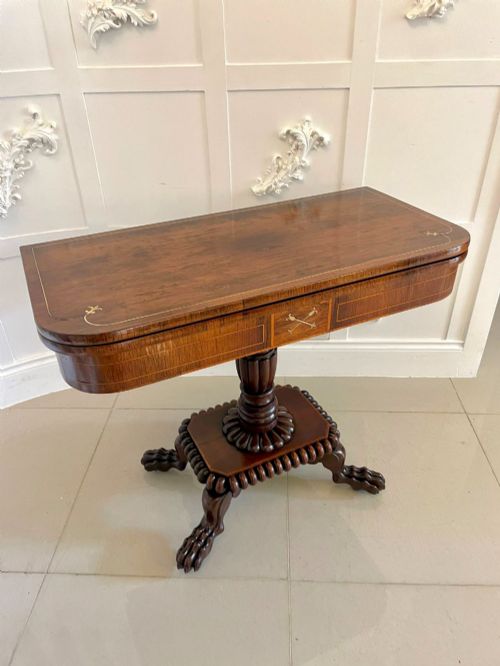
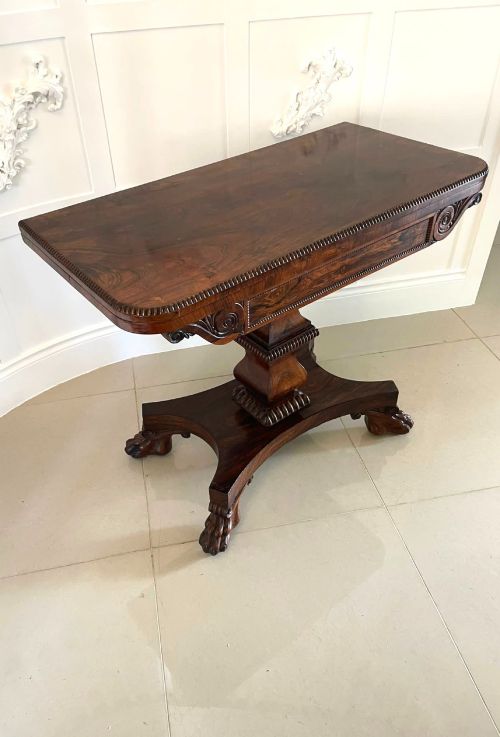
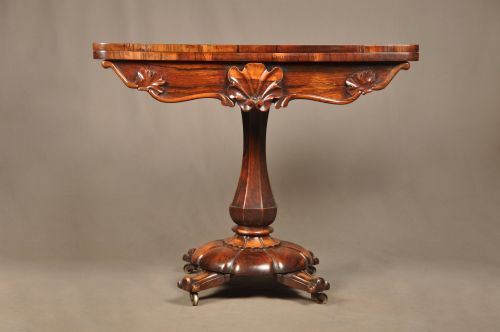
Dark Rosewood Card Table
A dark rosewood card table brings a rich, dense timber grain and a fold-over top into a room, offering both a functional surface and a piece of period cabinet-making.
Dark Rosewood Card Table
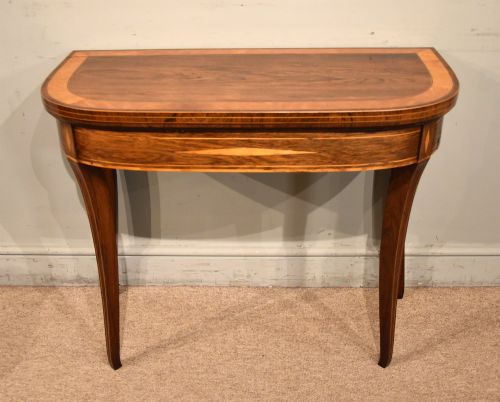
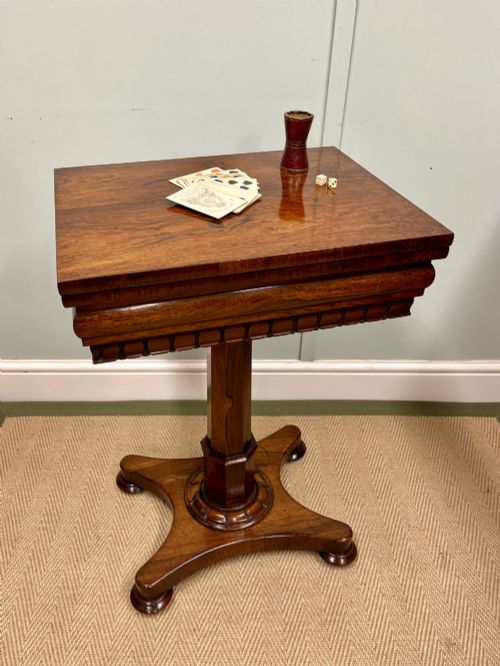
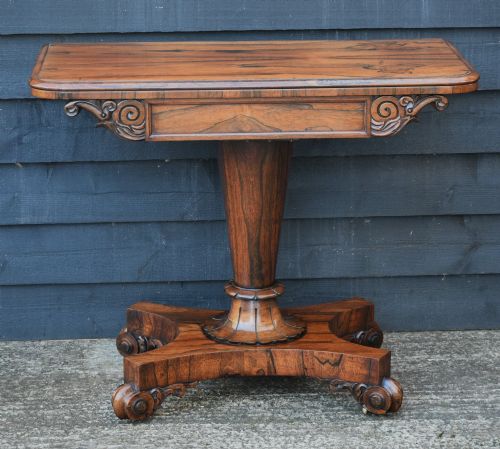
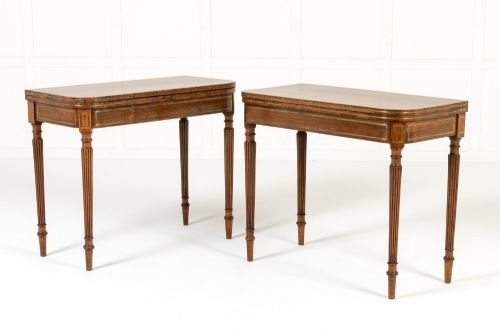
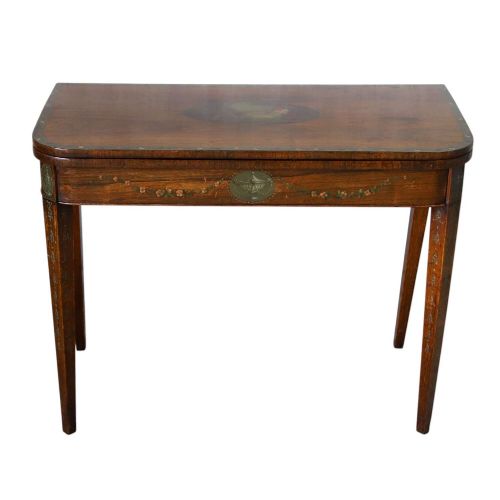
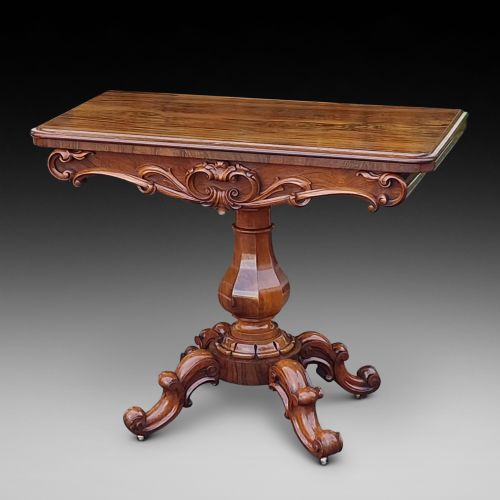
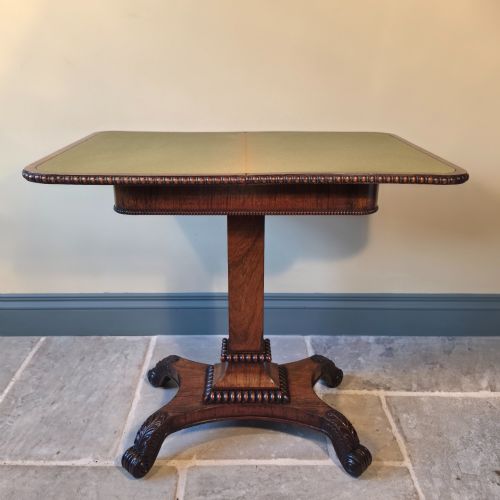
When you search for a dark rosewood card table, you encounter furniture dating primarily from the Regency, William IV, and Victorian eras, alongside pieces attributed to the eighteenth and nineteenth centuries. These tables generally feature a hinged, fold-over top designed to open for games or sit flush against a wall as a console or side table when closed.
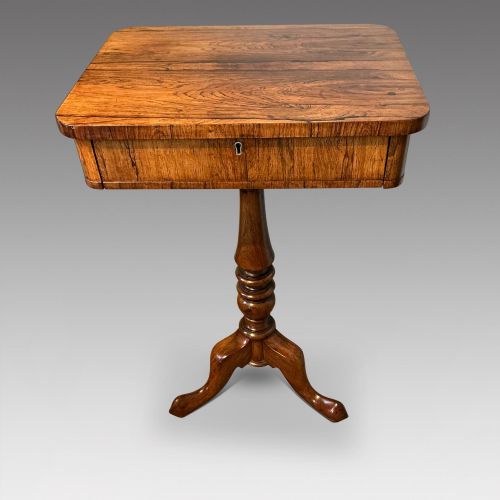
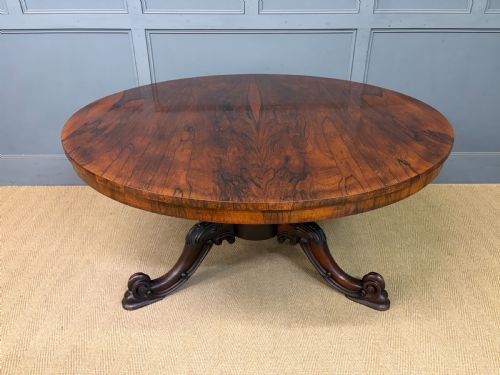
The selections span distinct stylistic phases, including Grand Regency, Early Victorian, and George IV designs. Alongside standard card tables, the listings encompass related forms such as games tables, tea tables, and pedestal tables sharing the same dark rosewood idiom.
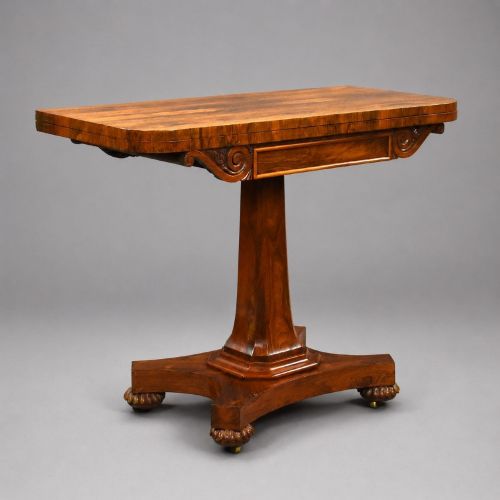
Originating predominantly from English workshops, these items reflect the domestic social habits of the Georgian and Victorian periods, where versatile furniture for entertainment and parlour use was essential. A buyer is most likely to meet pieces supported by pedestal columns, carved dolphin bases, or lyre supports.
Distinctions in craftsmanship and design
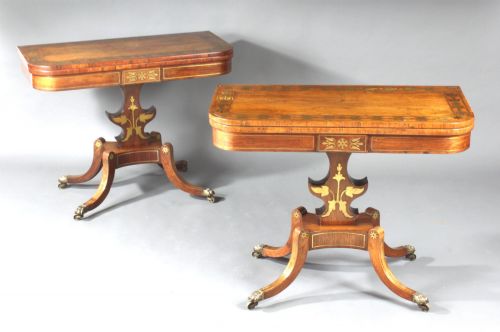
The distinction between ordinary production and superior work lies in the crispness of the carved details, the precision of the brass inlay, and the choice of timber figure in the rosewood veneer. Tables associated with documented makers or specific stylistic mannerisms demonstrate greater refinement in their proportions and decorative restraint.
Superior examples exhibit well-balanced pedestal bases, tight joints in the folding mechanism, and high-grade secondary woods beneath the surface veneers. The depth of colour in the polished rosewood and the harmony between satinwood stringing and brass work separate the finest pieces from standard workshop output.
Listings span the Regency, Georgian, and Victorian periods, incorporating materials such as rosewood, brass, satinwood, baize, and ormolu.
George Bullock·Gillows·William Trotter
The Dark Rosewood Card Table Glossary
- Fold-over top
- A hinged wooden surface that doubles the size of the table when opened for games or dining. It pivots or flips to rest upon the frame.
- Baize
- A coarse woollen fabric, typically green, used to line the playing surface of card and games tables. It provides a soft texture for handling cards.
- Pedestal base
- A central pillar support rising from a platform or feet, commonly utilised on Regency and William IV tables to hold heavy rosewood tops.
- Ormolu
- Gilded bronze applied as decorative mounts and accents on furniture. It provides metallic contrast against dark timber.
- Stringing
- Thin inlay of contrasting wood, such as satinwood or boxwood, set flush into the surface to outline panels and borders.
Dark Rosewood Card Table: Frequently Asked Questions
What is a dark rosewood card table used for?
These tables served primarily for card games and social assemblies in nineteenth-century drawing rooms. The hinged top folded flat against the wall when not in use.
Today, they function well as console tables in hallways or occasional tables in living spaces while retaining their original folding mechanism.
How do I tell Regency from Victorian tables?
Regency pieces often display classical proportions, brass inlay, and elements like lyre supports or carved dolphin bases. They date from the early nineteenth century.
Victorian examples tend towards heavier proportions, bolder carved ornamentation, and darker finishes typical of mid-century cabinet-making.
What materials are inside the fold-over top?
Opening the top usually reveals a surface lined with baize or fabric designed to cushion playing cards and dice. This interior area sometimes includes small wells for counters.
The surrounding wood framing often incorporates contrasting stringing made from lighter timbers like boxwood or satinwood.
Are all these tables English in origin?
The available pieces reflect English manufacture, particularly from stylistic traditions associated with London and regional cabinet-makers. Design motifs align with British decorative arts of the Georgian and Victorian periods.
Attributions point toward domestic workshops and prominent firms operating during the nineteenth century.