


Dark Wood Chess Table
A dark wood chess table brings deliberate play into a room, joining handsome timbers with a built-in board for quiet evenings.
Dark Wood Chess Table
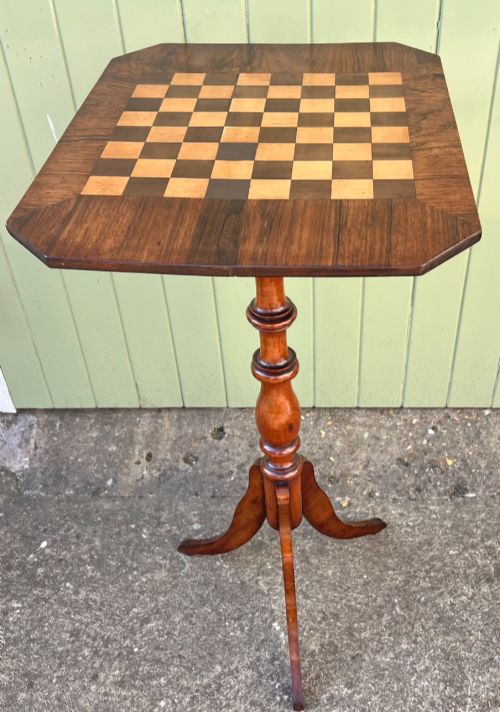
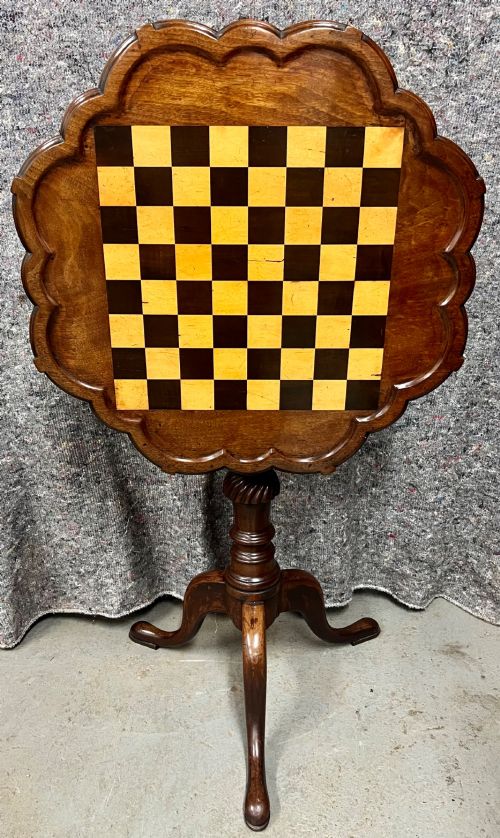
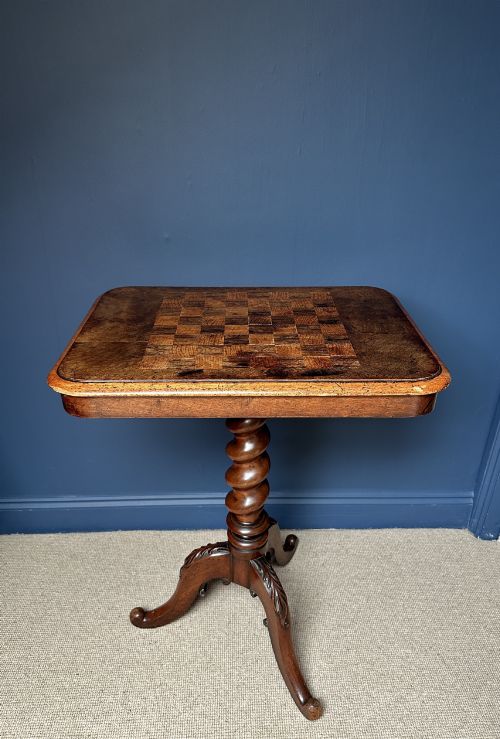
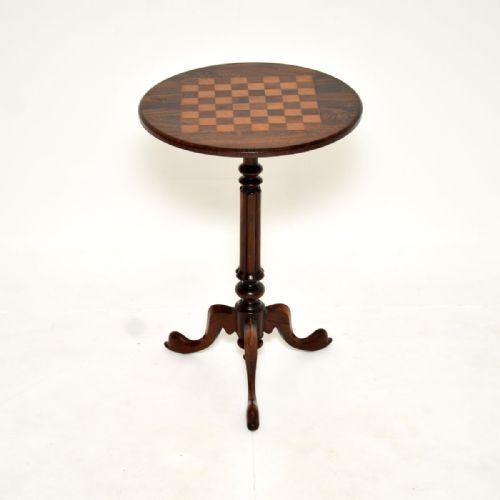
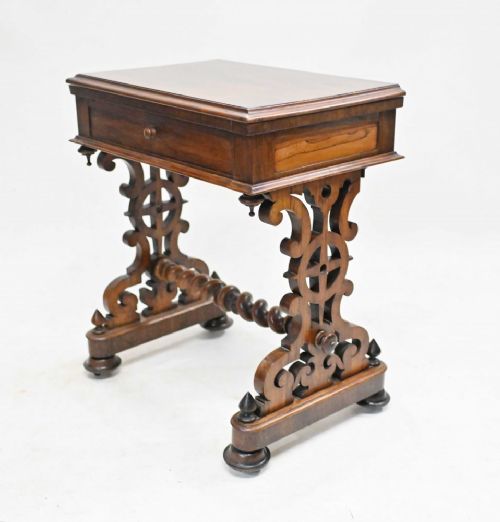
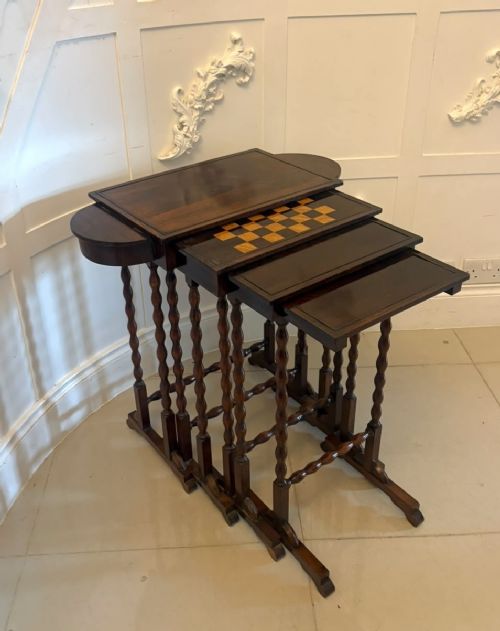
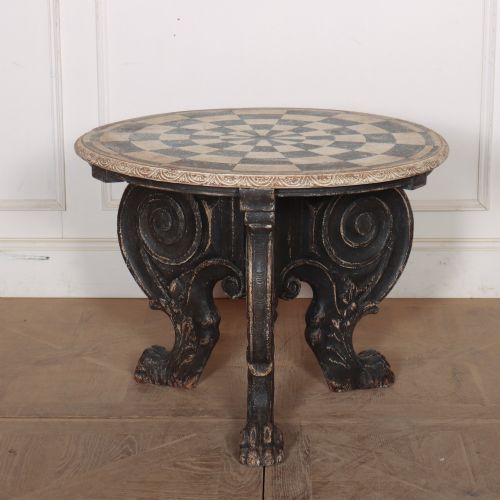
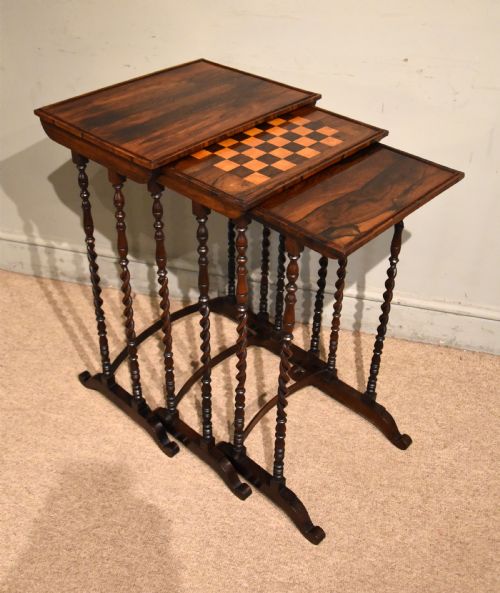
A dark wood chess table provides a dedicated surface for play, appearing across periods from the Georgian era through to the late Victorian years. These pieces function primarily as games tables, occasional tables, or nest of tables with integrated boards.
The version most commonly met on this page is the 19th Century rosewood or mahogany table featuring an inlaid chess board. Examples range from tripod lamp tables to combination work tables and folding tables designed for versatility.
How they were made
Cabinet makers utilised dense, richly grained timbers such as rosewood and mahogany for the primary structures, providing deep natural colour and a solid foundation. These woods were turned, carved, or assembled into tripod bases and nesting forms.
Inlaid chess boards incorporated contrasting light and dark timbers like boxwood, ebony, satinwood, and walnut to create the precise squares required for play. Some tables featured specialist mechanisms including split swivelling tops and folding actions for backgammon integration.
Dark Wood Chess Table Retail Price Guide 2026
Typical asking prices for dark wood chess table among the pieces listed under this phrase on Sellingantiques today, from the lower quarter to the upper quarter. They describe what is for sale here now, not the wider market.
Listings feature woods including rosewood, mahogany, boxwood, ebony, satinwood, and walnut, alongside brass hardware.
What varies in quality
Quality rests upon the precision of the wood inlay and the selection of timber veneers, where tight, uniform graining elevates the appearance of the playing surface. The crispness of carved details on tripod bases and the smooth execution of swivelling or folding mechanisms distinguish finer examples.
Structural integrity depends on the joinery within the framework, particularly on complex forms like nest of tables or combination work tables. Superior pieces maintain alignment and stability across all moving parts without losing the rich lustre of the polished wood.
The Dark Wood Chess Table Glossary
- Tripod table
- A small table supported by a central pillar resting on three feet. This form allows stability on uneven floors.
- Quartetto nest
- A set of four graduating tables that fit neatly beneath one another. They appeared frequently in the Regency period.
- Inlay
- A technique where pieces of contrasting wood are fitted into depressions within a solid surface to form a pattern. Boxwood and ebony create the squares on a chess board.
- Backgammon
- A board game frequently paired with chess on dual-purpose tables. These pieces often feature a reversible or swivelling top.
- Campaign style
- Furniture designed for easy transport and folding practicality. These pieces utilise sturdy hinges and compact dimensions.
Dark Wood Chess Table: Frequently Asked Questions
How were these tables used originally?
Originally, these tables served both social and domestic functions in period parlours and drawing rooms. The inclusion of drawers or split swivelling tops allowed owners to store game pieces or needlework alongside the board.
Some examples incorporated backgammon boards or functioned as lamp tables, proving useful for everyday room lighting as well as evening recreation.
How do I care for a rosewood chess top?
Rosewood requires gentle dusting with a soft, dry cloth to protect the polished timber finish from abrasive particles. Avoid placing the table in direct sunlight or near heat sources to prevent the wood from drying out.
Applying occasional specialist wax helps maintain the deep natural lustre of the dark timber without damaging the delicate wood inlay of the playing squares.
How can I tell a Regency chess table apart from a Victorian one?
Regency chess tables often display classical restraint through clean lines, rosewood grains, and clever engineering such as quartetto nests or swivelling tops. Makers during this era favoured refined tripod bases and architectural proportions.
Victorian examples tend towards heavier carving, robust proportions, and occasional Baroque Revival motifs. They frequently combine multiple games into a single folding or multi-tiered piece.