


Regency Gaming Table
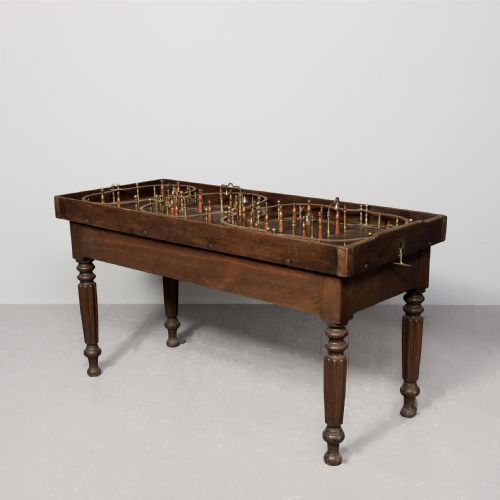
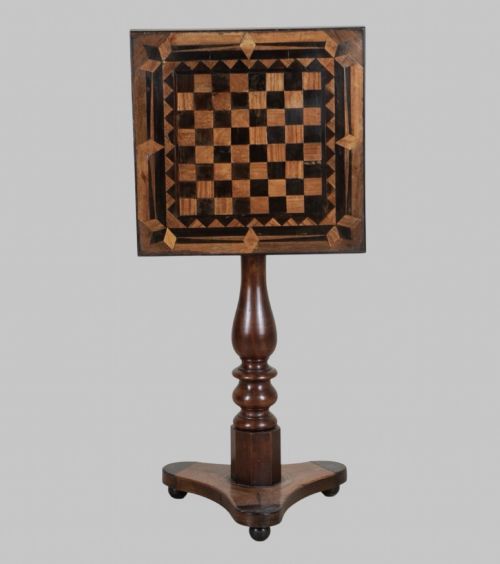
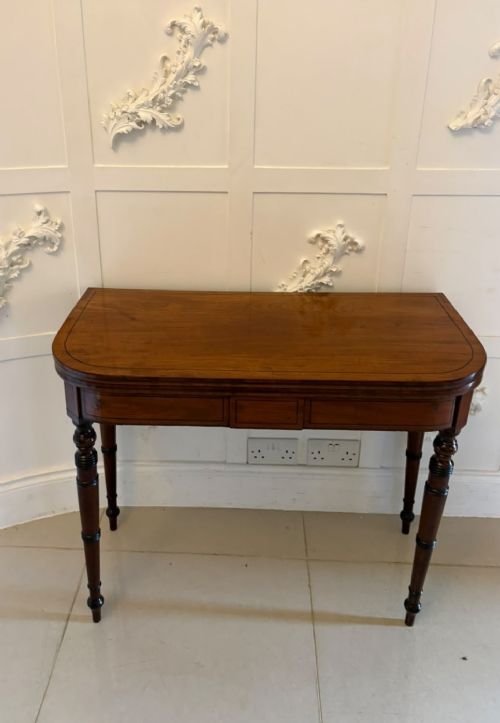
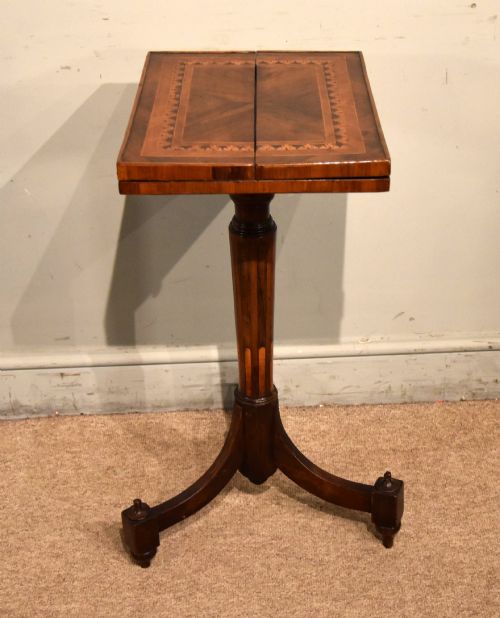
A regency gaming table brings folding tops and inlaid woods into a room, designed to open for cards or board games.
Regency Gaming Table
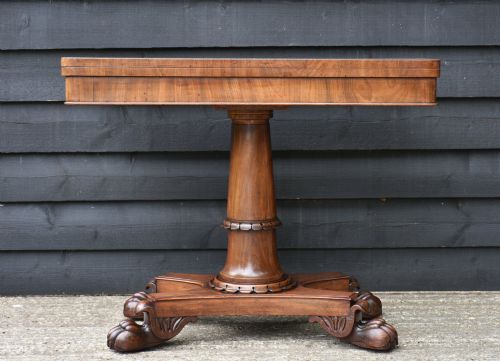
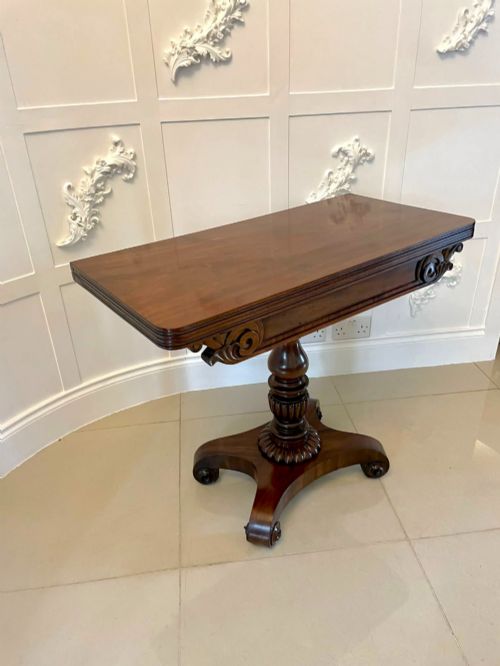
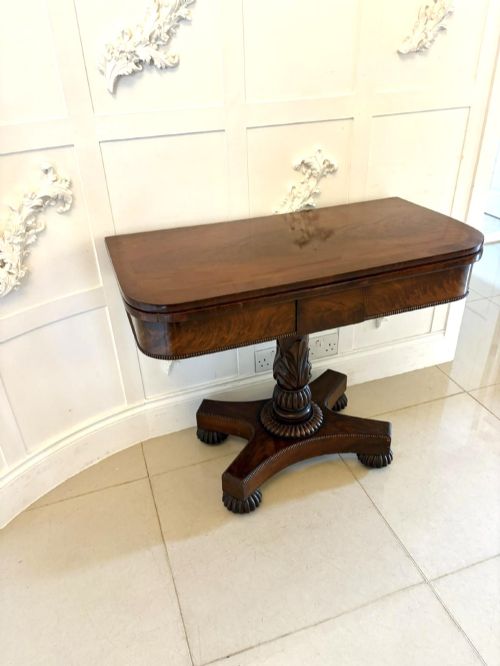
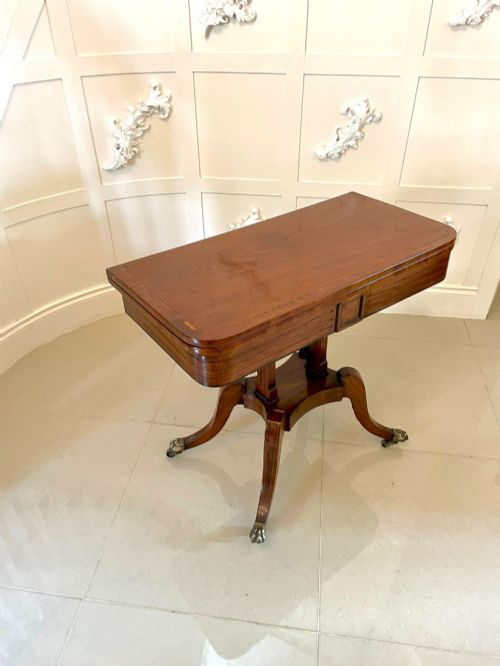
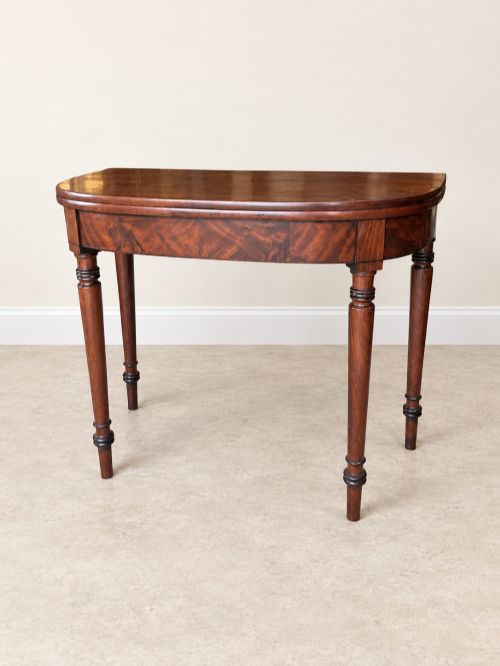
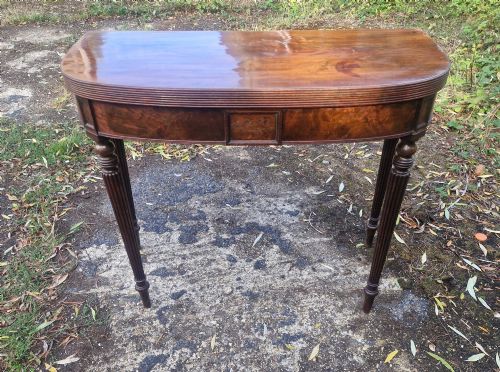
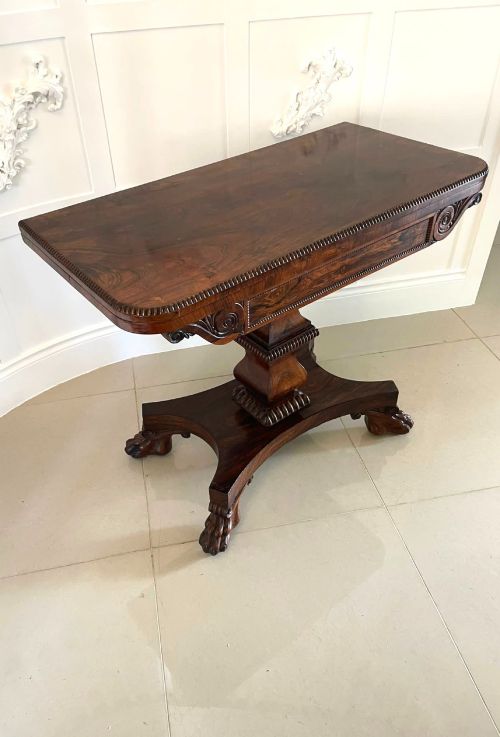
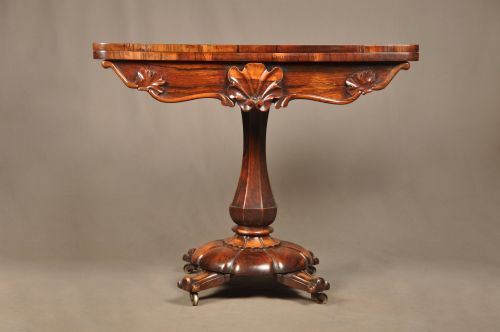
A regency gaming table is primarily encountered as a fold-over card table, console table, or tea table dating from the nineteenth century, Georgian, and Regency periods.
These pieces function as compact side furniture during the day, expanding on hinges when play or dining begins.
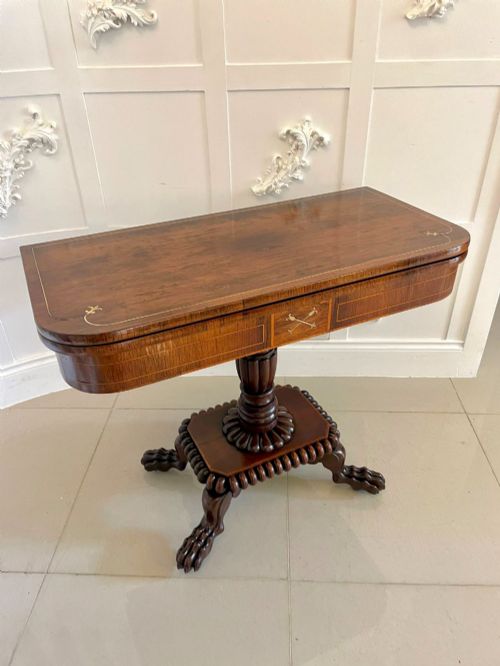
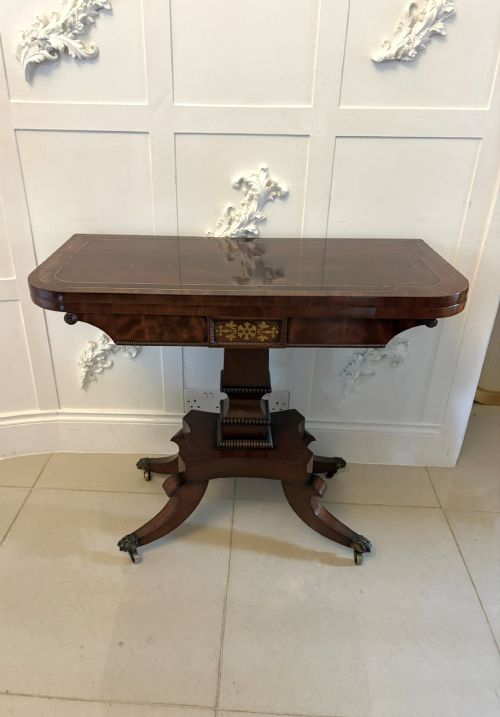
Makers of this era produced demi-lune, rectangular, and concertina formats, often utilising pedestals with scroll bases or sabots with castors.
Materials and Construction
Workshops utilised solid timber frames paired with decorative veneers, selecting mahogany, rosewood, satinwood, and oak.
Brass inlay, boxwood stringing, and crossbanding in burr yew or olive defined the surface decoration of finer examples.
Structural folding mechanisms, concertina actions, and rotating tops required precise cabinet-making to support the weight of the hinged leaves.
Current listings feature rosewood, mahogany, satinwood, and flame mahogany veneer across nineteenth-century and Georgian pieces.
Evaluating the Pieces
Quality rests upon the selection of timber veneers and the precision of brass inlay work integrated into the surface.
The integrity of the folding mechanism and the stability of the pedestal base or legs dictate how well the table survives heavy use.
Attribution to known makers such as George Bullock or Gillows elevates the standing of a piece alongside original brass castors and sabots.
George Bullock·Gillows
The Regency Gaming Table Glossary
- Concertina card table
- A table with an expanding frame that opens like an accordion to support a double-sided folding top evenly on all four sides.
- Crossbanding
- A strip of veneer running border-to-border along the edge of a tabletop, with the grain running perpendicular to the main surface.
- Demi-lune
- A half-moon shape used for console and card tables designed to sit flat against a wall when folded closed.
- Sabot
- A metal sleeve fitting over the foot of a table leg, usually cast in brass.
- Baton
- A term relating to structural supports found beneath folding leaves.
Regency Gaming Table: Frequently Asked Questions
How do I open a gaming table?
Most tables feature a fold-over top that rotates on a pivot or lifts on hinges to reveal a baize-lined playing surface underneath.
Support legs often swing outward from the rear gate-leg assembly to hold the open leaf steady.
What is the difference between a card table and a tea table?
Card tables typically include a lined interior surface intended for gaming and hold specific compartments or coin wells.
Tea tables share the folding top mechanism but present a plain wooden surface designed for porcelain and hospitality.
Where should I place a console table?
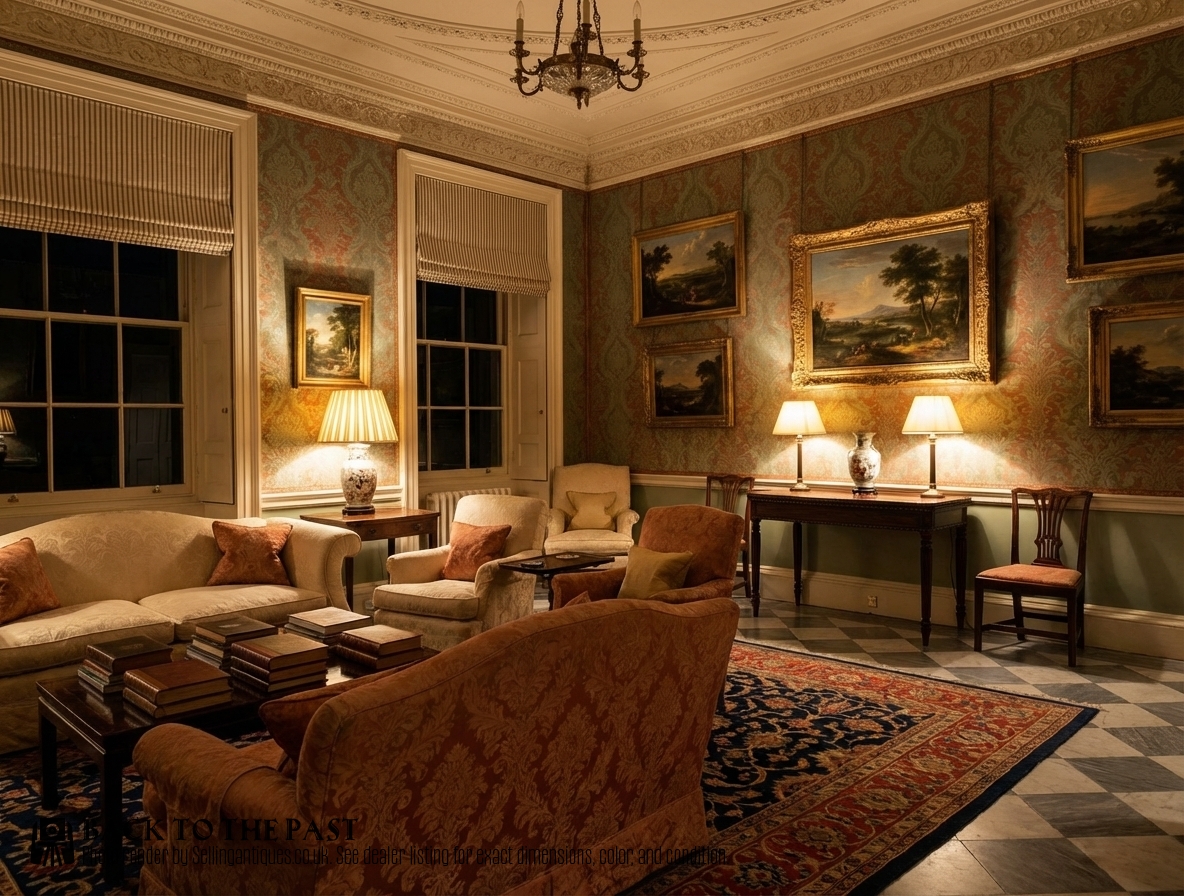
These pieces fit against flat walls in hallways or living rooms while in their closed, folded position.
They move to the centre of a room only when opened for social gatherings.
How do I identify a Regency period piece?
Look for specific wood combinations like rosewood paired with brass stringing, along with pedestal bases supported by scroll feet.
Proportions remain classical, reflecting design trends from the early nineteenth century.