


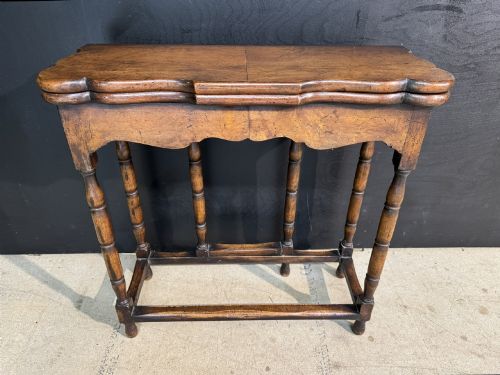
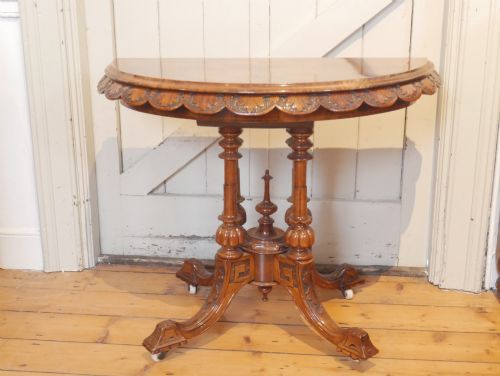
Walnut Gaming Table
A walnut gaming table brings centuries of social play into a room, offering fold-over tops and marquetry boards designed for cards and chess.
Walnut Gaming Table
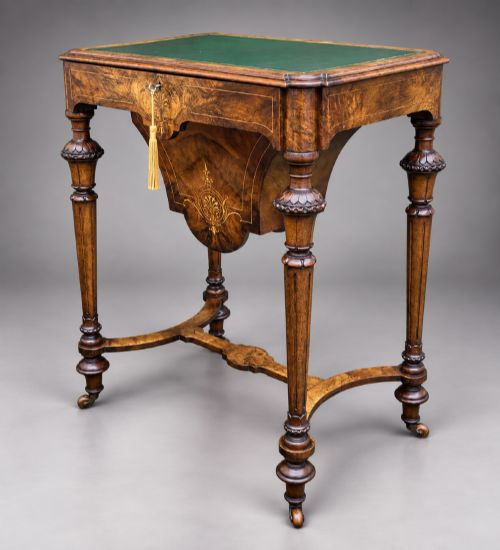
A walnut gaming table is a dual-purpose piece built to serve as a decorative console or side furniture by day and open for cards or chess by night. These tables span from the Georgian period through the Victorian era and into later revivals.
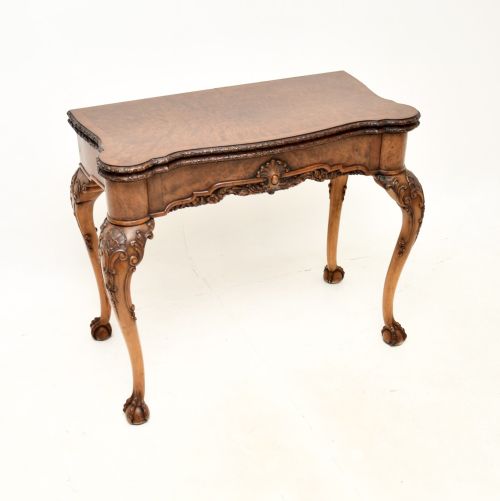
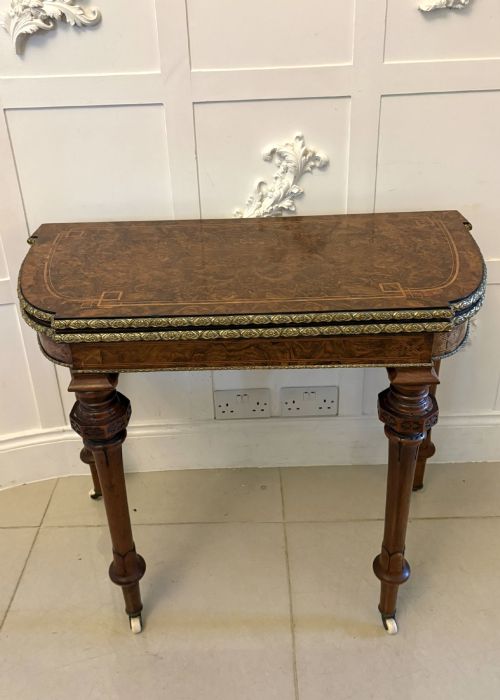
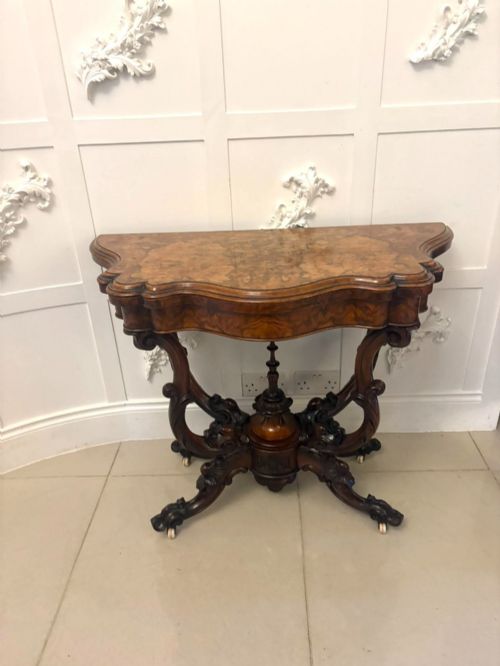
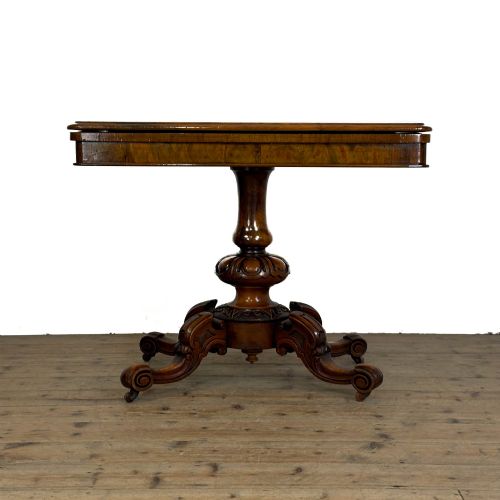
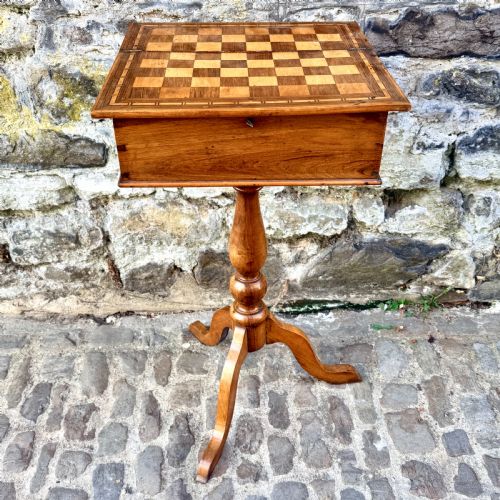
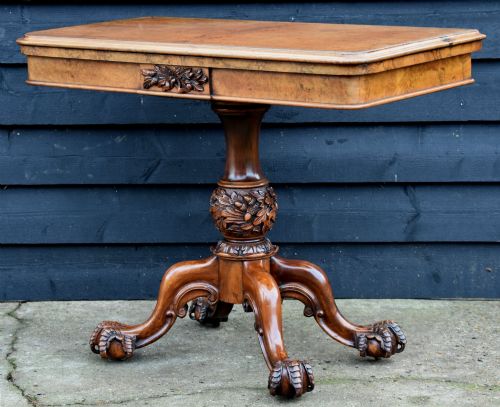
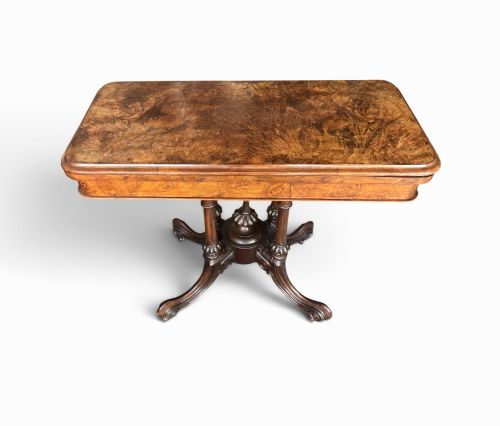
Burr walnut and figured timber dominate the pieces found here, often showing rich grain patterns across fold-over tops. Many examples combine card surfaces with chess boards and internal compartments for counters.
Makers drew on Georgian proportions, Victorian rococo curves, and Queen Anne influences, producing everything from French provincial pieces to English Pembroke and console formats.
Materials and Construction
Cabinet makers utilised solid walnut and decorative veneers like burr walnut, laying them over secondary timbers to create striking patterned surfaces on the tops. Fruitwood, mahogany, and ebonised wood often appeared alongside brass and ormolu mounts.
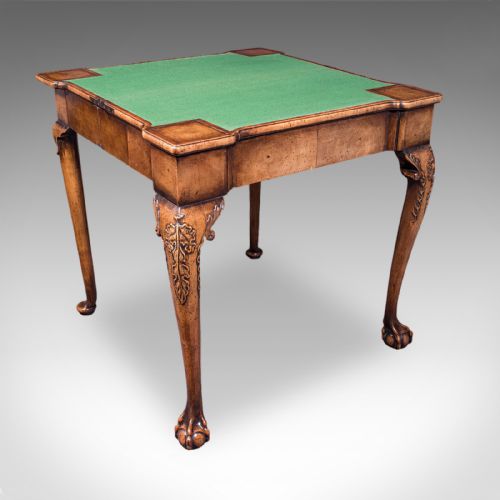
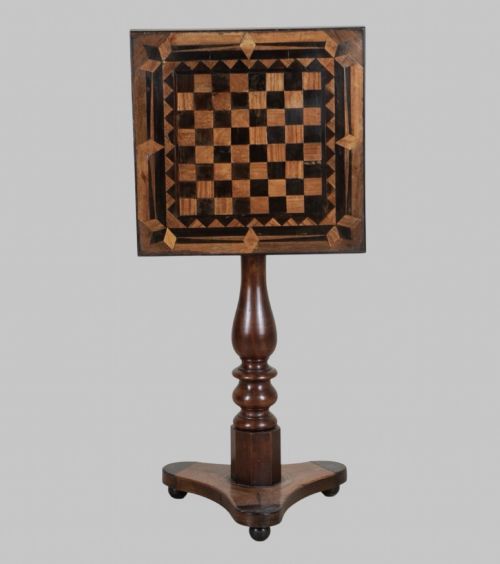
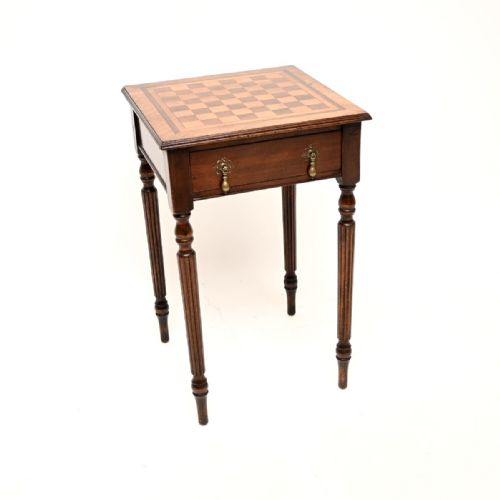
Inlaid wood and marquetry defined the decorative vocabulary, mapping out chess boards and floral motifs directly into the timber top. Interiors frequently concealed baize-lined playing surfaces or sewing compartments beneath the folding lids.
Listings feature walnut gaming tables spanning from the eighteenth century through the Victorian era up to nineteen-twenty.
Judging Quality
The distinction between standard production and top-tier pieces rests on the choice of veneer and the crispness of the carving. Highly figured burr walnut and intricate floral marquetry separate exceptional exhibition pieces from simpler functional tables.
Structural integrity in the hinge mechanisms and the alignment of the fold-over top indicate the original skill of the workshop. Carved basket bases, solid ormolu mounts, and untouched original patination elevate the standing of a piece.
Epstein and Co
The Walnut Gaming Table Glossary
- Burr walnut
- A veneer taken from the warted growths of walnut trees, yielding highly swirled and mottled grain patterns. It was favoured by cabinet makers for grand Victorian and Georgian table tops.
- Baize
- A coarse woolen fabric used to line the playing surface of card and gaming tables. It provides a soft, non-slip texture for dealing cards.
- Marquetry
- The art of applying pieces of veneer to a structure to form decorative patterns and pictures. Floral designs and geometric chess boards are common on these tables.
- Demi-lune
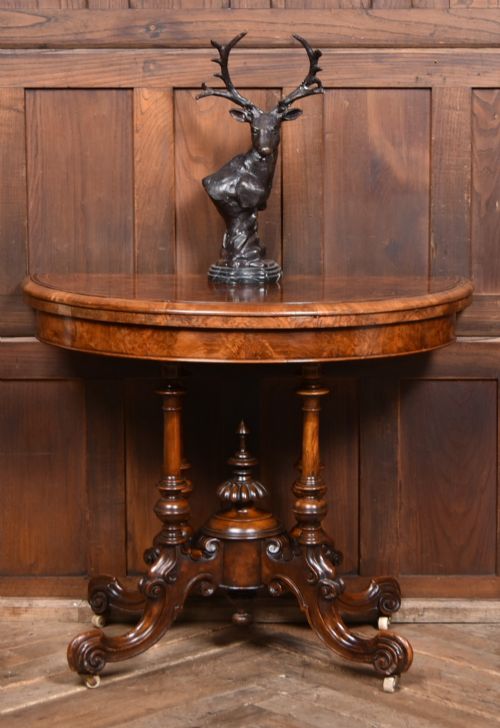
- A half-moon shape used for table tops and consoles. These tables sit flat against a wall until opened out into a full circle for play.
- Ormolu
- Gilded bronze mounts applied to furniture for decoration. They appear frequently on mid-19th-century French and Victorian pieces.
Walnut Gaming Table: Frequently Asked Questions
How do you open a fold-over gaming table?
Most fold-over tables rely on a pivoting or rotating top supported by a swing leg or a concertina frame. Lifting the upper leaf reveals the hidden playing surface and any internal storage wells.
Care must be taken to support the weight evenly on the hinges rather than relying on the pivoting mechanism alone when opening the table.
What games were played on these tables?
These tables accommodated card games such as whist and bridge, alongside board games like chess and backgammon. Many tops feature inlaid checkerboards flanked by wood veneer.
Interiors often include shallow wells intended for holding gaming counters, dice, or sewing implements in dual-purpose work tables.
How do I date a walnut gaming table?
Dating relies on combining the timber preparation, the style of the base supports, and the specific inlay techniques. Georgian pieces favour simpler crossbanding, while Victorian examples often feature heavy carved pedestal bases and ornate marquetry.
Hardware such as hinges and the presence of baize linings also offer clues to the manufacturing decade.
Can I use a antique gaming table daily?
These pieces function well for occasional dining, display, or card games provided the weight is kept moderate. Using coasters and protecting the walnut veneer from direct sunlight preserves the polish.
The folding mechanisms benefit from gentle handling to protect 19th-century hinges and internal wooden pivots.