




Eighteenth Century Lowboy
An eighteenth century lowboy offers compact table storage with drawers, bringing understated period utility to a bedroom or hallway.
Eighteenth Century Lowboy
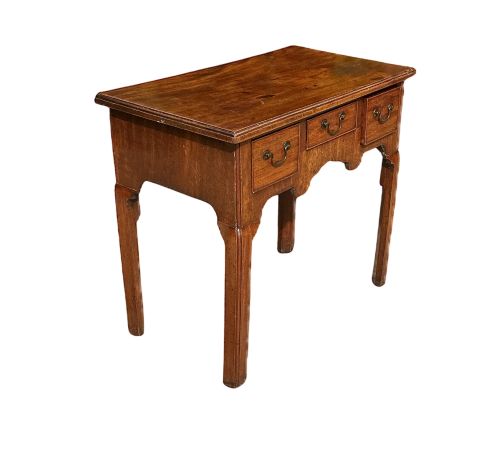
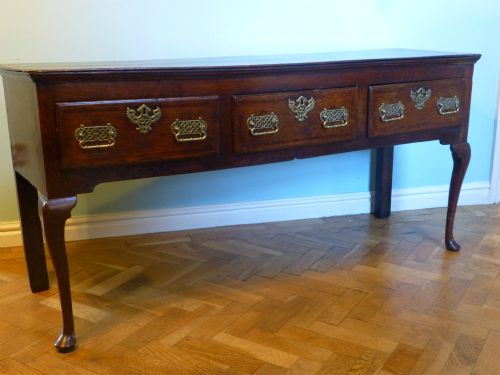
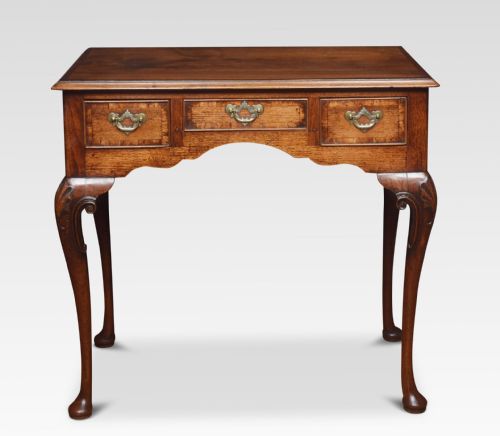
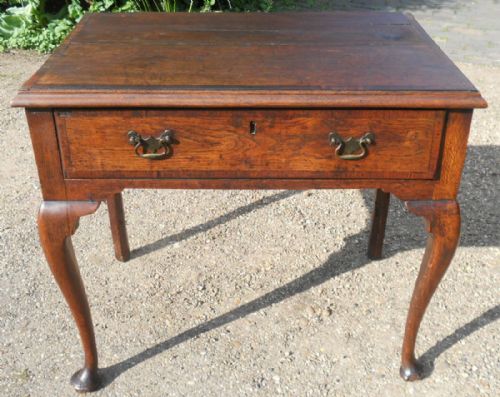
An eighteenth century lowboy is a small side table fitted with drawers, designed primarily for dressing or general storage in period interiors. You encounter these pieces in forms ranging from simple oak designs to more refined walnut and mahogany examples.
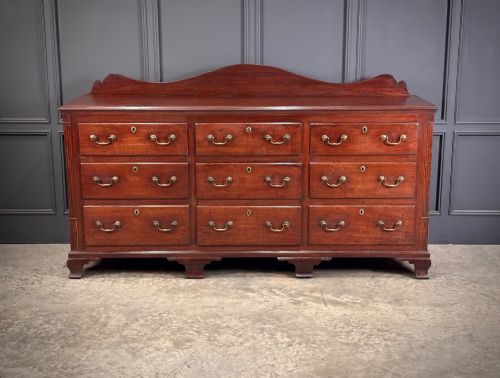
The listings show lowboys spanning the eighteenth century alongside later nineteenth century and Edwardian interpretations. You also find related forms such as low dresser bases and side tables sharing similar proportions.
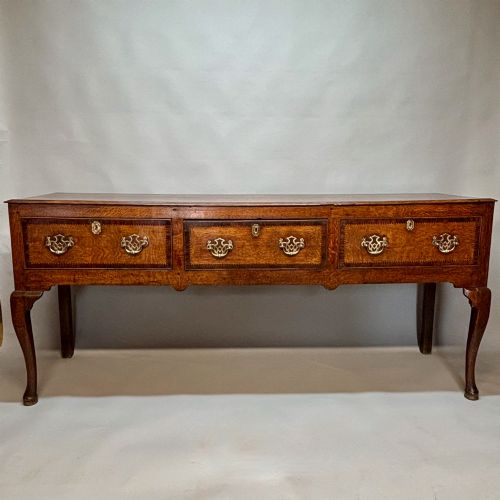
Originating in English country and Georgian workshops, these pieces often feature cabriole legs and distinct foot forms. Their modest height and shallow depth make them adaptable for modern rooms requiring period character.
How they were made
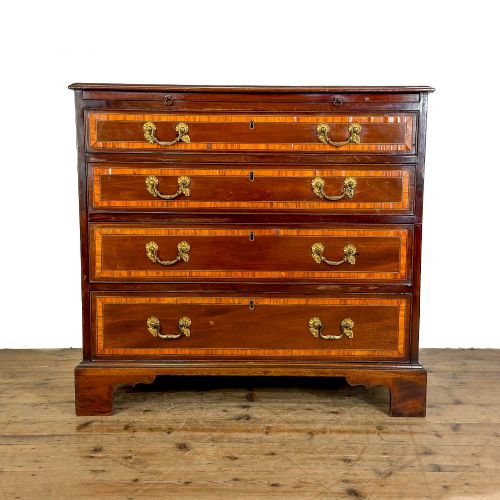
Cabinet makers built these tables using timber such as oak, walnut, and mahogany, frequently selecting figured veneers for principal surfaces. Brass handles and escutcheons punctuate the drawer fronts, providing functional contrast to the dark timber.
Construction techniques rely on traditional joinery to frame the drawers and secure the legs. Cabriole legs shape the lower profile on many examples, terminating in specific foot types.
The listings show eighteenth century lowboys built in oak, walnut, and mahogany, often featuring cabriole legs and multiple drawers.
What varies in quality
Quality rests in the choice of timber and the crispness of the cabinetwork across the frame and drawers. Figured grain and well proportioned cabriole legs separate standard examples from finer pieces.
The integrity of the timber surfaces and the retention of original brass hardware influence the overall character. Later alterations or replaced elements alter the standing of a piece within the period range.
The Eighteenth Century Lowboy Glossary
- Lowboy
- A small pedestal table or side table containing one or more tiers of drawers, typically standing on four legs. They served as dressing tables or general utility surfaces in domestic rooms.
- Cabriole leg
- A furniture leg that curves out in a convex arc and tapers inward in a concave arc, ending in a foot. This form became prominent during the Queen Anne and Georgian periods.
- Figured mahogany
- Timber cut to highlight decorative patterns within the grain, such as flame or mottle figures. Makers reserved these veneers for prominent display surfaces.
- Escutcheon
- A flat plate surrounding a keyhole, usually made of brass to protect the wood from wear. They serve both a practical function and a decorative purpose on drawer fronts.
Eighteenth Century Lowboy: Frequently Asked Questions
What is an eighteenth century lowboy used for today?
These tables function well as compact hallway surfaces or small dressing desks in bedrooms. Their shallow depth allows them to fit narrow spaces without dominating a room.
They also serve as bedside stands or lamp tables where low height and drawer storage are required.
How do I identify a period lowboy?
Look at the timber construction, joinery methods, and leg profiles such as cabriole designs. Eighteenth century examples show construction methods and wear consistent with their age.
Compare the piece against documented examples from the Georgian and Queen Anne eras to verify period characteristics.
What woods were used for lowboys?
Oak, walnut, and mahogany appear frequently across the surviving pieces. Makers also utilised satinwood for specific decorative elements.
Softer woods often formed internal drawer linings while primary timbers made up the visible exterior.
Where should I place a lowboy in my home?
A hallway or landing provides a suitable location for placing a lowboy against a wall. They also sit comfortably beneath mirrors in living rooms or bedrooms.
Keep them away from direct heat sources to protect the historic timber and veneer.