


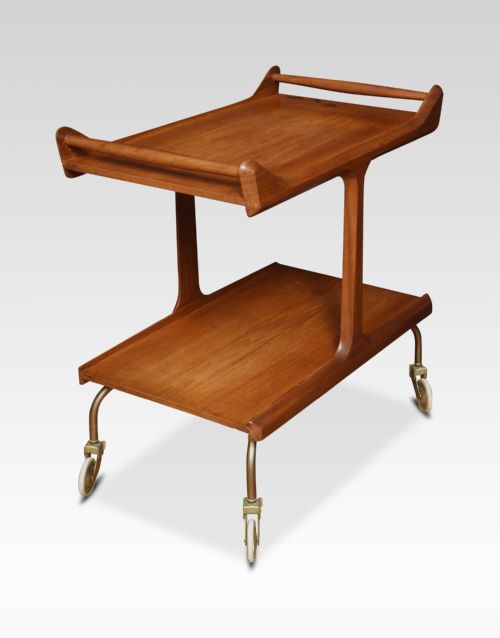
Vintage Walnut Tea Cart
A vintage walnut tea cart brings serving furniture into a room with warmth, movement and the grain of the wood.
Vintage Walnut Tea Cart
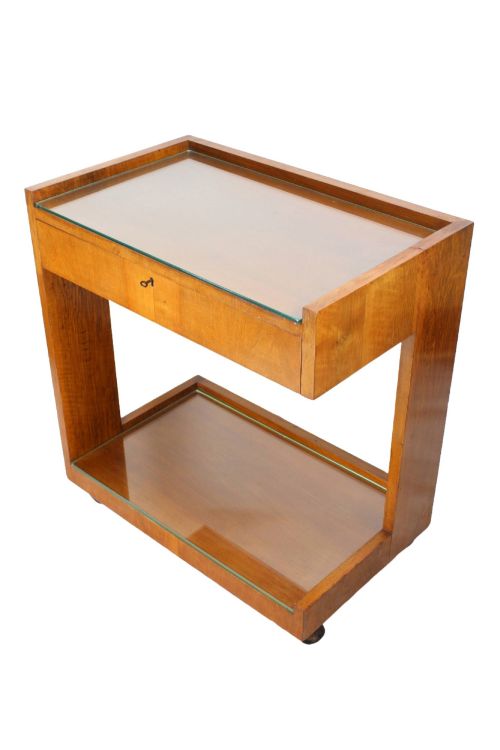
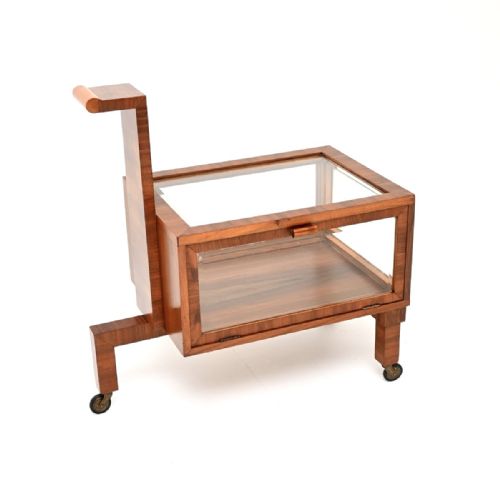
A vintage walnut tea cart spans forms ranging from simple serving trays on wheels to elaborate drinks bars, display cases and metamorphic pieces designed for hospitality. When you search for a vintage walnut tea cart, you encounter pieces that function as mobile drinks trolleys, bar carts and serving carts.
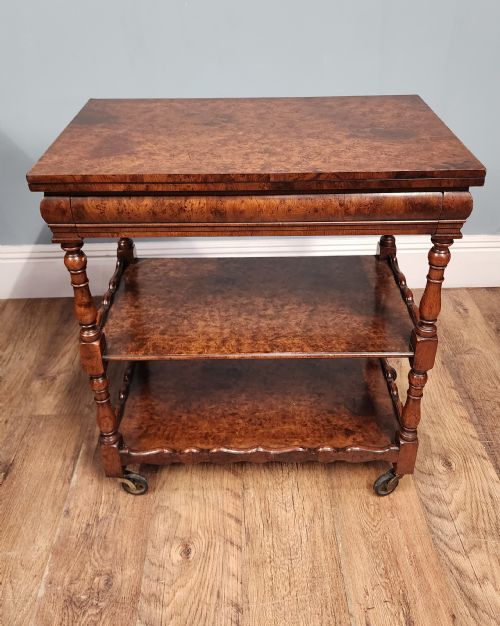
The pieces listed here lean heavily into the Art Deco style, alongside Victorian and Mid-Century Modern examples. You are most likely to meet an Art Deco serving trolley featuring circular or two-tier designs from the nineteen thirties, built to serve drinks and host guests.
Materials and construction
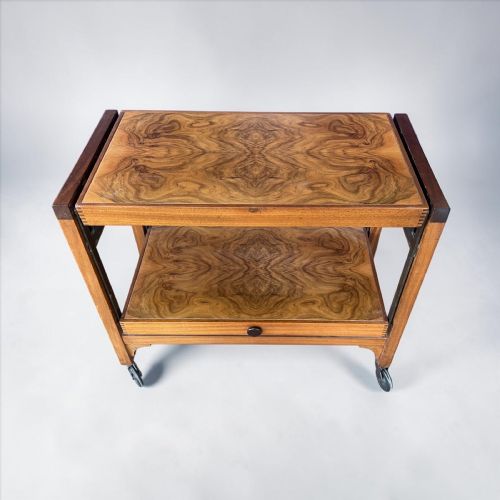
Makers utilised walnut, burr walnut veneer and general wood substrates to build these mobile carts, often highlighting the natural figure and grain of the timber on the main serving surfaces. The warmth of the wood provides the primary visual impact across the pieces.
Metal and brass components appear in the structural fittings, handles and castors that allow the carts to move smoothly across a floor. Glass panels also feature in specific designs, particularly on display cases and upper serving tiers.
Materials recorded across the inventory include walnut, burr walnut veneer, brass, metal, glass, wood and castors.
Distinguishing quality in walnut tea carts
Quality rests in the handling of the walnut timber and the selection of figured burr walnut veneer, where richer and more active grain patterns elevate the visual presence of the cart. The joinery of the tiers and the integration of moving parts dictate the structural integrity of the piece.
The refinement of the Art Deco or Victorian styling, from circular configurations to metamorphic mechanisms, separates standard utility items from more ambitious pieces. Subsidiary materials like brass and glass must coordinate with the primary woodwork to present a cohesive object.
The Vintage Walnut Tea Cart Glossary
- Walnut
- A hard, dense timber prized for its rich dark brown colour and varied grain patterns. It serves as the primary material for many serving carts and trolleys.
- Veneer
- A thin layer of superior wood applied over a secondary timber base to create decorative surfaces. Burr walnut veneer displays swirling, knotty grain patterns.
- Castor
- A small wheel mounted on a swivel assembly attached to the legs of the cart. It enables the piece to be rolled easily across a room.
- Metamorphic
- Describing furniture designed to transform or change shape for different functions. These serving trolleys can alter their configuration to aid in hospitality.
- Art Deco
- A design style spanning the nineteen twenties and thirties characterised by streamlined shapes and geometric forms. Many circular drinks trolleys follow this aesthetic.
Vintage Walnut Tea Cart: Frequently Asked Questions
What is a vintage walnut tea cart used for?
These carts function primarily as mobile drinks trolleys and serving stations for entertaining guests in a home. They transport glasses, bottles and dishes from room to room.
Collectors also utilise them as static display surfaces for books, decor items and barware when not actively serving food or drinks.
How do I identify an Art Deco tea cart?
Art Deco tea carts typically feature geometric lines, circular tiers or streamlined silhouettes dating from the nineteen twenties and thirties. They often employ figured walnut veneer to create striking patterns on the wood surface.
Victorian examples by contrast lean toward heavier turning, bookshelves and traditional whatnot styles from the late nineteenth century.
Are these carts easy to move around?
Most pieces incorporate metal and brass castors affixed to the base to allow smooth rolling across interior floors. Their mobility is central to their original function as serving carts.
Weight varies depending on whether the piece incorporates glass panels, multiple tiers or solid wood construction rather than veneer.
What periods do these tea carts come from?
The listings span the Victorian era of eighteen ninety through to the nineteen twenties, nineteen thirties and nineteen forties. The majority of the items cluster in the interwar Art Deco period.
Mid-Century Modern examples also appear occasionally, showing the evolution of the serving trolley across decades of design.