


Antique Walnut Bar Trolley
An antique walnut bar trolley brings mid twentieth century cocktail culture into a room with rich wood grain and rolling mobility.
Antique Walnut Bar Trolley
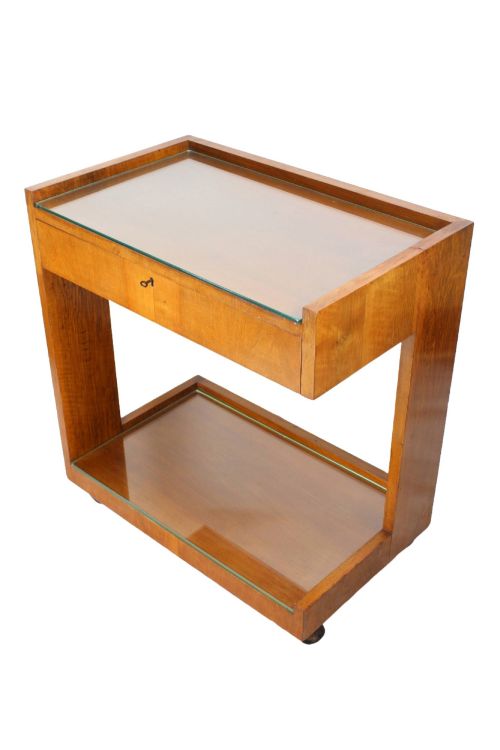
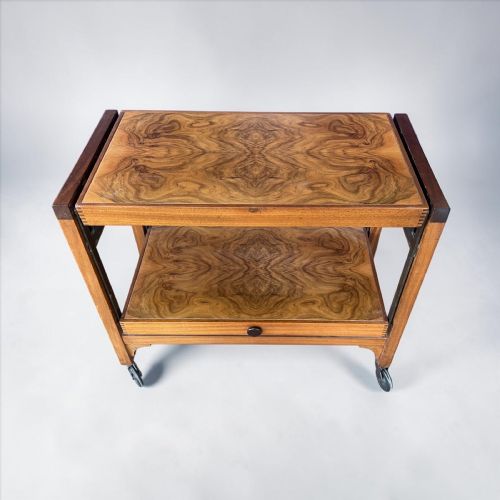
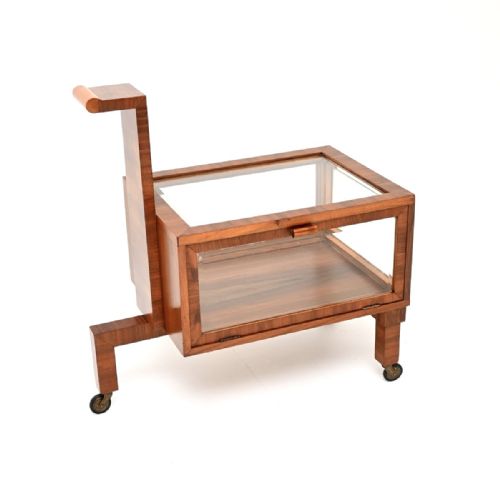
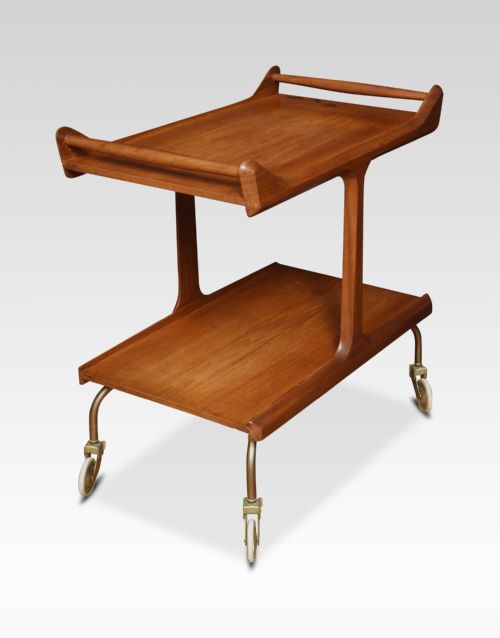
An antique walnut bar trolley serves as a mobile surface for bottles, glassware, and mixing equipment during social gatherings. Buyers searching for an antique walnut bar trolley encounter pieces primarily rooted in the Art Deco period, spanning the nineteen twenties, nineteen thirties, and nineteen forties. These serving carts take forms such as circular trolleys, two tier designs, display cases, and metamorphic tables that transform for serving.
English origins appear frequently among these pieces, often manifesting as streamline or Savoy styles. Formats vary from standard serving carts to pop up cocktail tables and drinks chests. The selection on this page shows walnut timber as the primary defining material across the listed items.
How they were made
Makers utilised walnut timber and walnut veneer to construct these trolleys, frequently highlighting figured grains across the main surfaces. Ebonised wood often provides contrast to the warm brown tones of the walnut body.
Functional hardware integrates brass and other metal elements, while glass panels form shelves or display tops. Castors fitted to the base allow the furniture to move smoothly across floor surfaces.
Some trolleys transform from innocent side tables into pop up cocktail bars faster than a thirsty guest can say Art Deco.
What varies in quality
The sophistication of the Art Deco design and the liveliness of the figured walnut veneer distinguish the better examples. Streamline shaping and complex metamorphic mechanisms require precise engineering to operate correctly.
Integration of contrasting ebonised wood details alongside quality brass fittings and glass inserts elevates the overall standard of construction. The balance between timber selection and practical mobility defines the character of each piece.
Incorporall
The Antique Walnut Bar Trolley Glossary
- Walnut
- A hard timber valued for its rich brown colour and distinct grain patterns. Cabinet makers frequently slice this wood into thin veneers for decorative effect.
- Veneer
- A thin layer of superior wood applied over a secondary timber base. This technique allows craftsmen to display striking grain figures across large flat surfaces.
- Metamorphic
- Describing furniture designed to transform its shape or function through folding or lifting parts. These pieces shift from a compact table into an expanded serving station.
- Castor
- A small wheel mounted on a swivel attached to the base of the trolley. This hardware enables the cart to roll across a room easily.
- Ebonised
- Wood treated to imitate the dark, dense appearance of ebony. Makers applied this dark finish to create sharp visual contrast against lighter walnut sections.
Antique Walnut Bar Trolley: Frequently Asked Questions
What periods do these bar trolleys come from?
The pieces listed span the nineteen twenties, nineteen thirties, and nineteen forties. They align closely with the Art Deco design movement of the twentieth century.
English examples from these decades demonstrate distinct streamline and Savoy stylistic influences.
How were these trolleys used originally?
Hosts utilised these mobile carts to serve drinks, cocktails, and canapes to guests in domestic drawing rooms and dining spaces. Metamorphic variants and pop up tables provided concealed storage for bottles and glassware until needed.
Lower tiers and glass surfaces held glasses and mixing accessories ready for use during evening gatherings.
What materials are used in their construction?
Walnut timber and figured walnut veneer form the primary body of the furniture. Brass, metal, and glass components provide structural support and surface trays.
Ebonised wood details and castors complete the composition, ensuring both decorative contrast and physical mobility.