



Brass Drinks Trolley
A brass drinks trolley brings unmistakable vintage glamour to any room, serving both as a practical mobile bar and a striking decorative piece.

Brass Drinks Trolley
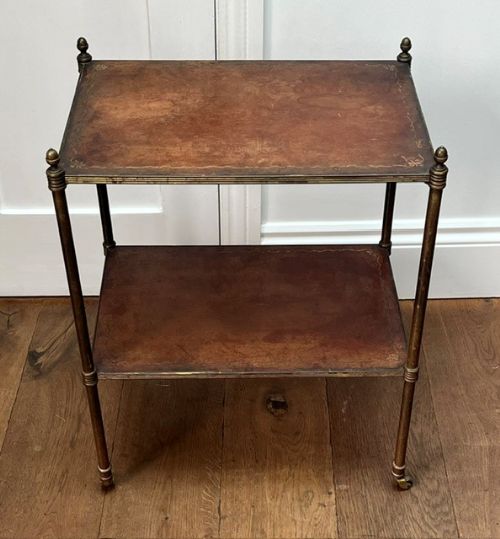
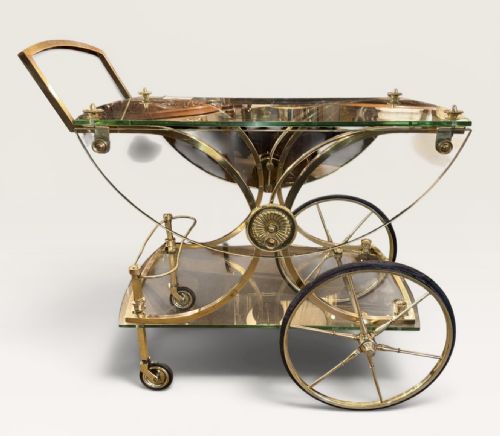
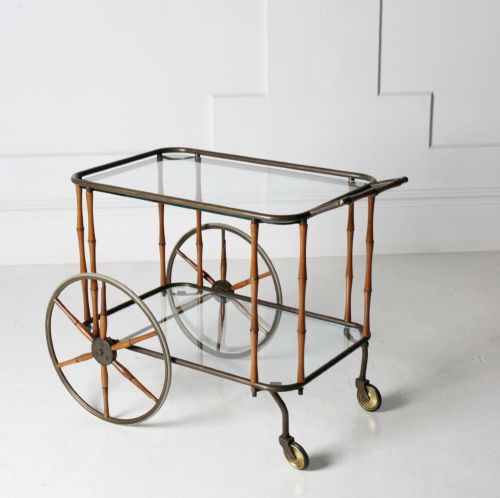
A brass drinks trolley is a movable serving cart designed for entertaining, typically fitted with wheels or castors for easy transport. When you search for this phrase, you encounter pieces originating primarily from the early twentieth century through to later mid-century decades. French workshops feature strongly among these designs, alongside examples from English and Italian makers.
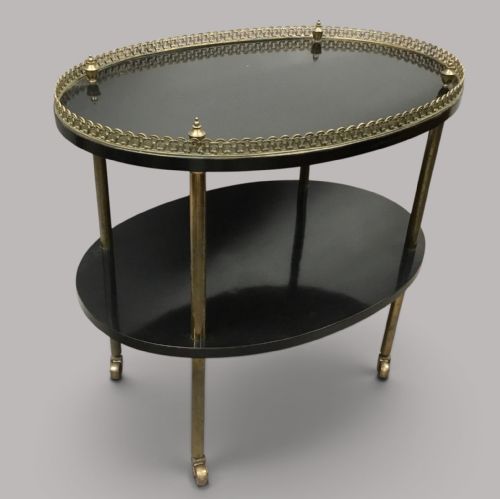
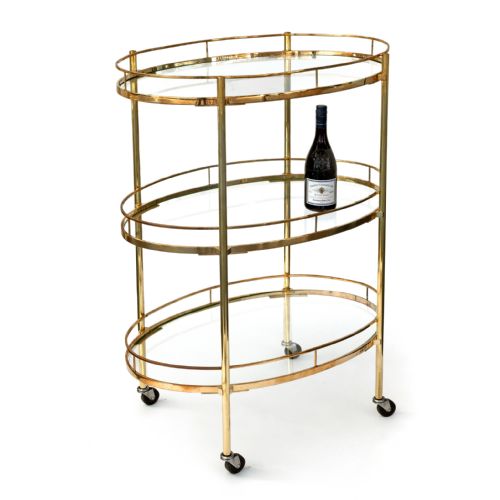
The standard configuration relies on multi-tiered frames holding glass shelves or wooden surfaces. Many designs incorporate protective galleries around the edges to secure glassware and bottles during movement. Variations range from simple two-tier models to elaborate three-tier display stands and nested table sets.
Stylistic influences span Art Deco, French Mid-Century, Hollywood Regency, and French Neoclassical aesthetics. You also find distinctive textural treatments such as burr amboyna, goatskin, faux bamboo, oak, walnut, and mahogany integrated into the metallic framework. Some examples adapt related forms like etagere carts or dessert trolleys.
How They Were Made
The primary structural framework relies on shaped and joined brass, occasionally paired with nickel plating. Metal components are frequently combined with timber supports or inset panels of glass. Cabinetmakers utilised diverse woods including oak, walnut, mahogany, teak, and burr amboyna.
Surface decoration showcases specialised craftsmanship such as intricate wood veneers and stretched goatskin coverings. Faux bamboo shaping demonstrates detailed metalworking or woodwork techniques. Removable trays and galleried edges require precise metal fabrication to secure inset glass or wooden bases.
Brass Drinks Trolley Retail Price Guide 2026
Typical asking prices for brass drinks trolley among the pieces listed under this phrase on Sellingantiques today, from the lower quarter to the upper quarter. They describe what is for sale here now, not the wider market.
Some trolleys come disguised in goatskin, proving that even a cocktail cart likes to dress up.
What Varies in Quality
Quality depends on the precision of the metalwork, the weight of the brass frame, and the selection of secondary materials. Superior pieces employ solid brass construction with substantial gauge framing rather than lighter tubing. The integration of luxury elements like burr amboyna, goatskin, or hand-inlaid woods signals higher tier production.
The sophistication of the design execution separates standard utility carts from high-end decorative examples. Renowned studio attributions and complex tiered structures with galleried detailing elevate the standing of a piece. The condition and clarity of fitted glass shelves and the smooth operation of original castors also influence the overall standard.
Maison Bagues·Maison Jansen·Aldo Tura
The Brass Drinks Trolley Glossary
- Gallery
- A raised rim or decorative railing around the edge of a shelf to prevent items from sliding off. This feature is common on upper and lower tiers of serving carts.
- Etagere
- An open piece of furniture consisting of a number of open shelves for displaying small objects. In drinks trolleys, this translates to multiple stacked tiers.
- Burr Amboyna
- A highly prized wood veneer showing intricate, swirling grain patterns. It adds rich texture and depth to cocktail carts.
- Castor
- A small wheel mounted on a swivel assembly attached to the bottom of the legs. They allow the trolley to move smoothly across floors.
- Faux Bamboo
- A decorative carving or moulding technique that mimics the segmented stalks of real bamboo. French makers utilised this style frequently in mid-century designs.
Brass Drinks Trolley: Frequently Asked Questions
How were brass drinks trolleys used historically?
These trolleys served as mobile cocktail bars during formal entertaining in private homes. Hosts used them to wheel spirits, glassware, and ice directly to guests in drawing rooms.
They also functioned as tea carts or dessert stands in affluent households. Their mobility made them essential accessories for hosting gatherings without constant trips to the kitchen.
How do I style a drinks trolley at home?
Balance functionality and display by arranging tall bottles at the back and glassware toward the front. Incorporate decorative accessories such as cocktail shakers, ice buckets, and small plants to create visual interest.
Leave enough space so the trolley remains practical for serving drinks. Pairing the brass finish with complementary metallic accents in the room ties the decor together.
How do I identify an Art Deco drinks trolley?
Art Deco models typically date from the 1920s and 1930s, featuring geometric lines and streamlined silhouettes. They frequently combine polished brass with rich woods like burr amboyna or walnut.
These pieces often emphasise symmetrical forms and architectural styling. The hardware and wheel assemblies on genuine period pieces reflect manufacturing techniques of that era.
What is the difference between a bar cart and a drinks trolley?
The terms are often used interchangeably, but traditional British usage generally applies trolley to wheeled serving vehicles. Carts can sometimes refer to stationary or simpler serving surfaces.
Both types prioritize the display and transport of bottles and glassware. Historical examples categorized as trolleys almost universally feature castors for mobility.