




French Bar Cart
A french bar cart brings vintage hospitality to any room, combining glass and brass with period elegance.
French Bar Cart
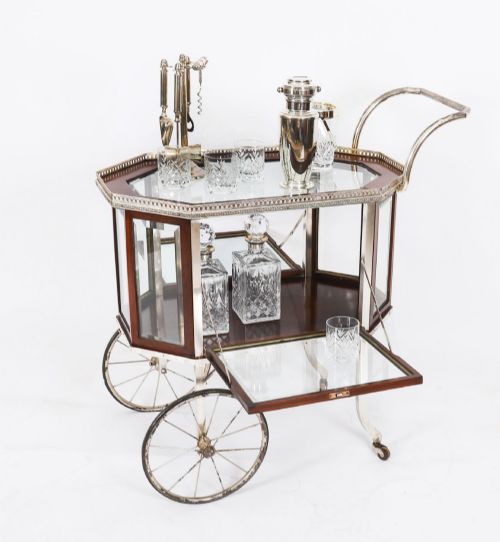
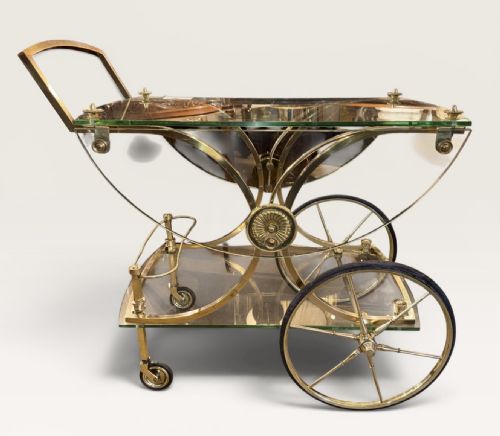
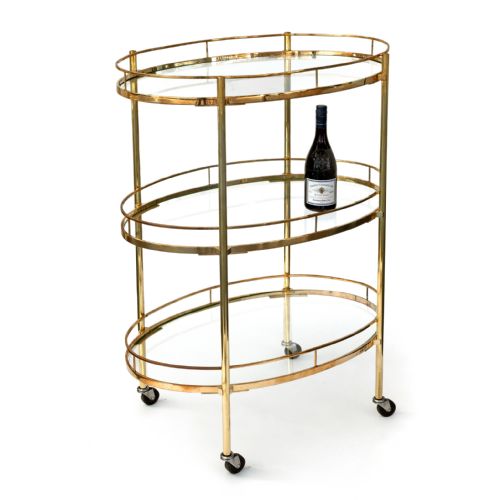
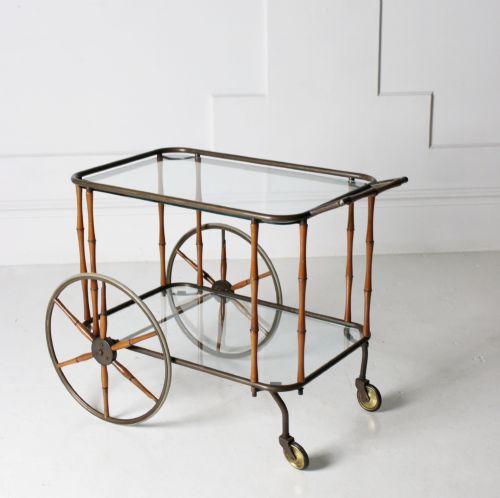
When you search for a french bar cart, you encounter drinks trolleys, serving trolleys, and etagere forms originating from France. These pieces serve as mobile cocktail stations and display stands for glassware and barware.
The versions you are most likely to meet on this page span the Art Deco period, the 1910s, 1920s, 1930s, and later than 1960. They manifest in styles such as French Neoclassical, Hollywood Regency, and French Mid-Century.
Alongside standard trolleys, the selections include nesting table variations and novelty cocktail accessories. Their primary function remains the transport and presentation of drinks with distinct continental flair.
Materials and construction
These items rely on brass, silver plate, chrome, and gilt bronze for their structural frameworks and decorative galleries. Glass tiers provide sturdy surfaces for bottles and glassware while maintaining a light visual profile.
Cabinetmakers and metalworkers utilised wood species including mahogany, walnut, and burr amboyna. Alternative materials like plastic and faux bamboo also appear in later mid-century iterations.
Joinery and metal casting techniques ensure stability across multiple tiers. Frames often incorporate wheels or castors designed for smooth movement across floors.
Factors that define quality
The refinement of the metalwork separates standard utility trolleys from high-style examples. Crisp casting on brass frames and substantial silver plating indicate superior original manufacture.
Choice of timber veneer dictates the prestige of wooden variants. Figured woods like burr amboyna and walnut provide visual depth that plain timbers lack.
The integration of original glass shelves and functional, matching castors preserves the integrity of the piece. Superior design shows in balanced proportions across two or three tiers.
Maison Bagues·Sudre·Maison Jansen·Japy Freres
The French Bar Cart Glossary
- Art Deco
- A design style dominant in the 1920s and 1930s characterised by sleek geometric shapes and stylised motifs. It defines many of the most sought-after pieces on this page.
- Etagere
- A set of open shelves for displaying small objects or serving items. These tiered stands provide multiple levels for glassware and bottles.
- Burr Amboyna
- A highly decorative wood veneer showing intricate swirling grain patterns. It adds rich texture to cabinetwork.
- Galleried
- Featuring a raised metal rim or rail around the edge of a shelf. This prevents items from sliding off during movement.
- Silver Plated
- Covered with a thin layer of silver over a base metal. This finish offers the lustre of solid silver with increased durability.
French Bar Cart: Frequently Asked Questions
What periods do these carts come from?
The available examples date primarily from the early twentieth century, with strong representation from the 1910s, 1920s, and 1930s Art Deco era. Later pieces extend past 1960.
Design aesthetics shift from ornate brass framing to streamlined chrome and exotic wood veneers as the decades progress.
How were these trolleys originally used?
They functioned as mobile hospitality stations in formal drawing rooms and dining spaces, used to wheel out spirits, wine, and cocktail accessories to guests.
The multiple tiers allowed hosts to keep glassware on one level and bottles on another during gatherings.
Are the glass shelves usually original?
Many pieces retain their original glass panes, often featuring bevelled edges or fitted galleries to secure bottles during transit.
When replacement glass is used, it matches the thickness and tint appropriate to the specific period of the metal frame.
How do I style a bar cart at home?
Balance height and texture by arranging tall bottles alongside shorter glassware, cocktail shakers, and decorative items like novelty cocktail sticks.
Keep the top surface uncluttered so the trolley remains functional for serving drinks when entertaining.
How do I identify an Art Deco piece?
Look for geometric symmetry, clean lines, and luxurious materials such as burr amboyna or polished chrome rather than floral scrollwork.
Art Deco examples from the 1930s frequently combine reflective metal surfaces with rich wood veneers or glass.