



Three Tier Serving Cart
A three tier serving cart offers mobile elegance for hospitality, spanning Victorian mahogany to Art Deco walnut.
Three Tier Serving Cart
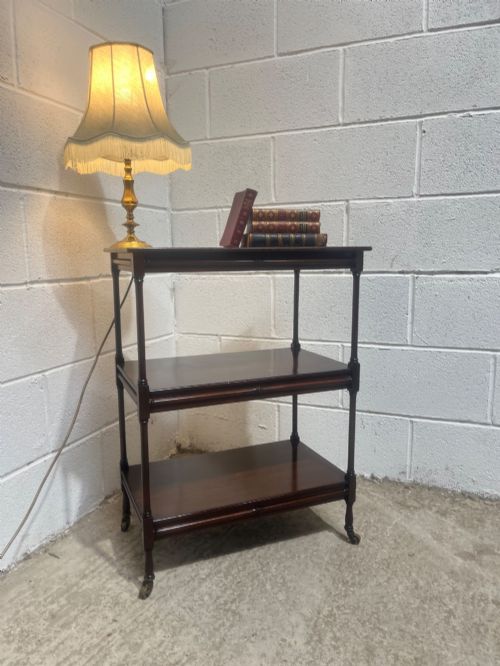
A three tier serving cart represents a versatile category of mobile furniture designed for carrying food, drinks, or books across multiple levels. When searching for a three tier serving cart, buyers encounter diverse forms ranging from Victorian dumb waiters and butlers trolleys to Art Deco circular bar carts and Edwardian tea trolleys.
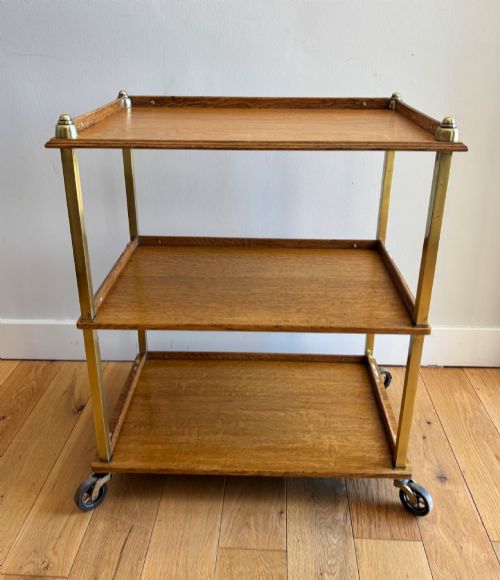
The pieces on this page traverse periods from the nineteenth century through the 1930s, taking shapes such as etageres, buffets, and sideboards. Oak, mahogany, walnut, and brass form the structural backbone of these multi-level mobile units.
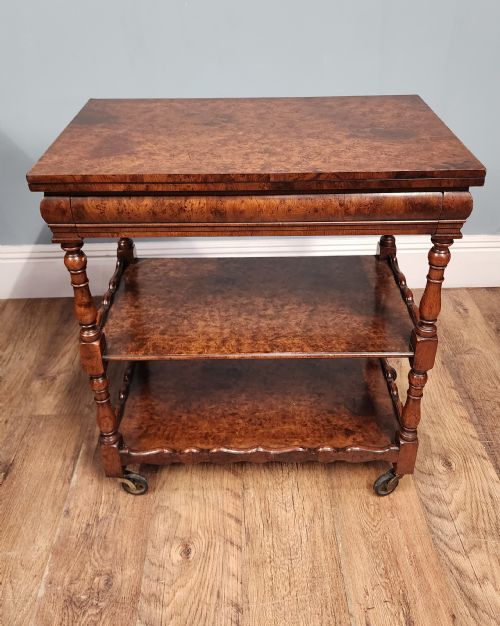
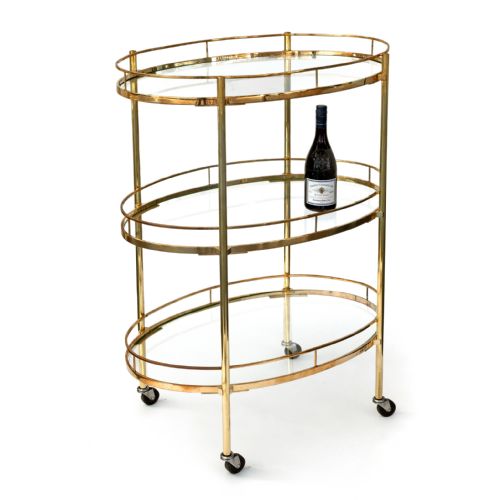
Victorian examples often lean towards timber construction with barley twist or carved details, whereas twentieth-century items embrace circular designs, glass surfaces, and brass galleried tiers. Each iteration serves the fundamental domestic purpose of hospitality and display with ease of movement.
How they were made
Makers constructed these serving units primarily from solid timbers like mahogany, oak, and walnut, frequently applying burr walnut veneer for decorative grain patterns on later twentieth-century examples. Brass frequently appears in structural frames, galleries, and wheel mountings.
Glass is utilised for shelving in brass etageres, providing a lighter visual profile compared to solid wood tiers. Carving, turning such as barley twist, and precise joinery define the craftsmanship across Victorian and Edwardian pieces, while Art Deco items favour clean circular geometry.
Listings feature items spanning the Victorian era through the 1930s, utilising mahogany, oak, walnut, brass, and glass.
What varies in quality
The standard of timber selection and veneer matching dictates much of the visual appeal, where figured walnut or well-grained mahogany elevates a piece above utility. Solid construction in the uprights and sturdy wheel attachments ensure structural integrity across multiple tiers.
Refinement in decorative details, such as brass galleries, fine carving on hardwood, and balanced proportions, separates standard utilitarian furniture from exceptional examples of the cabinetmaker's art.
The Three Tier Serving Cart Glossary
- Etagere
- A set of open shelves for displaying small objects, often featuring multiple tiers supported by slender columns.
- Dumb waiter
- A tiered piece of freestanding furniture used for holding food and tableware, removing the need for servants during meals.
- Barley twist
- A spiral turning technique used on wooden legs and uprights, popular in Victorian and Edwardian furniture.
- Galleries
- Low rails or ledges fitted around the edges of shelves to prevent items from sliding off during movement.
- Burr walnut veneer
- Thin slices of decorative wood taken from walnut tree growths, prized for intricate and swirling grain patterns.
Three Tier Serving Cart: Frequently Asked Questions
What is a three tier serving cart used for?
These pieces function primarily as mobile display and serving units for drinks, tea, or books in domestic settings. The multiple levels provide ample surface area while remaining easy to move between rooms.
Historically, similar items served dining rooms as dumb waiters or tea trolleys, but modern homes utilise them widely as stylish home bars or side tables.
How do I date a three tier serving cart?
Dating relies on observing the prevailing materials, construction methods, and decorative styles present in the piece. Victorian examples often feature heavy mahogany, turned wood, and traditional joinery.
Twentieth-century items from the 1920s and 1930s typically embrace Art Deco circular geometries, figured walnut veneers, or brass and glass combinations.
Are these carts stable on carpet?
Most antique trolleys feature small wheels or castors designed for hard floors rather than thick carpets. Moving them safely requires steady guidance across the tiers to prevent items from tipping.
Checking the castors ensures smooth operation when transferring the unit between different living spaces.
Can I use an antique trolley as a bar cart?
Many of these pieces, particularly Art Deco circular walnut designs and brass etageres, suit the role of a home bar perfectly. The multiple tiers easily accommodate glassware, bottles, and cocktail accessories.
Care should be taken to protect antique wood surfaces from moisture rings using coasters or trays.