



Art Deco Display Case
An art deco display case combines geometric ambition with fine cabinetry, offering an architectural stage for ceramics, glass and books.
Art Deco Display Case
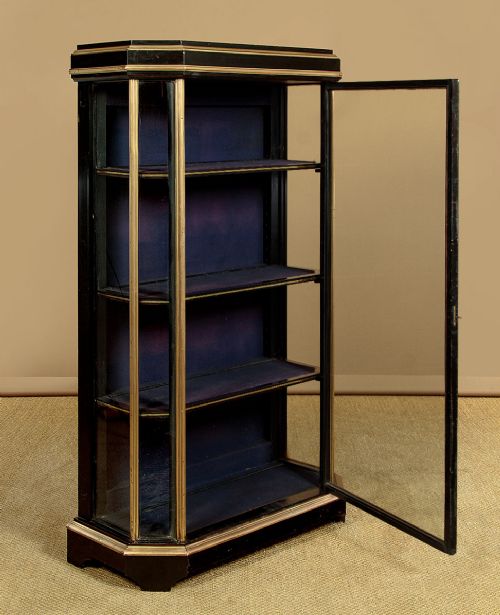
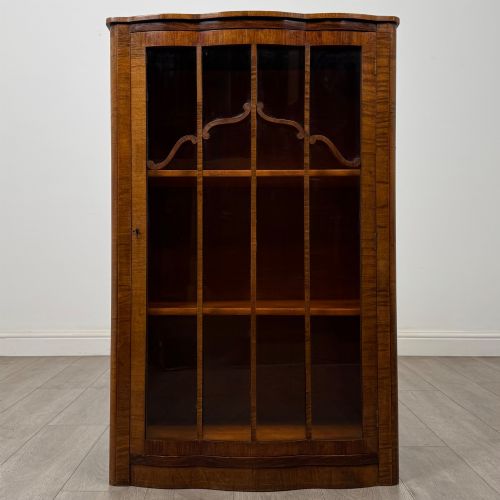
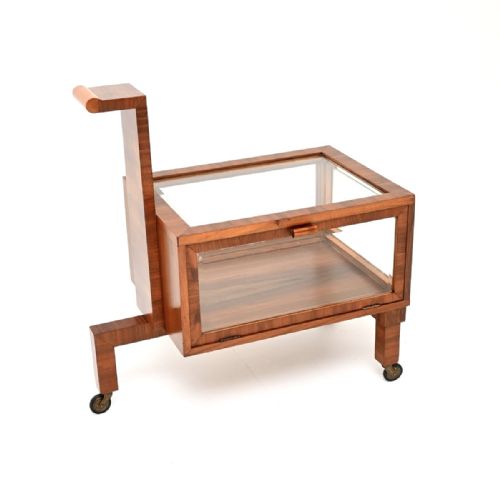
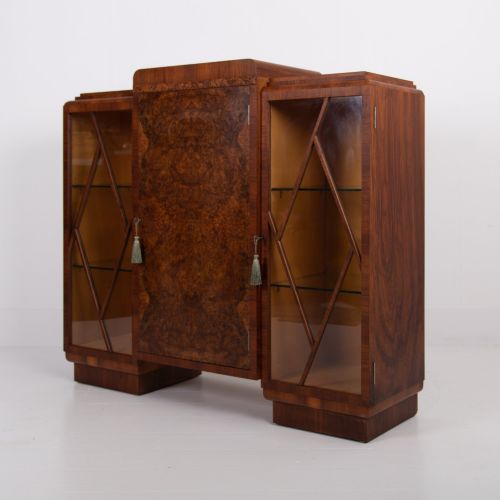
An art deco display case serves primarily to protect and exhibit valued objects behind glazed panels. The forms span upright cabinets, corner units, low counters, serving carts and combined bookcase cabinets from the interwar decades.
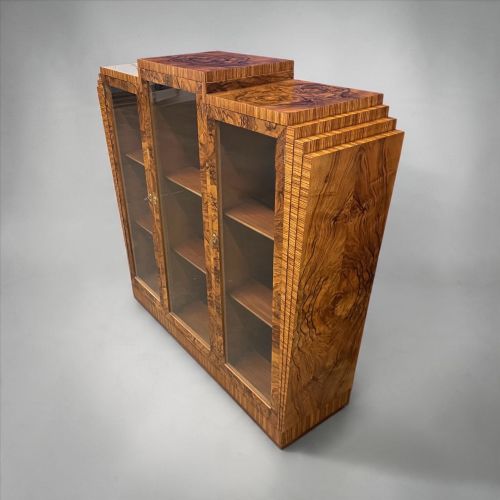
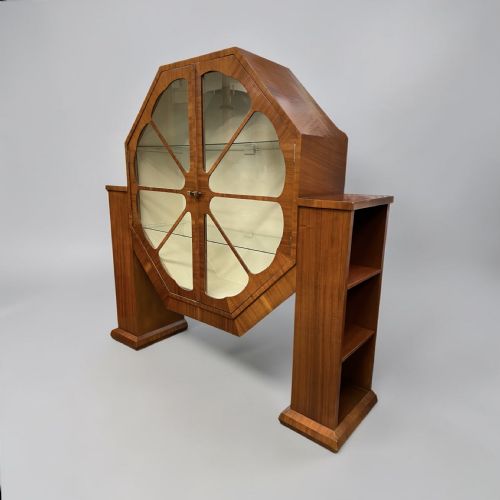
Walnut, burr walnut and oak dominate the timber selection, frequently shaped into circular, oval, hexagonal or cathedral contours rather than standard rectangular boxes. These pieces emerge from the 1920s and 1930s, alongside transitional Edwardian examples that anticipate the geometric shift.
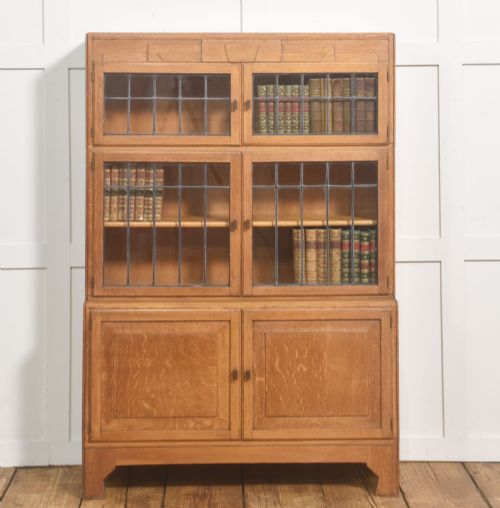
The buyer encounters freestanding vitrines with leaded glass, alongside specialised shop display counters framed in metal or aluminium. Interiors often incorporate contrasting veneers like sycamore or retain original fabric linings.
How they were made
Cabinet makers utilised figured walnut, burr walnut and oak as primary structural timbers, often applying them as veneers over solid cores to create dramatic grain patterns. Internal carcases frequently combine secondary timbers with specialised mouldings, stepped cornices and carved details.
Glazing relies on clear, crystal or leaded glass held within wooden, brass, steel or aluminium frames. Metal components such as brass mounts, ebonised elements and structural frames provide structural contrast and linear definition.
Specialised workshops integrated fabric linings, painted lettering and multi-drawer configurations into the interior architecture of commercial and domestic cabinets.
Art Deco Display Case Retail Price Guide 2026
Typical asking prices for art deco display case among the pieces listed under this phrase on Sellingantiques today, from the lower quarter to the upper quarter. They describe what is for sale here now, not the wider market.
Form variations recorded across the archive include circular, oval, hexagonal, octagonal, cathedral and corner cabinets alongside serving carts.
What varies in quality
Quality rests upon the ambition of the geometry and the selection of timber veneers. Matched burr walnut figures and complex curves such as octagonal or oval shapes demand superior carpentry compared to plain rectilinear oak boxes.
The execution of secondary details distinguishes standard production from notable workshop output. Integrated brass mounts, specialist leaded glass patterns, fine mouldings and secondary woods like sycamore elevate an interior piece.
Provenance and maker attribution separate standard commercial cabinets from commissioned works. Pieces bearing documented signatures or retail origins demonstrate superior design intent in their structural joinery and hardware.
Charles Graffart for VSL·Epstein·Saml. Elliott & Sons·Betty Joel
The Art Deco Display Case Glossary
- Burr walnut
- A figured timber harvested from walnut tree growths, displaying complex swirling grain patterns. It provides highly decorative surfaces on interwar cabinet doors.
- Vitrine
- A glass-fronted cabinet designed specifically for displaying fine objects or curiosities. These structures utilise glazed panels on multiple sides to maximise interior light.
- Leaded glass
- Glass panes joined together by narrow strips of lead into geometric or decorative patterns. This technique appears frequently on interwar bookcase and cabinet doors.
- Ebonised
- Timber treated with a dark finish to resemble ebony. This dark staining provides stark visual contrast against brass mounts and light glass panels.
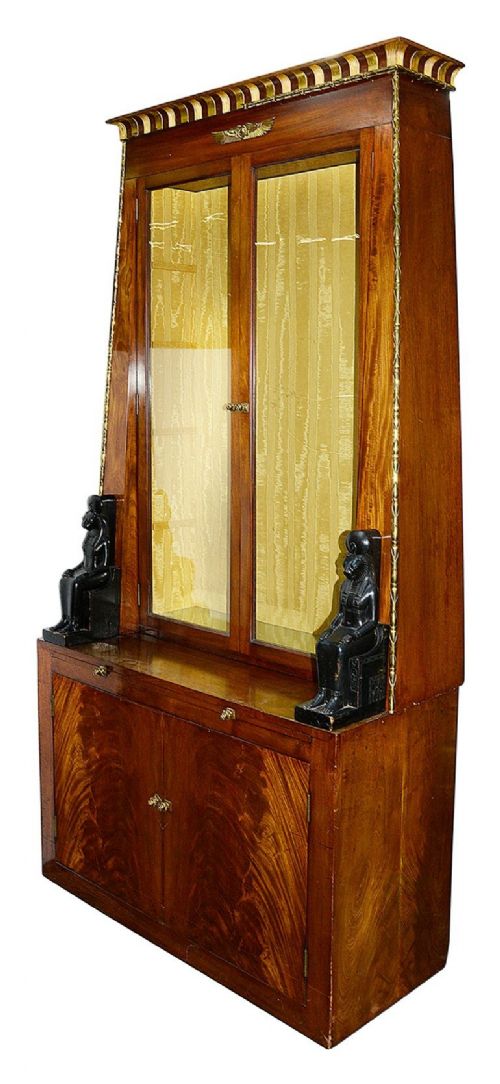
- Egyptian revival
- A design style inspired by ancient Egyptian motifs following archaeological discoveries. It manifests in cabinet hardware, carved details and structural proportions.
Art Deco Display Case: Frequently Asked Questions
Where should I place an art deco display case?
Position the cabinet away from direct sunlight to protect delicate wooden veneers and interior fabric linings from fading. Ensure adequate floor space for models featuring circular, hexagonal or projecting cathedral footprints.
Allow sufficient clearance for opening glazed doors or accessing side drawers. These architectural pieces function effectively as focal points in living rooms or dining spaces.
How do I care for walnut veneer surfaces?
Dust the exterior regularly with a soft, dry cloth to prevent particulate accumulation on the polished timber. Avoid silicone-based polishes, opting instead for traditional microcrystalline wax applied sparingly.
Maintain stable indoor humidity levels to prevent the veneer from lifting or cracking over time. Protect the internal glass panels using non-abrasive cleaners formulated for delicate surfaces.
How can I tell a 1920s cabinet from a 1930s one?
Cabinets from the 1920s often incorporate transitional Edwardian elements, heavier ebonised mounts or early interpretations of classical revival styles. The lines tend towards traditional symmetry with restrained decorative accents.
Pieces from the 1930s embrace bolder geometries, including curved, circular, octagonal and cathedral silhouettes. Materials like aluminium frames and stark burr walnut veneers become more prominent during this later decade.