

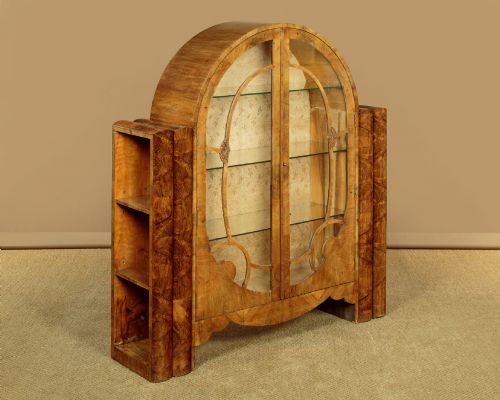


1930s Glass Bookcase
A 1930s glass bookcase brings architectural geometry and clear display space to a room, offering both storage and a distinctive period silhouette.
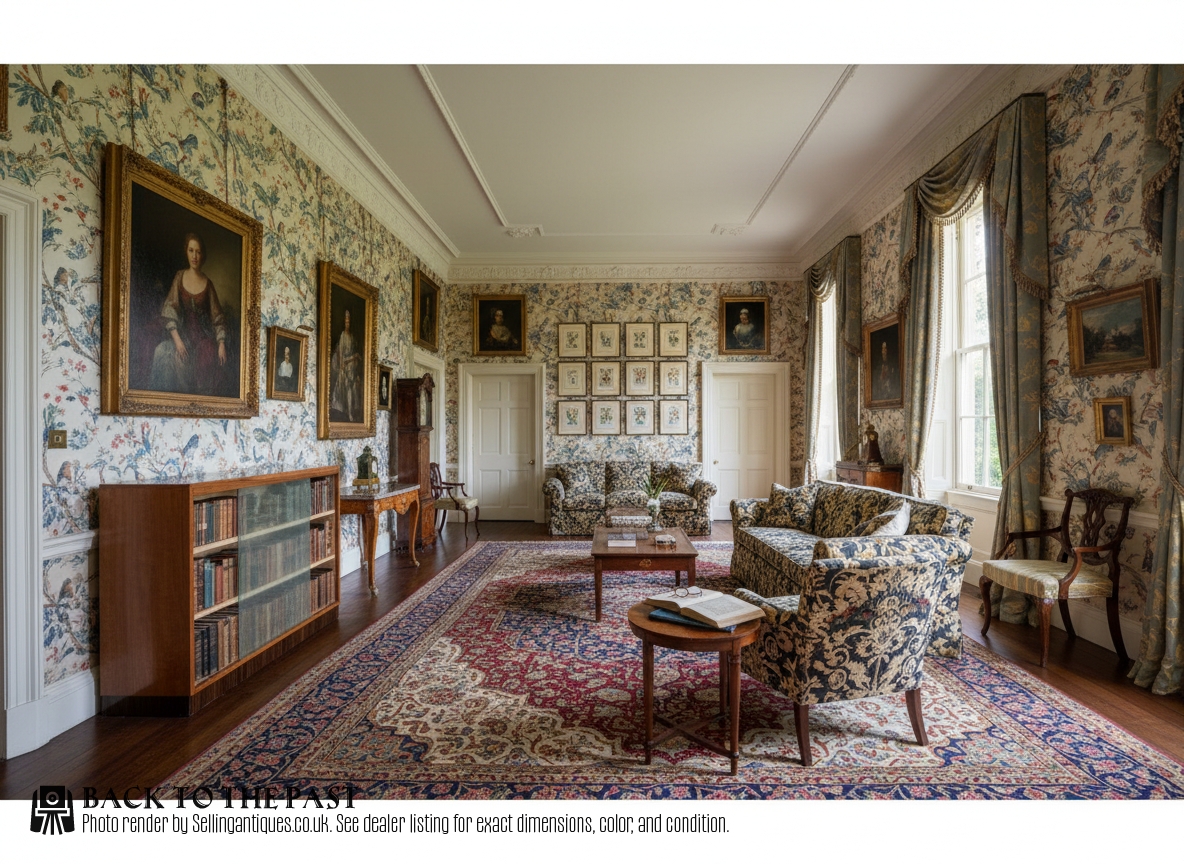
1930s Glass Bookcase
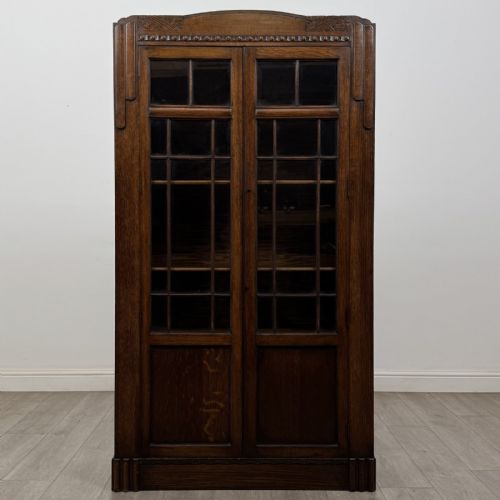
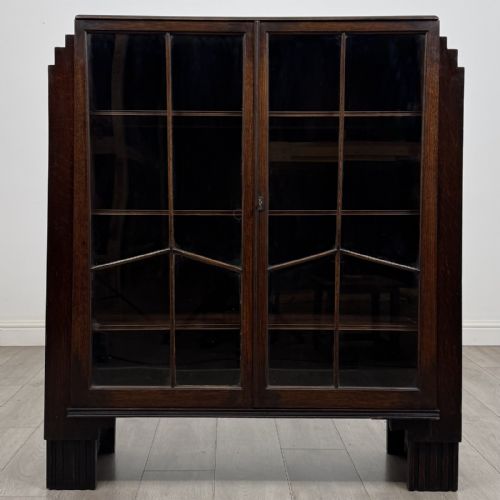
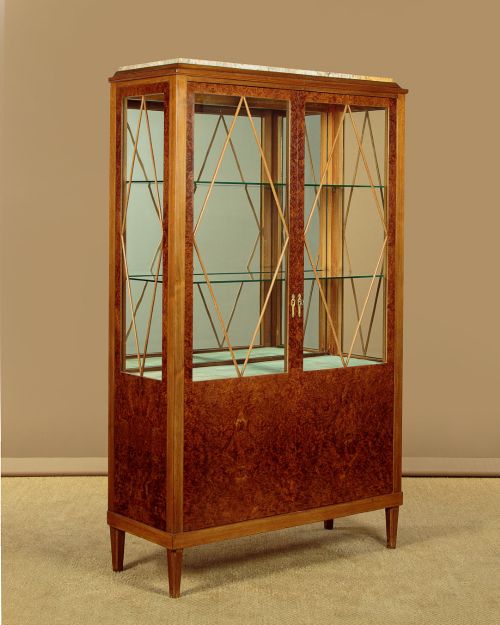
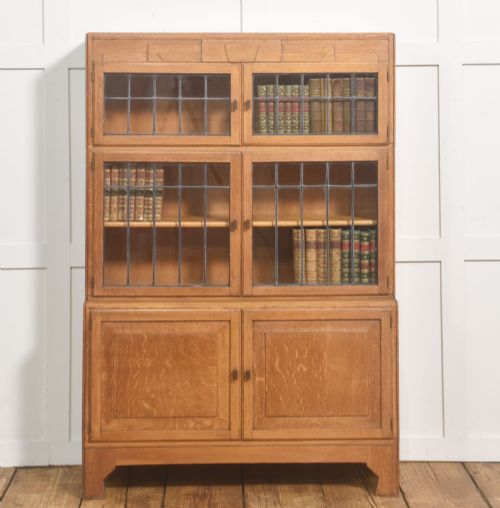
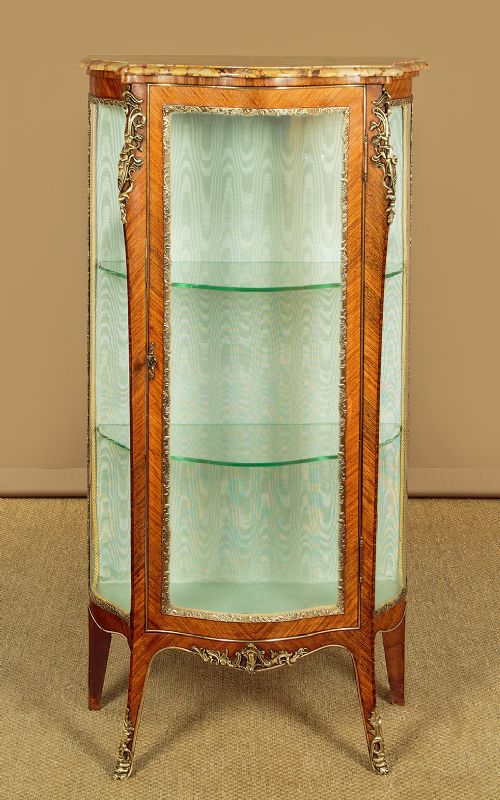
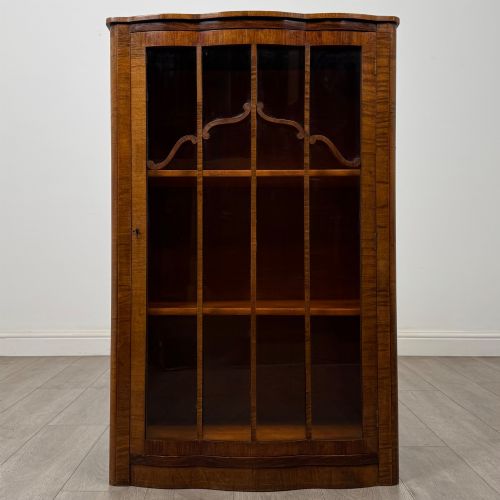
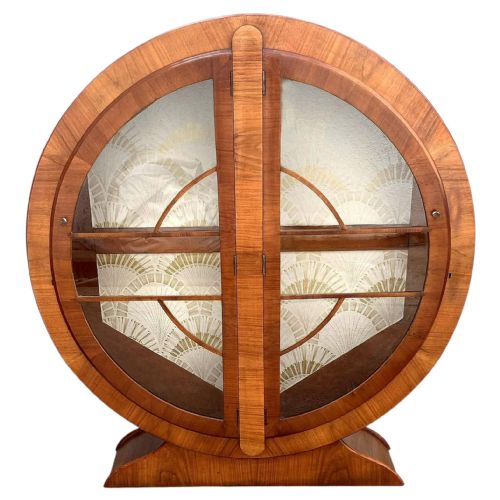
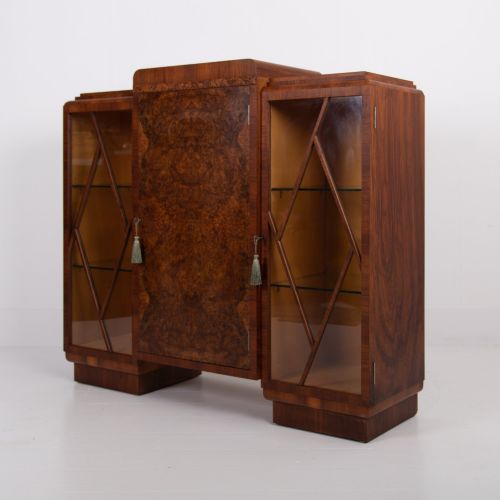
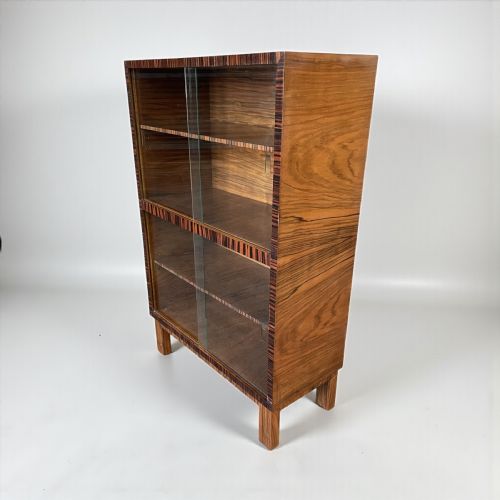
When you search for a 1930s glass bookcase, you encounter a selection primarily shaped by the Art Deco movement alongside intersecting styles such as Louis XV Style, Edwardian Revival, and Neoclassical Revival. These pieces function as display cabinets, vitrines, and bookcase cabinets designed to house books and decorative items behind glass doors.
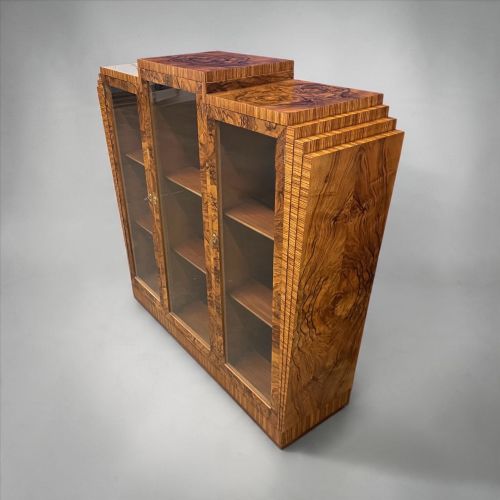
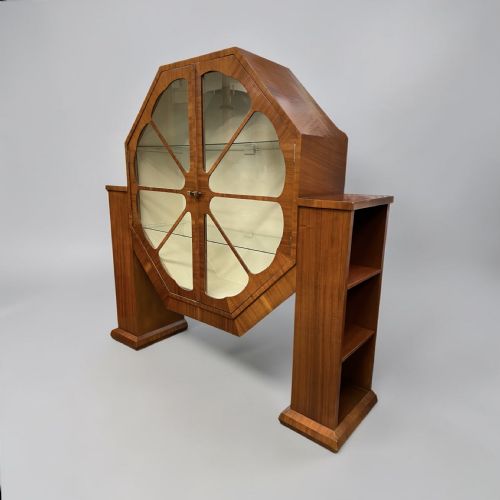
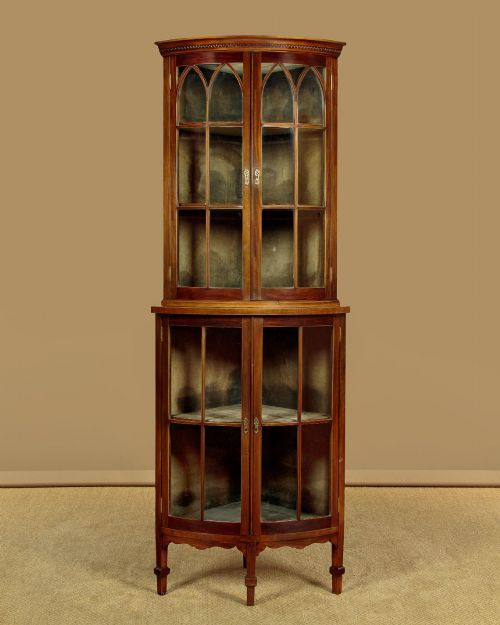
The most common form on this page is the walnut display cabinet, frequently rendered in circular, octagonal, or bow front shapes from around 1930. Alongside these walnut pieces, English oak and mahogany variations appear, spanning solid constructions and glazed formats with leaded glass details.
Origins include English workshops alongside continental examples like Italian sideboards and cabinets. The forms range from compact corner units and small vitrines to large sideboards and credenzas equipped with multiple shelves and compartments.
Materials and construction methods
Cabinet makers utilised a palette of figured walnut, burr walnut, sycamore, oak, mahogany, and maple veneers laid over sturdy timber cores. Brass mounts provided structural and decorative accents on select vitrines, while lead came held individual panes together in leaded glass doors.
Glass panels were integrated into timber doors to protect contents while maintaining visibility from the room. Construction techniques combined solid framing with decorative veneering to create the curved silhouettes and geometric patterns characteristic of the interwar period.
1930s Glass Bookcase Retail Price Guide 2026
Typical asking prices for 1930s glass bookcase among the pieces listed under this phrase on Sellingantiques today, from the lower quarter to the upper quarter. They describe what is for sale here now, not the wider market.
Bookcases occasionally doubled as secret display stages for porcelain collections, ensuring your teacups received the theatrical lighting they deserved.
Distinctions in craftsmanship
Quality depends upon the choice and matching of timber veneers, particularly the grain movement visible across burr walnut and figured walnut surfaces. Superior pieces demonstrate precise joinery in complex geometric shapes such as circular and octagonal cabinets.
The refinement of hardware, including brass mountings and handle design, separates standard production from elevated cabinet work. Additionally, the integration of secondary timbers like sycamore alongside primary display woods indicates greater attention to interior detail.
Rurka·Maurice Adams·Epstein
The 1930s Glass Bookcase Glossary
- Vitrine
- A glass-fronted cabinet designed for the display of curiosities, books, or porcelain. These pieces often feature glass on multiple sides to maximise light penetration.
- Burr walnut
- A prized timber harvested from the growths of walnut trees, yielding complex, swirling grain patterns. It was frequently utilised on the primary surfaces of interwar display cabinets.
- Leaded glass
- Individual panes of glass joined together by strips of lead came to form geometric or decorative patterns. This technique appears across various oak and walnut bookcases.
- Sycamore
- A light-coloured hardwood employed as a contrasting inlay or secondary timber within cabinet interiors. It complements darker woods like walnut in interwar furniture.
- Bow front
- A convex, outwardly curved furniture front that softens linear room angles. This shape is common among the corner and freestanding display cabinets from the period.
1930s Glass Bookcase: Frequently Asked Questions
What is an Art Deco display cabinet?
An Art Deco display cabinet is a glazed storage piece from the interwar period, characterised by geometric forms, curved silhouettes, and figured wood veneers.
These pieces were built to showcase books and decorative objects while serving as sculptural centrepieces within domestic interiors.
How do I identify a 1930s bookcase?
You can identify a 1930s bookcase through its characteristic materials, such as burr walnut, oak, and mahogany, often paired with glazed or leaded doors.
The presence of circular, octagonal, or bow front configurations points directly to the design preferences of the interwar era.
Were these cabinets used only for books?
These cabinets served multiple domestic purposes, functioning simultaneously as bookcases, china cabinets, and general display vitrines.
The adjustable shelving and glass doors allowed owners to protect fragile ceramics alongside bound volumes.