


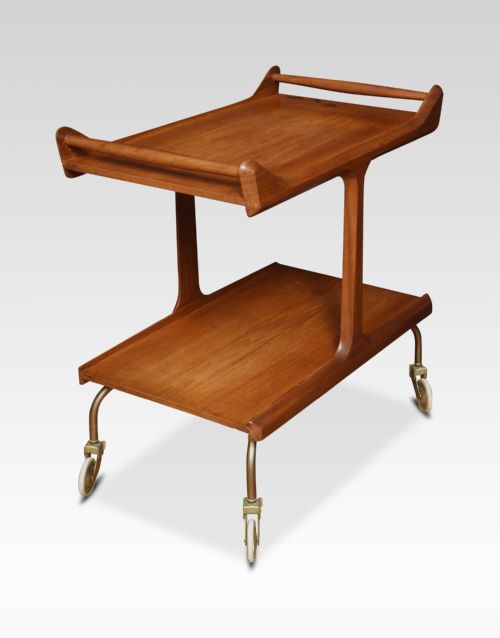
Vintage Walnut Cart
A vintage walnut cart brings period hospitality into a room, offering a mobile surface for glassware, bottles and serving pieces.
Vintage Walnut Cart
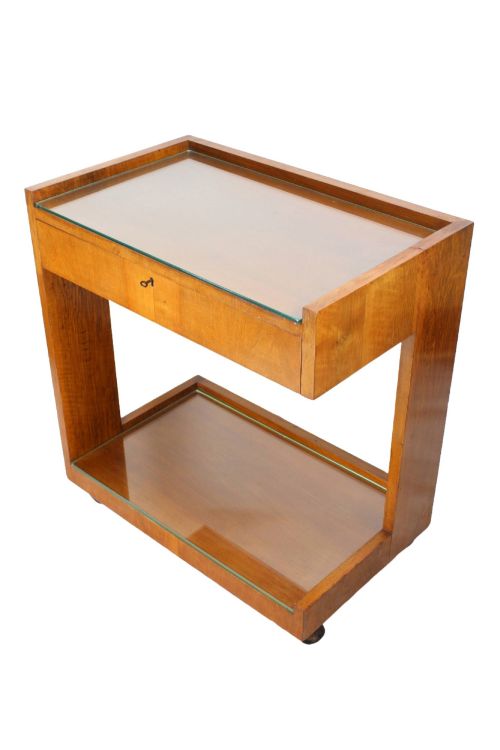
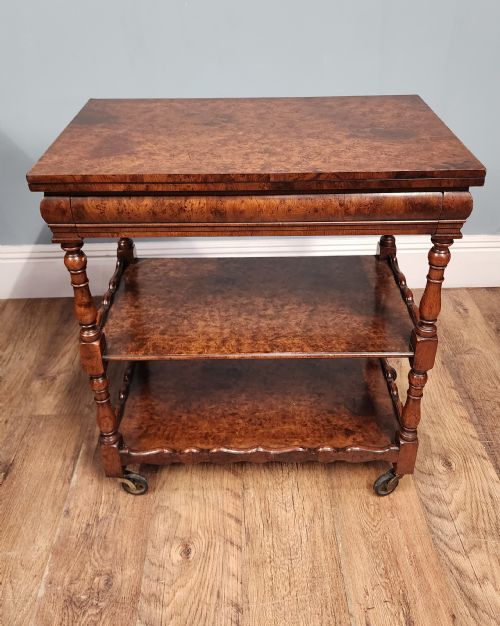
A vintage walnut cart primarily takes the form of a drinks trolley, bar cart or serving trolley, designed for entertaining and domestic service. These pieces frequently emerge from the Art Deco period, alongside Victorian, Edwardian and Mid-Century Modern examples that span from the late nineteenth century into the mid-twentieth century.
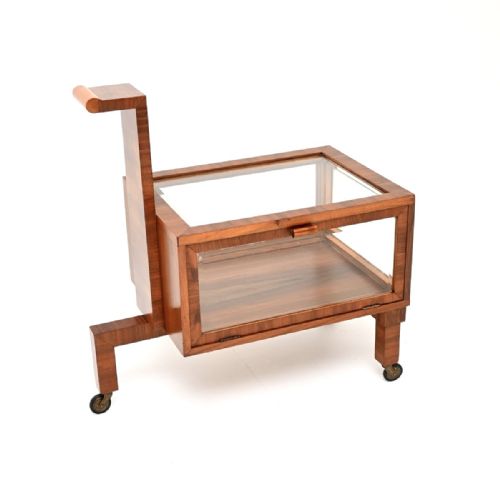
The selection ranges from circular serving carts and two-tier trolleys to metamorphic designs and display cases that double as carts. Alongside functional furniture, the category occasionally includes framed wall art depicting horse-drawn carts in walnut frames, widening the scope of what appears under the heading.
Most pieces date to the 1930s or 1920s, capturing the streamline aesthetic and circular shapes popular during the Art Deco era. Buyers encounter everything from simple wooden utility designs to elaborate hostess bars mounted on castors.
Materials and construction
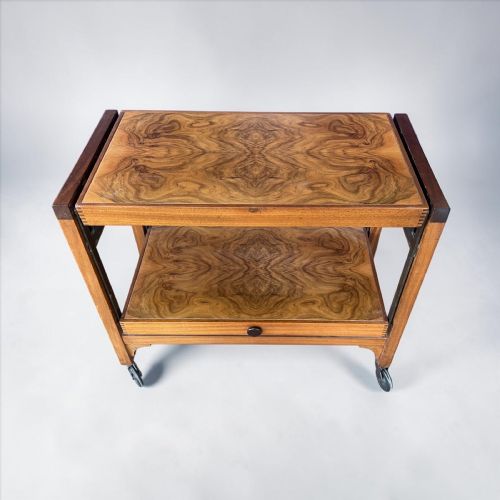
Walnut and burr walnut veneer form the primary visual and structural body of these pieces, providing rich grain patterns across circular trays and rectangular tiers. Cabinetmakers applied veneers over core timbers to achieve decorative surfaces on serving trays and display cases.
Makers integrated brass and other metals for handles, galleries, frames and wheel mounts, adding functional contrast to the dark timber. Glass inserts appear on tiers and serving surfaces, while related items utilise chalk and paper within framed wall art.
Listings feature items built across five distinct eras, ranging from Victorian and Edwardian work up through Art Deco and Mid-Century Modern styles.
Assessing quality and design
Quality rests in the handling of the walnut timber and burr walnut veneer, where thoughtful matching of wood grain elevates a standard serving trolley into a striking focal piece. The execution of streamline Art Deco curves or complex metamorphic folding mechanisms demonstrates the skill behind the construction.
The integration of brass fittings, secure glass trays and smooth-running wheels distinguishes higher grade serving carts from simpler utility trolleys. Period execution, such as genuine 1930s English manufacture, carries distinct weight compared to less defined workshop origins.
The Vintage Walnut Cart Glossary
- Burr walnut veneer
- A thin slice of wood taken from a walnut tree growth, showing intricate swirling grain patterns applied to the surface of a cart.
- Metamorphic
- A design feature allowing the furniture to transform its shape or function, such as unfolding to expand the serving area.
- Two tier trolley
- A serving cart featuring two distinct levels or shelves, commonly used for transporting drinks and glassware.
- Savoy drinks trolley
- A specific circular trolley design associated with high-end hospitality styles of the Art Deco period.
- Whatnot bookshelf
- A multi-shelved open piece of furniture occasionally grouped with utility trolleys from the Victorian era.
Vintage Walnut Cart: Frequently Asked Questions
How were drinks carts used historically?
These trolleys served as mobile storage and serving stations for drinks, glassware and meals during gatherings and evening hospitality in the home.
Hosts used them to wheel refreshments between rooms without needing to carry heavy trays by hand.
What periods do these carts come from?
The pieces span several decades, with a heavy concentration originating from the Art Deco era of the 1920s and 1930s.
Earlier Victorian and Edwardian examples also appear, alongside occasional Mid-Century Modern designs.
Are the wheels usually original?
Many carts retain their original metal or brass castors, which allow the pieces to roll smoothly across floors.
Some trolleys feature specialised wheels suited for circular or streamline designs.
How do I care for walnut veneer?
Walnut surfaces require protection from excessive moisture, direct heat and prolonged sunlight to preserve the finish and veneer.
Regular dusting with a dry cloth helps maintain the natural grain without building up heavy wax residues.