
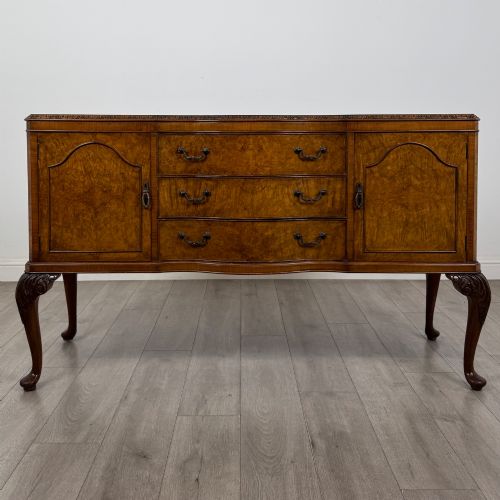
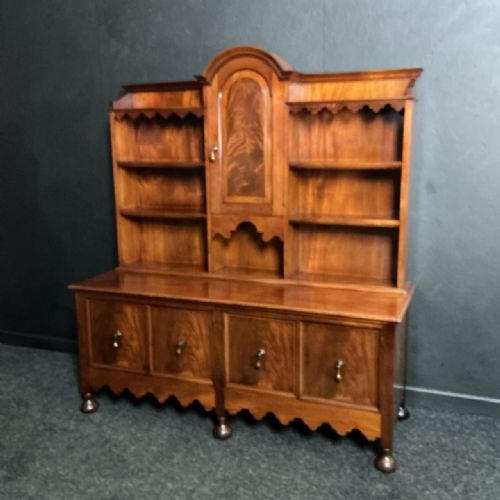
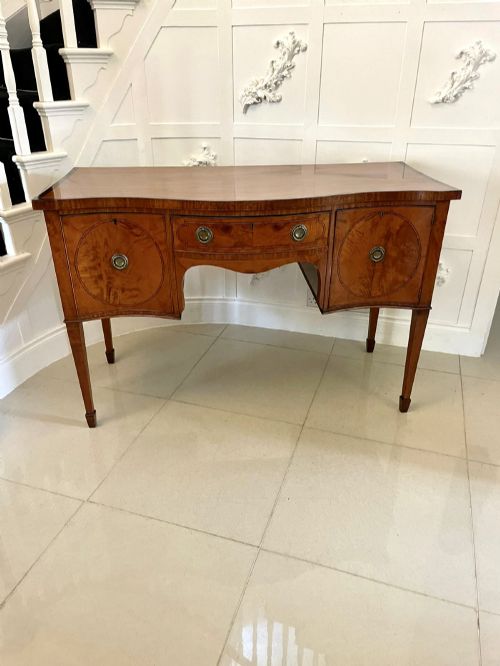
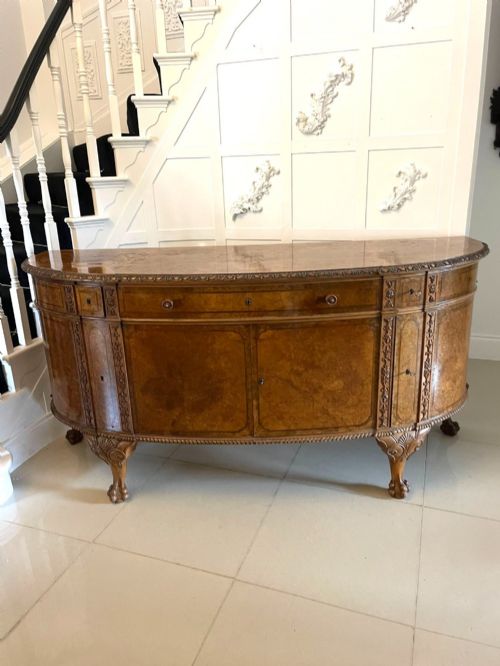
Edwardian Dining Sideboard
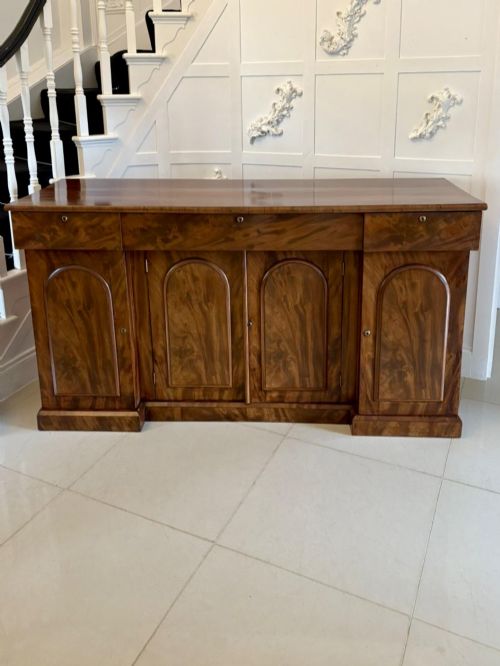
An Edwardian dining sideboard serves as a substantial centrepiece for the dining room, offering practical surface space and deep storage for tableware.
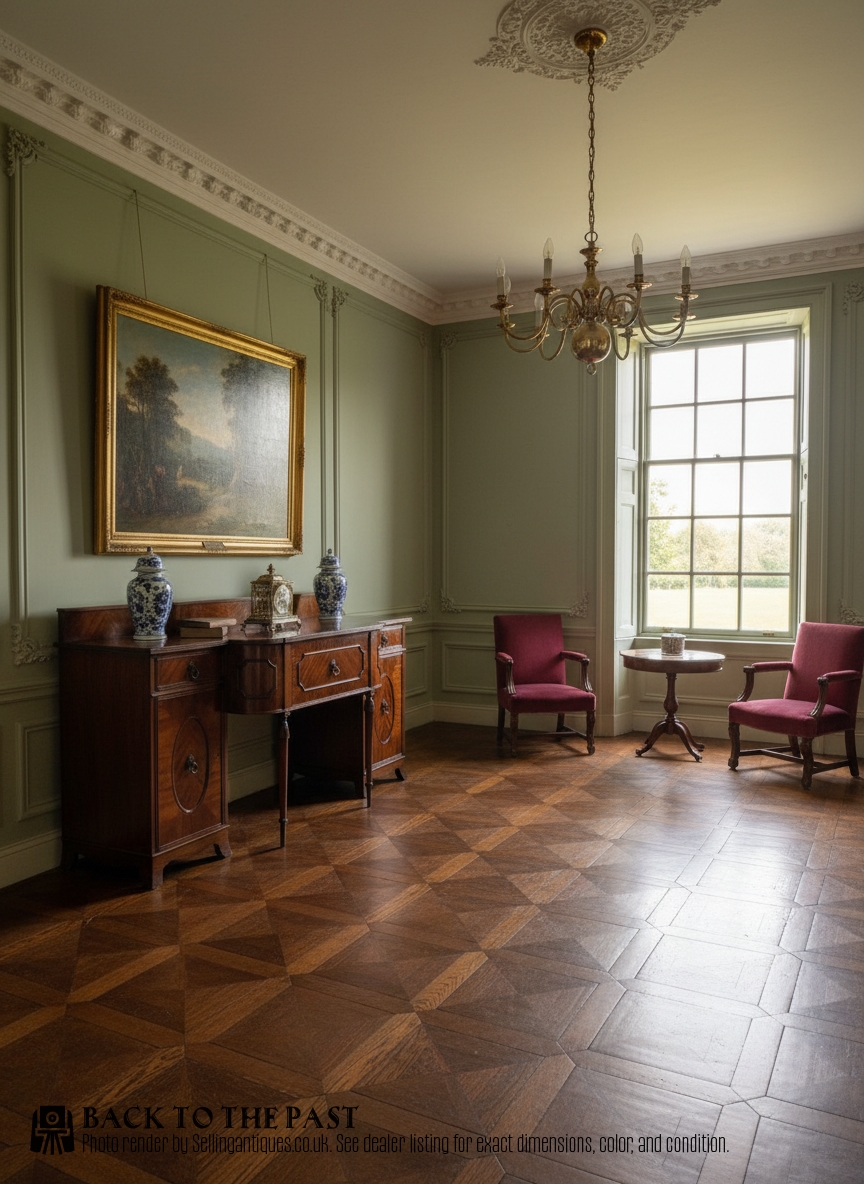
Edwardian Dining Sideboard
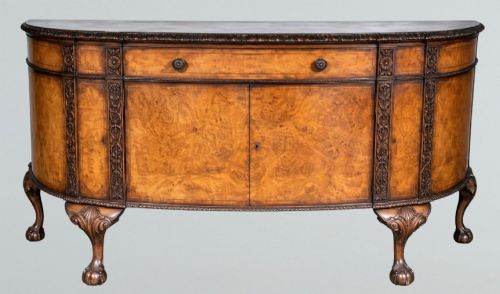
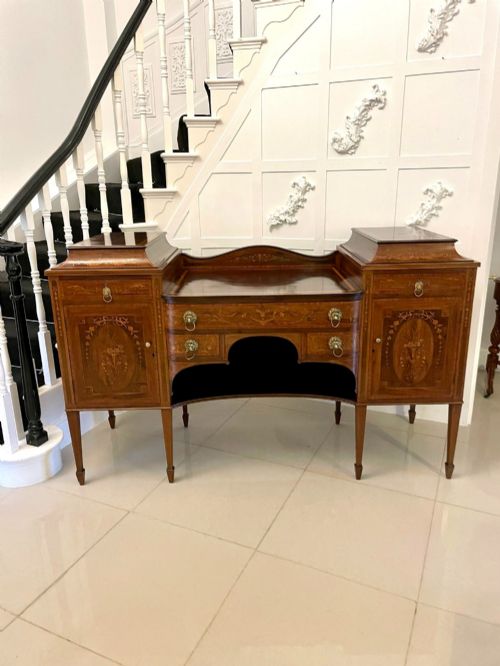
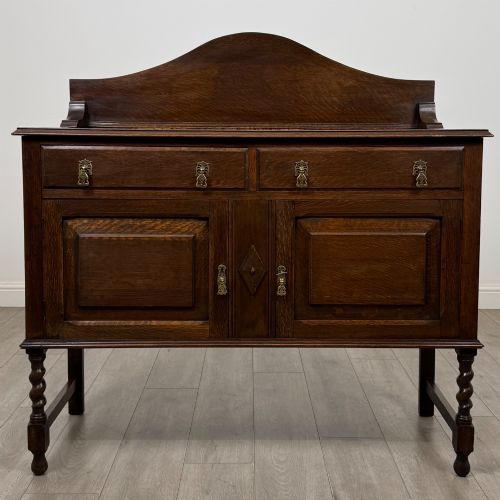
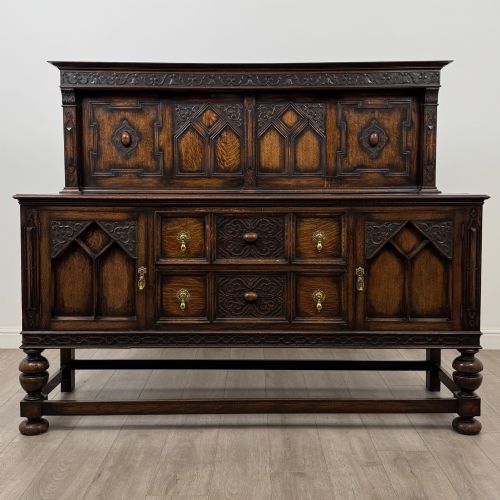
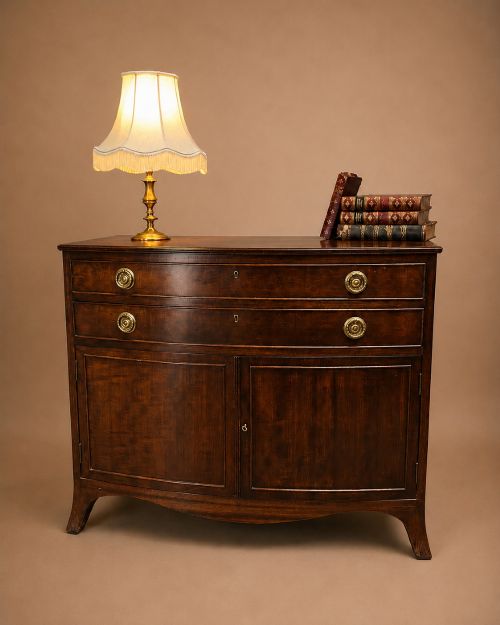
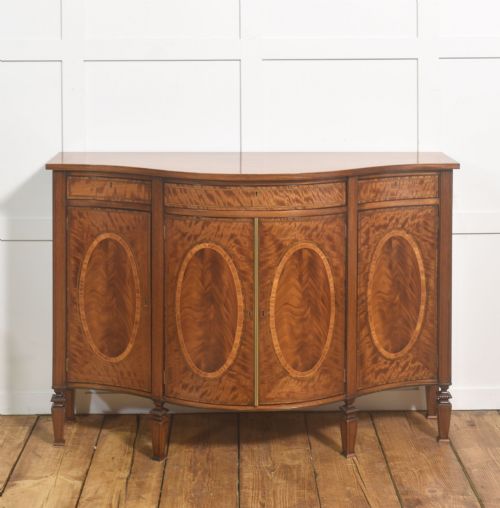
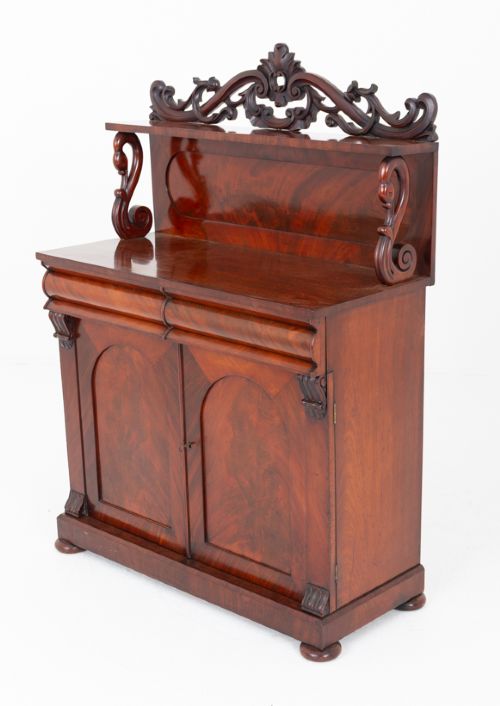
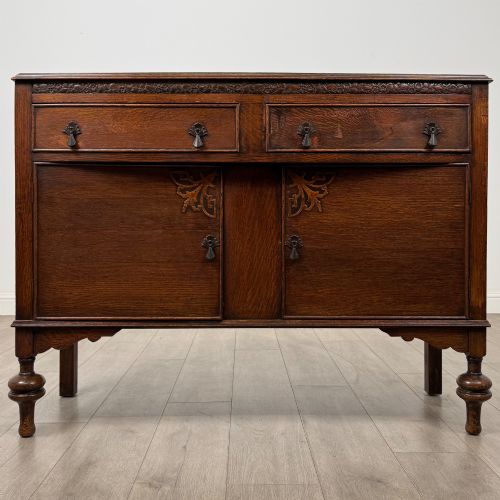
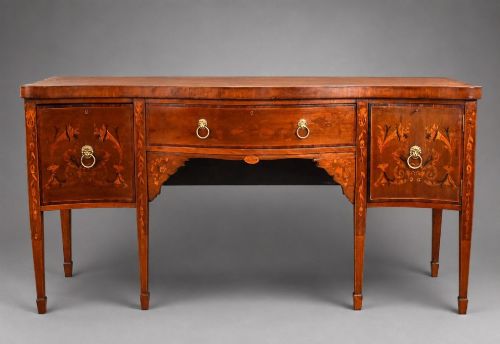
When you search for an Edwardian dining sideboard, you encounter large storage furniture primarily made during the Edwardian period, alongside related Victorian and early twentieth-century examples. The forms span serpentine and bow-fronted cabinets, breakfront servers, and cupboards in mahogany, satinwood, and oak.
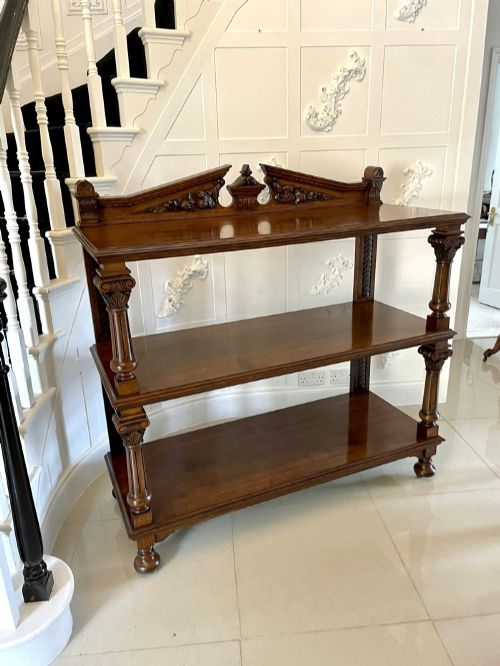
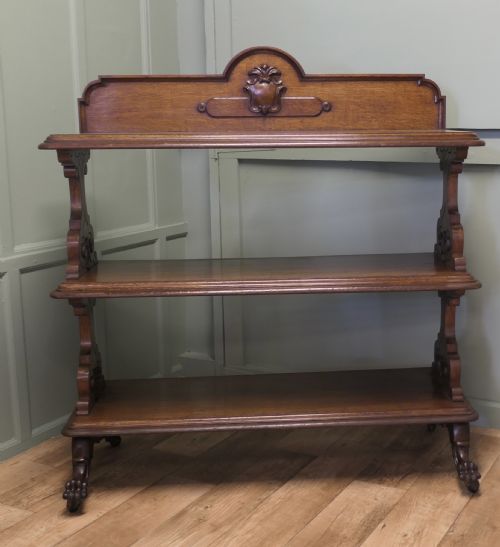
Most pieces date from the early 1900s and reflect revivals of Sheraton, Adam, and Jacobean styles. Alongside standard sideboards, the selection encompasses related dining room forms such as chiffoniers, buffets, and dumbwaiters.
Makers and designers from the broader nineteenth and early twentieth centuries also appear, with mahogany and oak remaining the dominant timbers across the range.
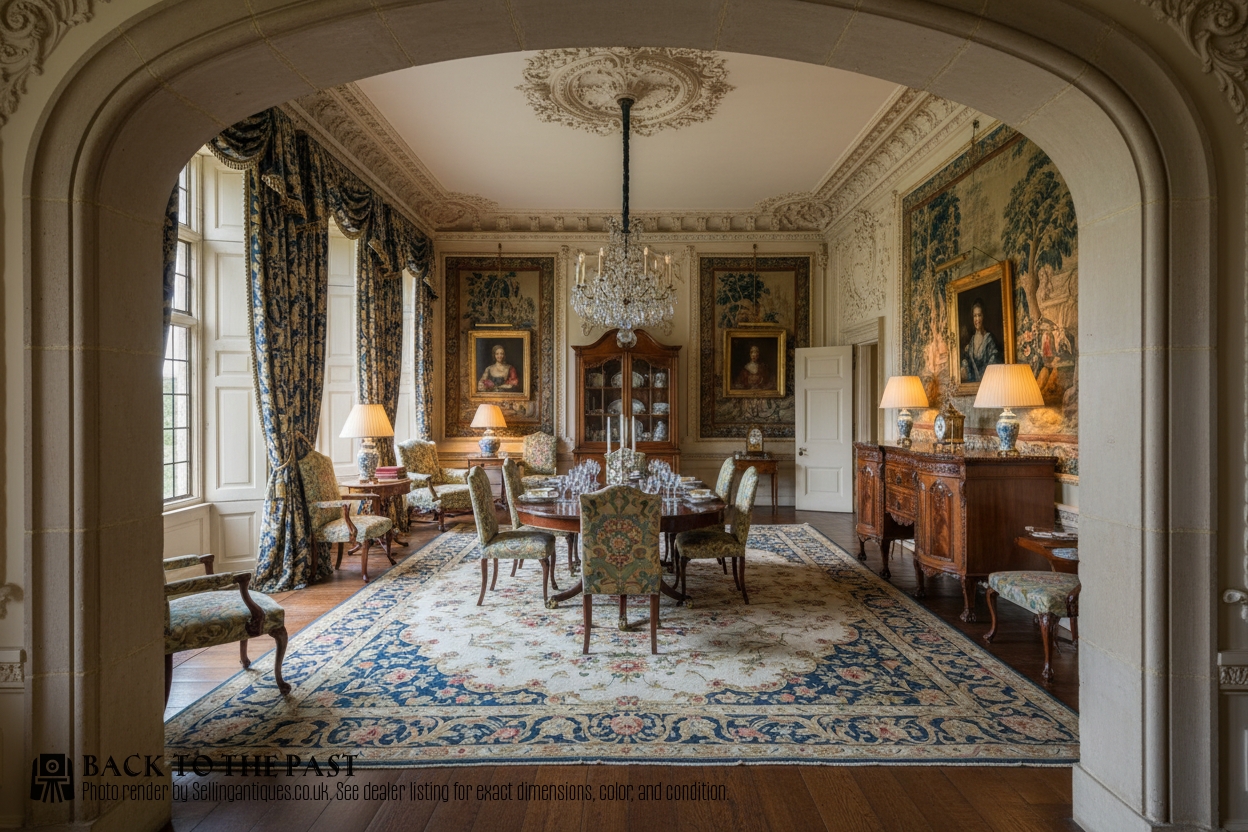
Materials and Construction
Makers utilised solid timbers and selected veneers, notably flame mahogany, burr walnut, and pollard oak, often enhanced with contrasting boxwood and satinwood inlay or marquetry. Brass handles, escutcheons, and gallery rails provide metal accents to the wooden structures.
Construction techniques involve traditional joinery combined with decorative carving, barley twist turnings, and crossbanding. Glass doors and fitted compartments for cutlery appear in specific variations.
Edwardian Dining Sideboard Retail Price Guide 2026
Typical asking prices for edwardian dining sideboard among the pieces listed under this phrase on Sellingantiques today, from the lower quarter to the upper quarter. They describe what is for sale here now, not the wider market.
The inventory spans the Georgian, Victorian, Edwardian, and 1920s eras, featuring Sheraton Revival, Jacobean Revival, and Arts and Crafts styles.
Grading Quality
Quality rests upon the selection of timber figures, such as flame mahogany or burr walnut, and the precision of inlaid marquetry and boxwood stringing. Pieces bearing maker stamps or attributions to established firms demonstrate higher workshop status.
The sophistication of carved detailing, from classical motifs to barley twist supports and paw feet, distinguishes standard utility items from finer revival pieces.
Hewetsons London·M D Miller And Sons Nottingham
The Edwardian Dining Sideboard Glossary
- Bow-front
- A cabinet front curved in a convex shape. This profile softens the rectangular lines of a dining room.
- Serpentine
- A furniture front shaped with a central convex curve flanked by concave sections. It requires advanced cabinet-making skill to execute.
- Crossbanding
- A strip of veneer applied to the border of a panel with the grain running at right angles to the centre. This technique frames the primary timber.
- Marquetry
- Decorative patterns formed by fitting together small pieces of wood veneer. It creates pictorial or geometric designs on drawer fronts and tops.
- Dumbwaiter
- A piece of tiered dining furniture used for holding food and tableware. These objects reduce the need for servant assistance during meals.
Edwardian Dining Sideboard: Frequently Asked Questions
What is an Edwardian dining sideboard?
An Edwardian dining sideboard is a large storage cabinet produced in the early twentieth century for dining rooms. These pieces combine drawers and cupboards to hold cutlery, linens, and serving dishes.
They frequently draw design inspiration from earlier Sheraton and Georgian styles, employing mahogany or oak with decorative inlay.
How do I identify an Edwardian sideboard?
Edwardian sideboards typically date between 1901 and 1910, often displaying Sheraton Revival mahogany construction with satinwood crossbanding and delicate stringing. They lean towards lighter, refined proportions compared to heavy Victorian furniture.
Look for characteristics like spade feet, brass hardware, and inlaid shell or floral motifs characteristic of the Edwardian aesthetic.
Where should I place a sideboard in a dining room?
Sideboards traditionally stand against the longest wall of the dining room, providing a surface to serve food from during meals. Their height makes them ideal for displaying silver, glassware, or decorative lamps.
Ensure adequate clearance around the piece so that cupboard doors and drawers can open fully without obstruction.