

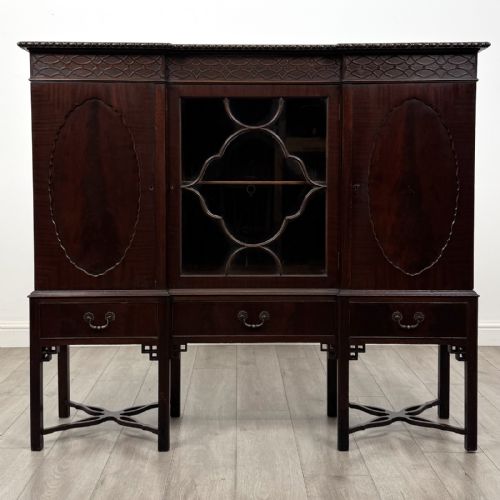
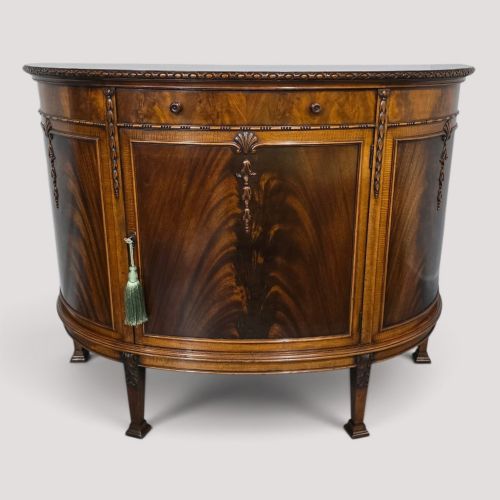
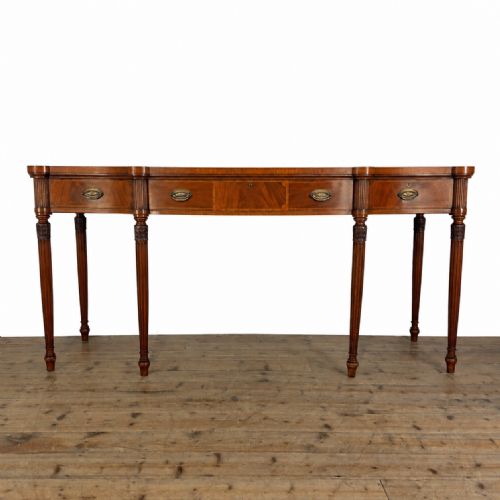
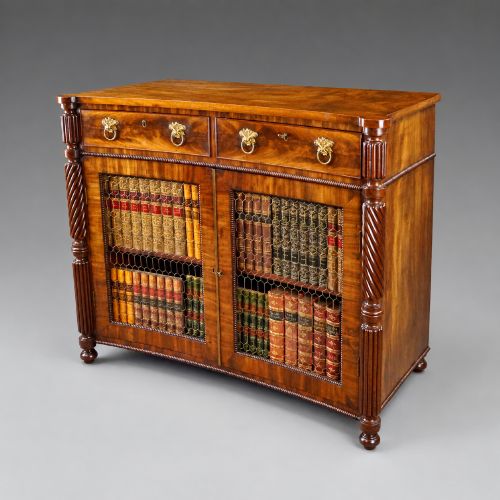
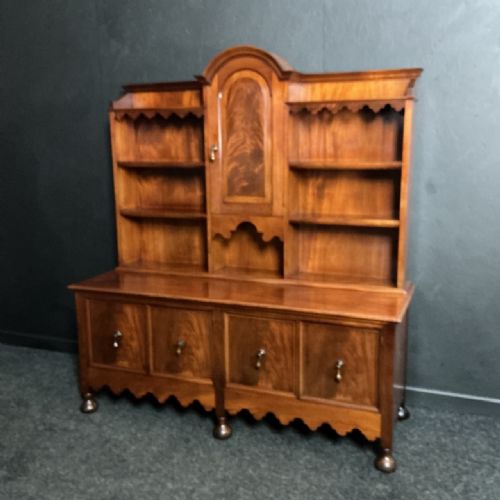
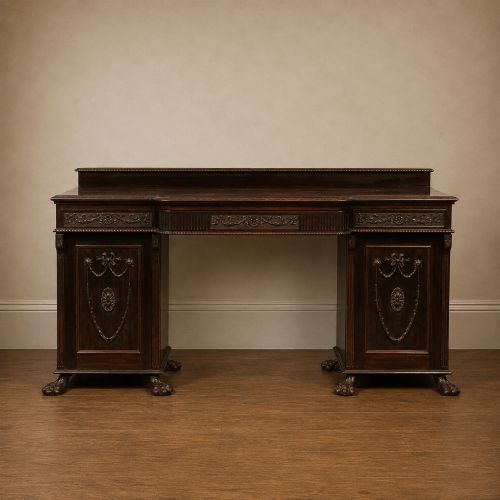
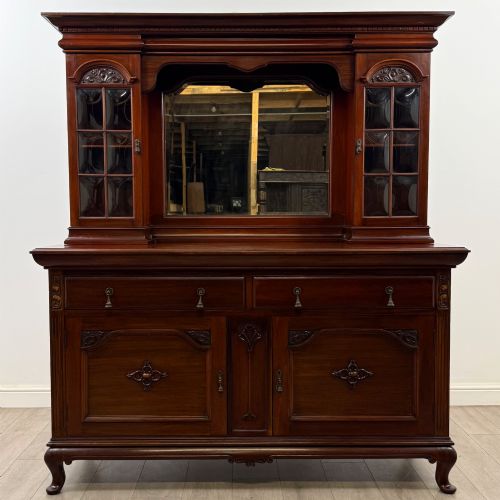
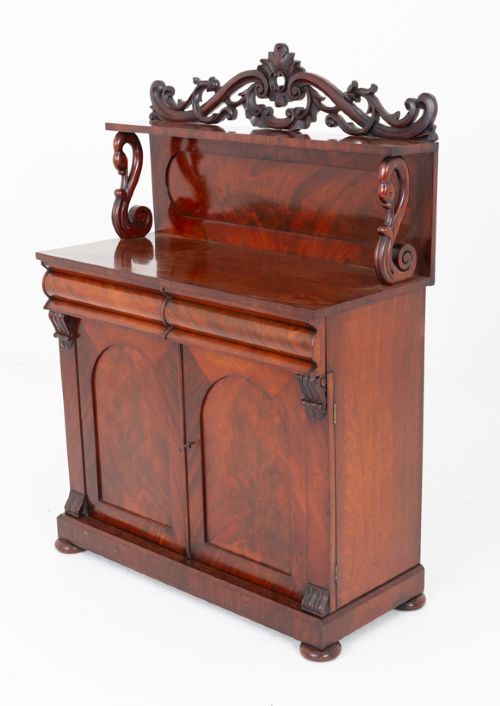
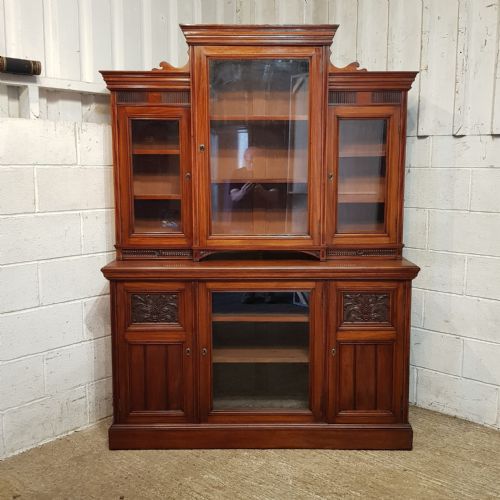
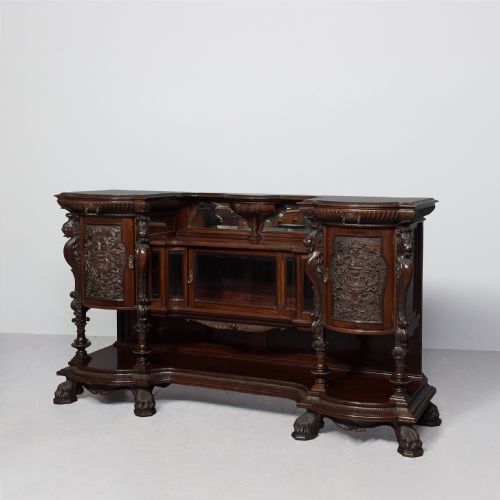
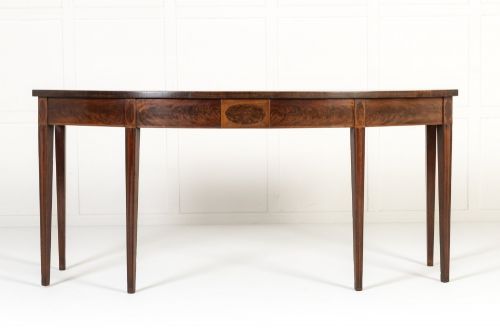
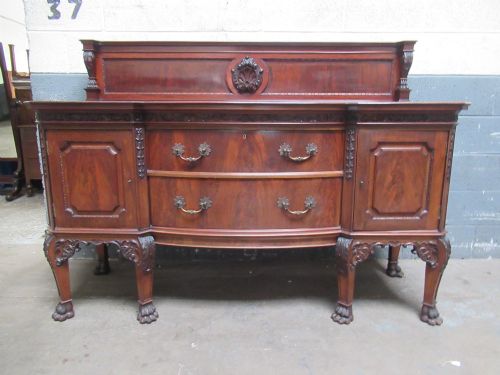
Edwardian Carved Mahogany Sideboard
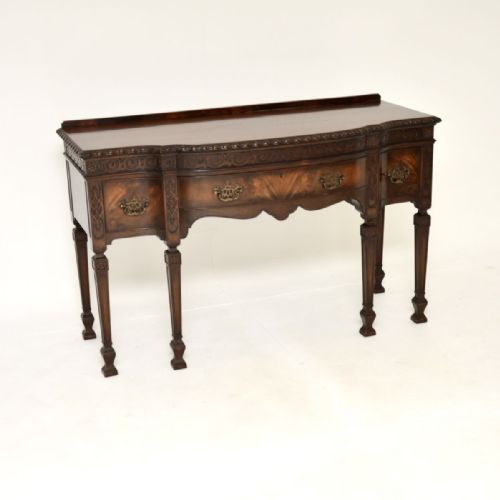
An edwardian carved mahogany sideboard brings substantial presence to a dining room, offering deep drawers and cupboards framed by classical revival details.
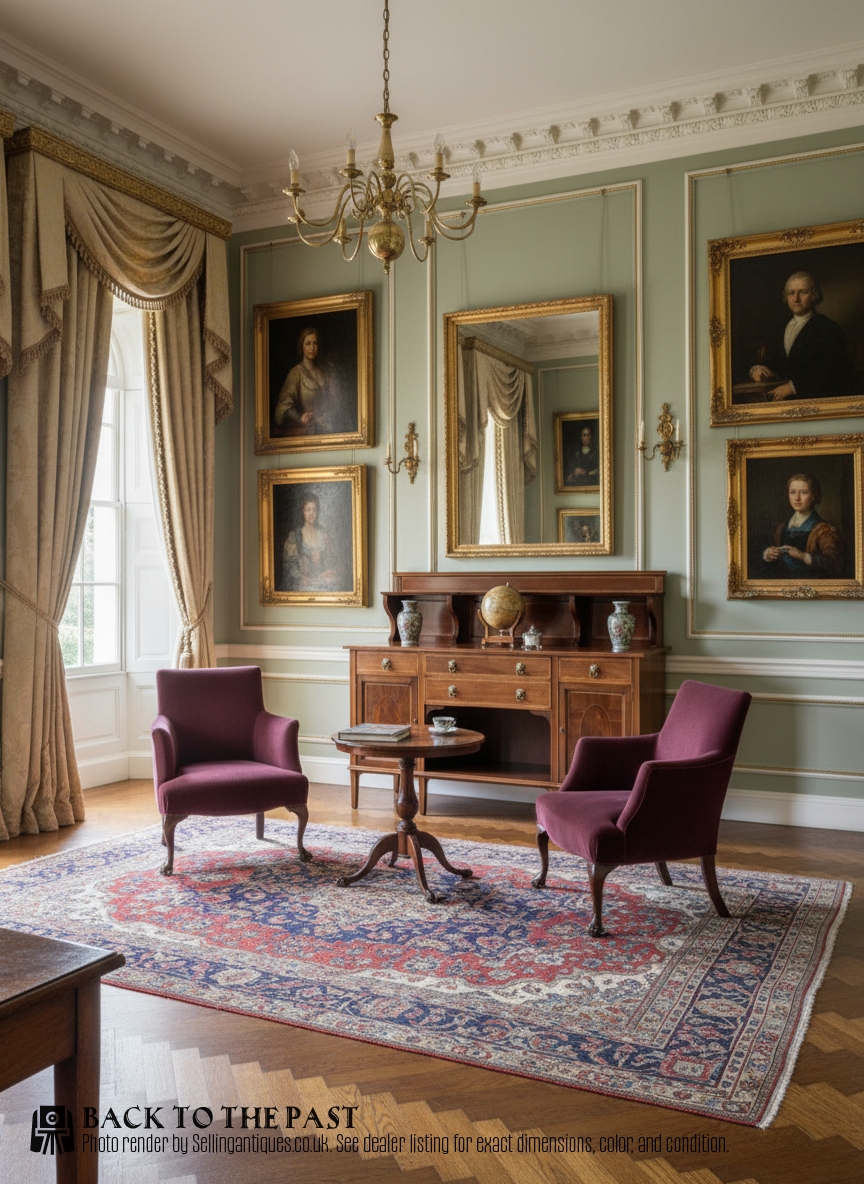
Edwardian Carved Mahogany Sideboard
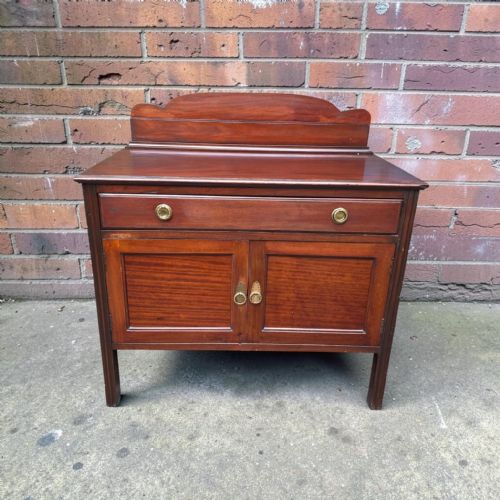
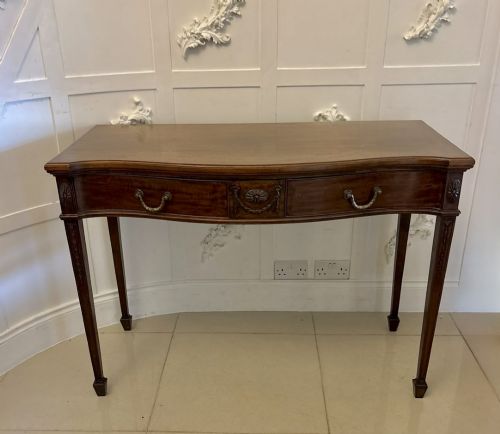
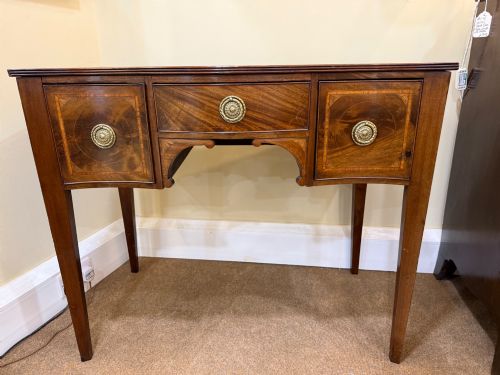
An edwardian carved mahogany sideboard spans formal dining rooms and large hallways, taking the form of breakfront cupboards, mirror-back servers, and low credenzas. The pieces meeting this search phrase draw heavily on earlier vocabularies, particularly Chippendale, Sheraton, and Adam revivals, alongside Art Nouveau touches.
While Victorian and later pieces appear in the selection, the core of the group consists of Edwardian examples built around 1900 to 1910. These items combine substantial storage capacity with decorative carving, often featuring raised backs, mirrored sections, or inlaid borders.
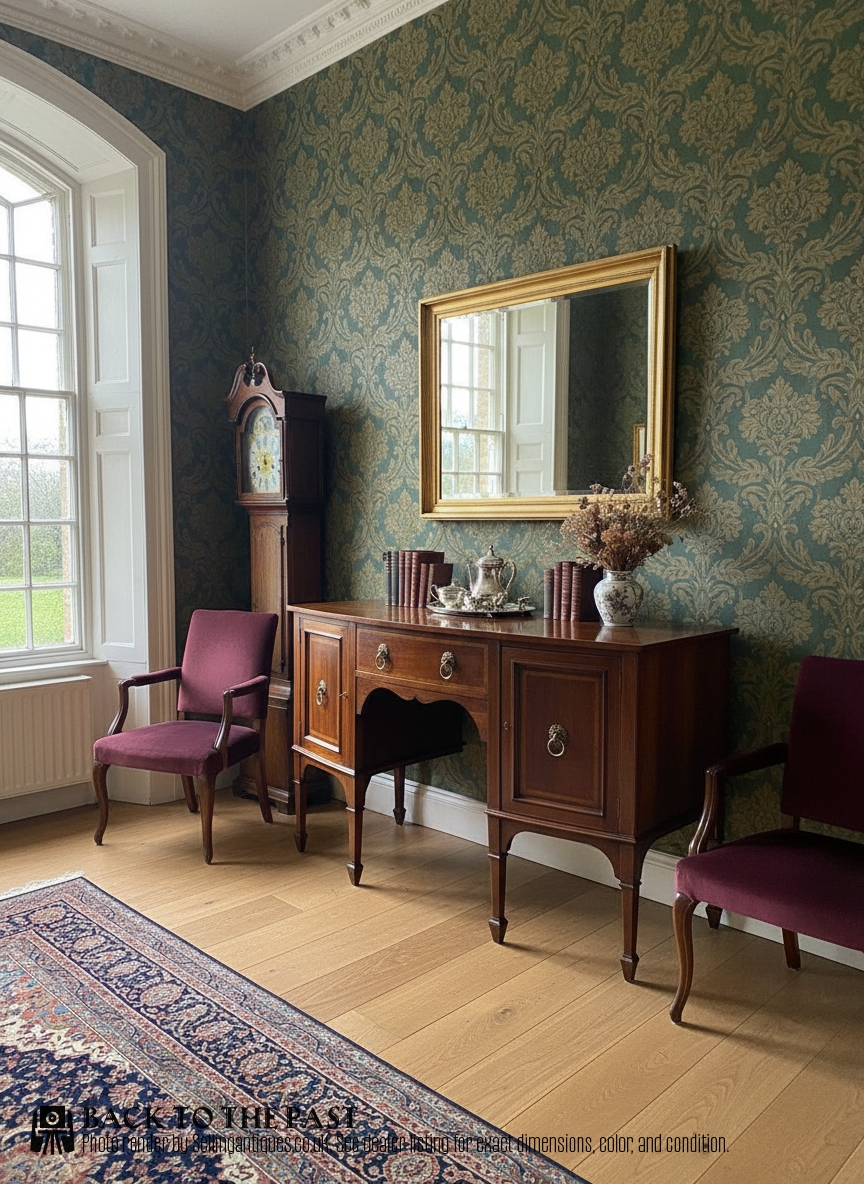
Grading the Workmanship
The distinction between standard production and superior craftsmanship rests on the selection of timber and the precision of the veneer work. Flame mahogany requires careful book-matching across large cupboard doors, and finer examples maintain seamless grain patterns without awkward joins.
Carving depth and sharpness separate the ordinary from the exceptional, as crisp hand-chiselled acanthus leaves or moulding details take significantly more skill than cast or shallow machine routing. Original hardware, intact bevelled mirror glass, and well-fitted internal cellarets also elevate the standing of a piece.
Edwardian Carved Mahogany Sideboard Retail Price Guide 2026
Typical asking prices for edwardian carved mahogany sideboard among the pieces listed under this phrase on Sellingantiques today, from the lower quarter to the upper quarter. They describe what is for sale here now, not the wider market.
Listings span multiple decades, incorporating Victorian, Edwardian, and early twentieth-century examples alongside Regency and Georgian revivals.

Robson of Newcastle·M. D. Miller & Sons·Whytock & Reid
The Edwardian Carved Mahogany Sideboard Glossary
- Breakfront
- A cabinet or sideboard whose central section projects forward from the flanking outer cupboards. This arrangement creates a dynamic facade favoured in classical revival furniture.
- Flame mahogany
- Timber cut from the fork of the mahogany tree, producing a distinctive flickering, flame-like grain pattern. Cabinet makers prize this figure for central door panels.
- Chiffonier
- A low sideboard or cabinet, typically featuring enclosed cupboards beneath a shelf or mirror back. The form evolved during the nineteenth century for dining and drawing rooms.
- Satinwood
- A pale, lustrous exotic timber used extensively for contrasting stringing and marquetry in Edwardian and Sheraton revival pieces. It provides a bright visual accent against dark mahogany.
- Serpentine
- A furniture front or edge shaped with a convex centre flanked by concave curves. This undulating line demands advanced woodworking skill to execute cleanly.
Edwardian Carved Mahogany Sideboard: Frequently Asked Questions
How do I spot an Edwardian sideboard?
Edwardian sideboards frequently display lighter proportions and brighter mahogany finishes than their darker Victorian predecessors, often incorporating delicate satinwood inlay or mirror backs.
They draw heavily on Sheraton and Chippendale revival motifs while maintaining the practical storage demands of early twentieth-century dining rooms.
Where should I place a sideboard?
These large timber pieces anchor a dining room wall, positioned to serve food and store heavy silver, linen, or glassware.
Because many examples include mirror backs or display shelves, positioning them opposite a light source helps brighten the room and highlights the carved details.
What is flame mahogany?
Flame mahogany is a highly figured veneer harvested from the junction where branches meet the main trunk of the tree.
Cabinet makers arranged these swirling grain patterns symmetrically across door panels to create a striking visual texture.
How do I care for mahogany furniture?
Mahogany responds best to stable indoor humidity away from direct sunlight, which can bleach the timber and dry out the polish.
Routine dusting with a soft, dry cloth preserves the wax finish without needing heavy commercial sprays or silicones.