

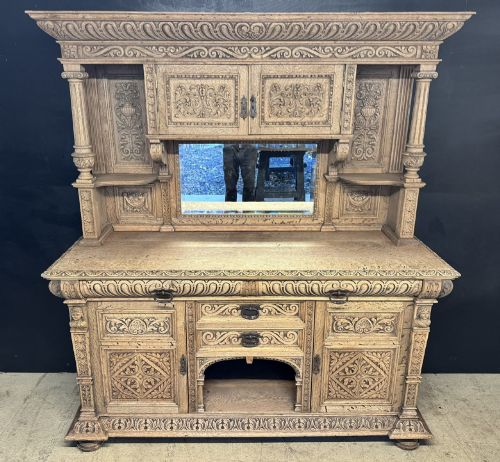
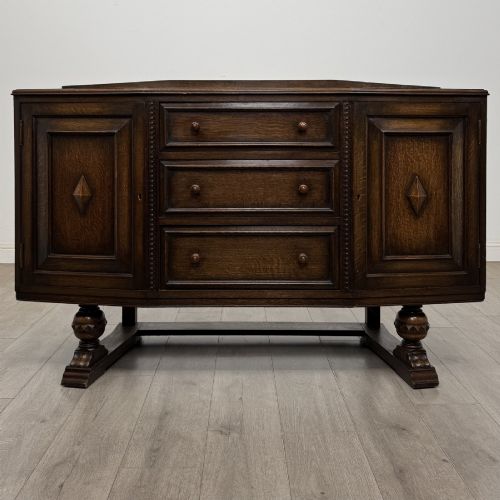
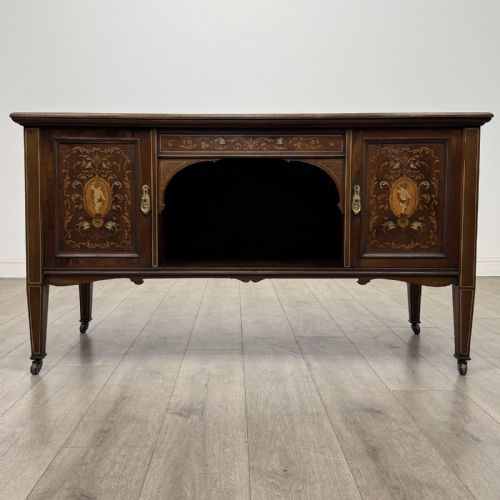
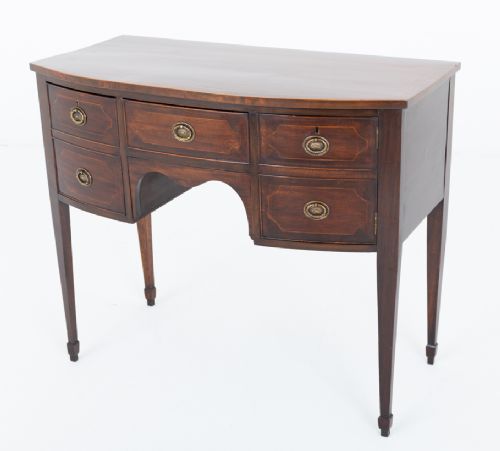

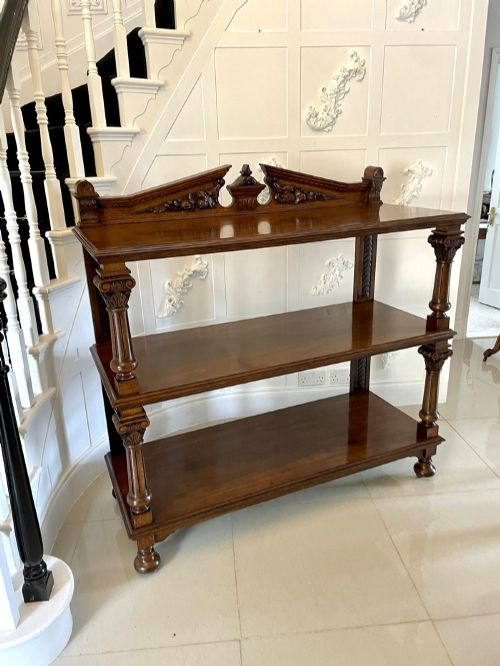
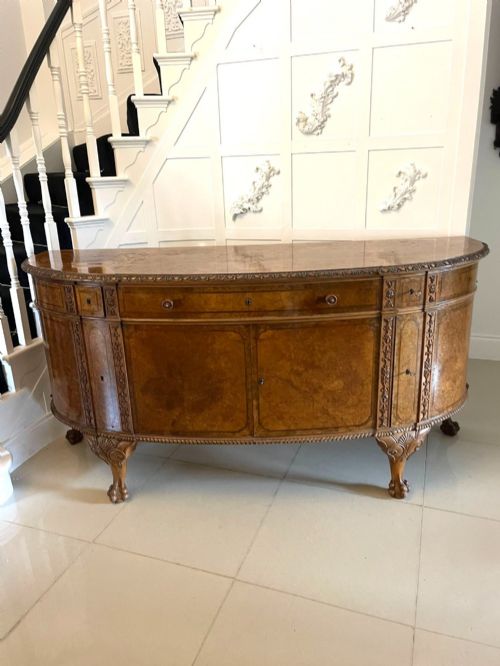
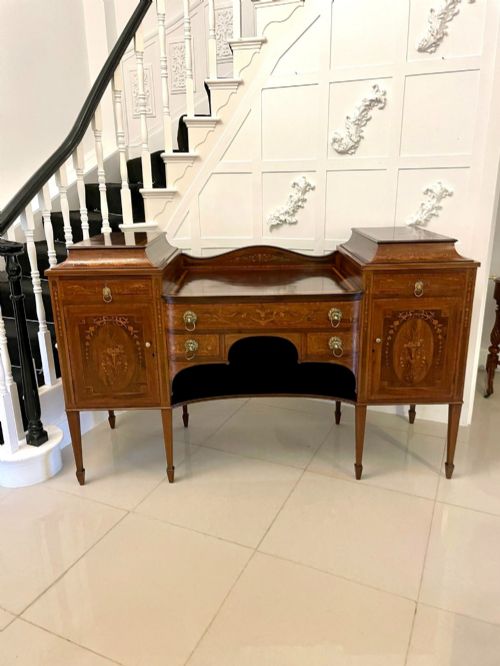
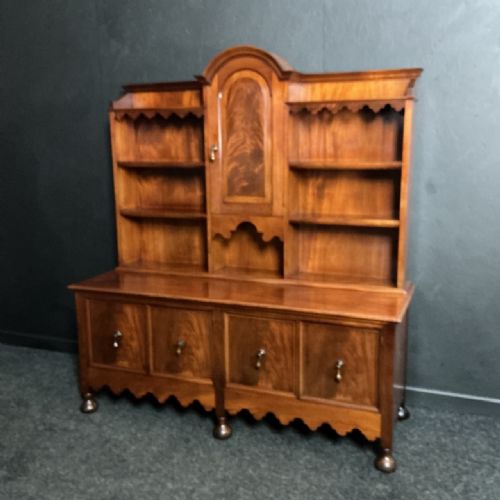
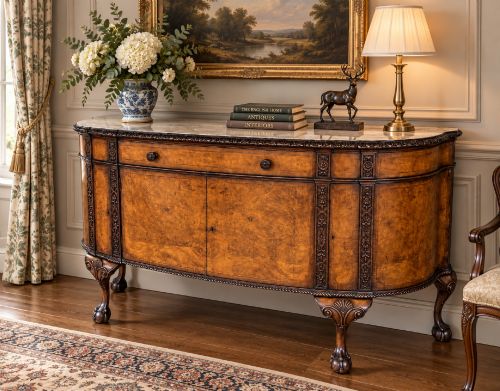
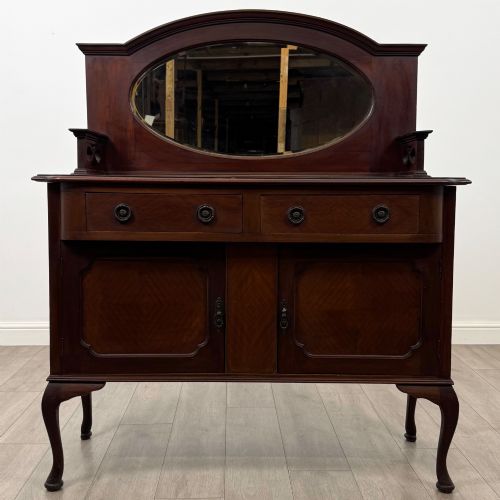
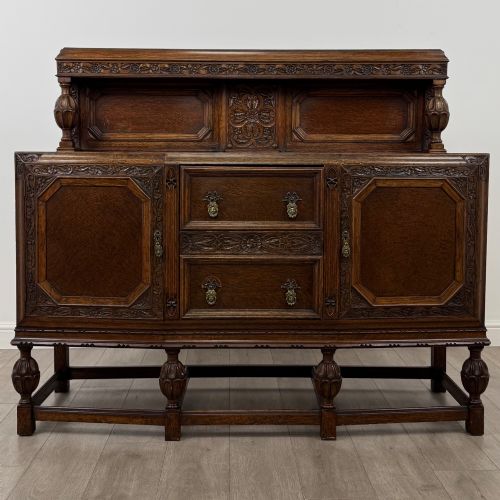
Edwardian Dining Room Sideboard
An edwardian dining room sideboard grounds a formal interior, offering deep cupboards, serving surfaces, and traditional storage for household silver and linen.
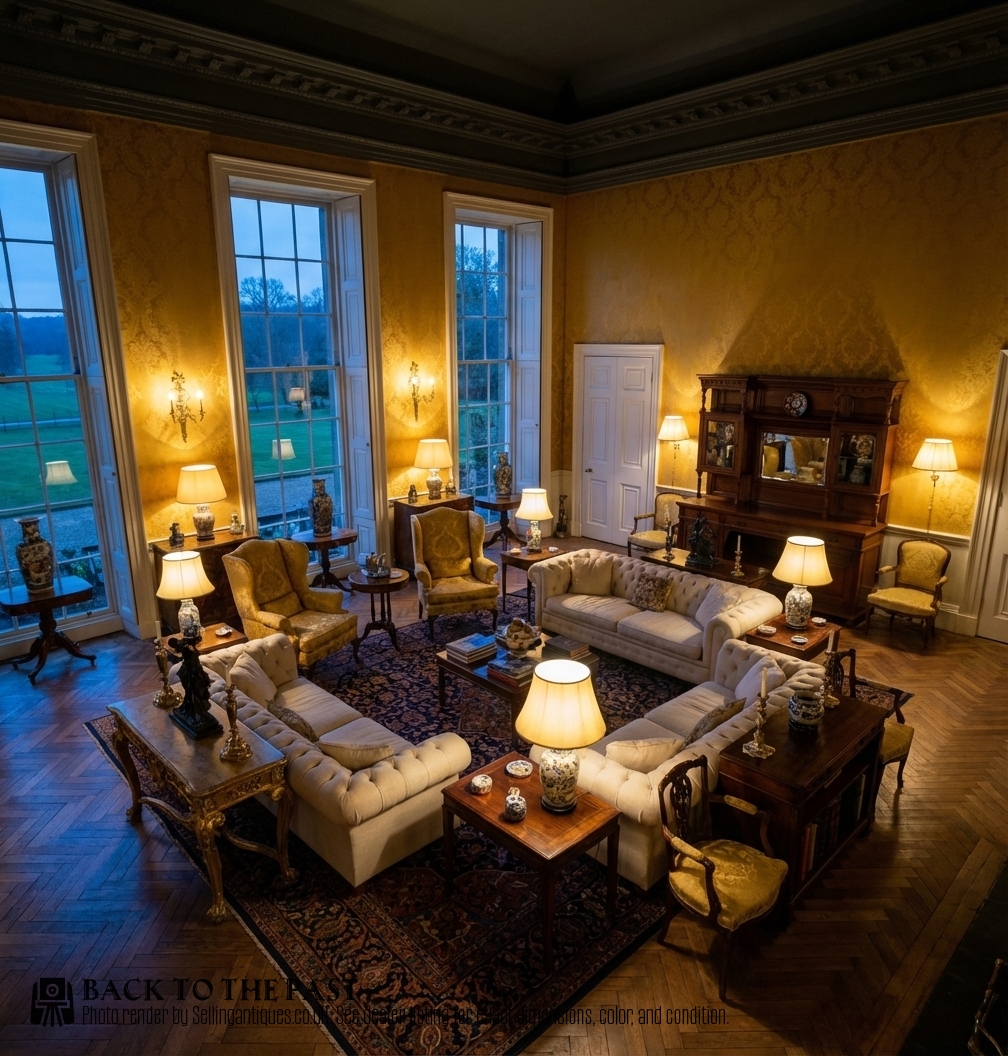
Edwardian Dining Room Sideboard
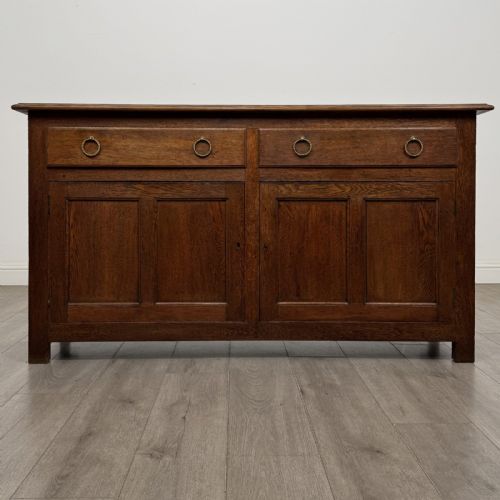
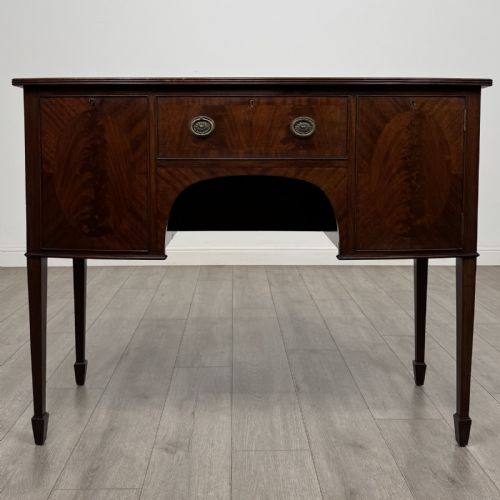
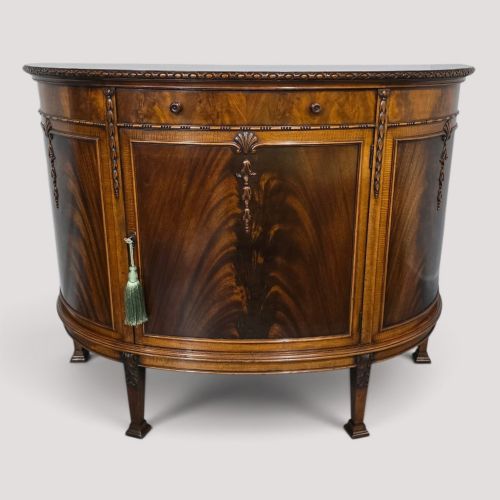
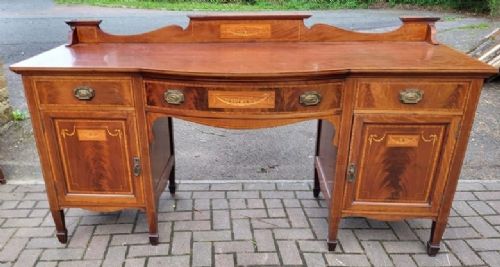
When you search for an edwardian dining room sideboard, you encounter substantial dining furniture designed primarily for storage and serving during the late nineteenth and early twentieth centuries. These forms include spacious cupboards, bow front cabinets, and servers.
The pieces appearing here span Edwardian production alongside Victorian and later revivals, reflecting the dining customs of the period. Mahogany and oak dominate the offerings, often complemented by satinwood or burr walnut details.
Sideboards range from straightforward cupboards to elaborate pieces incorporating mirror backs, cutlery sets, and barley twist supports. Each piece serves the practical demands of the dining room while demonstrating the prevailing design revivals of its decade.
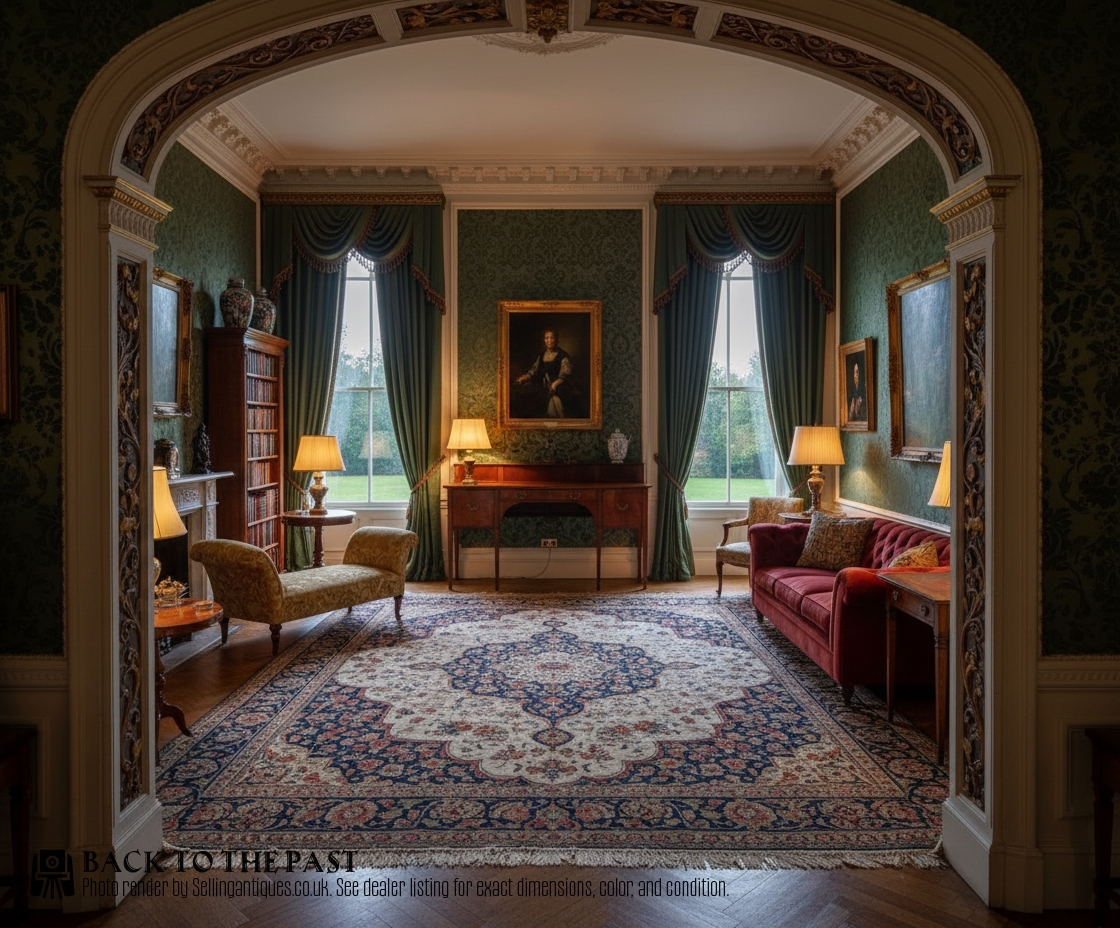
Materials and construction
Cabinet makers relied heavily on solid timber foundations of mahogany, oak, and walnut, often applying flame mahogany or burr walnut veneers to create striking figure patterns on large surfaces. Inlays of satinwood and marquetry provided linear contrast along drawer fronts and borders.
Carved ornamentation, such as the barley twists and floral motifs seen on oak examples, required skilled hand chiselling by period artisans. Brass handles, escutcheons, and hinges completed the hardware assembly, securing doors and drawers built to withstand heavy daily use.
Edwardian Dining Room Sideboard Retail Price Guide 2026
Typical asking prices for edwardian dining room sideboard among the pieces listed under this phrase on Sellingantiques today, from the lower quarter to the upper quarter. They describe what is for sale here now, not the wider market.
Decorative techniques visible across the selection include brass hardware, marquetry inlays, glass panels, and barley twist carvings.
Gradations of quality
Quality rests on the selection of timber figures, such as matched flame mahogany or rich burr walnut, and the precision of the cabinetmaker's joints. Superior examples display seamless veneer matching across wide drawer fronts and substantial carcases built entirely of solid hardwoods.
Refinement in carving, crispness of marquetry inlays, and the inclusion of fitted interiors like designated cutlery drawers distinguish finer production from simpler utility items. Original brass hardware and well-preserved structural integrity further elevate a piece.
Hewetsons London·M D Miller and Sons
The Edwardian Dining Room Sideboard Glossary
- Bow front
- A convex curved cabinet front that projects outward in a smooth arc. This shape appeared frequently on mahogany sideboards to soften rigid rectangular room layouts.
- Marquetry
- Decorative veneer patterns formed by fitting together small pieces of various woods, shells, or ivory. Craftsmen used this technique to create floral or geometric tableaus on cabinet doors.
- Barley twist
- A spiral turning resembling a twisted rope, carved into wooden furniture legs or supports. It gained popularity on oak sideboards during revival periods.
- Serving table
- A long table designed for holding food and dishes prior to service, often lacking the enclosed cupboards found on standard sideboards.
- Chiffonier
- A compact sideboard or low cabinet typically fitted with drawers and doors below a shelf structure. Victorian examples frequently incorporated small mirrors in the superstructure.
Edwardian Dining Room Sideboard: Frequently Asked Questions
How do I care for a mahogany sideboard?
Apply a natural beeswax polish occasionally to nourish the timber and maintain a soft sheen. Avoid placing the wood near direct heat sources or strong sunlight to prevent warping and fading.
Lift objects rather than sliding them across the polished top surface to protect the finish from scratches. Regular dusting with a soft cloth keeps the grain clear and free from abrasive particles.
Were these sideboards used for dining rooms?
Dining rooms were the primary location for these large cabinets, which held heavy dinner services, glassware, and silver. The flat top surface functioned as a server during large meals.
Smaller sideboards and servers also appeared in morning rooms and large hallways for general household storage. Their deep cupboards accommodated linens and bulkier dining accessories.
How do I distinguish Edwardian from Victorian sideboards?
Edwardian sideboards tend to show lighter wood tones, Sheraton Revival influences, and delicate inlays of satinwood. They often feel less sombre than their earlier Victorian counterparts.
Victorian pieces typically employ darker, heavier mahogany or figured walnut with robust carvings and mirror backs. The construction scale is generally heavier and more imposing.
Can I fit a modern dining room with these?
These sideboards provide exceptional internal storage capacity that easily accommodates modern tableware and serving platters. Their traditional proportions anchor contemporary dining spaces with architectural presence.
Selecting a lighter oak or mahogany finish helps the piece integrate comfortably with neutral walls and modern flooring. The deep cupboards remain entirely practical for contemporary domestic organisation.