


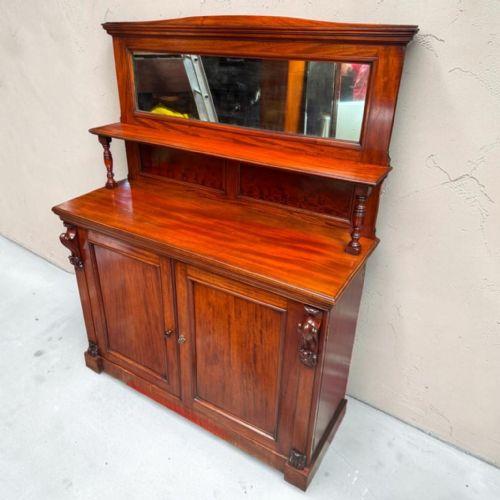
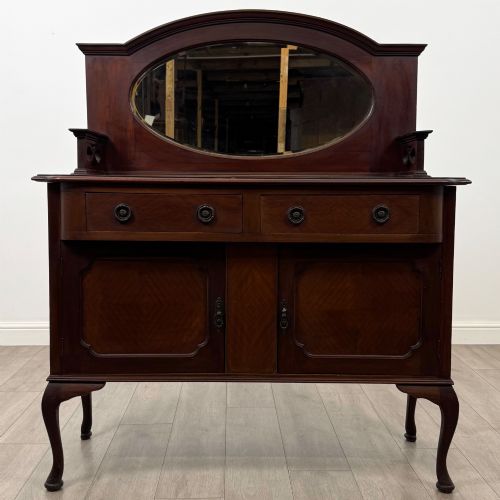
Vintage Mahogany Buffet Cabinet
These vintage mahogany buffet cabinet pieces offer generous dining room storage and traditional craftsmanship.
Vintage Mahogany Buffet Cabinet
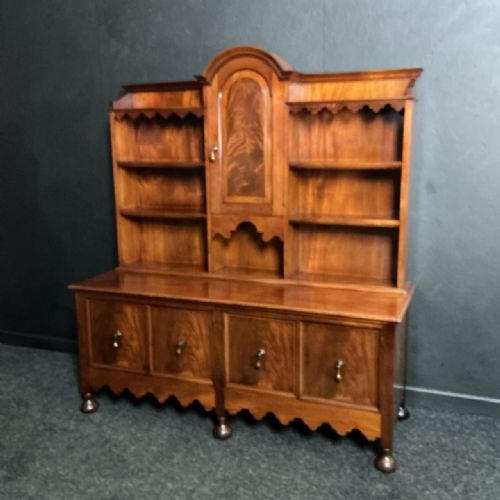
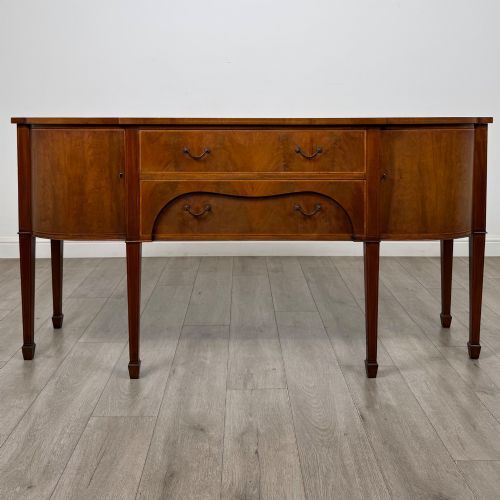
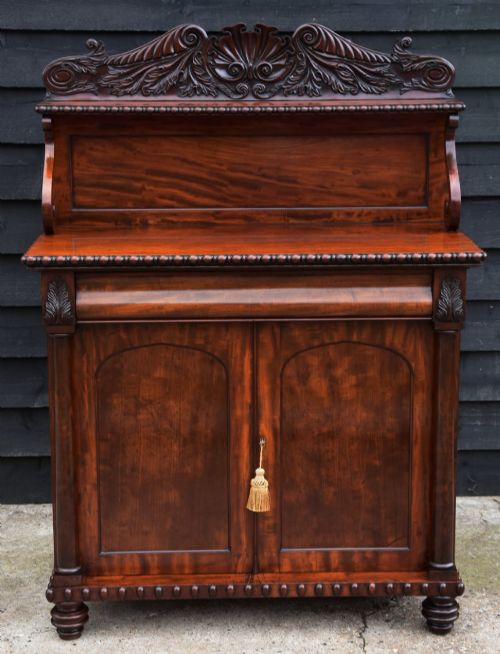
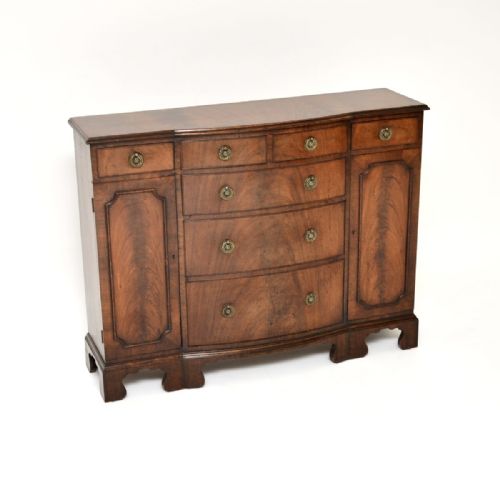
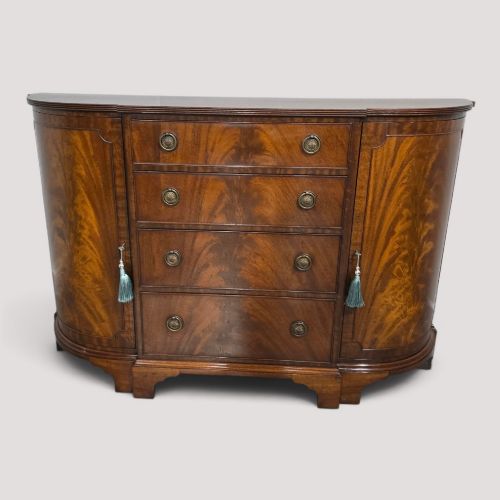
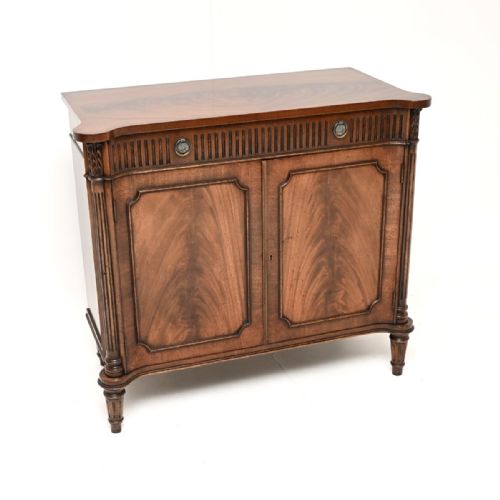
A vintage mahogany buffet cabinet serves as a substantial dining room storage piece, frequently appearing on this page as a sideboard, server, chiffonier, or credenza. These items accommodate dining porcelain, silver, and table linen while anchoring the room with a formal silhouette.
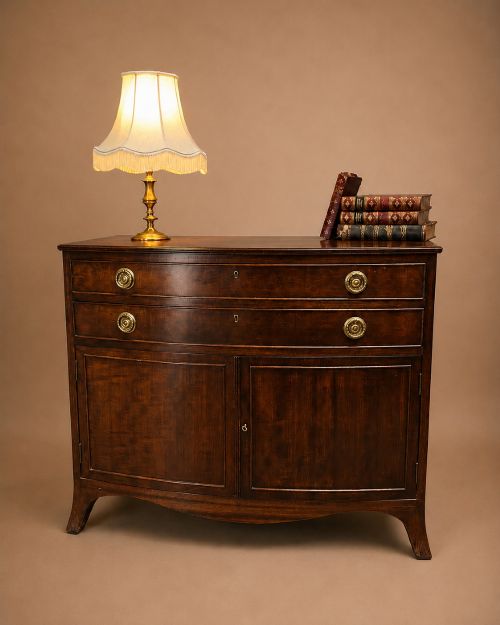
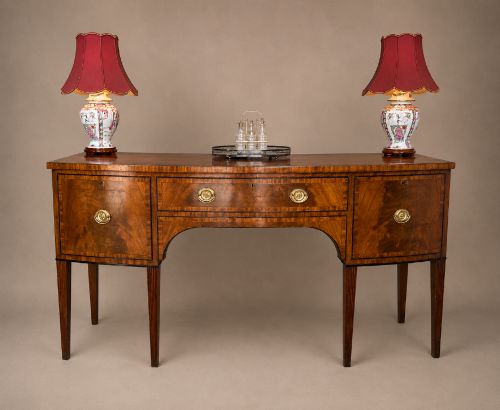
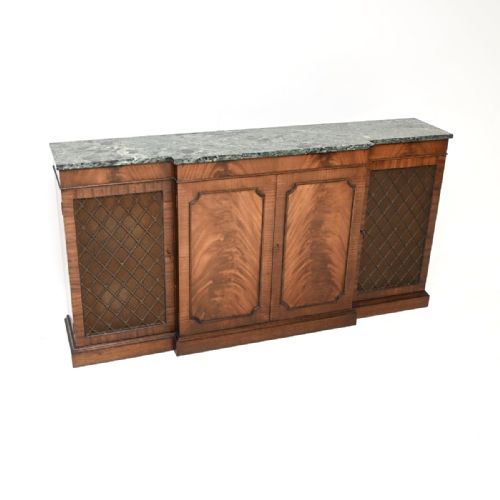
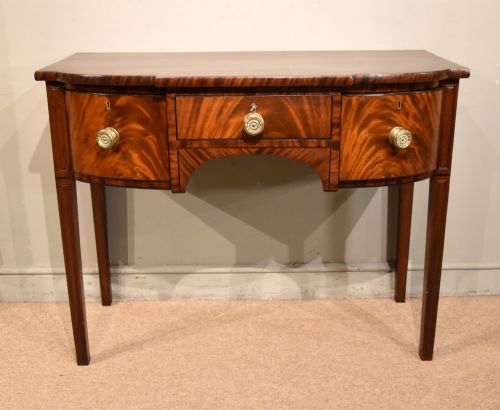
The selections span distinct periods ranging from Georgian and Regency origins through Victorian iterations to Edwardian and early twentieth century revivals. Buyers encounter various forms including bow front designs, breakfront layouts, and smaller side cabinets suited to compact spaces.
Originating primarily within British and European cabinet-making traditions, these pieces combine functional storage cupboards with surface display areas. The inventory reflects multiple stylistic revivals alongside authentic period construction.
How they were made
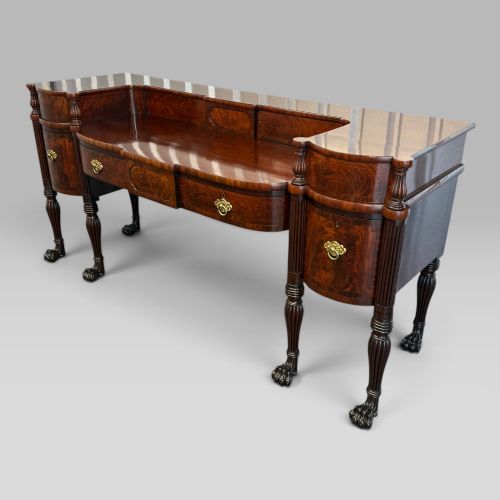
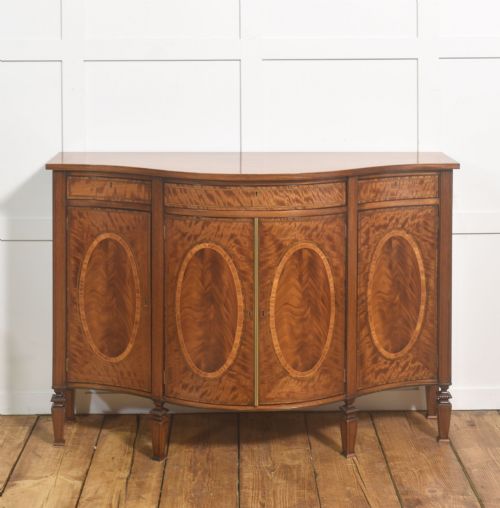
Makers utilised solid mahogany and applied flame mahogany veneer to achieve rich grain patterns across the primary surfaces. Finer examples incorporate contrasting details such as satinwood inlay, boxwood stringing, and marquetry motifs.
Structural elements frequently integrate secondary timbers alongside brass hardware, lion paw feet, marble tops, and grill fronts on specific cabinet doors. Joinery methods rely on traditional drawer construction and cabinet-making techniques appropriate to each respective period.
Vintage Mahogany Buffet Cabinet Retail Price Guide 2026
Typical asking prices for vintage mahogany buffet cabinet among the pieces listed under this phrase on Sellingantiques today, from the lower quarter to the upper quarter. They describe what is for sale here now, not the wider market.
Materials recorded across the inventory include solid mahogany, flame mahogany veneer, satinwood, boxwood, brass, glass, and marble.
What varies in quality
The distinction between standard examples and superior pieces rests upon the selection of timber veneers and the intricacy of decorative inlay. Flame mahogany veneer and precise satinwood or boxwood stringing elevate the visual impact significantly.
Hardware execution and structural detailing, such as carved lion paw feet or grill front panels, separate simpler utility pieces from high-status dining room furniture. The refinement of the cabinet proportions and style adherence also dictate the overall grade.
M. D. Miller & Sons, Nottingham
The Vintage Mahogany Buffet Cabinet Glossary
- Flame mahogany
- A distinct timber veneer exhibiting a flamelike or mottled grain pattern. This highly figured cut appears on the primary display surfaces of finer cabinets.
- Bow front
- A convex curved cabinet front popular during the Georgian and Regency periods. This shape softens the room geometry while maintaining internal storage capacity.
- Chiffonier
- A compact sideboard or low cabinet equipped with drawers and doors. These pieces often feature mirror backs or upper shelving in Victorian iterations.
- Breakfront
- A cabinet design where the central section projects forward from the flanking outer sections. This architectural arrangement creates depth and visual rhythm on larger sideboards.
- Inlay
- A decorative technique where contrasting woods like satinwood or boxwood are inserted into the mahogany surface. This method forms geometric borders or intricate floral motifs.
Vintage Mahogany Buffet Cabinet: Frequently Asked Questions
What is a vintage mahogany buffet cabinet used for?
These pieces provide enclosed storage for tableware, linens, and dining accessories while offering a wide surface for serving food during meals.
They function equally well as focal display furniture in dining rooms, living areas, or hallways, combining practical organisation with traditional decorative presence.
How do I distinguish Georgian from Edwardian styles?
Georgian pieces generally exhibit heavier proportions, restrained classical lines, and solid timber construction developed during the eighteenth century.
Edwardian items often revive earlier Sheraton or Chippendale aesthetics, frequently incorporating lighter wood inlays, satinwood banding, and brighter polished surfaces.
What does bow front mean on a sideboard?
A bow front describes a cabinet facade that curves outward in a convex arc towards the centre. This curved profile softens the rectangular silhouette of the room.
Cabinet-makers utilised this technique on sideboards and servers from the Regency and later revival periods to create subtle movement across the piece.
How do I care for mahogany furniture?
Maintain the wood by applying a quality beeswax polish periodically and avoiding placement near direct heat sources or strong sunlight.
Clean surfaces gently with a soft, dry cloth to preserve the polished finish and protect the underlying veneer from drying out.
Where were these cabinets made?
The majority originate from British workshops spanning the nineteenth and early twentieth centuries, reflecting regional cabinet-making traditions.
Certain examples demonstrate continental European influences, such as French Louis Philippe style pieces featuring marble tops and tailored mahogany framing.