
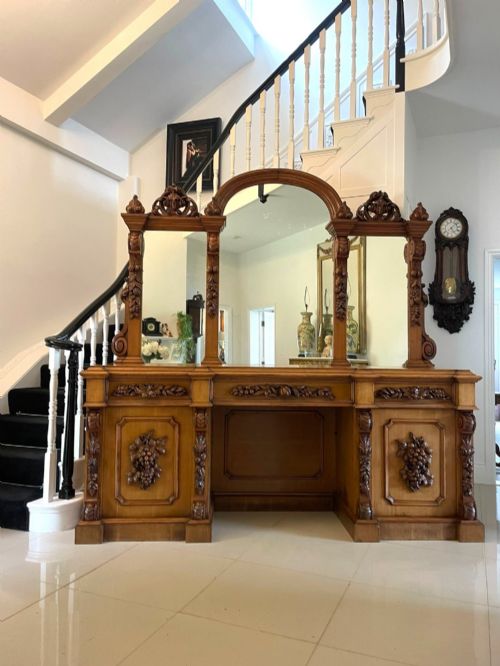
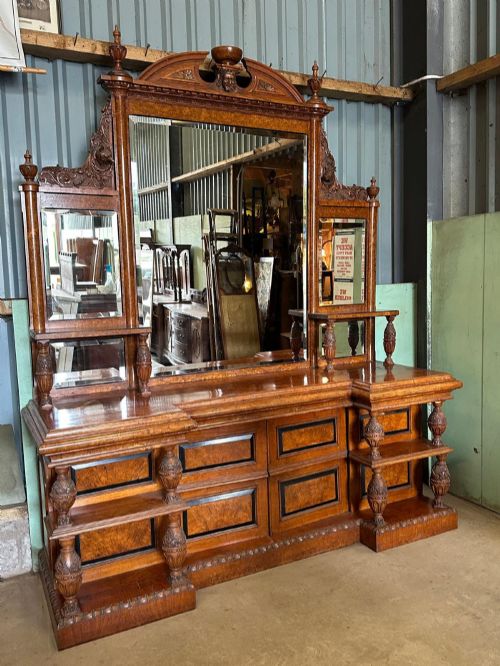
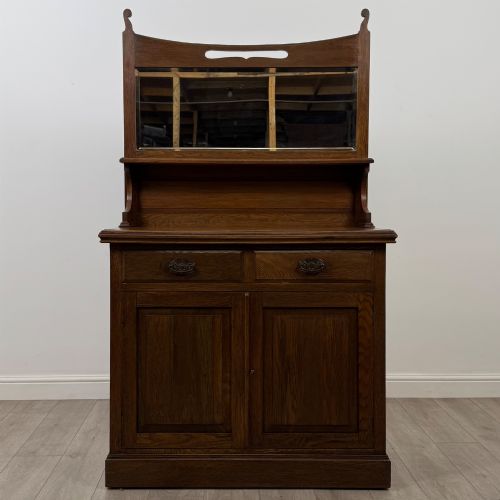
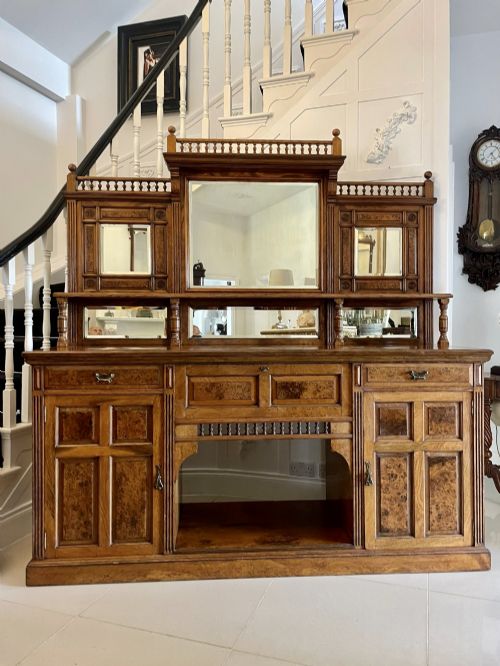
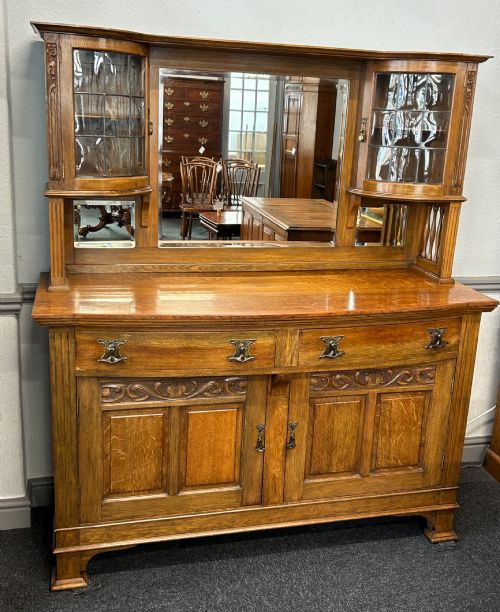

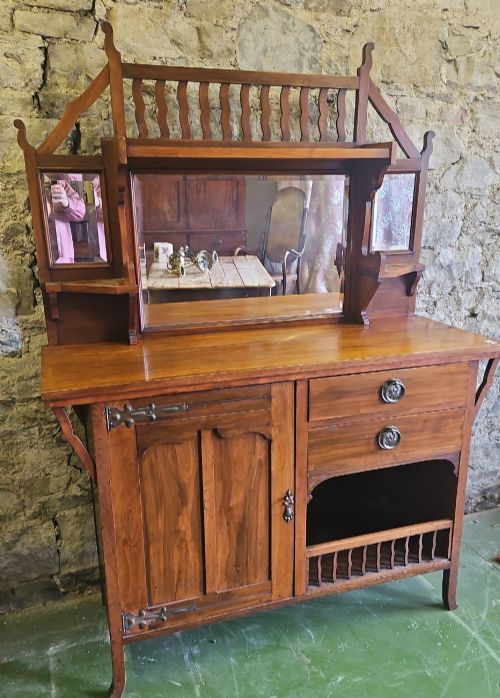
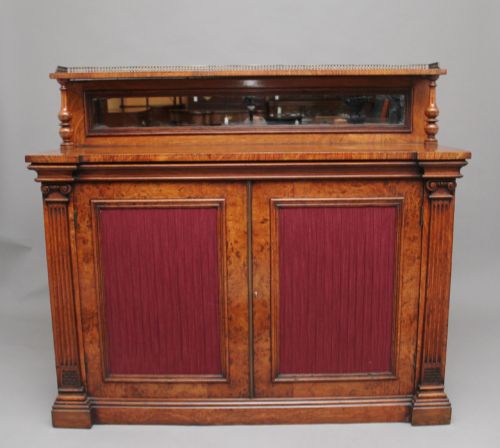


Oak Mirror Back Buffet
An oak mirror back buffet anchors a dining room with substance, combining storage with the reflective light of integrated glass.
Oak Mirror Back Buffet
An oak mirror back buffet serves as a substantial dining room furnishing designed for storage and display, appearing frequently across Victorian and Edwardian periods.
Buyers encounter heavy timber constructions featuring carved details, raised cupboards, and fitted glass panels that reflect interior spaces.
The form merges the practicality of a sideboard with the decorative display capacity of an elevated mirror frame.
Materials and construction
Carpenters utilised solid oak alongside decorative pollard oak veneers to create robust frameworks with varied grain patterns.
Mirrors were integrated into backboards alongside brass and iron hardware, anchoring heavy timber doors and drawers.
Periods represented span from the mid-nineteenth century through the Edwardian era and into the nineteen-thirties.
Judging quality in oak sideboards
Superior examples demonstrate meticulous timber selection, particularly in pollard oak grain matching, alongside deep and crisp carved ornamentation.
Plain construction and standard brass fittings differentiate utilitarian pieces from the refined work attributed to notable cabinet makers.
T Simpson and Son
The Oak Mirror Back Buffet Glossary
- Pollard oak
- Timber taken from trees that have been pollarded, producing tightly clustered, highly decorative growth rings. This figured wood appears on select cabinet doors and drawer fronts.
- Mirror back
- An upright wooden frame fitted with a glass mirror attached to the rear of a sideboard. It projects light back into the room and allows display items to be viewed from multiple angles.
- Arts and Crafts
- A design movement prioritising handcrafting and simple materials over industrial mass production. Pieces in this style often display unpretentious joinery and minimal surface decoration.
- Gothic Revival
- An architectural and decorative style drawing on medieval forms. Furniture typically incorporates pointed arches, tracery, and heavy carved mouldings.
Oak Mirror Back Buffet: Frequently Asked Questions
How do I date an oak mirror back buffet?
Dating relies on observing stylistic markers such as heavy Victorian carvings versus cleaner Arts and Crafts lines, alongside construction methods in the timber framework.
Changes in hardware styles and mirror bevels also provide clues to whether a piece originates from the mid-nineteenth century or the Edwardian era.
Where should I place a mirror back buffet?
These pieces suit dining rooms or large entrance halls where their proportions and integrated mirrors can reflect natural light.
Ensure the floor is level and capable of supporting substantial timber furniture before positioning the unit against a main wall.
How do I care for pollard oak furniture?
Maintain the timber by dusting regularly with a soft, dry cloth and applying appropriate wax polish sparingly to preserve the grain.
Keep the piece away from direct heat sources and strong sunlight to prevent the timber and veneer from drying out.
What is the difference between a buffet and a sideboard?
Buffets and sideboards both provide dining storage, though the addition of a mirror back specifically designates a display function.
Victorian cabinetmakers often used the terms interchangeably in records, focusing on the combination of cupboards, drawers, and shelving.